Common Pitfalls in Dissertation Research and How to Avoid Them Identify common mistakes made during dissertation research, including poor planning, inadequate resources, and lack of a clear research direction, and how to overcome them.

 : 441
: 441
Common Pitfalls in Dissertation Research and How to Avoid Them
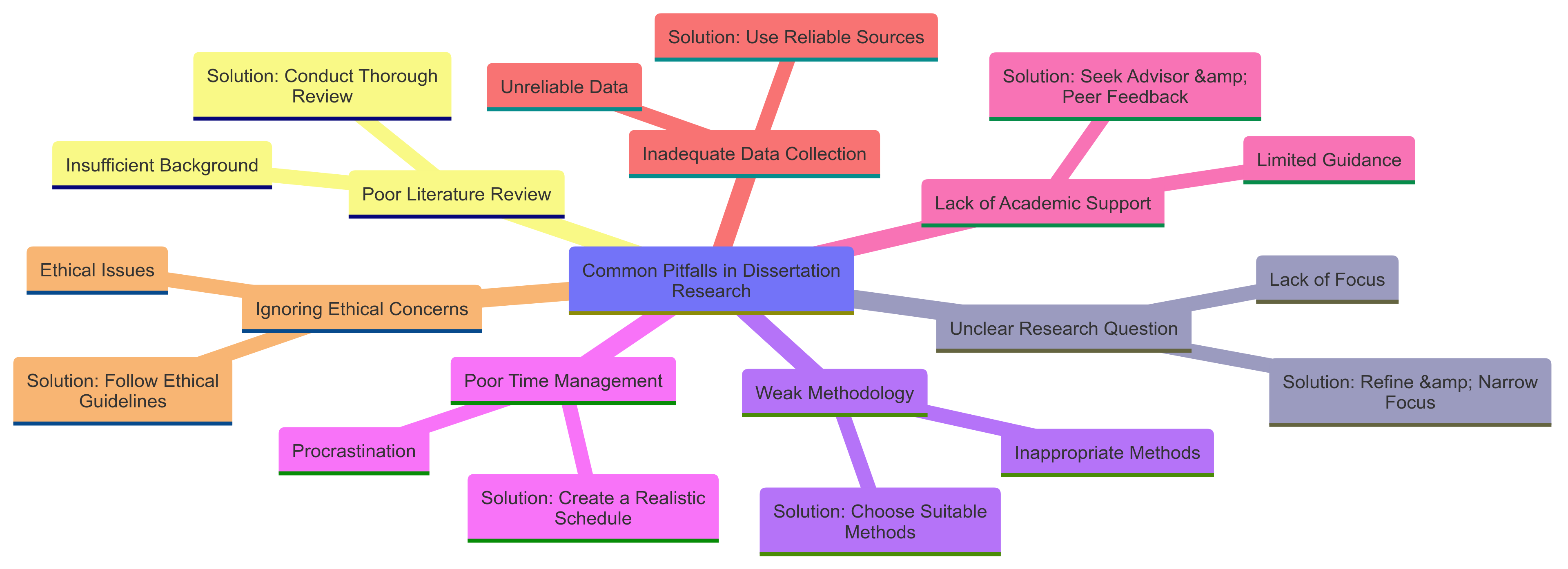
Dissertation research is a monumental undertaking in any academic journey. It is the culmination of years of study and effort, and it represents a unique opportunity to contribute original insights to your field. However, the path to completing a dissertation is often riddled with challenges. Many candidates encounter pitfalls such as poor planning, inadequate resources, and a lack of clear research direction. In this comprehensive guide, we’ll explore some of the most common pitfalls in dissertation research and provide actionable strategies on how to avoid them, ensuring you maintain progress, clarity, and confidence throughout your research process.
1. Inadequate Planning and Time Management
One of the most prevalent pitfalls in dissertation research is poor planning. Without a well-structured plan, it’s easy to become overwhelmed by the sheer magnitude of the project.
Lack of a Detailed Timeline
- Problem: Many students underestimate the time required for each phase of their dissertation—from the literature review and data collection to data analysis and writing. Without a clear timeline, deadlines may be missed, and the project can quickly spiral out of control.
- Solution: Develop a detailed project timeline. Break your dissertation into manageable segments, setting milestones for each phase. Use tools such as Gantt charts or digital calendars to map out key dates and deliverables. Be realistic about the time each task requires, and build in buffer periods for unexpected delays. Regularly review and update your timeline to reflect progress and emerging challenges.
Procrastination and Poor Work Habits
- Problem: Procrastination can be a significant barrier to progress. The open-ended nature of dissertation research often leads to delays in starting tasks or making decisions.
- Solution: Establish a consistent work routine. Set daily or weekly goals that are specific and measurable. Break large tasks into smaller, actionable steps, and use productivity techniques such as the Pomodoro Technique to maintain focus. Additionally, consider creating a dedicated workspace free from distractions to boost your concentration.
Inflexibility in Planning
- Problem: While planning is essential, being too rigid in your schedule can also be a pitfall. Research rarely follows a linear path, and unexpected issues or new insights may require you to pivot.
- Solution: Build flexibility into your plan. Recognize that your timeline is a living document that should evolve as your research progresses. Schedule regular check-ins with yourself (or with your advisor) to assess your progress and make necessary adjustments.
2. Insufficient Literature Review and Theoretical Foundation
A comprehensive literature review is the cornerstone of any strong dissertation. Failing to thoroughly engage with the existing literature can undermine your study’s credibility and significance.
Superficial Literature Reviews
- Problem: Some researchers may only skim the surface of the available literature, missing critical debates or recent developments in their field.
- Solution: Invest time in a systematic literature review. Use academic databases like Google Scholar, JSTOR, or PubMed to gather a wide range of sources. Organize your findings using reference management tools like Zotero or EndNote. Critically analyze each source, noting its strengths, weaknesses, and relevance to your research question. By building a robust theoretical foundation, you not only demonstrate your expertise but also identify research gaps that your work can address.
Failing to Update Literature
- Problem: Given the rapid pace of academic research, relying solely on outdated literature can make your study less relevant.
- Solution: Stay current by regularly reviewing recent publications in your field. Set up alerts for key journals and follow influential researchers on academic platforms. Integrate the latest studies into your literature review to ensure that your dissertation reflects the most current trends and debates.
Over-Reliance on a Single Theoretical Perspective
- Problem: Focusing too narrowly on one theoretical framework may limit the scope of your analysis and overlook alternative explanations.
- Solution: Adopt a multifaceted approach by considering multiple theoretical perspectives. This not only enriches your analysis but also demonstrates that you have considered various angles. Compare and contrast different theories and justify your chosen framework based on how well it addresses your research problem.
3. Unclear Research Direction and Question Formulation
An ill-defined research question can leave your dissertation without a clear focus, leading to scattered efforts and inconclusive results.
Vague or Overly Broad Research Questions
- Problem: A research question that is too broad can be overwhelming, while a vague question can result in ambiguous or unfocused research.
- Solution: Develop a specific, focused, and answerable research question. Start by brainstorming the key issues you wish to address, then refine your question by considering the scope of your study, available resources, and time constraints. Engage in discussions with peers and advisors to refine your question. Remember that a well-formulated research question should guide your methodology and help define the parameters of your study.
Lack of Research Hypotheses or Objectives
- Problem: Without clear objectives or hypotheses, your research can lack direction, making it difficult to measure progress or success.
- Solution: Clearly outline your research objectives and hypotheses. What are you aiming to discover or prove? Break your objectives into short-term and long-term goals, and ensure they are aligned with your research question. This clarity will not only help you stay on track but will also communicate the significance and direction of your study to your committee and future readers.
4. Poor Methodological Design
The methodology section is critical to the validity of your dissertation. A flawed methodological approach can compromise your entire study.
Inappropriate Research Design
- Problem: Selecting a research design that does not align with your research question can lead to invalid or unreliable results.
- Solution: Choose a research design that best suits your objectives, whether it’s qualitative, quantitative, or mixed-methods. Justify your choice by explaining how it will help you address your research question effectively. Consider conducting a pilot study to test your design and refine your approach before committing fully.
Insufficient Data Collection Methods
- Problem: Relying on limited or inappropriate data collection methods can result in data that is not representative or comprehensive.
- Solution: Develop a robust data collection plan. Identify multiple data sources and methods—such as surveys, interviews, experiments, or archival research—that can provide a well-rounded view of your research topic. Ensure that your methods are well-documented and that you have contingency plans if certain data sources prove unreliable or inaccessible.

Flawed Data Analysis Techniques
- Problem: Using incorrect or insufficient data analysis techniques can lead to inaccurate conclusions.
- Solution: Choose appropriate data analysis methods that are consistent with your research design. If you are using statistical methods, ensure you have the necessary expertise or seek guidance from a statistician. For qualitative research, clearly outline your coding procedures and how you will interpret themes. Training in your chosen analytical methods and using reliable software tools can significantly improve the quality of your analysis.
Neglecting Ethical Considerations
- Problem: Overlooking ethical issues in your research design can lead to complications and even rejection by review boards.
- Solution: Address ethical considerations early in your research. This includes obtaining informed consent from participants, ensuring confidentiality, and handling data responsibly. Familiarize yourself with your institution’s ethical guidelines and seek approval from the relevant ethics committee before beginning your study.
5. Inadequate Resource Management
Dissertation research often requires substantial resources—both in terms of time and material assets. Mismanaging these resources can hinder your progress.
Limited Access to Resources
- Problem: Failing to secure adequate resources—such as funding, equipment, or access to necessary archives—can stall your research.
- Solution: Identify the resources you will need early on and develop a plan to secure them. This may involve applying for research grants, establishing collaborations with other institutions, or negotiating access to specialized equipment or archives. Maintain a resource inventory and update it regularly as your research evolves.
Overcommitting to Unnecessary Resources
- Problem: While it’s important to have sufficient resources, overcommitting or spending excessively can lead to financial strain and distract you from your primary objectives.
- Solution: Be strategic about your resource allocation. Prioritize essential resources that directly contribute to your research objectives. Develop a budget plan and stick to it, seeking advice from your advisor or financial officer if necessary.
Poor Management of Time and Energy
- Problem: Many students invest significant time in resource management at the expense of actual research. This imbalance can lead to burnout.
- Solution: Balance resource management with research activities. Delegate administrative tasks when possible, and focus your energy on the most critical aspects of your study. Use project management tools to keep track of both research tasks and resource requirements, ensuring that neither is neglected.
6. Ineffective Communication with Advisors and Committee Members
Clear and consistent communication with your advisor and dissertation committee is crucial. Misunderstandings or a lack of feedback can derail your progress.
Delayed or Infrequent Communication
- Problem: Waiting too long between updates or failing to share your progress can result in misaligned expectations and missed opportunities for guidance.
- Solution: Establish a regular meeting schedule with your advisor. Use these sessions to discuss progress, challenges, and next steps. Be proactive in seeking feedback and clarifications, and keep detailed records of meetings to ensure that you follow up on all recommendations.
Not Incorporating Feedback
- Problem: Ignoring or dismissing constructive criticism can lead to repeated mistakes and a proposal that does not fully meet academic standards.
- Solution: Actively incorporate feedback into your research plan. Evaluate suggestions carefully and adjust your methods or focus accordingly. Remember that your advisor’s feedback is intended to help you improve the quality and impact of your research.
Misunderstanding Advisor Expectations
- Problem: Sometimes, the expectations of advisors and committee members can be unclear, leading to confusion and misaligned research efforts.
- Solution: Clarify expectations early on. Discuss your research plan, timeline, and goals in detail with your committee. Don’t hesitate to ask for examples of successful dissertations in your field to better understand what is expected. Clear communication at the outset can prevent misunderstandings down the line.
7. Data-Related Challenges
Handling data is at the heart of many dissertations, and data-related issues can pose significant challenges.
Poor Data Quality
- Problem: Relying on low-quality or unreliable data can compromise your entire research project, leading to inaccurate conclusions.
- Solution: Prioritize data quality by carefully selecting your data sources and conducting rigorous data cleaning and validation procedures. Where possible, triangulate your findings by using multiple data sources. Ensure that your data collection methods are robust, and be prepared to revise your approach if initial data quality is unsatisfactory.
Data Overload
- Problem: Collecting too much data without a clear plan for analysis can lead to overwhelm, making it difficult to extract meaningful insights.
- Solution: Focus your data collection on what is directly relevant to your research question. Develop a data analysis plan before collecting data, and be disciplined in sticking to your plan. Use data management software to organize and analyze your data systematically, and remember that sometimes less is more when it comes to drawing clear conclusions.
Inadequate Data Analysis Skills
- Problem: A lack of proficiency in the necessary data analysis techniques can hinder your ability to derive valid conclusions.
- Solution: Invest time in learning or refining the analytical skills required for your research. Take advantage of workshops, online courses, or consult with experts in statistics or qualitative analysis. Practice using relevant software and consider collaborating with peers or advisors who have complementary skills.
8. Writing and Revision Challenges
The process of writing the dissertation itself can present many pitfalls, particularly if you don’t plan for multiple rounds of revision.
Writer’s Block and Procrastination
- Problem: The pressure of producing a lengthy, high-quality dissertation can lead to writer’s block, making it difficult to make progress.
- Solution: Break your writing into manageable chunks and set daily or weekly word count goals. Don’t aim for perfection on your first draft—focus on getting your ideas down and then revise thoroughly. Use techniques such as free writing or structured outlines to overcome blocks and maintain momentum.
Lack of Clear Structure and Flow
- Problem: A dissertation that is poorly organized or lacks clear transitions between sections can confuse readers and undermine your arguments.
- Solution: Develop a detailed outline before you begin writing. Ensure that each chapter builds on the previous one and that transitions are clear and logical. Regularly review your structure to maintain a coherent narrative. Consider asking peers or mentors to review your draft to provide feedback on clarity and organization.
Inadequate Revision and Editing
- Problem: Many students underestimate the importance of revising and editing their work, leading to a final product that may be rife with errors or unclear arguments.
- Solution: Allocate ample time for multiple rounds of revision and editing. Seek feedback from trusted colleagues, advisors, or professional editors. Pay attention to both content and style—ensure that your arguments are logically sound, well-supported by evidence, and clearly articulated. Revising is a critical part of the writing process that helps transform a rough draft into a polished dissertation.
9. Emotional and Psychological Challenges
Beyond the academic hurdles, the dissertation process can take a toll on your mental and emotional well-being.
Stress and Burnout
- Problem: The prolonged stress of managing a complex research project can lead to burnout, impacting both your productivity and personal well-being.
- Solution: Practice self-care and maintain a healthy work-life balance. Set realistic expectations and take regular breaks to recharge. Consider mindfulness practices, exercise, or seeking support from peers and mentors. Remember that it’s important to pace yourself and to recognize the signs of burnout early so that you can address them proactively.
Isolation
- Problem: Dissertation research can be a lonely endeavor, especially if you’re working independently without much interaction with peers.
- Solution: Engage with your academic community. Join research groups, attend seminars, and participate in study groups or writing retreats. Regular interactions with others in similar situations can provide emotional support, reduce feelings of isolation, and offer valuable perspectives on your work.
Self-Doubt and Imposter Syndrome
- Problem: Many researchers struggle with self-doubt or feel like they are not capable of completing their dissertation, leading to procrastination and anxiety.
- Solution: Recognize that self-doubt is a common experience among graduate students. Seek reassurance from your advisor and peers, and remind yourself of the progress you’ve made. Set achievable goals and celebrate small victories along the way. Professional counseling or support groups for graduate students can also be immensely helpful.
10. Strategies for Long-Term Success in Dissertation Research
To overcome these common pitfalls, it’s important to adopt a proactive and holistic approach to your dissertation research.
Regular Self-Assessment and Reflection
- Conduct Regular Reviews:
Periodically assess your progress against your goals and timeline. Reflect on what is working well and where you might need to adjust your strategy. - Set Achievable Goals:
Establish short-term and long-term goals that are specific, measurable, and realistic. This will help you maintain motivation and track your progress over time.
Building a Support Network
- Engage with Peers:
Connect with other graduate students who are navigating similar challenges. Peer support can provide practical advice and emotional reassurance. - Seek Mentorship:
In addition to your advisor, consider finding a mentor who has successfully completed their dissertation. Their insights can be invaluable in helping you avoid common pitfalls. - Utilize Campus Resources:
Most academic institutions offer workshops, counseling, and writing support services. Take advantage of these resources to bolster your skills and well-being.
Adopting a Growth Mindset
- Embrace Challenges:
View obstacles as opportunities for learning and growth. Each setback is a chance to refine your approach and strengthen your research. - Celebrate Progress:
Recognize and celebrate your achievements, no matter how small. This positive reinforcement can help counter feelings of self-doubt and keep you motivated.
Staying Flexible and Adaptable
- Revisit and Revise Plans:
Be prepared to modify your research plan in response to new findings or challenges. Flexibility is key to managing the unpredictable nature of dissertation research. - Keep Learning:
Continuously seek out new skills, whether it’s advanced data analysis techniques or improved writing strategies. Lifelong learning is at the heart of academic success.
Conclusion
Dissertation research is a challenging yet immensely rewarding process. By being aware of the common pitfalls—such as poor planning, insufficient literature review, unclear research direction, flawed methodology, and resource mismanagement—you can take proactive steps to avoid these traps and steer your project toward success.
Effective planning, regular self-assessment, clear communication with advisors, and a commitment to self-care are all essential strategies for overcoming the hurdles of dissertation research. Embrace the process with a growth mindset, and remember that every challenge is an opportunity to improve your skills and contribute meaningfully to your field.
By following the strategies outlined in this guide, you can navigate the complexities of dissertation research with greater confidence and clarity. Your journey may be long and demanding, but with careful planning, ongoing support, and a willingness to adapt, you will be well-equipped to produce a dissertation that stands as a testament to your hard work and intellectual contributions.
At DissertationAssist.com, we are dedicated to helping you avoid these common pitfalls and succeed in your research endeavors. Whether you need guidance on planning, methodological design, or managing the emotional aspects of dissertation research, our team of experts is here to support you every step of the way.
Remember: the key to a successful dissertation lies not only in the research itself but also in your ability to plan, adapt, and persevere through challenges. With persistence, careful strategy, and a supportive network, you can overcome the obstacles that lie ahead and achieve your academic goals.
Good luck on your dissertation journey—may your research be insightful, your process smooth, and your contributions meaningful.