How to Create a Comprehensive Dissertation Outline
Master the art of outlining your dissertation, creating a roadmap for each chapter, and ensuring that your research is structured logically and coherently from start to finish
 : 438
: 438
How to Create a Comprehensive Dissertation Outline
Crafting a dissertation is a monumental academic undertaking. Before diving into the actual writing, however, creating a detailed dissertation outline is an essential step. A well-structured outline serves as a roadmap, guiding you through each chapter and ensuring that your research is organized logically and coherently from start to finish. In this extensive guide, we’ll walk you through the process of mastering the art of outlining your dissertation. We’ll discuss why an outline is crucial, break down the steps to create one, and offer practical tips and strategies to streamline your process. Along the way, discover how expert support from DissertationAssist can help you polish your plan and keep your research on track.
The Importance of a Dissertation Outline
A dissertation outline is much more than a simple list of topics or chapters. It is a strategic framework that:
-
Clarifies Your Research Focus:
By mapping out your ideas, you can see the overall structure of your argument and ensure that every element aligns with your research objectives. -
Guides Logical Flow and Coherence:
An effective outline organizes your content in a sequential manner, making sure that each chapter builds upon the previous one. This logical progression helps your reader follow your argument effortlessly. -
Saves Time and Reduces Stress:
With a clear outline, you avoid the pitfalls of writer’s block and last-minute revisions. It serves as a blueprint, reducing the stress of organizing a large amount of information all at once. -
Facilitates Communication with Advisors:
Sharing your outline with your dissertation advisor can lead to invaluable feedback. It allows you to discuss your approach early in the process and make adjustments before you commit to full chapters. -
Enhances Focus and Productivity:
Breaking down your dissertation into manageable sections enables you to tackle the writing process step-by-step, making the overall project less daunting.
Step-by-Step Guide to Creating a Comprehensive Dissertation Outline
Creating a robust outline involves several key steps. Below, we’ll delve into each step in detail, providing practical advice to help you create a plan that serves as the backbone of your dissertation.
1. Define Your Research Question and Objectives
Before you start outlining your dissertation, it’s essential to have a clear understanding of your research question and objectives. This foundational step will guide the entire structure of your dissertation.
-
Identify the Central Research Question:
Ask yourself what specific problem or gap your dissertation addresses. This question should be concise yet broad enough to allow for in-depth exploration. -
Set Clear Objectives:
Outline the goals of your research. What do you hope to discover or prove? Clearly defined objectives will help you determine the necessary chapters and sections of your dissertation. -
Refine Your Scope:
A well-defined scope prevents your research from becoming too broad. Narrow down your focus to ensure that your dissertation remains manageable and coherent.
Tip: Document your research question and objectives at the very beginning of your outline. This keeps you aligned with your overall purpose and provides a reference point for all subsequent sections.
2. Brainstorm and Organize Your Ideas
Once you have a clear research question, it’s time to brainstorm. This phase involves gathering all your thoughts, ideas, and potential sections that could be part of your dissertation.
-
Mind Mapping:
Use a mind map to visualize the connections between different ideas. This technique helps in identifying key themes and subtopics. -
List and Categorize:
Write down all the topics and subtopics that come to mind, then group them into categories. This initial organization will form the basis of your chapters and sections. -
Identify Gaps:
Look for any missing elements or gaps in your research that need further exploration. These gaps might indicate areas where you need to gather more information or adjust your research focus.
Tip: Tools like digital mind mapping software or simple paper and pen can help you brainstorm effectively. If you need guidance on organizing your ideas, consider reaching out to experts through DissertationAssist.
3. Establish the Structure of Your Dissertation
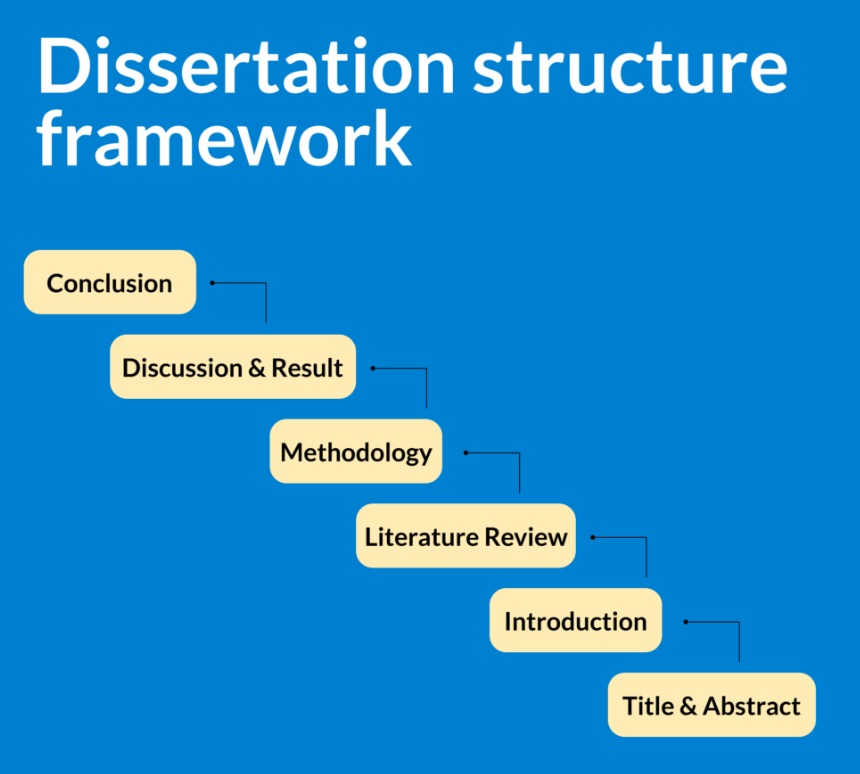
Most dissertations follow a conventional structure, though the specific format may vary by discipline. A typical dissertation outline includes the following chapters:
-
Introduction:
Introduces the research topic, outlines the research questions and objectives, and sets the stage for the study. -
Literature Review:
Reviews existing literature to provide context and justify your research. This chapter highlights gaps in current knowledge and positions your study within the academic conversation. -
Methodology:
Details your research design, including methods for data collection and analysis. This chapter explains how you will address your research questions. -
Results/Findings:
Presents the data and results of your research. This section is often divided into sub-sections based on different aspects of your findings. -
Discussion:
Interprets the results, discussing their implications, and relating them back to your research questions and the literature review. -
Conclusion:
Summarizes the research, restates the significance of your findings, and offers suggestions for future research. -
References and Appendices:
Includes all the sources cited and any additional material that supports your dissertation.
Tip: Create a skeleton outline with these standard chapters as the main headings. Later, you can refine each section with subheadings and detailed notes.
4. Develop Detailed Chapter Outlines
Now that you have established the overall structure, dive deeper into each chapter. A detailed chapter outline breaks down the content into sub-sections, providing a roadmap for your writing process.
-
Introduction Chapter:
- Context and Background: Provide an overview of the topic.
- Research Problem: Clearly state the research problem and its significance.
- Research Questions/Objectives: List your key questions and objectives.
- Overview of Methodology: Briefly outline your research methods.
- Structure of the Dissertation: Provide a brief description of the subsequent chapters.
-
Literature Review Chapter:
- Thematic Sections: Organize the literature by themes, theories, or chronological order.
- Critical Analysis: Include a critical evaluation of the existing research.
- Gaps in the Literature: Identify areas that have not been explored and how your research addresses them.
-
Methodology Chapter:
- Research Design: Explain your overall research strategy.
- Data Collection Methods: Detail how you will collect data (e.g., surveys, interviews, archival research).
- Data Analysis Techniques: Outline the techniques and tools you will use to analyze your data.
- Ethical Considerations: Discuss any ethical issues and how you plan to address them.
-
Results/Findings Chapter:
- Presentation of Data: Organize the presentation of your data in logical segments.
- Analysis and Interpretation: Explain the significance of the findings in relation to your research questions.
- Visual Aids: Plan for the inclusion of charts, graphs, or tables to support your findings.
-
Discussion Chapter:
- Interpretation of Findings: Discuss the implications of your results.
- Comparison with Existing Literature: Relate your findings to the literature reviewed earlier.
- Limitations of the Study: Acknowledge any limitations in your research methodology or data.
- Recommendations for Future Research: Suggest areas for further investigation.
-
Conclusion Chapter:
- Summary of Findings: Recap the key findings of your research.
- Contribution to the Field: Highlight the significance and impact of your work.
- Final Thoughts: Provide closing remarks and reflect on the research process.
Tip: For each chapter, create bullet points that detail the key topics and sub-sections. This detailed plan acts as a checklist, ensuring that no critical component is overlooked during the writing process.
5. Incorporate Flexibility for Revisions
While your outline should be as comprehensive as possible, it’s important to remain flexible. Research is an evolving process, and new insights may lead you to revise your plan.
-
Allow Room for New Ideas:
Keep some space in your outline for additional sections or sub-sections that might emerge as you delve deeper into your research. -
Iterative Review:
Periodically review and update your outline as your research progresses. This iterative process ensures that your dissertation remains aligned with your evolving understanding of the subject. -
Feedback Integration:
Share your outline with your dissertation advisor and peers to get constructive feedback. Incorporate their suggestions to improve the overall structure and coherence of your outline.
Tip: Regularly revisiting your outline not only keeps your work organized but also ensures that your research stays focused on your original objectives. For additional support, contact DissertationAssist to learn how professional feedback can refine your outline.
Practical Tips and Tools for Outlining Your Dissertation
Creating a dissertation outline can seem overwhelming, but several tools and strategies can simplify the process. Here are some practical tips to streamline your planning:
1. Use Outlining Software and Digital Tools
Digital tools can help you structure and visualize your outline more effectively. Consider using:
-
Mind Mapping Tools:
Software such as MindMeister, XMind, or even free online mind mapping tools can help you visualize connections between ideas. -
Word Processors with Outlining Features:
Programs like Microsoft Word or Google Docs offer built-in outlining tools that allow you to create hierarchical structures with headings, subheadings, and bullet points. -
Project Management Apps:
Tools like Trello or Asana can help you break down tasks, set deadlines, and monitor your progress as you work on different sections of your dissertation.
2. Create a Visual Roadmap
A visual representation of your outline can be a powerful motivator and a clear indicator of progress. Consider creating a flowchart or timeline that maps out each chapter and key milestones. This visual roadmap not only aids in keeping you on track but also provides a snapshot of how each component of your dissertation fits together.
3. Develop a Detailed Timeline
Integrate your outline with a realistic timeline for your dissertation project. Outline key deadlines for:
- Drafting each chapter
- Receiving and incorporating feedback
- Completing revisions and final edits
This timeline acts as a project management tool, ensuring that you allocate sufficient time for each phase of your research. If you find scheduling challenging, order professional assistance to get expert guidance on managing your dissertation timeline.
4. Leverage Feedback for Continuous Improvement
An effective outline isn’t static. As you develop your dissertation, continuously refine your outline based on new insights and feedback. Regular meetings with your advisor can help identify areas for improvement, allowing you to adapt your outline and, consequently, your research direction.
-
Schedule Regular Check-Ins:
Arrange periodic meetings with your advisor to discuss your outline and any adjustments that may be necessary. -
Use Peer Review:
Share your outline with fellow graduate students or writing groups. Their perspectives can uncover potential gaps or redundancies you might have overlooked.
Case Study: A Successful Dissertation Outline in Action
Consider the journey of a graduate student in social sciences tasked with investigating the impact of digital media on public opinion. At the outset, the student defined a clear research question and set objectives that guided the study. Here’s how the student created a comprehensive dissertation outline:
-
Defining the Focus:
The student began by crafting a research question: “How does digital media shape public opinion on political issues?” Objectives were established to explore the role of social media platforms, identify key influencers, and assess the impact of digital campaigns on voter behavior. -
Brainstorming and Organization:
Using mind mapping software, the student generated ideas and grouped them into thematic clusters. These clusters informed the major chapters of the dissertation, such as the literature review on digital media theories and the methodology chapter detailing survey and interview methods. -
Developing the Outline:
The student created a detailed outline for each chapter:- Introduction: Context, research questions, and significance.
- Literature Review: Sections on theoretical frameworks, historical context, and contemporary studies.
- Methodology: Description of research design, data collection, and analysis methods.
- Results: Presentation and interpretation of survey data.
- Discussion: Comparative analysis with existing literature and implications for future research.
- Conclusion: Summary of findings, limitations, and recommendations.
-
Feedback and Revision:
After sharing the outline with their advisor, the student received suggestions to refine the theoretical framework and restructure the methodology chapter for clarity. The outline was revised accordingly, resulting in a more coherent and focused structure. -
Outcome:
The student’s final dissertation was not only logically structured but also allowed for clear, focused writing. The outline served as a roadmap throughout the writing process, ensuring that every chapter contributed to a cohesive argument.
This case study illustrates the transformative power of a detailed dissertation outline. It not only helped the student manage a complex research project but also ensured that the final document was organized, coherent, and impactful.
Integrating Professional Support
While the process of outlining can be managed independently, many students benefit from professional assistance. Expert services like DissertationAssist offer tailored support that can streamline the outlining process and provide clarity when planning your research.
How DissertationAssist Can Help:
-
Expert Feedback on Your Outline:
Receive detailed feedback on the structure and content of your outline, ensuring that all critical elements are covered and logically organized. -
Personalized Revision Strategies:
Based on your specific research topic and academic discipline, professionals can help you refine your outline to better align with your objectives. -
Time Management and Organizational Support:
Learn strategies for integrating your outline into a comprehensive timeline that keeps your research on track. -
Access to Additional Resources:
Explore a range of support options—from Sample Dissertation Help to List of Dissertation Topics—to gather inspiration and ensure that your research is both current and comprehensive.
Tip: If you’re feeling overwhelmed or need expert guidance to get started, consider ordering professional assistance from DissertationAssist to make the outlining process smoother and more effective.
Best Practices for Maintaining an Effective Dissertation Outline
Once you’ve created a comprehensive outline, maintaining it as a living document throughout your dissertation journey is crucial. Here are some best practices to keep your outline relevant and effective:
1. Regular Updates and Revisions
Your dissertation outline should evolve as your research progresses. Update your outline regularly to reflect new insights, additional data, or revised perspectives.
-
Set a Regular Review Schedule:
For instance, review your outline after each major milestone or after receiving feedback from your advisor. -
Adjust for New Findings:
As you uncover new research or refine your arguments, modify your outline to incorporate these developments seamlessly.
2. Keep a Detailed Log of Changes
Document every revision you make to your outline. This detailed log serves as a record of your research evolution and can help you track your progress.
-
Version Control:
Use version control tools or maintain dated copies of your outline to monitor how your ideas have developed over time. -
Reflect on Changes:
Periodically review your log to identify patterns in your revisions, which can provide insights into areas that may need further clarification or additional research.
3. Use Feedback as a Continuous Improvement Tool
Feedback isn’t a one-time event; it should be integrated continuously as you refine your dissertation.
-
Incorporate Advisor and Peer Feedback:
After each review session, update your outline based on the suggestions received. -
Seek Clarification:
If certain feedback is unclear, schedule follow-up discussions with your advisor. This ensures that every revision is well-informed and purposeful.
4. Align Your Outline with Your Research Progress
Ensure that your outline reflects the current status of your research. This alignment helps keep your writing focused and prevents you from straying off course.
-
Benchmark Against Your Timeline:
Compare your outline with your project timeline to ensure that each chapter and section is on track for completion. -
Refine Based on Research Outcomes:
As you finalize data collection or complete initial analyses, adjust your outline to mirror the actual findings and insights emerging from your research.
Conclusion: Mastering the Art of the Dissertation Outline
Creating a comprehensive dissertation outline is a critical step toward producing a cohesive, well-structured, and impactful dissertation. By defining your research question, brainstorming and organizing your ideas, establishing a clear structure, and developing detailed chapter outlines, you lay a solid foundation for your entire research project. An effective outline not only saves time and reduces stress but also ensures that every component of your dissertation contributes meaningfully to your overall argument.
Embracing the process of outlining involves both careful planning and the willingness to adapt as your research evolves. By integrating best practices such as regular updates, detailed documentation, continuous feedback, and effective time management, you can maintain a dynamic roadmap that guides you from the initial concept to the final draft.
For those who find the process challenging or overwhelming, remember that professional support is always available. Services like DissertationAssist offer expert guidance, personalized feedback, and a wealth of additional resources to help you craft an outline that sets the stage for academic excellence. Whether you’re looking to order assistance, explore a List of Dissertation Topics, or view Sample Dissertation Help, there’s a wealth of support to ensure your dissertation journey is a success.
Your dissertation outline is not merely a planning document—it’s a strategic blueprint for your academic success. Embrace the process, refine your ideas, and trust that with a well-structured outline, your research will unfold with clarity and purpose. Happy outlining, and here’s to your journey toward a brilliant dissertation!