How to Manage Your Dissertation Time Effectively Discover techniques for efficient time management during dissertation writing, including setting deadlines, breaking down tasks, and maintaining productivity without sacrificing quality.

 : 409
: 409
How to Manage Your Dissertation Time Effectively
Managing your dissertation time effectively is crucial for turning your research and writing process into a productive, stress-free journey. Balancing academic work, personal commitments, and the inherent complexities of dissertation research can be challenging. However, with the right techniques and mindset, you can maintain high productivity without sacrificing quality. This guide provides comprehensive strategies for efficient time management during dissertation writing, including setting realistic deadlines, breaking down tasks into manageable parts, and staying motivated through each stage of the process.
1. Understanding the Importance of Time Management
Effective time management is not just about getting everything done; it’s about working smarter and maintaining balance. Here are some key reasons why managing your dissertation time effectively is critical:
- Avoiding Burnout: The dissertation process can be long and demanding. By organizing your time well, you prevent exhaustion and keep stress levels in check.
- Maintaining Productivity: A structured schedule helps you make consistent progress. Regular work, even in small increments, adds up over time.
- Ensuring Quality: When you manage your time wisely, you can dedicate sufficient hours to research, writing, and revisions, ensuring that the final product is both thorough and polished.
- Balancing Commitments: Effective time management allows you to juggle your dissertation with other responsibilities, whether they’re academic, professional, or personal.
- Meeting Deadlines: Staying organized increases your ability to meet submission deadlines and respond to feedback promptly, keeping your project on track.
Understanding these benefits sets the stage for adopting strategies that can transform your dissertation journey.
2. Assessing Your Current Situation and Setting Goals
Before you can manage your time effectively, you need to assess your current situation and set clear, attainable goals.
A. Self-Assessment
-
Identify Your Strengths and Weaknesses:
Reflect on your working habits. Are you a morning person or a night owl? Do you thrive under pressure, or do you need a slow, steady pace? Understanding your natural rhythms will help you schedule tasks when you’re most productive. -
Evaluate Your Commitments:
List all your current responsibilities, including classes, work, family, and personal interests. Knowing what else is on your plate will help you create a realistic schedule for dissertation work.
B. Goal Setting
-
Set SMART Goals:
Use the SMART framework—Specific, Measurable, Achievable, Relevant, and Time-bound—to set clear goals. For example, instead of saying “I need to write more,” set a goal like “I will write 500 words a day for the next four weeks.” -
Define Short-Term and Long-Term Goals:
Short-term goals might include daily or weekly writing targets, while long-term goals could involve finishing a chapter or completing a major section of your research. Breaking your dissertation into smaller milestones makes the process less overwhelming. -
Prioritize Your Tasks:
Rank your tasks based on importance and deadlines. This helps you focus on what needs immediate attention and what can be scheduled for later.
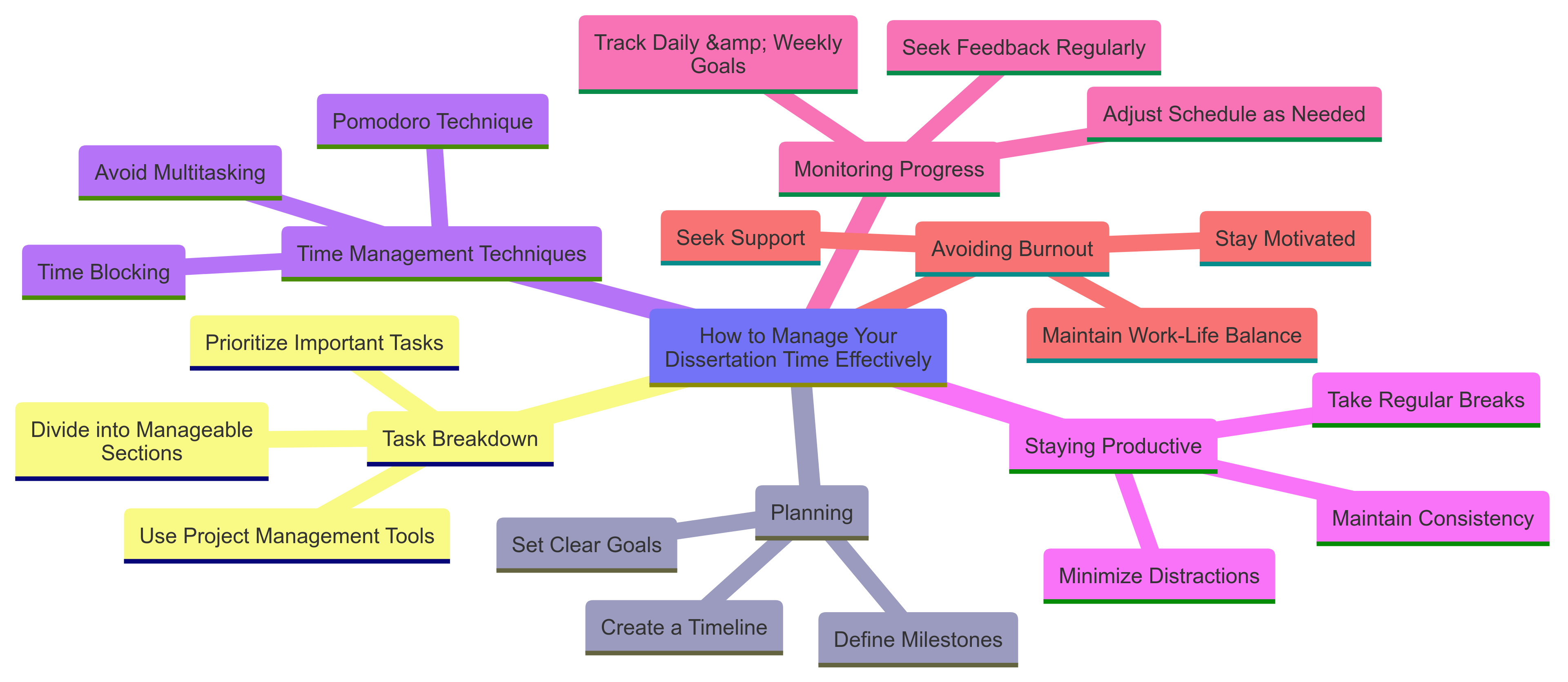
By assessing where you stand and setting clear goals, you create a roadmap for your dissertation that guides every step of your process.
3. Creating a Detailed Dissertation Timeline
One of the most effective tools for time management is a well-constructed timeline. This timeline should break down the entire dissertation process into manageable phases.
A. Mapping Out the Process
-
Phases of the Dissertation:
Typical phases include the proposal, literature review, research design, data collection, data analysis, writing the dissertation chapters, and revisions. Mapping these out visually can help you see the big picture. -
Milestones and Deadlines:
Set deadlines for each phase. For instance, plan to finish your literature review by a specific date or aim to have the data collection completed within a set number of months. This gives you clear targets to work toward.
B. Using Tools for Scheduling
-
Gantt Charts:
A Gantt chart visually represents your timeline and milestones. It allows you to track progress and adjust timelines as necessary. -
Digital Calendars:
Use online calendars (like Google Calendar or Outlook) to mark deadlines, meetings, and dedicated writing sessions. These calendars can send you reminders and help you stay organized. -
Project Management Software:
Tools like Trello, Asana, or Notion can help you break down tasks, assign deadlines, and monitor your progress. They are particularly useful for visualizing the workflow and managing large projects.
C. Building in Flexibility
-
Buffer Time:
Allocate extra time for each phase to account for unexpected challenges or delays. Dissertation research is rarely linear, so having a buffer can reduce stress when things don’t go exactly as planned. -
Regular Check-Ins:
Schedule periodic reviews of your timeline. Adjust your goals and deadlines based on your progress and any new developments in your research.
A detailed, flexible timeline not only organizes your work but also serves as a motivational tool, making your progress visible and tangible.
4. Breaking Down Tasks into Manageable Chunks
A major reason many dissertations seem overwhelming is the size and complexity of the project. Breaking down large tasks into smaller, more manageable components can make the work less daunting.
A. Chunking the Dissertation
-
Divide by Chapters:
Instead of viewing your dissertation as one massive document, break it down into individual chapters (e.g., introduction, literature review, methodology, results, discussion, conclusion). Tackle one chapter at a time. -
Sub-Tasks Within Chapters:
Each chapter can be divided into smaller tasks. For instance, the literature review can be segmented into “gathering sources,” “annotating key articles,” “organizing themes,” and “writing summaries.” -
Daily and Weekly Tasks:
Create daily and weekly task lists. Write down specific tasks for each day, such as “Draft the methodology section” or “Revise chapter 2.” This makes the process less overwhelming and ensures continuous progress.
B. The Power of To-Do Lists
-
Prioritized To-Do Lists:
Write a list of tasks each day, prioritizing them according to importance and urgency. This can help maintain focus and prevent procrastination. -
Time Blocking:
Allocate specific time blocks for each task. For example, set aside two hours for writing, one hour for reviewing literature, and so on. Stick to these blocks as much as possible to build a routine.
C. Using the “Pomodoro Technique”
-
Focus Intervals:
The Pomodoro Technique involves working in 25-minute focused intervals followed by a 5-minute break. After four intervals, take a longer break of 15–30 minutes. This method can boost concentration and prevent burnout. -
Tracking Progress:
Use a timer and record how many Pomodoros you complete each day. This not only tracks productivity but also creates a sense of accomplishment.
By breaking down your dissertation into smaller, actionable tasks, you transform an overwhelming project into a series of achievable steps, making steady progress feel both possible and satisfying.

5. Strategies for Maintaining Productivity
Once you’ve set up your schedule and broken down tasks, the next step is to maintain productivity throughout the dissertation process.
A. Establishing a Routine
-
Consistent Work Hours:
Choose specific times each day dedicated solely to dissertation work. A regular routine can train your brain to focus during these periods. -
Dedicated Workspace:
Create a workspace free from distractions. Whether it’s a home office or a quiet spot in a library, having a dedicated area for work can significantly boost concentration.
B. Minimizing Distractions
-
Digital Distractions:
Turn off notifications on your phone and computer during writing sessions. Consider using apps like Freedom or Cold Turkey to block distracting websites. -
Environment Control:
If possible, work in a quiet environment. Background music, if it helps, should be non-distracting instrumental music rather than lyrics that could interrupt your thought process.
C. Incorporating Breaks and Self-Care
-
Scheduled Breaks:
Regular breaks are essential for sustained productivity. Short breaks help prevent mental fatigue and allow your mind to reset. -
Physical Activity:
Incorporate some form of exercise into your routine. Whether it’s a short walk, yoga, or a full workout, physical activity boosts energy and helps maintain focus. -
Mindfulness and Relaxation:
Techniques such as meditation or deep breathing exercises can reduce stress and improve concentration. Even a few minutes a day can make a significant difference.
D. Tracking Your Progress
-
Progress Journals:
Keep a daily or weekly journal of your accomplishments. Reflecting on what you’ve achieved can boost morale and provide insights into what strategies work best for you. -
Adjusting Strategies:
Regularly assess your productivity. If you notice that certain strategies are not working, be willing to adjust your routine or try new techniques.
Maintaining productivity is not about working non-stop—it’s about finding a sustainable rhythm that allows you to produce quality work consistently over time.
6. Balancing Quality and Efficiency
While it’s important to manage your time effectively, maintaining the quality of your work is paramount. Here are strategies to ensure you strike the right balance:
A. Prioritize High-Impact Tasks
-
Focus on Core Tasks:
Identify which parts of your dissertation have the greatest impact on your overall argument or findings. Prioritize these tasks in your schedule. -
Quality over Quantity:
It’s better to produce a well-researched, well-written section than to quickly churn out mediocre content. Allocate more time to sections that require deep analysis and reflection.
B. Effective Revision Techniques
-
Scheduled Revisions:
Incorporate time for revision into your timeline. Revising as you go along—rather than waiting until the end—can help maintain high quality throughout. -
Peer Reviews:
Regularly share drafts with peers or mentors for feedback. Fresh perspectives can highlight areas for improvement that you might have overlooked. -
Breaks Between Drafts:
Allow time between drafts. Stepping away from your work for a day or two can help you return with a fresh perspective and renewed energy for revision.
C. Using Technology to Enhance Quality
-
Writing Tools:
Use grammar and style checkers like Grammarly or Hemingway to improve clarity and correctness. These tools help catch errors that might detract from your work’s quality. -
Reference Management Software:
Tools like Zotero, EndNote, or Mendeley can streamline your citation process, ensuring accuracy and saving time during the research and writing phases. -
Collaboration Platforms:
Consider using platforms like Google Docs for collaborative feedback. Real-time comments and suggestions can accelerate the revision process and ensure high-quality output.
Balancing quality and efficiency is about recognizing that well-managed time is the foundation of excellence. When you plan effectively, break tasks into manageable units, and incorporate regular reviews, you create the conditions for producing high-caliber work without undue stress.
7. Dealing with Common Time Management Challenges
Even with the best plans, you may encounter challenges that disrupt your schedule. Here’s how to address some common issues:
A. Procrastination
-
Identify Triggers:
Understand what causes you to procrastinate. Is it a particular task, time of day, or environment? Recognizing these triggers is the first step to overcoming them. -
Set Micro-Goals:
Break tasks into even smaller steps if you find yourself delaying. A 10-minute task can be much less intimidating than a full-hour commitment. -
Accountability Partners:
Work with a peer or mentor who can hold you accountable. Regular check-ins can help ensure you stay on track.
B. Unexpected Delays
-
Plan for Contingencies:
Build extra time into your schedule for unexpected setbacks. If a particular task takes longer than expected, having a buffer prevents derailment of your overall timeline. -
Prioritize Urgencies:
When delays occur, reassess your priorities. Focus on the tasks that must be completed and adjust your schedule accordingly.
C. Perfectionism
-
Set Realistic Standards:
Perfectionism can slow you down. Recognize that it’s more productive to produce a good draft that you can revise later than to delay progress while seeking perfection in every sentence. -
Iterative Improvement:
Embrace the iterative nature of writing. Allow yourself to create a “rough” version, knowing that continuous revisions will lead to a polished final product.
D. Lack of Motivation
-
Revisit Your “Why”:
Remind yourself why you started this journey. Revisiting the significance of your research can reinvigorate your motivation. -
Celebrate Small Wins:
Reward yourself for meeting deadlines and completing tasks. Small celebrations build positive momentum and encourage continued progress. -
Change Your Environment:
Sometimes a change of scenery—like working in a new café or library—can boost motivation and focus.
Dealing with these challenges proactively will help you maintain momentum and ensure that minor setbacks don’t snowball into major obstacles.
8. Leveraging Support and Resources
No dissertation journey is a solo endeavor. Leveraging support from others can significantly enhance your time management and productivity.
A. Advisor and Committee Guidance
-
Regular Meetings:
Schedule frequent check-ins with your advisor to discuss progress and obstacles. Their feedback can help streamline your work and prevent unnecessary delays. -
Clarifying Expectations:
Make sure you understand what your committee expects. Clear communication about deadlines and milestones helps avoid misalignment and wasted effort.
B. Peer Support Groups
-
Writing Groups:
Join or form a writing group with fellow dissertation candidates. Sharing progress and challenges creates a supportive environment that fosters accountability. -
Online Forums and Communities:
Participate in online academic communities where you can exchange tips, seek advice, and share resources. Platforms like ResearchGate or specialized Facebook groups can offer valuable insights.
C. Institutional Resources
-
Workshops and Seminars:
Many institutions offer workshops on time management, research methods, and academic writing. Attending these can provide new strategies and tools. -
Counseling and Wellness Programs:
Don’t hesitate to use campus counseling services if you’re feeling overwhelmed. Maintaining mental and emotional well-being is key to long-term productivity.
By leaning on your advisors, peers, and institutional resources, you create a network of support that helps you manage your time more effectively and keep your project moving forward.
9. Reflecting and Adapting Your Time Management Strategy
Effective time management is an evolving process. Regular reflection and adaptation ensure that your strategy remains aligned with your needs as your dissertation progresses.
A. Regular Self-Assessment
-
Track Your Progress:
Keep a log or journal of your daily and weekly achievements. Reviewing this record helps you see what’s working and where you might need to adjust your strategy. -
Evaluate Your Methods:
Periodically ask yourself if your current time management techniques are helping you meet your goals. Are you completing tasks on time? Is your stress level manageable? Use these reflections to refine your approach.
B. Adjusting Your Schedule
-
Flexibility is Key:
If you notice that certain periods of the day are more productive, adjust your schedule accordingly. Likewise, if a particular method isn’t effective, experiment with alternatives. -
Update Your Goals:
As your dissertation evolves, so too should your goals. Revisit your SMART goals regularly and update them based on your current progress and new challenges.
C. Celebrating Milestones
-
Reward Yourself:
Recognize and celebrate achievements, no matter how small. Whether it’s finishing a chapter or meeting a weekly word count, taking time to acknowledge your progress keeps motivation high. -
Reflect on Growth:
Regularly reflect on how far you’ve come. This not only reinforces your commitment to your dissertation but also highlights effective strategies that can be maintained or expanded.
Continually adapting your time management strategy ensures that you remain flexible, focused, and resilient throughout the dissertation process.
10. Final Thoughts: Integrating Time Management into Your Dissertation Journey
Managing your dissertation time effectively is a dynamic process that evolves as you progress through each stage of your research. By implementing the strategies outlined in this guide, you can build a robust system that not only enhances productivity but also protects your well-being.
Remember, time management is not about rigidly adhering to a schedule; it’s about creating a balanced, realistic approach to your work. Set clear goals, create a detailed timeline, break down large tasks into manageable steps, and leverage the support available to you. Embrace flexibility and be prepared to adapt your methods as necessary.
Your dissertation is a marathon, not a sprint. With consistent effort, thoughtful planning, and a commitment to both quality and efficiency, you can navigate the complexities of dissertation writing with confidence. Every small step forward is progress—each well-managed day brings you closer to completing a work that reflects your dedication, expertise, and academic vision.
At DissertationAssist.com, we believe that effective time management is the cornerstone of a successful dissertation. By balancing productivity with self-care and continuously adapting your strategies, you can transform what might seem like an overwhelming challenge into a rewarding academic journey.
Good luck on your dissertation journey—may your planning be meticulous, your focus unwavering, and your progress steady as you work toward producing a dissertation that stands as a testament to your hard work and intellectual contributions.