Structuring Your Dissertation: A Step-by-Step Guide Learn how to organize your dissertation, from the introduction to the conclusion, ensuring logical flow and clarity in presenting your research findings and analysis.

 : 490
: 490
Structuring Your Dissertation: A Step-by-Step Guide
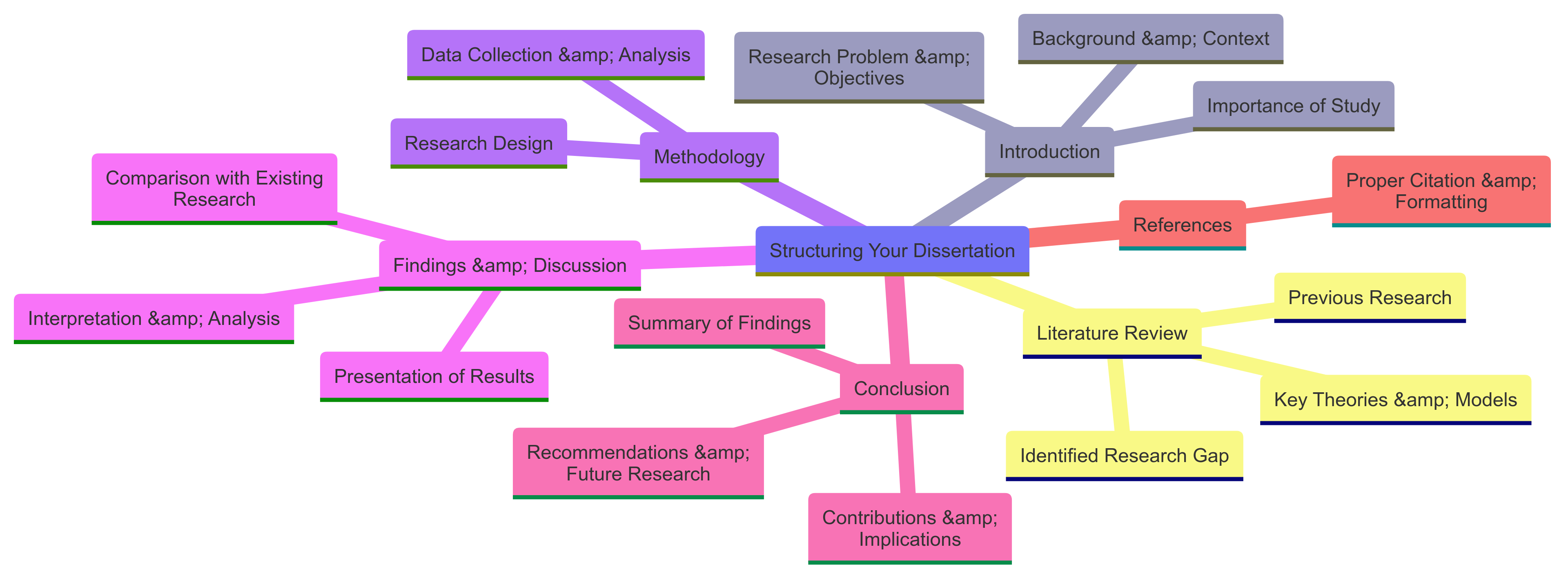
Crafting a well-organized dissertation is essential to effectively communicate your research findings and analysis. A clear structure not only helps your readers follow your arguments but also demonstrates your mastery of the subject and your ability to conduct rigorous academic research. In this comprehensive guide, we’ll walk you through each stage of structuring your dissertation—from the introduction to the conclusion—ensuring a logical flow and clarity throughout your document. Follow this step-by-step guide to create a dissertation that is well-organized, persuasive, and reflective of your hard work.
1. Understanding the Importance of Structure
Before diving into the specifics of each section, it’s crucial to understand why a clear structure is so important:
- Enhances Readability: A well-organized dissertation allows your readers to easily follow your arguments and understand your research findings.
- Demonstrates Critical Thinking: A logical structure shows that you can effectively synthesize information, develop coherent arguments, and build upon your ideas step by step.
- Guides the Research Process: An organized plan helps you stay focused on your objectives, ensuring that each section of your dissertation contributes to the overall narrative.
- Facilitates Feedback: A clear structure makes it easier for advisors and committee members to identify strengths, weaknesses, and areas for improvement.
With these benefits in mind, let’s explore how to structure your dissertation from start to finish.
2. Preliminary Steps: Planning and Outlining
Before writing begins, spend time planning and outlining your dissertation. This preparatory work lays the foundation for a coherent structure.
A. Define Your Objectives and Research Questions
- Clarify Your Goals: Clearly articulate the primary objectives of your research. What do you hope to achieve? What questions are you aiming to answer?
- Develop a Focused Research Question: A well-defined research question will guide the structure of your dissertation by narrowing your focus to a specific problem or gap in the literature.
B. Create a Detailed Outline
- Organize Your Thoughts: Break down your research into major sections and subsections. A detailed outline acts as a roadmap, ensuring that each part of your dissertation logically follows from the previous section.
- Identify Key Themes: Determine the core themes and arguments that will form the backbone of your dissertation. Organize these themes in a sequence that makes sense for your research narrative.
- Plan Transitions: Think about how each section will connect with the next. Smooth transitions are essential for maintaining a logical flow throughout your document.
By planning carefully and creating an outline, you set yourself up for a well-structured dissertation that remains focused and coherent.
3. The Core Structure of Your Dissertation
A dissertation typically follows a conventional structure, though variations exist depending on academic discipline and institutional guidelines. Below is a step-by-step breakdown of the most common components.
A. Title Page
- Title: Choose a concise yet descriptive title that reflects your research focus.
- Author and Institution: Include your name, the name of your department, and your institution.
- Date: Add the submission date.
The title page is the first impression of your dissertation, so ensure that it is professional and adheres to your institution’s formatting guidelines.
B. Abstract
- Summary of Your Research: Provide a brief overview (typically 150–300 words) summarizing the research problem, methodology, key findings, and implications.
- Clarity and Conciseness: The abstract should be clear and succinct, giving readers a snapshot of your entire dissertation.
A well-written abstract helps readers quickly understand the essence of your research and its significance.
C. Acknowledgments
- Express Gratitude: Thank your advisors, committee members, colleagues, and anyone who supported your research.
- Keep It Professional: While personal, the tone should remain professional and concise.
Acknowledgments add a personal touch and recognize the contributions of others to your academic journey.
D. Table of Contents
- Outline Your Dissertation: List all chapters, sections, and subsections with corresponding page numbers.
- Ease of Navigation: A detailed table of contents helps readers find specific parts of your dissertation easily.
A clear table of contents is vital for navigating a lengthy document.
E. List of Figures and Tables (if applicable)
- Organize Visual Data: Provide separate lists for figures, tables, charts, or graphs included in your dissertation.
- Enhance Clarity: These lists allow readers to quickly locate visual aids that support your research.
Ensure that all visual elements are clearly labeled and referenced in your text.
F. List of Abbreviations and Glossary (if applicable)
- Define Terms: Include a list of abbreviations and a glossary of specialized terms used in your dissertation.
- Promote Understanding: This section helps readers unfamiliar with your field navigate technical language and concepts.
Providing definitions for technical terms improves accessibility for a broader audience.
4. The Main Body of Your Dissertation
The main body is where you present your research in detail. It typically includes several key chapters, each serving a distinct purpose.
A. Introduction
- Set the Stage: Introduce your research topic and explain its significance. Provide background information to contextualize your study.
- State the Problem: Clearly articulate the research problem or gap in the literature that your dissertation addresses.
- Research Questions and Objectives: Outline the specific questions you aim to answer and the objectives of your research.
- Overview of the Dissertation: Briefly describe the structure of your dissertation, guiding readers through what to expect in the subsequent chapters.
The introduction should engage your readers and clearly present the scope and importance of your research.
B. Literature Review
- Survey the Field: Review existing research relevant to your topic. Summarize key theories, debates, and findings in the literature.
- Identify Gaps: Highlight areas that have not been fully explored, setting the stage for your own contribution.
- Theoretical Framework: Describe the theoretical lens through which you will analyze your research problem.
- Critical Analysis: Evaluate the strengths and weaknesses of existing studies. Explain how your research will address these gaps or extend current knowledge.
A comprehensive literature review demonstrates your mastery of the subject area and positions your research within the broader academic conversation.
C. Methodology
- Research Design: Describe the overall design of your study—whether it is qualitative, quantitative, or mixed-methods—and justify your choice.
- Data Collection: Detail the methods you used to gather data (e.g., surveys, interviews, experiments, archival research). Explain why these methods are appropriate for your research question.
- Data Analysis: Explain the techniques you will use to analyze your data, including any software or statistical tools.
- Ethical Considerations: Address any ethical issues related to your research, such as obtaining informed consent and ensuring confidentiality.
- Limitations: Acknowledge potential limitations in your methodology and discuss how you plan to address them.
The methodology chapter is crucial for establishing the validity and reliability of your research.
D. Results / Findings
- Present Your Data: Clearly present the findings of your research. Use tables, figures, and graphs where appropriate to illustrate your results.
- Organize by Themes: Structure your findings in a logical order—by research questions, themes, or chronological order.
- Describe the Outcomes: Explain what your data reveals without interpreting the findings in depth; save analysis for the next chapter.
This section should be factual and data-driven, laying the groundwork for the subsequent discussion.
E. Discussion and Analysis
- Interpret the Findings: Analyze your results in the context of your research questions and the literature review. What do the findings mean for your field?
- Compare with Literature: Discuss how your findings align or contrast with existing studies. Highlight any unexpected outcomes.
- Theoretical Implications: Explain the implications of your results for existing theories and frameworks.
- Practical Implications: Discuss any real-world applications or policy implications of your research.
- Limitations Revisited: Reflect on the limitations mentioned earlier and discuss how they may have impacted your results.

The discussion chapter is where you synthesize your research, linking your findings back to your initial questions and objectives.
F. Conclusion
- Summarize Key Points: Provide a concise summary of your research, including the problem, methodology, key findings, and conclusions.
- Restate the Significance: Reinforce the importance of your research and its contributions to the field.
- Recommendations: Offer recommendations for future research or practical applications based on your findings.
- Final Thoughts: End with a strong closing statement that reflects on the overall journey and significance of your work.
The conclusion should leave readers with a clear understanding of your research’s impact and the future directions it suggests.
5. Additional Considerations
Beyond the main chapters, several additional sections help round out your dissertation.
A. Appendices
- Supplementary Material: Include any additional data, questionnaires, interview transcripts, or other supplementary material that supports your dissertation but is too detailed for the main text.
- Organize Clearly: Label each appendix clearly and refer to them appropriately in your text.
Appendices provide valuable supplementary information without disrupting the flow of your main arguments.
B. References / Bibliography
- Cite Sources: Provide a complete list of all sources cited in your dissertation. Follow the citation style mandated by your institution or discipline (e.g., APA, MLA, Chicago).
- Ensure Accuracy: Double-check each reference for accuracy, ensuring that every citation in the text has a corresponding entry in your bibliography.
A meticulously compiled reference list is critical for academic integrity and demonstrates your engagement with the existing literature.
6. Ensuring Logical Flow and Clarity
A clear structure is not just about dividing your dissertation into chapters; it’s about ensuring that these sections flow logically and coherently.
A. Transitional Elements
- Chapter Transitions: Use introductory and concluding paragraphs in each chapter to connect it to the previous and next sections.
- Linking Sentences: Ensure that sentences and paragraphs transition smoothly, guiding readers through your argument step by step.
- Signposting: Use clear headings, subheadings, and signposts (e.g., “In the following section…”, “This leads us to…”) to indicate shifts in topic and maintain clarity.
B. Consistency in Formatting
- Uniform Style: Adhere to a consistent formatting style throughout your dissertation. This includes font, spacing, headings, and citation styles.
- Visual Aids: Ensure that tables, figures, and charts are consistently formatted and clearly labeled. Visual aids should enhance, not distract from, your narrative.
- Proofreading: Regularly proofread your work to eliminate grammatical errors, typos, or formatting inconsistencies that could disrupt the flow of your dissertation.
C. Revising and Editing
- Multiple Drafts: Accept that the first draft is rarely perfect. Revise your work multiple times, focusing on clarity, coherence, and logical flow.
- Feedback: Seek feedback from peers, advisors, and professional editors. Fresh eyes can help identify areas where the structure or argument may be unclear.
- Reflect on the Narrative: Read your dissertation as if you were a first-time reader. Ask yourself whether the structure makes sense and if the progression of ideas is logical.
7. Practical Tips for a Smooth Writing Process
Writing a dissertation is a marathon, not a sprint. Here are some practical tips to help you manage the writing process and maintain clarity and structure:
A. Create a Writing Schedule
- Set Specific Goals: Develop daily or weekly word count goals to keep yourself accountable.
- Break It Down: Divide your writing tasks into manageable sections. Focus on one chapter or section at a time.
- Stick to a Routine: Establish a regular writing routine, designating specific times of the day for focused work.
B. Utilize Tools and Resources
- Outlining Software: Consider using outlining or mind-mapping software (such as Scrivener or MindMeister) to organize your thoughts and structure your dissertation.
- Reference Management: Use tools like EndNote, Zotero, or Mendeley to manage your citations and references efficiently.
- Productivity Techniques: Techniques such as the Pomodoro Technique can help maintain focus and productivity during writing sessions.
C. Maintain a Backup Plan
- Regular Backups: Save your work regularly and back it up on multiple devices or cloud storage to avoid any data loss.
- Version Control: Keep track of different drafts and revisions. This allows you to revert to previous versions if needed.
D. Stay Flexible and Adaptable
- Iterative Process: Remember that writing is an iterative process. Allow your structure and arguments to evolve as you delve deeper into your research.
- Embrace Change: If a particular chapter or section isn’t working, don’t hesitate to revise or reorganize it. Flexibility is key to producing a coherent final document.
8. Finalizing Your Dissertation
Once the main writing is complete, the final stage involves polishing your dissertation for submission.
A. Comprehensive Review
- Read Aloud: Reading your dissertation aloud can help you catch awkward phrasing or structural issues.
- Seek Peer Review: Ask colleagues or mentors to review your work. Their feedback can be invaluable in refining your structure and argument.
- Professional Editing: Consider hiring a professional editor to ensure that your dissertation is free of grammatical errors and flows logically.
B. Final Formatting and Proofreading
- Check Guidelines: Ensure that your dissertation adheres to your institution’s formatting guidelines. Pay attention to margins, font size, headings, and citation styles.
- Consistency Check: Review your table of contents, list of figures, and references to ensure that all elements are accurate and consistent.
- Final Proof: Conduct a final proofread to catch any remaining errors or inconsistencies.
C. Preparing for Submission
- Bind and Submit: Once your dissertation is finalized, prepare it for submission according to your institution’s requirements. This may include printing, binding, and electronic submission.
- Backup Copies: Keep backup copies of your final dissertation for your records and future reference.
9. Conclusion
Structuring your dissertation is a critical aspect of the research process that can significantly impact how your work is received by readers, advisors, and academic committees. A well-organized dissertation not only reflects your deep understanding of the subject matter but also showcases your ability to communicate complex ideas with clarity and logical flow.
By following this step-by-step guide, you can ensure that every component—from the title page and abstract to the literature review, methodology, results, discussion, and conclusion—is thoughtfully crafted and seamlessly integrated. Remember, the key to success lies in meticulous planning, continuous revision, and the willingness to seek feedback and make necessary adjustments.
As you work through the structuring process, keep in mind that your dissertation is more than just a document—it is a testament to your academic journey, your dedication, and your ability to contribute original insights to your field. Whether you are just starting your research or nearing the final stages of your dissertation, a clear, coherent structure will guide your readers through your work and leave a lasting impression of your scholarly capabilities.
At DissertationAssist.com, we understand the challenges that come with organizing and presenting your research. With careful planning, a detailed outline, and the flexibility to adapt as your work evolves, you can create a dissertation that not only meets but exceeds academic standards.
Good luck as you embark on the final stages of your dissertation writing. With persistence, organization, and a clear vision, your dissertation will stand as a well-structured, compelling narrative of your research journey and academic achievements.