Using Academic Databases for Dissertation Research Master the use of academic databases to find credible, peer-reviewed articles, books, and journals, ensuring your research is grounded in reliable and up-to-date sources

 : 413
: 413
Using Academic Databases for Dissertation Research
Academic databases are the lifeblood of rigorous dissertation research. Mastering these resources is essential for finding credible, peer-reviewed articles, books, and journals that will form the foundation of your scholarly work. In today’s information-rich world, knowing how to efficiently navigate academic databases not only saves time but also ensures that your research is grounded in reliable and up-to-date sources. This comprehensive guide will walk you through every aspect of using academic databases effectively—from understanding what they are and why they matter to mastering advanced search techniques, organizing your findings, and integrating your research into your dissertation.
1. The Importance of Academic Databases in Dissertation Research
Academic databases provide access to a vast array of scholarly materials that are peer-reviewed, credible, and current. They are indispensable for several reasons:
- Credibility and Quality: Articles, books, and journals indexed in academic databases undergo rigorous peer review. This process ensures that the sources you rely on are credible and of high quality.
- Comprehensive Coverage: Databases often cover extensive subject areas, allowing you to explore interdisciplinary perspectives and find literature that is directly relevant to your research question.
- Efficiency: Instead of sifting through countless search engine results, academic databases provide refined search capabilities and filters that save time and enhance the relevancy of your findings.
- Staying Current: With continuous updates, these databases keep you informed about the latest research trends and developments in your field.
- Citation Management: Many databases offer features to export citations in various formats, simplifying the process of managing references and building your bibliography.
Understanding these benefits sets the stage for effective use of academic databases, ensuring your dissertation is built on a solid foundation of well-researched, reliable sources.
2. Overview of Major Academic Databases
Different academic fields have specialized databases that cater to their unique research needs. Here are some widely used databases across disciplines:
A. Multidisciplinary Databases
- JSTOR:
A digital library containing a vast collection of academic journals, books, and primary sources. JSTOR is particularly strong in the humanities, social sciences, and arts. - ProQuest:
Offers access to a broad spectrum of academic journals, dissertations, newspapers, and other scholarly content across various subjects. - EBSCOhost:
Provides a suite of databases covering multiple disciplines. It’s known for its powerful search functions and extensive coverage of academic literature.
B. Subject-Specific Databases
- PubMed:
Essential for medical, health, and life sciences research, PubMed indexes millions of citations and abstracts from biomedical literature. - IEEE Xplore:
A key resource for engineering, computer science, and technology research, offering access to conference proceedings, standards, and technical literature. - PsycINFO:
Managed by the American Psychological Association (APA), this database is the go-to resource for psychology and related fields. - ERIC (Education Resources Information Center):
A valuable database for education research, providing access to journals, reports, conference papers, and more.
C. Regional and Specialized Databases
- Scopus:
A comprehensive database covering peer-reviewed literature across disciplines. Scopus provides tools for tracking citations and analyzing research impact. - Web of Science:
Known for its rigorous selection criteria, this database is excellent for citation analysis and multidisciplinary research. - Google Scholar:
While not a traditional academic database, Google Scholar aggregates scholarly articles from multiple sources. However, it may require extra steps to verify the credibility of sources.
Familiarity with these databases helps you choose the right tools for your discipline, ensuring that your literature review is both thorough and pertinent.
3. Getting Started: Access and Authentication
Before you can dive into academic databases, you need to gain access:
A. Institutional Access
- University Libraries:
Most universities subscribe to a wide range of academic databases. Access is typically provided through your institution’s library website. - Remote Access:
Many institutions offer remote access options via VPN or proxy servers. This means you can access the resources from home or while traveling. - Library Guides:
Your university library often provides guides and tutorials on using their subscribed databases. These resources can be invaluable when you are just starting out.
B. Open Access Resources
- Open Access Journals:
Platforms like the Directory of Open Access Journals (DOAJ) provide free access to peer-reviewed journals. These resources can supplement your research when institutional access is limited. - Repositories:
Institutional repositories often house theses, dissertations, and research papers that are freely accessible. Examples include PubMed Central for biomedical research or arXiv for physics and computer science.
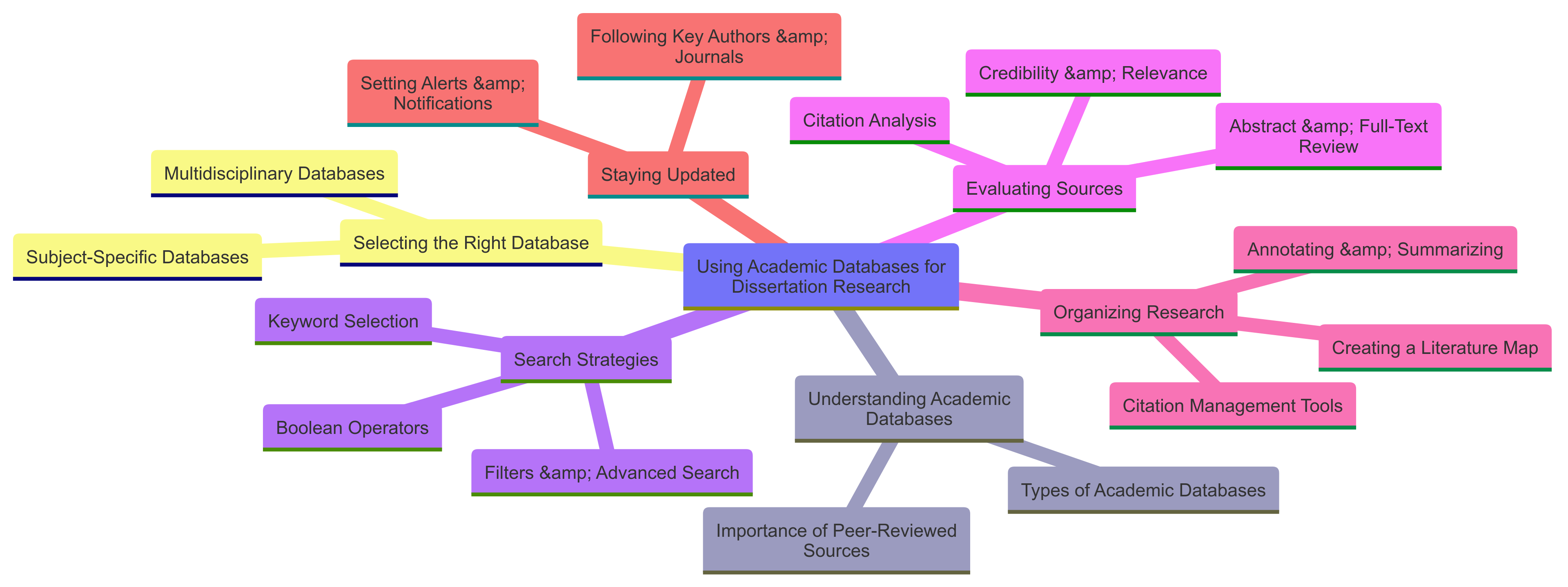
Understanding how to access these resources ensures that you can begin your research without unnecessary delays.
4. Crafting Effective Search Strategies
The key to efficient research is knowing how to find the right information quickly. Here are some strategies to enhance your search capabilities:
A. Using Keywords and Boolean Operators
- Keywords:
Begin by identifying key terms related to your research question. Think about synonyms and related concepts that might yield additional results. - Boolean Operators:
Use operators like AND, OR, and NOT to combine or exclude keywords. For example, if you’re researching “sustainable energy AND solar power,” you will retrieve articles that discuss both concepts. - Phrase Searching:
Use quotation marks to search for exact phrases. This is especially useful when looking for specific theories, models, or names. - Wildcards and Truncation:
Symbols like asterisks () allow you to search for variations of a word. For example, “educat” can return education, educational, educator, etc.
B. Advanced Search Techniques
- Filters and Limits:
Most databases offer filters to narrow down results by publication date, document type, subject, and more. Use these filters to ensure your results are as relevant and recent as possible. - Subject Headings and Index Terms:
Many databases use controlled vocabularies (e.g., MeSH in PubMed) to index articles. Learning these terms can greatly enhance your search accuracy. - Citation Searching:
Once you find a relevant article, use its references or cited by feature to locate additional related research. This method helps you uncover foundational works and emerging studies in your area. - Saved Searches and Alerts:
Create and save search queries so that you can run them periodically. Many databases allow you to set up email alerts when new articles matching your criteria are published.
A combination of these techniques will refine your searches and yield more targeted, useful results.
5. Evaluating and Selecting Sources
Not every article or book you find will be relevant or of high quality. Here’s how to evaluate your sources:
A. Assessing Credibility
- Peer-Reviewed Status:
Ensure that the articles you select are peer-reviewed. This indicates that the research has been evaluated by experts in the field. - Author Credentials:
Look into the author’s background, including their affiliation and publication history. Renowned experts in your field can add credibility to your research. - Publication Venue:
Consider the reputation of the journal or publisher. High-impact journals and established academic publishers are generally more reliable.
B. Relevance to Your Research
- Content Alignment:
Read abstracts and introductions to determine whether the source is directly related to your research question. Ensure that the study’s findings, methodology, or theoretical framework align with your work. - Recency:
Especially in fast-moving fields, newer sources may provide the most current insights and data. - Methodological Rigor:
Evaluate the research design and methodology. Reliable sources use robust methods and clearly articulate their limitations.
By critically assessing sources, you ensure that your literature review is built on a foundation of quality research.
6. Organizing Your Research Findings
Efficient management of the information you gather is just as important as finding it. Consider these strategies for organizing your sources:
A. Reference Management Tools
- Software Options:
Tools like Zotero, EndNote, and Mendeley help you store, organize, and format your references. They allow you to import citations directly from databases, annotate PDFs, and create bibliographies in your desired citation style. - Tagging and Folders:
Use tags or folders to categorize your references by theme, methodology, or relevance. This makes it easier to retrieve sources when writing specific sections of your dissertation.
B. Digital Note-Taking
- Annotation Tools:
Many databases and PDF readers allow you to highlight text and add notes. This feature helps you remember why a source is relevant and what key points it covers. - Summaries and Reviews:
Write brief summaries or reviews of each source as you go along. This not only reinforces your understanding but also creates a valuable resource when you begin synthesizing your literature review.
C. Creating a Literature Matrix
- Comparison Table:
Develop a literature matrix or chart that compares key studies on aspects such as methodology, findings, and theoretical perspectives. This visual aid can help you identify patterns and gaps in the literature. - Gap Identification:
Use the matrix to pinpoint areas that need further exploration, guiding your own research questions and objectives.
Organized research is easier to synthesize and reference, streamlining the writing process and ensuring that your dissertation is supported by a robust body of literature.
7. Integrating Database Research into Your Dissertation
Once you have gathered and organized your research, the next step is to integrate these sources effectively into your dissertation.
A. Crafting a Coherent Literature Review
- Thematic Organization:
Structure your literature review by themes rather than summarizing studies one by one. This approach creates a narrative that ties the literature to your research question. - Critical Analysis:
Instead of merely summarizing, engage critically with your sources. Compare methodologies, discuss contradictory findings, and highlight trends. - Building an Argument:
Use the literature review to build the foundation for your research. Clearly articulate the gap your dissertation will fill, supported by evidence from your sources.
B. Citing Sources Appropriately
- Follow Citation Guidelines:
Ensure that all references are formatted according to your chosen citation style (APA, MLA, Chicago, etc.). Accurate citations lend credibility to your work and allow readers to trace your sources. - Balance Direct Quotes and Paraphrasing:
Use direct quotes sparingly. Paraphrase complex ideas in your own words to demonstrate understanding, but always include proper citations. - Integrating Statistics and Data:
When using data from your sources, integrate it seamlessly into your analysis. Use tables, graphs, and charts when appropriate, and ensure that these visuals are clearly labeled and cited.
C. Synthesizing Information
- Developing a Narrative:
Your dissertation should not be a collection of isolated summaries. Synthesize the information to form a coherent narrative that supports your research objectives. - Connecting Research to Your Findings:
Relate the findings from the literature to your own research results. Discuss how your study confirms, extends, or challenges the existing body of knowledge.
Integrating academic database research into your dissertation not only strengthens your arguments but also situates your work within the broader academic conversation.

8. Overcoming Challenges in Database Research
While academic databases are powerful tools, you may encounter challenges along the way. Here are some common issues and strategies for overcoming them:
A. Information Overload
- Filtering Techniques:
When faced with an overwhelming number of search results, refine your search using advanced filters (e.g., publication date, document type, subject areas). This helps narrow your focus to the most relevant sources. - Prioritization:
Identify the most influential or frequently cited studies first. This can serve as a starting point for building your literature review.
B. Access Restrictions
- Institutional Subscriptions:
If you encounter a paywall, check if your institution provides access through its library portal. Use interlibrary loan services if necessary. - Open Access Alternatives:
Search for open access versions of articles using platforms like DOAJ or repositories such as PubMed Central and arXiv.
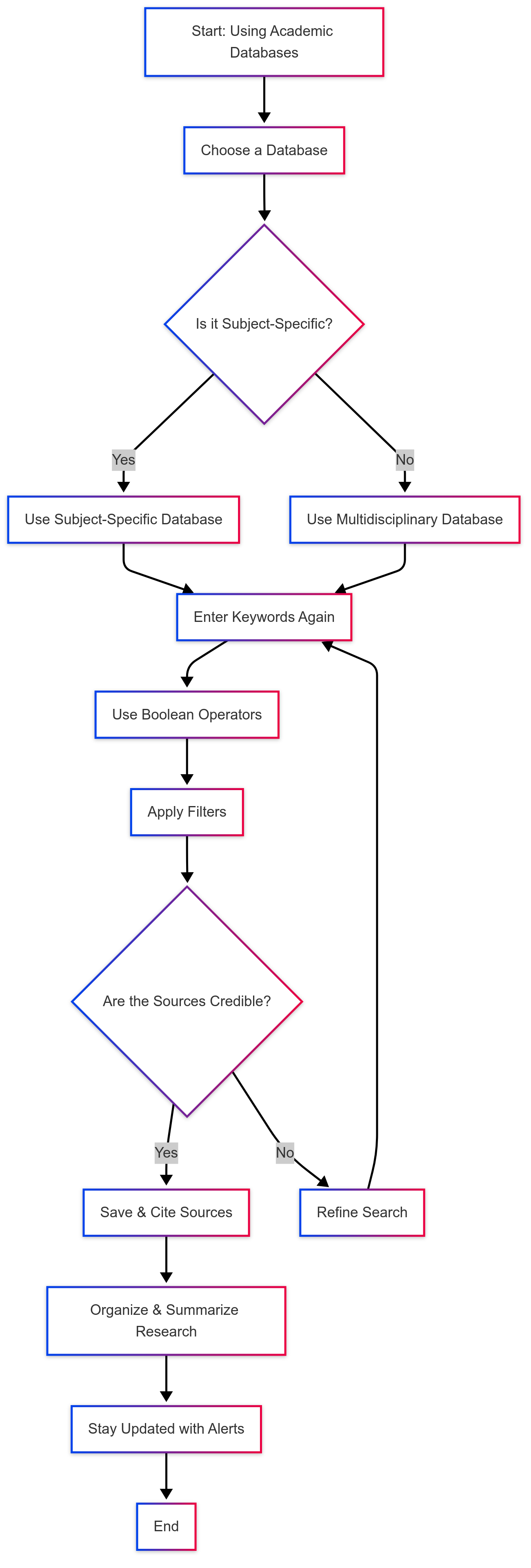
C. Keeping Up with Current Research
- Set Up Alerts:
Use the alert features in databases to receive notifications when new research matching your criteria is published. - Regular Updates:
Periodically revisit your search queries to ensure you are aware of the latest developments in your field.
Addressing these challenges head-on will ensure that your research remains comprehensive and up-to-date.
9. Advanced Tips for Mastering Academic Databases
For those who wish to take their database research skills to the next level, here are some advanced techniques:
A. Utilizing Citation Analysis
- Backward and Forward Citation Searching:
Examine the references of a key article (backward search) and identify subsequent articles that have cited it (forward search). This approach helps uncover seminal works and emerging trends. - Impact Metrics:
Use tools like Scopus or Web of Science to assess the impact of articles by examining citation counts and related metrics. High-impact articles are often influential in shaping the discourse in your field.
B. Customizing Searches
- Saved Searches:
Many databases allow you to save search queries and set recurring alerts. This feature ensures that you are automatically updated on new publications relevant to your research. - Search History and Refinement:
Take advantage of your search history to refine queries and identify patterns in successful searches. Adjust keywords and filters based on what has worked previously.
C. Combining Multiple Databases
- Cross-Database Searching:
Use more than one database to ensure comprehensive coverage. Each database may index slightly different journals or books, so combining results can provide a more complete picture. - Exporting and Merging Data:
Export search results to a reference manager and merge them. This helps in identifying duplicates and organizing your sources more efficiently.
By incorporating these advanced strategies, you can optimize your research process and ensure that your dissertation is supported by the best available evidence.
10. Final Thoughts: The Path to Scholarly Excellence
Mastering academic databases is more than a technical skill—it is a critical component of scholarly excellence. When used effectively, these databases empower you to build a robust foundation for your dissertation, ensuring that your arguments are grounded in high-quality, peer-reviewed research. The techniques and strategies outlined in this guide—from setting up effective search strategies and evaluating sources to organizing your findings and integrating them into your work—are essential tools that will serve you throughout your academic career.
Remember that academic research is an iterative process. As your dissertation evolves, continue to refine your search strategies, stay current with new literature, and leverage the support of your institution’s resources. With dedication and perseverance, you can navigate the complex landscape of academic databases with confidence, ensuring that your research is both comprehensive and compelling.
At DissertationAssist.com, we are committed to helping you achieve your academic goals by providing insights and strategies that empower you to excel in your research endeavors. By mastering academic databases, you are not only enhancing the quality of your dissertation but also laying the groundwork for a successful career in academia or your chosen field.
Good luck on your research journey—may your searches be fruitful, your findings robust, and your dissertation a testament to the power of diligent, well-organized academic inquiry.