 : 384
: 384
BUSN20016 RESEARCH IN BUSINESS, T1, 2019
ASSESSMENT 3
PROJECT TITLE: Impact of Operating Expenses on Income
Statements of Commonwealth Bank of Australia (CBA)
ASSESSMENT SHEET
|
Criteria |
Total marks |
Marks obtained |
Overall comments |
|
A detailed statement of the problem, research
aim, objectives and research questions |
10 |
|
|
|
A detailed justification and potential output
of the research |
10 |
|
|
|
The conceptual framework |
10 |
|
|
|
Methodology, organisation of the study,
project budget and schedule |
10 |
|
|
|
Accurate referencing, use of correct English
and logical sequences betweensentences and
paragraphs and a good introduction |
10 |
|
|
|
Total
= |
50 |
|
|
|
Mark reduction for Turnitin similarity (It's
up to the markers and unit coordinator's judgement) |
|
|
|
|
Mark reduction for late submission(5%
mark reduction for each day of late submission) |
|
|
|
|
Grand
Total= |
50 |
|
|
|
Key to grading and corresponding marking
scale: HD (42.5 and above out of 50 marks): Student demonstrates
outstanding understanding and interpretation of all aspects of the criteria. D (37.25 to 42.24 out of 50 marks): Student demonstrates
excellence in understanding and interpretation of almost all aspects of the
criteria with some minor corrections or additions needed. C (32.25 to 37.24 marks out of 50 marks): Student demonstrates very
good understanding and interpretation of most aspects of the criteria with
some need for additional work, additions or improvement. P (24.75 to 32.24 marks out of 50 marks): Student demonstrates good
understanding and interpretation of the criteria to warrant the award of a
Pass but requires considerable additional work, additions or improvement. F (below 24.7 marks out of 50 marks): Student demonstrates an
unsatisfactory understanding and interpretation of the criteria and requires
major additional work, additions or improvement to achieve a passing grade. |
|||
June 2019
Table of Contents
Justification for Research Project
Research Approach and Data Source
Data Collection Method and Technique
of Data Analysis
Budget and Scheduling and
Justification
Appendix 1:
Operating Expenses of CBA in 2016
Appendix 2:
Household Debt (% of GDP)
Appendix 3: Five
Year Financial Report of CBA (from 2015 to 2019)
Introduction
Financial performance of a business is liable to
portray the ability of the company to compete in the global market while
indicating potential growth opportunities. In this regard, focus on managing
operating expenses hold significant impact in supporting financial performance.
As opined by Tran (2015),
attempt of business entities to manage costs of operating activities can
present opportunity to regulate and control functional operations. It is also
crucial to manage business relations in terms of monitoring manufacturing and
production policies along with relationships with stakeholders. Moreover, focus
on controlling and allocating resources, including financial and human
resources are crucial to manage operating costs for supporting financial
improvement.
In the case of Australian banks, changing dynamics of
business policies and contemporary competitive market have facilitated chances
to focus on managing operations and related costs for further growth. For
instance, monetary policies are essential to attract the attention of the
customers for investing in Australian banks. This initiative due to
effectiveness of monetary policies can eventually lead to increased
profitability of respective banks (Borio, Gambacorta & Hofmann, 2017).
Besides, investments of bank in controlling taxable income and operating costs
including expenses for consulting services, employee remuneration, adoption of
technology and related legal fees can support a bank to improve profit margin.
In the opinion of Buckley, Weber & Dowell-Jones
(2015), the banking industry is devoted to deliver effective financial services
to a wide range of customers and hence insurance costs, directors fees, costs
of fixed assets and payroll are important factors to regulate operating
expenses. Regarding these aspects, emphasis on understanding the impact of
operating expenses of Commonwealth Bank of Australia (CBA) on
income statement of this bank can be effective to comment on financial
performance of Australian banks. It can also be influential in determining the
effectiveness of functional operations and related expenses for reflecting on
profit margin and ensure holistic growth of business.
Problem
Statement
Rapid changes in business dynamics
are accountable for restructuring financial performance of Australian banks in
terms of influencing profitability. According to Jin, Shan & Taylor (2015), increase in
operating expenses is liable to lower profit margin by allowing a business
entity to invest more in functional activities. However, influence of operating
expenses in controlling profit margin or income statement of a company can be
measured through evaluating net profit after tax (NPAT) of respective company.
In the context of Commonwealth Bank of Australia (CBA), increase in operating
expenses has been a significant issue for this company as it has affected
financial stability. As per statistical reports operating expense of the
company mentioned above increased up to 10,429 $m in 2016 from 9,993$m
in the previous year (Commbank.com.au, 2016). [Refer to Appendix 1]
In addition, potential risks related
to shift to macro-economy and risks related to household debt have affected the
financial performance of banking industry of Australia. As per statistical
information, household debt increased up to 127% of GDP that
influences income statement of Australian banks (Commbank.com.au, 2019).
Moreover, changes in operating costs in terms of supporting the introduction of
new technologies and managing increased number of customers are also effective
to regulate income statement of banks (Alam, Alam & Hoque, 2019). In this
context, the inability of CBA to manage records of 20 million customers and
losing data of past 15 years raised a question on effectiveness of functional
activities (Bbc.com, 2018). Hence, improvement in technology to protect
confidential information of consumers is a crucial factor that can influence
operating expenses. [Refer to Appendix 2]
Along with this, potential threats
of money laundering and terrorist financing have also instigated chances for
banking industries to improve legal approaches and strengthen security systems
for ensuring financial growth (Daley & Wood, 2016). Attempt of banks to
protect confidential data of consumers and track records of financial transactions
is liable to reduce instances of breach in law. However, negligence and
inadequate security systems of banks including CBA has forced financial loss
(James, Sawyer & Wallschutzky, 2015). For
instance, CBA has to pay $700 million for being accused of
breaching anti money laundering regulations (Doran & Janda, 2018).
Moreover, business expansion and the increased number of customers have
resulted in rise in operating expenses. The operating expenses of CBA increased
up to 11,269$m in 2019 (Commbank.com.au, 2019). [Refer to Appendix 3]
Apart from this, adequacy of a bank to manage its
operating costs projects the efficiency of the organisation to manage resources
and operate functional activities (Ogilvy & Vail, 2018). It is also
effective to comment on financial performance in terms of inspecting profit
margin. Besides, operating cost can determine financial performance through
managing net profit after tax that reflects in the income statement of a
company. In case of CBA, net profit after tax has decreased to 8,492$m
in 2019 from 8,915$m in 2018 (Commbank.com.au, 2019). Furthermore, the
inability of this bank to check 778,370 accounts properly and
reluctance to check 53,506 reports related to transactions of more than
$10,000 using the IDMs (intelligent deposit machines)
have presented challenges for this company to encounter financial loss (Doran
& Janda, 2018). [Refer to Appendix 3]
Hence, focus on evaluating the influence of operating
costs on income statement of CBA by calculating net profit after
tax (NPAT) can enable chances to measure financial growth of this bank. It is
also significant in understanding effectiveness of resource allocation and
utilise technological advancements for improving operational activities (Bodle,
Cybinski Patti & Reza, 2016). Moreover, focus on
assessment of operating expenses can also present chances to identify potential
areas of further growth while following legal instructions. Besides, it can be
advantageous to maintain the standards of accounting for regulating operational
activities and ensuring improvement in financial performance (Ahmed &
Ndayisaba, 2016).
Aim,
Objectives and Scope
The prime aim of this research would
be to explore the implication of operating expenses on the income statement in
regard to functional activities and financial performance of the CBA
(Commonwealth Bank of Australia).
The main objectives of this study
can be listed as below-
● To evaluate the influence of financial performance in
holistic business growth of CBA
● To identify factors that can be effective to control
operating expenses of CBA
● To identify how operating expenses of CBA influences
income statements
● To formulate effective suggestions for controlling
operating costs and supporting the financial growth of CBA
Attempt to examine the influence of
operating costs on the income statement of the bank mentioned above would be
effective to comment on effectiveness of resource allocation capability of the
bank. Moreover, it would support to evaluate financial performance of the bank
by assessing income statements and commenting on net profit after tax (NPAT),
gross
profit and annual revenue (Ongayi et al. 2018). This can also support to
understand potential aspects of financial growth of this company while
calculating profit ratio. Besides, it would deliver chances to identify major
factors that influence financial performance of the bank and evaluate
relationships with stakeholders to promote business growth. Along with these,
operating costs can also help to measure return on investment (ROI) and express
payment system (EPS) for evaluating technological and legal aspects to
influence profitability of the aforementioned Australian bank (Laing &
Dunbar, 2015).
Justification
for Research Project
This research would focus on
identifying implications of operating costs on income statement of CBA to
understand the effectiveness of the bank for controlling resources. It would
also help to locate functional efficacy and the financial performance of the
bank. Moreover, operating expenses being a parameter to measure initiatives of
the bank to regulate functional activities can help to assess business strategy
of the company (Tang, Chen & Lin, 2016). Besides, it can support to assess
financial market of Australia in terms of evaluating growth prospects of
financial service providers including CBA. Moreover, the research would be
beneficial to focus on utilisation of fixed assets and funds for reducing
operating expenses and generating maximum profit for ensuring business growth
(Yen, Sarath & Ahmed, 2016).
Apart from this, analysis of the
impact of operating expenses on the income statement would also help to comment
on accounting standards (Wines & Scarborough, 2015). It would generate
opportunity to comment on tax implications while tracking changes in profit
margin and calculating net profit after tax (NPAT) of the
CBA. In addition, emphasis on identifying factors that have affected operating
costs can extend chances to modify process of financial and human resource
allocation (Yapa, Kraal & Joshi, 2015). It can also allow Australian banks
to focus on improving corporate image in terms of maintaining international
financial standards. Furthermore, the research would contribute to develop an
understanding of cash flow stability and tax implications while measuring
social and legal aspects for supporting gradual improvement in financial
performance (Joubert, Garvie & Parle, 2017).
Potential
Outputs
The research intends to comment on
financial performance of Australian banks in terms of measuring influence of
operational expenses on income statement of CBA. Successful completion of this
research would be effective to understand efficacy of operations management
department of CBA to allocate resources. It would also support to identify
factors including remuneration of employees, insurance costs, maintenance of
fixed assets, and adoption of technology and tax implications to reflect on
financial performance (Xu, Davidson & Cheong, 2017). Moreover, the research
would contribute to explore the perspective of financial resource management by
assessing investment in operating expenses. This can ultimately support in
assessment of financial statements for calculating return on investments (ROI) and
gross
profit (Wong & Joshi, 2015).
In addition, it would help to
determine the influence of the factors to increase or decrease operating costs
that ultimately impacts on financial performance of an organisation. Besides,
implications of operating expenses to control financial performance or net
profit margin would also be explored in this research. It can explain the
relationship between operating expenses and profit margin by calculating net
profit after tax (NPAT) (Taplin et al. 2019).
It would also help to measure effectiveness of functional operations of
financial service providers including CBA. Along with this, the research can
contribute to understand required costs and changes in financial performance
due to compliance with accounting standards and legal guidelines while adopting
advanced technology to improve holistic performance (Zeller, Kostolansky & Bozoudis, 2019).
Conceptual
Framework

Figure
1: Conceptual Framework
(Source: Developed from Borio, Gambacorta &
Hofmann, 2017)
Research
Hypothesis
H0: Operational expenses
do not hold statistically significant impact on net profit after tax (NPAT) for
regulating income statement of Commonwealth Bank of Australia (CBA).
H1: Operational expenses
hold statistically significant impact on net profit after tax (NPAT) for
regulating income statement of Commonwealth Bank of Australia (CBA).
Methodology
Identifying a particular method of
research allows opportunity to conduct a systematic and scientific study for
meeting research aim and objectives (Bell, Bryman & Harley, 2018). This particular research
project would follow a secondary method of research to
collect relevant information on the influence of operating expenses on revenue
and NPAT (net profit after tax). Moreover, descriptive research approach would
be applied while adopting a quantitative research method to identify the
influence of operating expenses on the income statement of CBA.
Research
Approach and Data Source
This study would follow a secondary
method of research while applying positivism philosophy, descriptive design and
deductive approach. According to Kumar (2019), selection of positivism philosophy allows
opportunity to collect quantifiable and observable data to obtain reliable
research outcomes. In this particular case, incorporation of positivism
philosophy would be essential to interpret raw data into meaningful
information. Moreover, descriptive design can support to describe patterns in
obtained data sets and comment on variables that influence operating costs (Flick, 2015). Deductive
approach, on the other hand, would help to test the research hypothesis based
on existing theories. It would also be advantageous to develop a research
strategy for interpreting obtained secondary data and address research
hypothesis while establishing causal relationship between research variables (Walliman, 2017).
Apart from these, the research would
apply a secondary method of research to collect required information
from secondary sources including books, scholarly journals, websites, newspaper
articles and company reports (Bryman,
2016). In addition, quantitative method would be significant for this
study to gather raw data and interpret those for demonstrating influence of
operating expenses on the income statement of CBA. In this context, annual
reports of the bank and official website of CBA would be major sources of data
that would help to gather statistical data. Now, as CBA is dealing with issues
of decreasing net profit margin, attempt to apply this deductive research
approach would help to collect information on the financial performance of the
company. It would also support to evaluate implications of net profit, gross
profit, expenses for technological adoptions while understanding the influence
of return on investment (ROI).
Since data points required for this
research is operational expenses and net profit after tax (NPAT), prime data
sources would be annual reports and official website of Commonwealth Bank of
Australia (CBA). Hence, keywords such as operating expenses , net
profit after tax , income statements and
income tax expenses would be used to track data points. This would be
effective to comment on effectiveness of financial performance of CBA while
understanding influence of operating expenses on profit margin. Based on the
selected method, data points and snips of data sources can be presented as
below-
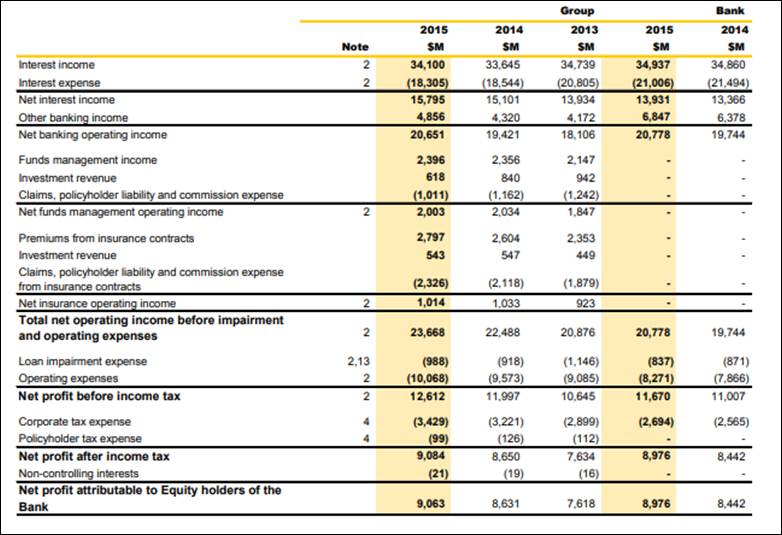
Figure
2: Income Statements 2015
(Source: Commbank.com.au, 2015)
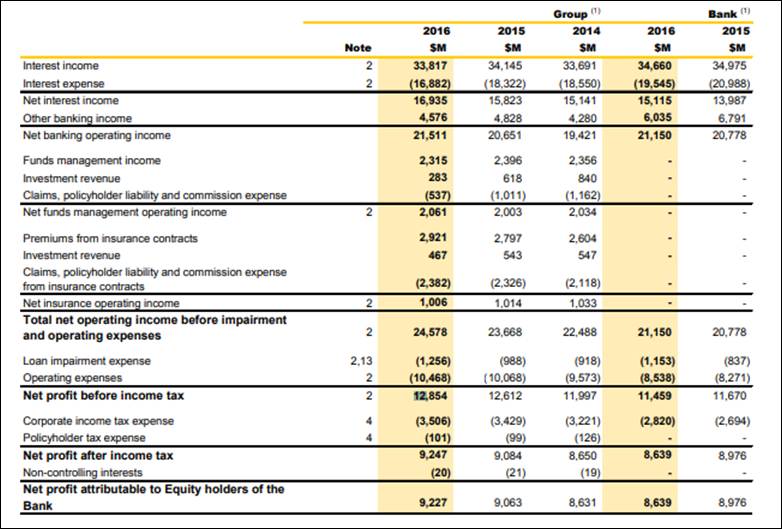
Figure
3: Income Statements 2016
(Source: Commbank.com.au, 2016)
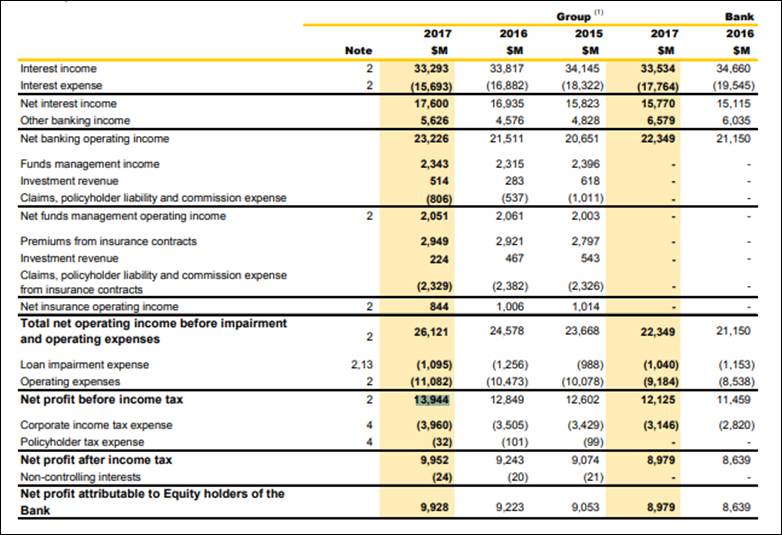
Figure
4: Income Statements 2017
(Source: Commbank.com.au, 2017)
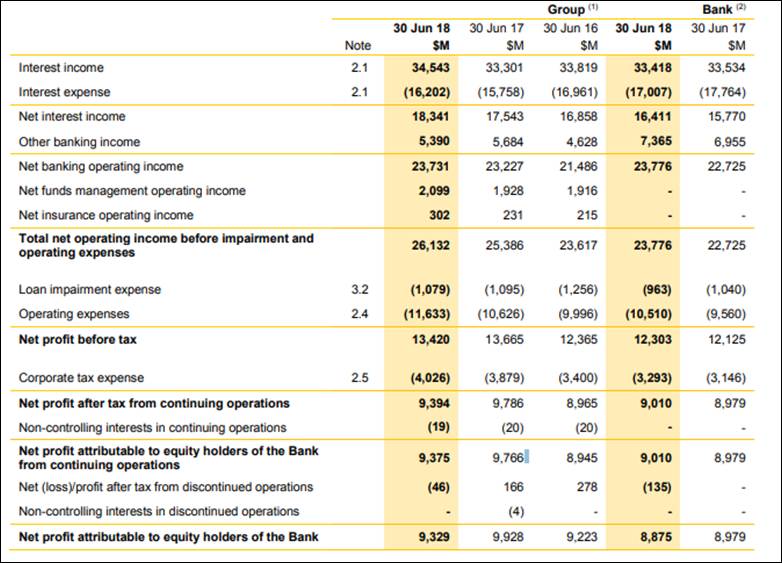
Figure
5: Income Statements 2018
(Source: Commbank.com.au, 2018)
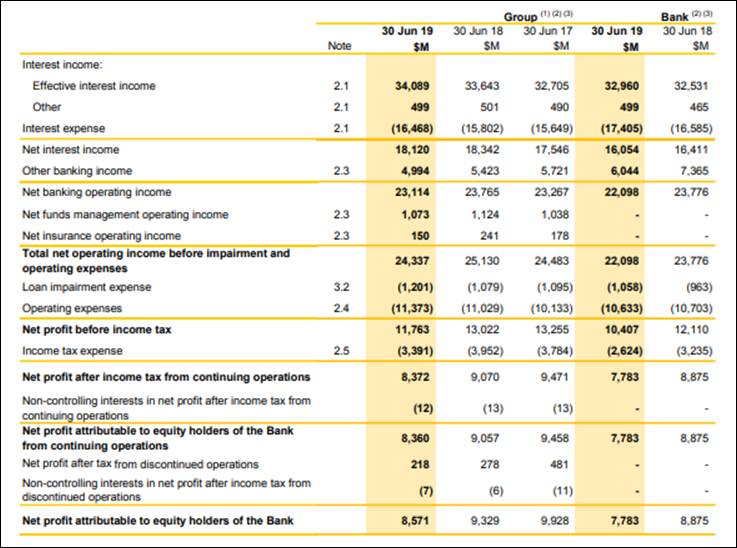
Figure
6: Income Statements 2019
(Source: Commbank.com.au, 2019)
Data
Collection Method and Technique of Data Analysis
Secondary method of data collection would be applied in this research to gather
statistical information on implication of operating costs on income statement
of CBA. In this regard, quantitative research method would
be selected to collect quantifiable information and conduct statistical
analysis for meeting research aim and objectives (Flick, 2015). Moreover, statistical information on
financial performance of CBA would be obtained from reliable sources including annual
reports of the company of the past five years ranging from 2015
to 2019. In this regard, official or commercial website of the company
would also be considered. Besides, suitable data points, in this context, would
be operating
expenses and NPAT (net profit after tax) of the
bank mentioned above. In addition, collected data would be evaluated using
analytical tools of Microsoft Excel and IBM SPSS. The former one would be used
to keep records of the data while the latter would help to interpret the raw
data and develop statistical tables and graphs.
Along with this, collected information would be
evaluated using relevant graphs and charts developed using the aforementioned
software tools. Furthermore, descriptive analysis, correlation
analysis, T-test and chi-square test would be performed
using IBM SPSS. These would help to explore the relationship between research
variables and test the hypothesis of this study to address research questions (Walliman, 2017). Focus on
evaluating secondary quantitative data collected from annual reports of past
five years of CBA would also be effective to comment on financial performance
of the bank. It would also support to identify efficacy of financial resource
allocation to identify potential areas of growth. Moreover, initiative to
statistically analyse collected data on operating expenses and net profit after
tax can present opportunity to comment on total income and expenses of the bank
mentioned above.
Research
Project Organisation
This research project would be
segmented into five different chapters that would contribute to the study for
identifying influence of operating costs on the income statement of CBA. The
chapters can be explained as following-
➢ Chapter 1: Introduction - This chapter will demonstrate the aim, objectives and
hypothesis of the study while providing a brief description of research
background and problem statement. It will also provide information on company
background and research deliverables to carry out further study.
➢ Chapter 2: Literature Review - It will review and analyse existing literature for
identifying factors that can influence operating expenses and eventually
influence profit margin. It will also discuss relevant theories and concepts
for generating ideas on financial performance of Australian banks.
➢ Chapter 3: Research Methodology - This chapter will discuss appropriate method to
conduct the study. It would deliver knowledge on the process of data collection
and analysis to meet research aim and objectives.
➢ Chapter 4: Findings, Analysis and Discussion - It will provide evaluation of obtained data and
discuss the findings of the study.
➢ Chapter 5: Conclusion and Recommendations - This chapter will conclude the entire research and
link objectives of the study with research findings while proposing
recommendations to address research questions. Moreover, areas of further
research and limitation of current research will also be highlighted in this
chapter.
Budget
and Scheduling and Justification
In order to conduct this study,
following estimation of budget can be considered, although this is subject to
vary depending on research requirements-
|
Area of Investment |
Estimated Budget |
|
Literature review |
$2500 |
|
Research resources
and data |
$2500 |
|
Data analysis |
$3000 |
|
Total Budget |
$8000 |
Table
1: Budget of the Research Project
Since this study has focused on
identifying implications of operating costs of CBA on income statements through
assessing net profit after tax (NPAT), access to secondary sources for
conducting literature review would require approx
$2500 to collect information from books and scholarly journals. In addition, an
amount of $2500 would be needed to collect statistical information regarding
financial performance of CBA. In this regard, information would be collected
from online web portals of the company as well as news articles and annual
reports that may cause changes in estimated budget. As analysis of obtained
information would require $3000 as it would require software to develop graphs,
charts and data illustrations.
Gantt
chart
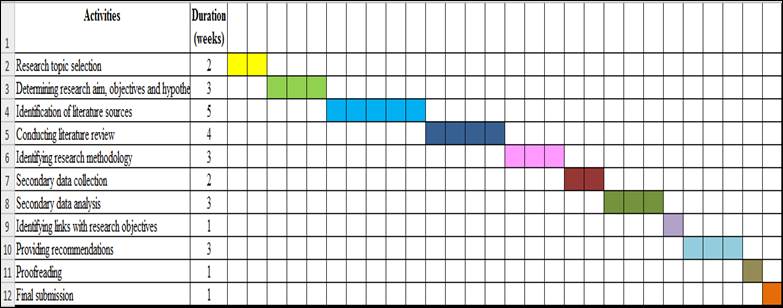
Figure
7: Research Schedule
References
Ahmed, A. D.,
& Ndayisaba, G. A. (2016). EFFECT OF CORPORATE GOVERNANCE ON CEO PAY - RISK
TAKING ASSOCIATION: EMPIRICAL EVIDENCE FROM AUSTRALIAN FINANCIAL INSTITUTIONS. The
Journal of Developing Areas, 50(4), 309-344. Retrieved from
https://search.proquest.com/docview/1844174959?accountid=188056
Alam, A. B. M.
M., Alam, M., & Hoque, A. (2019). SPENDING PRESSURE, REVENUE CAPACITY AND
FINANCIAL CONDITON IN MUNICIPAL ORGANIZATIONS: AN EMPIRICAL STUDY. The
Journal of Developing Areas, 53(1), 243-256. Retrieved from
https://search.proquest.com/docview/2094379135?accountid=188056
Bbc.com, (2018). Australia's Commonwealth Bank lost data of
20m accounts. Retrieved on 5th October 2019 from https://www.bbc.com/news/business-43985233
Bell,
E., Bryman, A., & Harley, B. (2018). Business research methods.
Oxford, UK: Oxford university press.
Bodle, K. A., Cybinski Patti, J., & Reza, M. (2016). Effect of IFRS
adoption on financial reporting quality. Accounting Research
Journal, 29(3), 292-312. doi:http://dx.doi.org/10.1108/ARJ-03-2014-0029
Borio,
C., Gambacorta, L., & Hofmann, B. (2017). The influence of monetary policy
on bank profitability. International Finance, 20(1),
48-63. Retrieved from DOI:10.1111/infi.12104
Bryman,
A. (2016). Social research methods. Oxford, United Kingdom: Oxford
university press.
Buckley, R.
P., Weber, R. H., & Dowell-Jones, M. (2015). A swiss
finish for australia? approaches to enhancing the
resilience of systemically important banks. Capital Markets Law
Journal, 10(1), 41-70. doi:http://dx.doi.org/10.1093/cmlj/kmu030
Commbank.com.au,
(2015). ANNUAL REPORT 2015. Retrieved
on 5th October 2019 from https://www.commbank.com.au/content/dam/commbank/about-us/shareholders/pdfs/annual-reports/cba-annual-report-30%20June-2015.pdf
Commbank.com.au,
(2016). ANNUAL REPORT 2016. Retrieved
on 5th October 2019 from
https://www.commbank.com.au/content/dam/commbank/about-us/shareholders/pdfs/annual-reports/2016_Annual_Report_to_Shareholders_15_August_2016.pdf
Commbank.com.au,
(2017). Annual Report 2017. Retrieved
on 5th October 2019 from https://www.commbank.com.au/content/dam/commbank/about-us/shareholders/pdfs/annual-reports/annual_report_2017_14_aug_2017.pdf
Commbank.com.au,
(2018). Annual Report 2018. Retrieved
on 5th October 2019 from
https://www.commbank.com.au/content/dam/commbank/about-us/shareholders/pdfs/results/fy18/cba-annual-report-2018.pdf
Commbank.com.au,
(2019). 2019 Annual Report. Retrieved
on 5th October 2019 from
https://www.commbank.com.au/content/dam/commbank/about-us/shareholders/pdfs/annual-reports/CBA-2019-Annual-Report.pdf
Commbank.com.au, (2019). Australia in 2019: Risks & Issues. Retrieved
on 5th October 2019 from https://www.commbank.com.au/content/dam/commbank-assets/business/industries/2019-03/risk-and-issues-2019.pdf
Daley, J.,
& Wood, D. (2016). Fiscal challenges for australia:
The next decade and beyond. Asia & the Pacific Policy
Studies, 3(3), 475-494. doi:http://dx.doi.org/10.1002/app5.146
Doran, M., &
Janda, M. (2018). Commonwealth Bank to
pay $700m fine for anti-money laundering, terror financing law breaches.
Retrieved on 5th October 2019 from https://www.abc.net.au/news/2018-06-04/commonwealth-bank-pay-$700-million-fine-money-laundering-breach/9831064
Flick,
U. (2015). Introducing research methodology: A beginner's guide to
doing a research project. Thousand Oaks, United States: Sage.
James, S.,
Sawyer, A., & Wallschutzky, I. (2015). Tax
simplification: A review of initiatives in australia,
new zealand and the united kingdom. EJournal of Tax Research, 13(1), 280-302.
Retrieved from https://search.proquest.com/docview/1784932060?accountid=188056
Jin,
K., Shan, Y., & Taylor, S. (2015). Matching between revenues and expenses
and the adoption of International Financial Reporting Standards. Pacific-Basin
Finance Journal, 35, 90-107. Retrieved from https://www.sciencedirect.com/science/article/pii/S0927538X14000870
Joubert, M.,
Garvie, L., & Parle, G. (2017). Implications of the new accounting standard
for leases AASB 16 (IFRS 16) with the inclusion of operating leases in the
balance sheet. The Journal of New Business Ideas & Trends, 15(2),
1-11. Retrieved from
https://search.proquest.com/docview/2002101028?accountid=188056
Kumar,
R. (2019). Research methodology: A step-by-step guide for beginners.
Thousand Oaks, United States: Sage Publications Limited.
Laing, G.,
& Dunbar, K. (2015). EVA(TM) EPS, ROA and ROE as measures of performance in
australian banks: A longitudinal study. Journal
of Applied Management Accounting Research, 13(1), 41-48. Retrieved
from https://search.proquest.com/docview/1694456692?accountid=188056
Newman, W., Mwandambira, N., Charity, M., & Ongayi,
W. (2018). LITERATURE REVIEW ON THE IMPACT OF TAX KNOWLEDGE ON TAX COMPLIANCE
AMONG SMALL MEDIUM ENTERPRISES IN A DEVELOPING COUNTRY. International
Journal of Entrepreneurship, 22(4), 1-15. Retrieved from
https://search.proquest.com/docview/2178087971?accountid=188056
Ogilvy, S.,
& Vail, M. (2018). Standards-compliant accounting valuations of ecosystems. Sustainability
Accounting, Management and Policy Journal, 9(2), 98-117. doi:http://dx.doi.org/10.1108/SAMPJ-07-2017-0073
Tang, Q.,
Chen, H., & Lin, Z. (2016). How to measure country-level financial
reporting quality? Journal of Financial Reporting and
Accounting, 14(2), 230-265. doi:http://dx.doi.org/10.1108/JFRA-09-2014-0073
Tran,
A. (2015). Can taxable income be estimated from financial reports of listed
companies in Australia. Austl. Tax F., 30, 569.
Retrieved from https://heinonline.org/hol-cgi-bin/get_pdf.cgi?handle=hein.journals/austraxrum30§ion=26
Walliman, N.
(2017). Research methods: The basics. Abingdon, United Kingdom:
Routledge.
Wines, G.,
& Scarborough, H. (2015). Australian government budget balance numbers. Accounting
Research Journal, 28(2), 120-142. doi:http://dx.doi.org/10.1108/ARJ-01-2014-0001
Wong, K.,
& Joshi, M. (2015). The impact of lease capitalisation on financial
statements and key ratios: Evidence from australia. Australasian
Accounting Business & Finance Journal, 9(3), 27-44. Retrieved from
https://search.proquest.com/docview/1770070695?accountid=188056
Xu, W.,
Davidson, R. A., & Cheong, C. S. (2017). Converting financial statements:
Operating to capitalised leases. Pacific Accounting Review, 29(1),
34-54. doi:http://dx.doi.org/10.1108/PAR-01-2016-0003
Yapa, P. W.
S., Kraal, D., & Joshi, M. (2015). The adoption of 'international
accounting standard (IAS) 12 income taxes': Convergence or divergence with
local accounting standards in selected ASEAN countries? Australasian
Accounting Business & Finance Journal, 9(1), 3-24. Retrieved from
https://search.proquest.com/docview/1678722109?accountid=188056
Yen, H. B.,
Sarath, D., & Ahmed, A. D. (2016). Efficiency of australian
superannuation funds: A comparative assessment. Journal of Economic
Studies, 43(6), 1022-1038. doi:http://dx.doi.org/10.1108/JES-05-2015-0088
Yeut,
H. T., Sultana, N., Singh, H., & Taplin, R. (2019). Busy boards and
earnings management an australian perspective. Asian
Review of Accounting, 27(3), 464-486. doi:http://dx.doi.org/10.1108/ARA-08-2018-0149
Zeller, T.,
Kostolansky, J., & Bozoudis, M. (2019). An
IFRS-based taxonomy of financial ratios. Accounting Research
Journal, 32(1), 20-35. doi:http://dx.doi.org/10.1108/ARJ-10-2017-0167
Appendices
Appendix 1: Operating Expenses of CBA in 2016
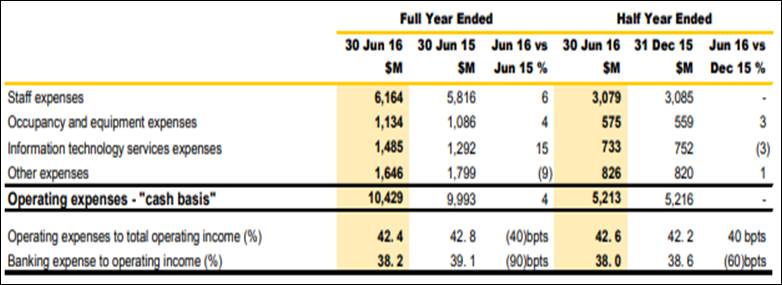
(Source:
https://www.commbank.com.au/content/dam/commbank/about-us/shareholders/pdfs/annual-reports/2016_Annual_Report_to_Shareholders_15_August_2016.pdf)
Appendix 2: Household Debt (% of GDP)
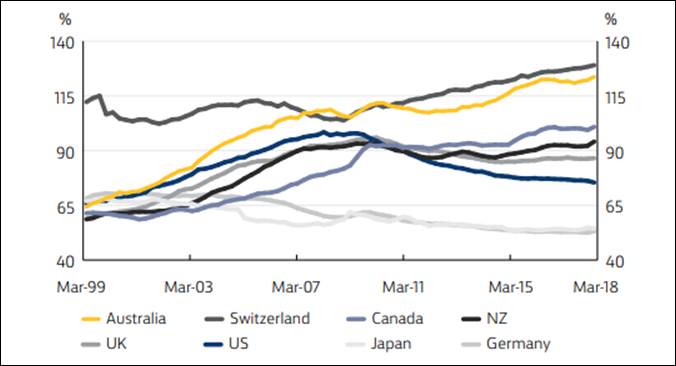
(Source:
https://www.commbank.com.au/content/dam/commbank-assets/business/industries/2019-03/risk-and-issues-2019.pdf)
Appendix 3: Five Year Financial Report of CBA (from 2015 to 2019)
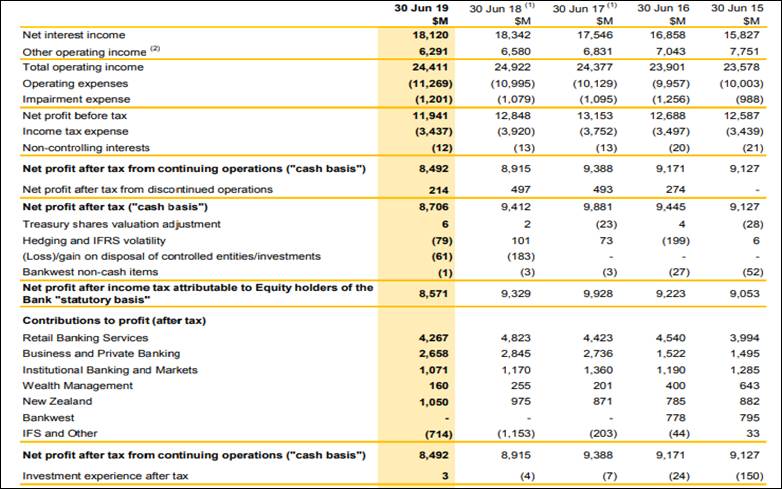
(Source:
https://www.commbank.com.au/content/dam/commbank-assets/about-us/2019-09/cba-annual-report-2019-spreads.pdf)