 : 527
: 527
EFFECTIVENESS OF SUPPLY CHAIN
MANAGEMENT IN THE POST-COVID SITUATION FOR THE PHARMACEUTICAL INDUSTRY IN THE
UK
Abstract
The research is based on the topic
of supply chain management in the pharmaceutical sector in the era of post
covid. The rationale of this research is based on the various challenges
encountered by the operations of supply chain in the pharmaceutical industry.
One of the problems identified in this research is related to labour shortage,
economic challenges and disruptions in the supply chain. The aim of the study
is to investigate the role of effectively managing the supply chain in the UK
pharmaceutical industry. A PICO framework is employed for setting the research
objectives. The section of literature review provides broad descriptions on the
topic. In
this section, the effectiveness of managing the supply chain is discussed. This
is based on the demand and the logistics aspect of the supply chain. The factor
of network visibility, capacity planning, inventory management and goods
distribution is discussed. The challenges such as lacking transparency and
pharmaceutical fraud are discussed. The resource-based and the agency theory
are also discussed.
Table
of Contents
1.6
PICO (Population, Intervention, Comparison, Outcome) framework
2.4 Importance of Supply Chain Management in the
Pharmaceutical Industry in the UK
2.5 Post Covid-19 required supply chain management
improvements in the UK
3.3 Application of inclusion and Exclusion criteria
3.6 Selection and Screening of articles
3.7 Study quality assessment and checklists
3.10
Data characterisation table
4.1
Characteristics of study table
4.2
Findings from the articles
4.3.
Table on the statistical findings
5.2
Strengths and weaknesses of the study
Figure
1: The ongoing influence of the Covid-19 pandemic on the pharmaceutical supply
chains
Figure 2: Sides of the effectiveness of Supply Chain
Management
Figure 3: Pharmaceutical logistics distribution
Figure 4: Changes in Industry Supply Chain
Figure 5: Challenges faced by UK pharmaceutical
industries
Figure 6: Mitigation Strategies to overcome challenges
faced by the UK pharmaceutical industry
Figure 10: Conceptual Framework
Figure
11: Graph on Meta-analysis of the searched articles
Figure
12: Recommendations for Post-Covid SCM
Table 2: Inclusion and exclusion criteria
Table 3: Keywords searched from the databases
Table 4: Search strategy and result obtained
Table 5: Search characteristics
Table 8:
Reliability and validity
Table9:
Characteristics of study table
Table10:
Findings from articles
Table
11: Findings from articles
Chapter 1: Introduction
1.1
Background
The supply chains in the Pharmaceutical
industries are mainly associated with the delivery of concerned drugs and
medicines to the patients at their places. Ciravegna
and Michailova (2022) mentioned that these supply
chains are immensely complex, and hence the challenges faced are unavoidable.
The complexity in this context refers to the numerous steps involved in one
process. Each step is significantly necessary to ensure the accessibility of
medicines to the patients. The supply chains involve a huge number of
stakeholders, starting from the manufacturers and wholesale distributors up to
the managers of the pharmacies (Alsuwailem et al., 2021).
The pharmaceutical industries involve the human lives; hence even a minor challenge has to be given huge importance. A supply chain, that is not appropriately effective, can delay the healing process of a particular patient and eventually have a negative impact on public health (Dai and Tang, 2022). The main challenges that might be faced by the supply chains of the pharmaceutical industries are visibility in the supply chains, counterfeiting of drugs, illegal rise in the prices of prescribed drugs etc. As said by Kano, Narula and Surdu (2022), this adds additional costs to the patient, which is both inconvenient and unethical. The challenges can be experienced as an uprising with the introduction of the pandemic because Covid-19 has evidently affected the global supply chains of all industries. The prices of pharmaceutical products recovered from a sheer amount of 0.5 billion Euros to directly 16.8 billion euros in the month of February 2021 as a result of the pandemic (Ons. 2021). The whole supply chain in the pharmaceutical industry was affected due to the pandemic starting from the manufacturers to the suppliers (Gereffi, 2020). The consumers being the most important stakeholder in this context were majorly affected too. There were shortages faced in the supplies of the multinational companies because of the huge spread of the virus, and similarly, demand shocks were faced. The impacts of the pandemic were so huge that it took a lot of time and strategies for the pharmaceutical companies to recover from them.
1.2
Rationale
The challenges faced by the pharmaceutical companies during
the pandemic mainly involved the demand and supply of essential products. There
were concerns regarding the postponement of the deliveries of drugs, and that
was the most unanticipated in the pandemic when many people were at the edges
of death. Narula et al. (2021) said,
there were delays in securing merchandise, travelling disruptions, and a labor
shortage. The labor shortage was the biggest problem because labors are the
working force in the organization without whom the whole system can fall. The labors
were either directly affected by Covid-19, or the loss of nearby ones made them
absent from work. Some organizations also had to cut off employees due to
budget issues, and this shortage of employees led to a gradual decrease in the
efficiency of the organizations (Balakrishnan and Ramanathan, 2021). All of
these events led to a disruption in the companies' supply chains, and the point
that the global supply chains are not prepared to combat challenges gained
attention.
The issue of mismanagement in the supply chains during covid-19
not only hampered individual lives but also made the UK suffer a great economic
disruption. The graph below shows the decrease in the GDP growth and the trade
growth in the industries of the UK during the pandemic.

Figure 1: The ongoing influence of the Covid-19 pandemic on the pharmaceutical supply chains
(Source:Weforum.org.
2020)
The extent to which the supply chains were affected due to
the pandemic had mandated some strategies for risk mitigation. The designs of
their supply chains and their dependencies require reconstruction to tackle the
losses in efficiency (Balakrishnan and Ramanathan, 2021). Certain steps are
important for combating future disasters, which might result in more losses for
the organizations.
Some challenges have made the managers of the huge supply chains rethink the pre-formulated strategies for avoiding the faced disruptions in future. The effect of the pandemic was not only on the supply chains but also on the relationship between the firms (Dai and Tang, 2022). Some forms had decided on shifting strategies from global to local and as a result of that, they had experienced a huge loss in manpower and money. The brand names and reputation were also hugely affected due to the loss of customers and eventually, the positions in the competitive market were hampered (Donthu and Gustafsson, 2020). Meeting unexpected disruptions would require an immensely efficient supply chain, representing a company that can combat such unanticipated situations.
1.3
Problem statement
The primary loss being experienced by the supply chains is
associated with the loss of the labor force. The issues underlying this context
mainly arose due to restrictions imposed by the Government of the UK that minimized
the travel and the presence of the employees within the companies to avoid
contact. As opined by Alam et al. (2021)
mentioned, the decline in international trade has also been another impact of
Covid-19 as a result of loss in the supply chains. There were uncertainties
regarding the production or manufacture of drugs because of the pandemic as
their demands were under question. On the contrary, the demand for certain
essential drugs increased to such an extent that even the biggest companies
failed to meet that demand. Additionally, the amount of production was
immediately out of stock while meeting the demands and maintaining the ongoing
demands. There was a need for more production at a very fast pace. However,
this was not possible due to the shortage of labor in both production and delivery
and mismanagement in the supply chains (Emanuelsson, Charles and Shivaprasad,
2021). As a result, the synchronization between the demand and supply was
enormously hampered.
The high demand for critical medications disrupted their production, including vaccines, drugs, and other medical accessories involved in the treatment of Covid-19. Delay in the regulatory oversight of the medicine production was another challenge faced by the supply chains. The travel restrictions imposed by the government for the prevention of the spreading of Ciovid-19 prevented the officials of the MRHA ( Medicines and Healthcare products Regulatory Agency ) to respond to the scenes and conducting investigations (Putter, 2021). These led to the export of many illegal drugs, which posed a serious challenge for both reputable organizations and governments. As said by Dai and Tang (2022), these resulted in the interaction within the global trade of pharmaceutical products because the countries chose to treat their own people rather than distribute the drugs to other countries. There were inadequacies observed in the supply chains due to improper planning and mismanagement, resulting from the pandemic resulting in a labor shortage.
1.4
Aim and Objectives
Aim
This study's main aim is to investigate supply chain
management in pharmaceutical industries in the UK during the post-Covid
situation.
Objectives:
●
To
understand present supply chain management in Pharmaceutical
industries from the UK during the ongoing post-Covid-19 situation
●
To
demonstrate pre and post covid-19 SCM differences associated with
pharmaceutical industries in the UK
●
To
identify several factors affecting the SCM practice related to the
pharmaceutical industries in the UK during the post-covid-19 phase
●
To
propose effective mitigation strategies to promote the best operational
workforce by improving SCM practice in the area of pharmaceutical industries in
the UK
1.5
Research Question
RQ1:
What changes have been associated
with supply chain management in the circumstance of the post-Covid-19 situation
in the area of the UK-based pharmaceutical industry?
1.6
PICO (Population,
Intervention, Comparison, Outcome) framework
|
Population |
● The participants have been
associated with SCM in the pharmaceutical industries of the UK. |
|
Intervention |
● The impact of Covid-19 on SCM of
pharmaceutical industries has been identified as the most crucial influencer
in reducing the chain's continuity through observing the supply chain's
estimated managerial function. |
|
Comparison |
● SCM performance during this
ongoing post-Covid-19 emergence among pharmaceutical industries has been
compared with the management structure of the pre-Covid-19 situation. |
|
Outcomes |
● The key outcome is the future SCM
strategies development and continuity with organizational development of
pharmaceutical industries from the UK. |
Table 1: PICO framework
Supply chain managers and staff
associated with the logistics department of pharmaceutical industries situated
in the UK have been identified as the study population. The interventions have
been described before covid-19, and after covid-19, SCM of different industries
have faced major destruction, and the pressure on the health care sectors has
been very high. The observation has demonstrated that SCM has destroyed lower
employee numbers mainly.
Chapter 2: Literature Review
2.1 Introduction
The competitive market in the pharmaceutical industry mandates effective management of the supply chain and also provides a competitive advantage. In addition, gaining competitive advantages helps an organisation in improving its organisational performance and rapidly increases the rate of profitability and productivity. The working performance of an organization is represent able by the management of its supply chain and the pandemic has mandated the industries to enhance the effectiveness of this management (Gereffi, 2020). The introduction chapter has focused on the effectiveness of the management of the supply chains of the pharmaceutical industries in the UK. The chapter on the literature review is essential in the entire dissertation and covers previous studies on provided research topics. Along with that, different types of theories have been included for developing properly.
2.2 Effectiveness of Supply Chain Management during
the stage of Post Covid situation among the UK pharmaceutical industry
The
resilience of the supply chain depends upon the capability set. It enables
every pharmaceutical industry to maintain and enhance all the operational and
competitive positions in the competitive market in the UK. In addition, the
Coronavirus brought itself to a fast-changing environment, and the
pharmaceutical industry may be required to respond, rebuild, and mitigate the
disruptions. As per the statement of Tasnim (2020), every mitigation strategy is completed with synerging, rebuilding and integrating all of its resources,
capabilities, and competencies in the UK's Pharmaceutical industry. A
supply chain consists of three sides namely the supply, demands and logistics
sides and all of these have been severely affected by the pandemic (Raj et
al. 2022). Most of the pharmaceutical supply chains have faced severe
disruptions as a result of Covid-19. The reputed brands including Healthcare
ltd. , Pfizer and Abbott Laboratories Ltd. have
experienced disruptions despite their effectively managed supply chains (Bown
and Bollyky, 2022). All those
emerging sides of the supply chain of the pharmaceutical industry in the UK are
mentioned below:
Supply-side
Every
pharmaceutical industry must supply all its products at the proper time and
place. But, during the Covid 19 situation, suppliers could
not deliver all the raw materials required for manufacturing pharmaceutical
drugs of the Covid pandemic. For this reason, Pharmaceutical Industries faced
supply shock because they could not manufactured and
supply essential drugs in the required time. As a result, patients recovered
very slowly. According to the statement of Kalaitzi et al.(2021),
after the pandemic era, all the pharmaceutical industry's supply chain managers
focus on the manufacturing drugs and deliverance of all the medicines at the
proper location and time. For this reason, it is increasing the profit rate and
reducing the operational costs in the pharmaceutical industry.
Demand-side
The
demand side in the pharmaceutical industry involves healthcare professionals,
the patient directly, insurers etc. The pandemic has affected the demand side
mostly because of the rising demand for drugs and masks (Bown and Bollyky, 2022). According to Handfield, Graham and Burns (2020),
increasing the requirements of essential pharmaceutical products improve the
supply chain management system in the Pharmaceutical Industry. Moreover, during
the post-Covid
19 situation, there was a high demand for facemasks, and because of
manufacturing a small number of products, all the pharmaceutical industries are
facing demand-side issues after covid effects.
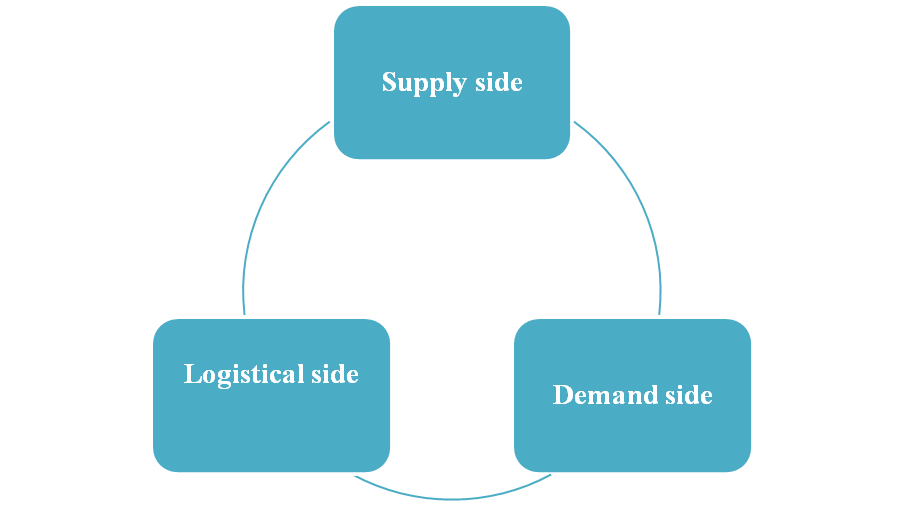
Figure 2: Sides of the effectiveness
of Supply Chain Management
(Source: Sarkis, 2020)
Logistical
side
An increase
in essential product demands is witnessed, whereas concerns are raised during
the postponed deliverance of pharmaceutical products. There are several reasons
present through which pharmaceutical industries are facing some logistical
issues during the post-Covid situation in the UK. All those issues are unanticipated
travel disruption, postponed deliveries and labour shortages. Before
the Covid
19 pandemic, every supply chain manager focused on improving inventory,
which helped decrease costs and increase the working efficiency in the
pharmaceutical industry in the United Kingdom (Joshi and Sharma, 2022).
2.3 Supply Chain Management takes actions to reshape
UK's pharmaceutical industry in post covid situation
The
Covid-19 pandemic has been a serious impediment to the manufacture of
pharmaceutical drugs as well as their shipment because most of the set targets
were difficult to meet in the midst of the rising demands. Moreover,
the brand manufacturer is producing products with effective product
manufacturer procedures. According to Masudin and Safitri
(2020), genetics and raw materials, which are required for manufacturing
pharmaceutical drugs, are procured from vendors. Finally, those are transferred
to the production areas for end processing. Different kinds of actions can be
taken in terms of reshaping the entire pharmaceutical industrial structure, and
those are highlighted below:
Managed
demand surges through network visibility.
Managing the
supply of pharmaceutical drugs by providing proper recommendations is very important
and effective. Moreover, by providing alternative suppliers' details is helping
the pharmaceutical industry in terms of tracking details. In addition,
providing alternate supply resources may help increase the productivity rate of
the pharmaceutical industry in the United Kingdom. As per the statement of Friday et al.(2021), using other types of
materials bills may help keep proper financial records, which will help the
pharmaceutical industry increase the profitability rate and get more variants
about the pharmaceutical drug products. In terms of managing the surges through
a network, visibility may help improve the entire pharmaceutical industry
system by improving supply chain management in the UK.
Capacity
planning
This kind of
action highlights the delays in mitigating the high demand. In addition to
that, this action is providing every pharmaceutical industry in terms of
manufacturing medical drugs efficiently, and it is improving the entire
supply-chain-management system in the pharmaceutical industry. As per the
statement of Farooq et al. (2021), recognising an alternate manufacturing plant, procedure,
delivery locations and raw materials suppliers are additional capacity. It
is also essential to come up with alternative planning procedures to reduce the
operational costs and those associated with the suppliers (Donthu
and Gustafsson, 2020). Moreover, the costs involved in implementing new
equipment and resources might also be planned effectively with these
alternative plans. For this reason, the pharmaceutical industry can
easily get proper raw materials in adequate amounts and manufacture proper
drugs with adequate dosages. Henceforth, it can be said that capacity planning
for the pharmaceutical industry is effective in maintaining high demand.
Inventory
Management
Maintaining
an efficient supply chain management helps the entire pharmaceutical industry
manufacture high-quality pharmaceutical drugs and deliver them at the proper
time. Moreover, the Good Distribution Practice is also helping to improve the
manufacturing procedure and provide them to the patients to overcome their
health issues rapidly. It is also essential to come up with
alternative planning procedures to reduce the operational costs and those
associated with the suppliers (Donthu and Gustafsson,
2020). Moreover, the costs involved in implementing new equipment and resources
might also be planned effectively with these alternative plans. Proper network
visibility is enhanced after along with management of the demand surges and
this is important in times of high demand (Raj et al. 2022).
2.4 Importance of Supply Chain Management in the
Pharmaceutical Industry in the UK
An effective
Supply
Chain Management may create some efficient drugs for end users. In
addition to that, it may transform the pharmaceutical industry in making better
usage of all resources as well as assets. According to the statement of Kumar et al. (2019), it helps generate the profit chain, enhance
shareholders' value, and mitigate customers' requirements effectively and
positively. On the other hand, as stated by Roscoe et al.(2020),
in between 2018 to 2023, the value of the pharmaceutical industry is forecasted
to increase by around 19.3 percent to 25 billion euros. In
addition to that, it is equal to the annual growth of nearly 3.6
percent in the era of Post Covid. Moreover, effective Supply
Chain Management ensures the improvement of an organisation's working
performance and working culture in several sectors in the Global World. Supply
chain management involves the integrated management networks present in
the pharmaceutical industry in the United Kingdom, and it consists of
purchasing level, product facilities, suppliers and logistics solutions.
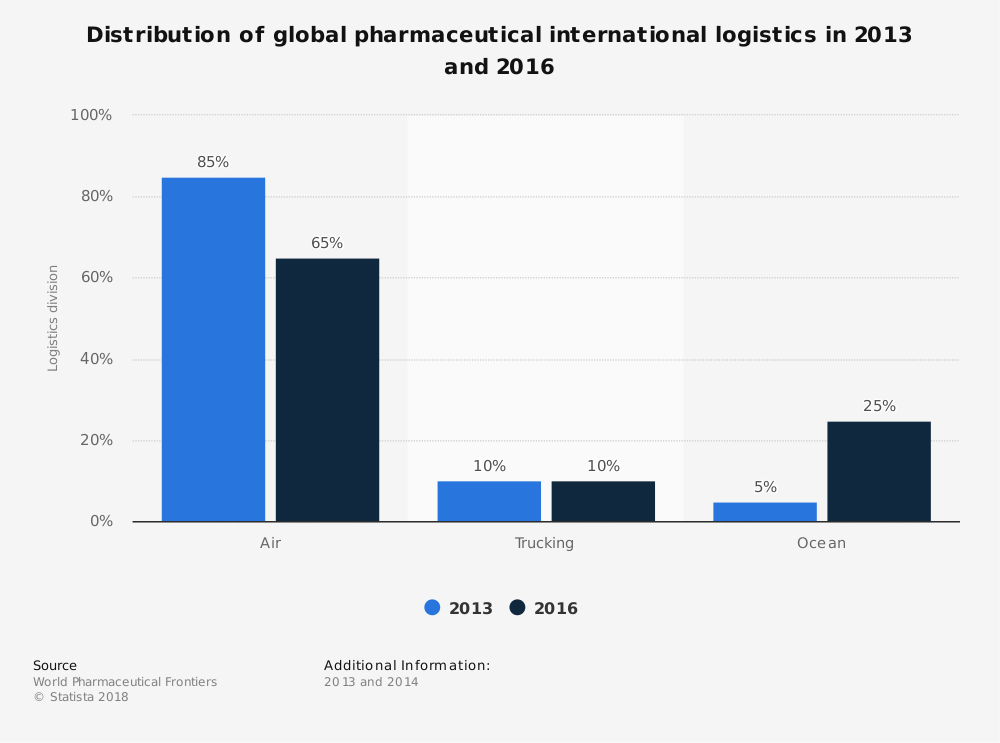
Figure 3: Pharmaceutical logistics
distribution
(Source: Statista.com, 2022)
The
importance of effective supply chain management lies in the fact that it can
reduce expenses and enhance the sales of the company. As mentioned by (Alzoubi et al. 2020), it also helps
pharmaceutical companies realign their supply chains to distinct concept sets.
This can be done by providing solutions for proper functioning solutions for
the needs of the enterprise. The needs associated with planning and forecasting
products as well as their procurement. Proper management
(Bradscholars.brad.ac.uk. 2021) enhances the efficiency of the whole execution
of the supply chain. The nodes involved in a supply chain have certain
functions that contribute to the product quality and hence its value in the
market.
The primary
factor that serves as the evidence of reduction of operational costs with the
introduction of SCM practices is the involved dynamics and simulation. The use
of SCM is not limited to the production of drugs. Rather its efficiency extends
to the distribution chain as well, including warehouse storage (Sabouhi, Pishvaee and Jabalameli,
2018). Several agents with various objectives are brought together with the use
of SCM, and the clustering of these objectives can work against the performance
of the organisation. As said by (Ul-Hameed et al. 2019), a miscommunication
between the employees can harm the product result, and that would bring out the
necessity of collaboration. All the agents allocated in the inventory,
forecasting and planning are required to coordinate their activities, which are
focused on with the help of an efficient SCM.
2.5 Post Covid-19 required supply chain management
improvements in the UK
Supply Chain may be achieved as an emergent practice field and emerging academic domain. Moreover, the future progression of each domain can be enhanced as well as indeed, and it is dependent on each other. For this reason, this research study is taking stock of development theory and practice in recognising all the barriers and possibilities. According to Donthu and Gustafsson, (2020), having effective supply chain management provides an organisation with a competitive advantage and this is extremely crucial to sustain in the midst of competitiveness. In addition, gaining all the competitive advantages helps an organisation improve the organisational working performance and rapidly increase the rate of profitability and productivity. Henceforth, it can be said that maintaining proper supply chain management in any industry may help improve customer relations and gather customer loyalty. For this reason, any kind of pharmaceutical industry can easily increase its productivity rate in the future.
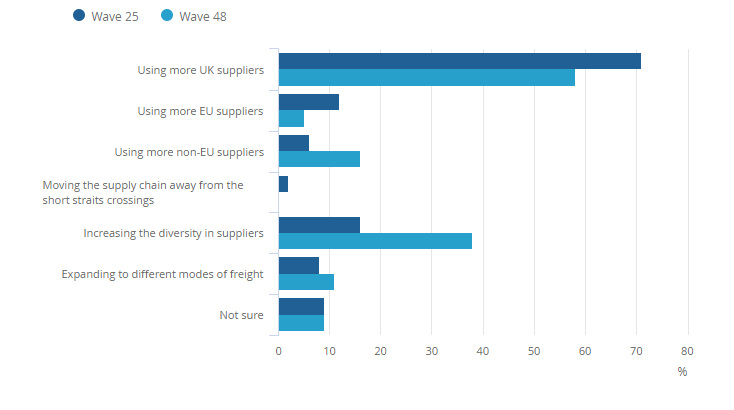
Figure 4: Changes in Industry Supply Chain
(Source: Lee and Lee, 2021)
The UK's pharmaceutical industries
have undergone noticeable changes in their structural organisations over time.
One of the major changes in this context was the implementation of supply chain
organisations. There has been evidence that an effective supply chain has
resulted in a significant reduction in the amount of perceived waste. The
associated costs have been reduced in most companies, and the service quality
has been enhanced (Bradscholars.brad.ac.uk. 2021). This is because
pharmaceutical waste is reduced by introducing tools and practices for
effective SCM. Inventory control has been efficient, and that is the case for
pharmaceutical companies all over the world and not just in the UK.
However, there is one negative
aspect in this case, and that is the lack of experience in the employees. As an
SCM involves a lot of steps and detailed programming, equipt
professional employees might be preferable in this case. Most of the current
employees in the reputed pharmaceutical companies in the UK are older men who
have been relying on traditional methods since the start of their work. It
becomes difficult for these people to adopt these new forms of technology in
less amount of time. As mentioned by (Sabouhi, Pishvaee and Jabalameli, 2018), initial interventions like
Just-In-Time
(JIM) approaches and Vendor managed Inventory (VMI) has
been introduced in the UK pharmaceutical organisations as a means of increasing
the efficiency of the SCM. These have helped explore the quality of expired
products like drugs and other surgical instruments. Simulation modelling and
outsourcing of medical supplies that are not that critical have been essential
steps in this context.
2.6 Challenges are faced by the UK pharmaceutical
industry while implementing Supply Chain Management
Pharmaceutical
distributors and wholesalers form a crucial link between drug manufacturers and
hospitals. In addition, while implementing supply chain management, the
pharmaceutical industry faces several challenges. Those are mentioned below:
Lack of transparency
The major
issue is faced by every pharmaceutical industry while implementing supply
chain management in the post-Covid situation in the United
Kingdom. In addition to that, the pharmaceutical industry cannot trace its
issues related to resources. According to Clauson et al.(2018),
the pharmaceutical industry is arriving in an unsuitable condition for
individual consumption or any kind of drug imitation, or prices are rising
without any strong reason.
Pharmaceutical
fraud
Pharmaceutical
fraud is the remaining major issue for any kind of organisation or business.
Moreover, it is possible during the post-covid situation in the United
Kingdom. In addition, all the industry observers have predicted that misconduct
during the pandemic may lead to higher than average healthcare
fraud recoveries every year. According to Ten et
al.(2018),
pharmaceutical fraud involves different activities, resulting in various kinds
of false claims for the insurers. All of them are associated with Medicare
in the United States programs for financial gain for pharmaceutical
industries.
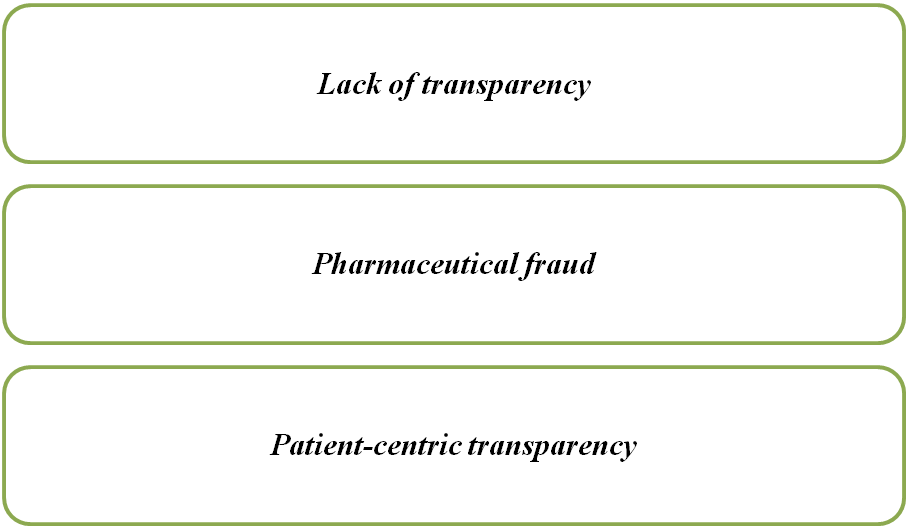
Figure 5: Challenges faced by UK
pharmaceutical industries
(Source: Cole, Stevenson and Aitken, 2019)
Patient-centric
transparency
With the
help of the Meta Pharma digital supply network, pharmaceutical producers,
different types of health systems and other types of stakeholders present in
the pharmaceutical industry's supply chain is getting end-to-end
supply chain visibility and various kinds of collaborative tools. As per Wang and Jie (2020), all
the health care providers increasingly shift far away from the
size fits approach for personalised medicines.
Blockchain
technology is one of the pharmaceutical industry's real challenges in supply
chain management. Clauson et al. (2018) state that modification of
the supply chain system in a pharmaceutical company with technology, multiple
actors influence, such as the monitoring system and availability of the
technology. However, self-proliferation of supply chain systems has occurred
with technology application in pharmaceutical supply-chain-management systems.
Implementation of blockchain technology can help in saving the cost of
operations as well as accuracy can be maintained in the supply chain.
Blockchain technology's critical challenge is maintaining integrity in the
supply chain. Other challenges found are EU parallel trade and poor
pharmaceutical governance in the supply chain (Clauson et al., 2018). Identification of the supply chain can influence
finding ways to improve the supply chain system in the drug delivery system
that can, in turn, influence the sustainable goal-oriented to health
improvement. Supply chain management problems in the UK include emergency
mitigation and disaster management involving the safe supply of healthcare
products to health workers in different public health emergencies.
Other
emerging challenges entail the pharmaceutical industry. As per the views of Sarkis et al. (2021), the product portfolio is an emerging challenge in UK
pharmaceutical companies. Another major challenge is the long pharmaceutical
product approval time. Therefore, maintaining a stalk is a problem. Long
approval time also can decrease product quality. In the process designing of
operation maintenance also, a different range of issues are faced by
pharmaceutical companies (Sarkis et al., 2021). For
instance, one common problem recognised in the pharmaceutical operational chain
is the modes of an optimal operational unit.
2.7 Mitigation Strategies to overcome challenges faced
by the UK pharmaceutical industry in the post-COVID-19 era
In terms of mitigating all the
challenges mentioned above, every pharmaceutical industry requires several
kinds of mitigation strategies. By which they can easily resolve their issues
and overcome them. All those mitigation strategies are mentioned below:
Encourage
sharing, not surveillance.
In terms of
building trust or creating a strong bond, every team member in the
pharmaceutical industry requires transparency. Every individual in healthcare
feels free to discuss with the team leaders without any kind of hesitation and
can access various kinds of information. As per the statement of Moktadir et al.(2018), every superior employee
requires to set meetings or install technologies that allow team members to
exchange knowledge voluntarily.
Maintain
proper digitisation
Material
digitisation is one kind of digital collection procedure that can follow
various kinds of digitisation standards. In addition, digitisation provides
effective links to resources containing additional information. Moreover, it
describes the digitisation parameters which are recommended for digitising
materials. According to Guha et al.(2022),
maintaining proper digitisation procedures helps every pharmaceutical industry
improve the supply chain during the post-Covid situation in the United
Kingdom. The digital collection also contains different types of digital media
such as audio, text, video, and still images.
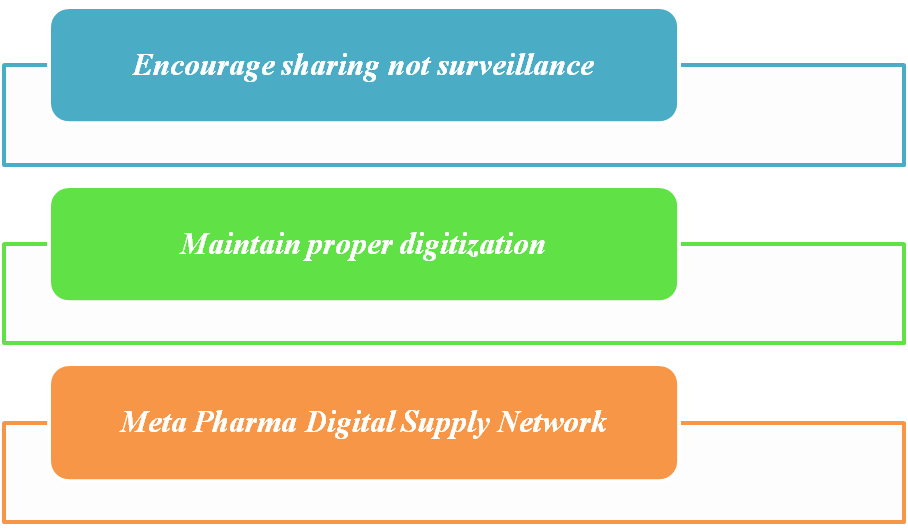
Figure 6: Mitigation Strategies to
overcome challenges faced by the UK pharmaceutical industry
(Source: Kumar et al. 2020)
Meta Pharma
Digital Supply Network
With the
help of the Meta Pharma digital supply network, the supply chain can be
improved easily. In addition, it creates several opportunities to connect with
disparate systems, enabling the communication procedure crossing the
pharmaceutical industry in the United Kingdom. According to Liza et al.(2022), maintaining a proper digital
supply network help to create a single source and gather proper
resources to improve the working culture and styles in the pharmaceutical
industry during a post-Covid situation in the United Kingdom.
Blockchain
adaptation-related problems can be resolved to maintain a well-balanced
pharmaceutical supply chain. As stated by Chang, Iakovouand and Shi
(2020), blockchain management can be implemented by involving trusting
stakeholders, which can enhance the supply-chain-management process.
Description of blockchain technology and blockchain platform is essential to
decide to escape from challenges in supply chain problems. To mitigate
one of the identified challenges, which is identifying a product portfolio in a
pharmaceutical chain, QTTP is required to understand (Sarkis et al.,
2021). On top of that, outsourcing manufacturing management and the
development of various contractors can alleviate the problem of the product
portfolio. Another identified issue that is the long approval time of
manufactured drugs can be reduced by finding different opportunities, such as
using single-use technology (Sarkis
et al., 2021). Multiple
product facility is also can contribute to mitigating a long time of drug
approval. Another challenge in the pharmaceutical operational channel is the
patient-specific product development process. It has been found that adaptation
of scale-out and parallel suits can help in the decision-making process that
can help in resolving this particular problem. As per the views of Ding (2018), in the pharma
industry presence of challenges causes hindrance to sustainable practice
following. Therefore, it is important to mitigate the challenges remaining in
the supply chain. Different process optimisation tools can be considered to
help mitigate pharmaceutical supply chain gaps, such as difficulty in finding
modes of operational units. Online process analytical technology can be used to
measure the process and can facilitate the monitoring system.
2.8 Theoretical Framework
In this
context, two different types of theories have been discussed. Additionally,
those theories are very helpful in improving an organisation's working styles
and culture. Those two theories are highlighted below:
Agency
Theory
This theory
is one kind of economic theory that suggests that the organisation is a
contract set between self-interest individuals. In addition to that, an agency
relationship is created while an individual is authorising another
individual to act on behalf. According to the statement of Poletti and Briano (2019), agency
theory has an application to labour economics, accounting, and
industrial organisation. Moreover, it is becoming the base of the economic
compensation model. This theory believes in a strong relationship between
principles and agents in the pharmaceutical industry. Along with that, an
organisation is making various kinds of policies by which the pharmaceutical
industry can reduce its operational costs and expand its revenue during the post-Covid
situation in the United Kingdom.
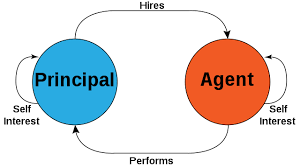
Figure 7: Agency Theory
(Source: Poletti and Briano, 2019)
Resources-based
View Theory
This theory
explains that all the resources are valuable, non-substitutable, and difficult
to imitate. In addition to that, all the resources provide a leading position
in the competitive market in achieving success positively. According to the
statement of Freeman, Dmytriyev and Phillips (2021), all the strategic
resources may provide the foundation for developing the firm's capabilities
which may lead to superior performance over time. In addition to that, as per
this theory, the supply chain of the pharmaceutical industry requires design in
a way that will be used to an extent for utilising properly and developing the
organisation in the future. This theory is also suggesting that maintaining a
balance between the available resources by which the pharmaceutical industry
can manage the supply chain systematically. As per this theory, it can be said
that if the pharmaceutical industry may manage the supply chain in an effective
way, then the industry may develop all its dynamic abilities smoothly.
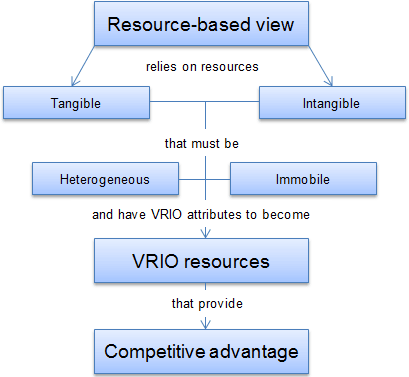
Figure 8: Resources-based View
Theory
(Source: Freeman, Dmytriyev
and Phillips, 2021)
System
Theory
This theory
on the effectiveness of the supply chain management in the UK
pharmaceutical industry is based on different types of variables, and it
develops to improve the working culture and industrial profitability rate for
the future. System Theory is a dominant theory present in the study of
supply chain management in the pharmaceutical industry in the UK. As per this
theory, a homeostatic system is provided in terms of describing the procedure
of feedback-controlled
regulation. The selected theory is looking to explain and develop the
hypothesis, which surrounds every characteristic. Moreover, it is reshaping the
complex structure of the UK's Pharmaceutical Industry. Additionally, it is
creating efficient drug supply for end-users, maintains a high-quality drug,
and delivers them within a target time.
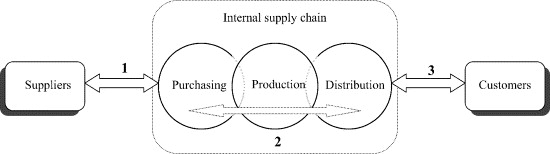
Figure 9: System Theory
(Source: Craighead et al. 2020)
In addition
to that, this theory is helping all the managers of the pharmaceutical industry
to account for interdependence among various kinds of organisational verticals.
Moreover, it assigns ownership in terms of achieving collective goals. As per
the statement of Gligor et al.(2018),
as system
theory is helping to achieve all the targeted goals hence, it will help
the pharmaceutical industries in terms of reshaping their supply chain
management during the post-Covid situation. Controlling
the manufacturing procedure may improve the product quality and decrease
lawsuits during build a strong customer base in the competitive market. In
addition to that, this theory is helping every pharmaceutical industry in terms
of providing medicines with adequate amounts and high quality to the right
place as well as customers.
2.9 Conceptual Framework
EFFECTIVENESS
OF SUPPLY CHAIN MANAGEMENT IN THE
POST-COVID SITUATION FOR THE PHARMACEUTICAL INDUSTRY IN THE UK Incentives and business pressure Agency
and Resource-based view theory Stakeholders Suppliers Supply chain
management for sustainable products Evaluation
of risk assessment
Figure 10: Conceptual Framework
Gap analysis
While
completing the research study on the provided research study, the research
developer faced different types of limitations while gathering information. For
this reason, the research developer has not developed the research study
properly and cannot draw a profound conclusion. In addition to that, concerned
with the research topic, the research developer has collected ample information
from secondary resources. For this reason, an issue has been recognised related
to authentication, and there is not a wide range of data resources present by
which the researcher cannot crosscheck all the collected data. Additionally, a
sufficient number of theories and models are not available on the provided
research topic. Henceforth, the researcher cannot discuss the research study
properly by a major issue. Moreover, while developing the research study, the
researcher has not adequate as well as proper information about the research
topic. Henceforth, it has been very difficult to complete the entire
dissertation in a good manner.
2.10 Summary
The entire research study it is
providing a clear overview of the effectiveness of Supply Chain Management
in the Pharmaceutical Industry in the United Kingdom in the post-Covid
era. In addition to that, in terms of improving working performance and
working culture, every pharmaceutical industry requires to follow several kinds
of mitigation strategies and know about the necessity of Supply Chain Management
for increasing productivity and profitability rate in the future. Along with
that, effective Supply Chain Management ensures to improvement of an
organisation's working performance and working culture in several sectors in
the Global World. In this chapter, different types of challenges, as well as
mitigation strategies, have been discussed properly. By which the research
developer can easily complete the entire dissertation in a good manner. Besides
that, the literature review plays an essential role in covering various kinds
of perspectives effectively. Moreover, in this chapter, various kinds of
secondary resources have been collected by which the researcher can compare and
contrast the statements of different authors on the provided research topic. Supply
Chain Management is present in the integrated networks of the
pharmaceutical industry in the UK. Moreover, effective supply chain management
may help to increase an organisation's productivity and profitability rate and
improve its working style and culture.
Chapter 3: Methodology
3.1
Introduction
The benefit of the meta-analysis and
the systematic review can be demonstrated by the fact that meta-analysis
provides an excellent opportunity for critical evaluation as well as a
statistical combination of the data gathered. The major aim of the
meta-analysis is that it helps in increasing the number of observations as well
as the statistical power of the research. It also helps in enhancing and
improving the possible estimates of the actual effect size of an association or
an intervention (Chen and Zhang, 2021). However, it is also to be kept in mind
that the interpretation of the quantitative results of the research is made by
following rigorous rules.According
to Kraus et al. (2020), the benefit
imparted by the systematic literature review is based on the fact that a systematic review helps in
determining the technological improvements and the possible outcomes of the
research. It is suggested that with the help of a systematic review of the
literature, the creation of a total article is allowed without the need to
consider the empirical data. Another major benefit of a systematic review can
be explained by the fact that it helps in the production of a transparent and
reproducible methodology.
3.2 Search engine
A systematic review of secondary resources is
required to collect from significant libraries or sources. Hence, the present
study has been oriented toward Supply chain management interferences and
evaluation. This is a broadly asserted topic for this study, which has further
subsection with specific industrial movements of Supply chain management .
As the study by Xu et al. (2020, p.160) has mentioned the
Covid-19 impact on supply chain continuity destruction. Google is
one of the most commonly used search engines for medical research activities,
and it is being utilised for regular professional purposes in the study (Rethlefsen et al., 2021). Other popular search
engines that are often used include Yahoo, AltaVista , Excite , Science.gov ,
BioMedNet and Search Medica . The search
engines often save valuable time during the research activities by searching
for the most appropriate key terms within a very short time period. It is very
much relevant for all individuals who can freely access to operate their
actions based on the comprehensive type of informative data (Johhson and Sylvia, 2018). The above-mentioned search engines
initiate the study by using advanced search options to refine the results.
The external environment affects pharmaceutical
product distribution (Hastig and Sodhi, 2020, p.952). Therefore, this is a stated interpretation
and evidence-based depiction of existing and proceeding studies' interrelation.
The searching plated forms such as Google Scholar and PubMed are highly
recommended sites to search keywords. The main keywords of this study are Post
Covid , SCM , pharmaceutical , Supply chain challenges , Covid-19 impact ,
Supply chain trends", "Supply Chain Performance
Measurement",
and "Pharmaceutical industries from the UK .
3.3 Application of inclusion and Exclusion criteria
The inclusion criteria for the
research are based on the following points of consideration: the year of
publication of the research articles, the type of the journals, and article
types. It is made sure that only those articles are considered peer-reviewed
journal articles and are available in the English language. It is also ensured
that topics relevant to supply chain management are included. Another important
criterion for the inclusion of data is based on the supply chain of the
pharmaceutical industry's functioning in the UK.
The exclusion criteria for this
specific research are based on excluding articles that are not peer-reviewed
and are structured poorly. Also, the articles that are not relevant to the
topic of the supply chain are excluded. Articles that were published before
2018 and not available in the English language are excluded. By effectively
considering the inclusion and exclusion criteria, the risk of unfavourable outcomes in the research can be avoided.
|
Components |
Inclusion criteria |
Exclusion
criteria |
|
Year |
Published
from the last five years articles and journals (2018-2022) |
Published
before the last five years or before 2018 |
|
Types of
journals |
Online
peer-reviewed journals with authentic information and data |
Non-peer reviewed
journals containing fake responses and results |
|
Types of
articles |
Peer-reviewed
online articles with accurate data based on the pharmaceutical industry |
Non-peer
reviewed articles with irrelevant data and false results |
|
Language |
All types
of English language journals and articles |
Articles
and journals which are not published in the English language |
|
Types of
studies |
Well-structured
academic studies with relevant information related to the recent and updated
UK data |
Poorly
structured articles and journals with irrelevant and unauthentic
information |
|
Type of data |
After the pandemic, data on supply chain management has been included |
Old journals before 10 years of supply chain management process have been excluded |
|
|
UK country supply chain management data on the pharmaceutical industry has been considered. |
Other country-published journals and articles have been excluded except for UK country data. |
Table 2: Inclusion and exclusion
criteria
(Source: Alamoodi et al.
2021)
The covid-19
extracted complications in the case of business management and performances
have been significant (Rai,
Tiwari, and Gupta, 2022, p.238). The details of participants included in
this study with collected data sets, selection of articles with specific
interventions, and different studies that have been included in this study are
stated in the below section-
Type of
participant
In the study
of Koenig et al. (2019, p.16937), the participants
were obtained from UK s different pharmaceutical industries. The industry
experts from the Pharmaceutical industry have been
included.
Justification
The participants are mainly selected from the
supply chain management of the pharmaceutical industry who are involved and can
easily provide the correct and authentic information for evaluating the entire
study (Maglietta
et al., 2022). The pharmaceutical industry experts, operational
managers, production managers and suppliers are involved in the study to
collect data during the post-Covid situation. They have been selected for the
study as they have faced a critical situation during the post-Covid along with
the impact of this condition on the pharmaceutical business of the UK
population.
Types of
intervention
The
objective of this study is associated with evaluating the importance of the
pharmaceutical industries' SCM, new SCM strategies to cope with the
post-covid-19 situation, required changes identification for UK's
pharmaceutical industries, and future mitigation strategies.
Justification
Supply chain management (SCM) strategies are being utilised for
coping with the entire critical situation during the post-Covid to enhance the
performance efficiencies of the pharmaceutical industry in the UK (Farooq et al.,
2021). The main challenging issues, intervention related to the
storage establishment and the diversification of the main suppliers, are very
involved in enhancing the industry with positive outputs. The interventional
strategies based on the supply chain improve the visibility along with the
"data analytics" to decrease the inventory and the
overhead cost level of the pharmaceutical business.
Type of
studies
In this
study, major inclusion criteria for selecting articles fall within the
randomised, cohort, primary, quantitative and qualitative types of studies. The
presented study mainly evaluates the impact of covid-19 in the case of SCM in
the UK's pharmaceutical industries.
Justification
The SCM-related studies are selected for the
study, and it has been identified that the selected articles include several
methods and procedures during the conduction of the study. The studies provide
a detailed idea about the barriers and strategies for improving SCM based on
the UK pharmaceutical industry with potential results and outcomes (Cooper et al.
2018). Hence, the study of Bag et al. (2021, p.29) has been followed by a multi-methodological
study application. In a clear and specific word, the exclusion criterion has
included systematic review papers, meta-analysis papers, and
multi-methodological research papers.
Search
process
Step 1: A specific research question is
being formulated to determine a clear and focused aim and objectives.
Step 2: The key concepts are identified
with the help of the search engine to acquire the correct data quickly (Munn
et al., 2019).
Step 3: After that, the search terms are
developed containing free text terms by utilising the different
types of medical databases.
Step 4: Controlled types of vocabulary
terms are established based on the main key terms or search terms (Grames et
al., 2019).
Step 5: Boolean operators are used to searching for the
correct results from different databases, which help to focus more on a
particular subject with productive results.
Step 6: After that, the articles are
selected and screened properly from the databases with the help of the PRISMA
framework for authentic data (Eriksen and Frandsen, 2018).
Step 7: At last, the selected and screened
articles are chosen for reviewing systematically based on the different
procedures that have been utilised for the study with potential outcomes.
3.4 Search strategy
The search strategy can be explained
by the fact that many search engines are used to access relevant band important
articles. These are google, google scholar, excite,
yahoo, and search medica. Another effective strategy for searching for relevant
articles is based on the usage of keywords. The main keywords used in this
research article's search are SCM, supply chain, pharmaceutical industries, and
post covid. Considering the inclusion and exclusion criteria has helped
significantly in gathering authentic and relevant articles from Google Scholar.
Keywords
|
DATABASE |
Google Scholar |
Cinahl |
Pubmed |
|
SELECTED KEYWORDS |
Supply chain management
Post-Covid
Pharmaceutical industry |
Supply chain
Covid-19
Medical products |
Pharmacy
Covid situation
Effectiveness |
Table 3: Keywords searched from the
databases
The databases that are utilised
for the study for searching for the most relevant and authentic information
include Google Scholar , Medline , Cinahl",
"PubMed", and MedLine .
The authentic information and data are also collected from the government
websites related to the UK, journals papers and articles, government books and
publications based on the Post Covid situation for determining the most
relevant and knowledgeable informative data (Grames et al. 2019). Boolean
Operators include OR , NOT", and
"AND" and are used in the study to search for the
correct results from different databases, which help to become more focused on
a particular subject with productive results (Usuzaki et al. 2020).
Keywords identified based on the research
topic are supply chain management in the pharmaceutical industry,
pharmaceutical industry in the UK, and pharmaceutical industry after pandemic
and supply chain management after the pandemic. As stated
by Bramer et
al. (2018), deciding elements of keywords is essential in choosing a topic
for obtaining the best results. As per the views of Rethlefsen
et al. (2021), search strategies also include filter applications for
finding relevant journals and articles in order to restrict the display of
irrelevant search results.
|
Database |
Keywords |
Filters |
Boolean
operators |
Resulted
number of articles |
|
Google
Scholar |
supply
chain management impact on the pharmaceutical industry |
2019 |
- |
16800 |
|
Google
Scholar |
supply
chain management and pharmaceutical industry |
2019 |
AND |
16800 |
|
Pubmed |
supply
chain management and pharmaceutical industry |
Custom
date, free full text |
AND |
41 |
|
PubMed |
supply
chain management and pharmaceutical industry in the UK |
Custom
date, free full text |
AND |
4 |
|
PubMed |
The
pharmaceutical industry and post-pandemic in the UK |
Custom
date, free full text |
AND |
3 |
Table 4: Search strategy and result
obtained
The above table reflects the use of boolean operators in the search strategy. As mentioned by Tawfik et al.
(2019), the proper databases for searching are PubMed, Google Scholar, Embase,
Cochrane and others using boolean operators and
gathered articles can be refined using PRISMA.
3.5 Search characteristics
Search
characteristic also begins with considering the defined research question. The
research question determines the search direction (Patino and Ferreira, 2018).
The objective of this systematic review has been developed, which is indicative
of the effect of supply chain management in the pharmaceutical industry after
the pandemic.
|
Population |
Author
name |
Intervention |
Aim or purpose of the systematic
review |
Study
design |
The geographic location of the
articles |
Summary of
the results |
|
Supply
chain Manager |
Spieske et al.
2022 |
Use of two
decision-making tools in supply chain management |
To
mitigate the challenging issues of the supply chain management faced by the manufacturers
of the industry |
Observational
study |
UK |
Barriers
to sustainability development in the pharmaceutical industry |
|
UK supply chain managers |
Hasan, Islam and Ishrat, 2022 |
Resilience maintenance in supply chain management of the pharmaceutical company |
The purpose is to find the impact of a pandemic on the supply chain management of a multinational pharmaceutical company. |
Primary quantitative and qualitative data research design |
United Kingdom |
Results show that microenvironment factors are altering the procurement strategies of multinational companies. |
|
Supply chain Management expert |
Frederico et al. 2021 |
Technology implemented in supply chain management |
This study aims to investigate the impact of technology 14.0 on supply chain performance. |
Survey research method |
UK |
Findings show that disruptive technologies significantly modify the supply chain's collaboration, integration, and transparency. |
|
Social media user |
Wilk, Roni, and Jie, 2022 |
Supply chain insights |
This study aims to find the social media user response to operational management of the supply chain. |
Qualitative research design |
UK |
Results reflect that negative sentiment on supply chain management |
|
Supply chain managers |
Sarkis, 2020 |
Implementation of environmental sustainability |
This study aims to provide a pathway to maintaining sustainability in pharmaceutical supply chain management. |
Interview method and secondary data collection method |
UK |
Findings depict that modern operations are implemented in supply chain management. |
|
Managers |
Frederico, Kumar and Garza-Reyes, 2021 |
Strategic sourcing for raw materials |
This research aims to find the effect of strategic sourcing in supply chain management. |
Survey-based research design |
UK |
Results show that strategic sourcing significantly contributes to developing a new direction in the production and management chain. |
|
Managers |
Belhadi et al. 2021 |
Technology adaptation |
The purpose of this study is to find the supply chain resilience |
Empirical Survey research design |
UK |
Findings reveal that technology 14.0 is the best strategy to implement in response to a pandemic situation |
Table 5: Search characteristics
3.6 Selection and Screening of articles
The
screening process in a systematic review can be summarised with the help of a
PRISMA framework. The first step in the PRISMA flow chart is identifying where
the protocols have been checked regarding the study. The number of databases
that have been taken is 4, namely "Google Scholar", "PUBMED",
"MEDLINE", and "PROQUEST". The next step was
removing the records before performing the screening process; in this case, the
number of records removed was 25. After this step, the number of articles that
were eliminated and 12 articles were selected. The selected articles were then
checked for retrieval, and the ones that passed this stage were 10, while two
articles were eliminated at this stage.
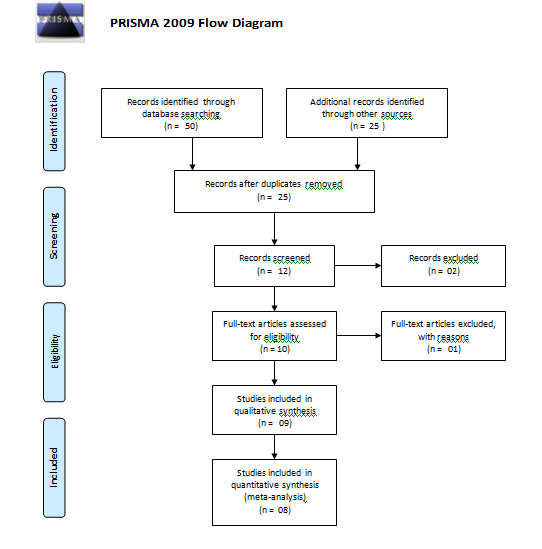
Figure 10: PRISMA framework
The selected
articles are being demonstrated by linking with the objectives of this study.
This study aims to evaluate SCM in the UK's pharmaceutical performances and
challenges related to Covid-19 impacts. Moreover, the critical reflection of
different articles and their results for the screening process is important.
The PRISMA framework has mentioned articles' clear and systematic inclusion and
exclusion. A total of 8 articles have been included in the ultimate analysis
section. The secondary research articles and papers are included with CASP
implementation. The main intention of using these tools and frameworks is value
effectiveness. Therefore, the systematic intervention process of study
development effectively includes selection and screening criteria.
3.7 Study quality assessment and checklists
|
CASP
Questions |
Article 1 |
Article 2 |
Article 3 |
Article 4 |
Article 5 |
Article 6 |
Article 7 |
|
1 |
Yes |
No |
Cannot tell |
No |
Yes |
No |
Cannot tell |
|
2 |
No |
Cannot tell |
Yes |
Cannot tell |
Yes |
Cannot tell |
No |
|
3 |
Cannot tell |
Yes |
Cannot tell |
No |
Cannot tell |
No |
Yes |
|
4 |
No |
Cannot tell |
No |
Yes |
Cannot tell |
Cannot tell |
Yes |
|
5 |
Yes |
Yes |
Yes |
Cannot tell |
No |
Yes |
Cannot tell |
|
6 |
Shows appropriate interventional strategy |
Shows effective methodology portion |
Shows appropriate interventional strategy |
Shows effective methodology portion |
Shows primary methods elaborately |
Shows primary methods elaborately |
Shows appropriate interventional strategy |
|
7 |
Precisely evaluated |
Correctly calculated |
Cannot elaborate on the result |
Correctly calculated |
Cannot elaborate on the result |
Correctly calculated |
Precisely evaluated |
|
8 |
Cannot tell |
No |
Cannot tell |
Yes |
Cannot tell |
Yes |
Cannot tell |
|
9 |
Yes |
Cannot tell |
Yes |
Yes |
Cannot tell |
No |
No |
|
10 |
Cannot tell |
Yes |
Cannot tell |
No |
Yes |
Cannot tell |
Cannot tell |
Table 6: CASP Tool
Study
quality can be assessed by using the CASP tool (Critical Appraisal Skills
Programme). This CASP tool is suitable for the quality appraisal for
qualitative evidence synthesis. As Long et al. (2020) stated, the strengths and
limitations of any quantitative research can be measured using the CASP tool.
Min et al. (2021) opined that methodological evaluation could also be
conducted using the CASP tool. Quality assessment with the CASP tool indicates
that data precision is high with selected articles and journals. Journals and
articles selected produce UK intervention strategy; hence it can be stated
that, locally it can be applied.
3.8 Data extraction
The process of the extraction of
data is done by accessing various scholarly articles based on the topic of
supply chain management.
|
Articles |
Author |
Data
collection tool utilised in the articles |
Chosen
data portion from the articles |
|
1 |
Spieske et al. 2022 |
Semi-structured
interview process followed in the article based on the "resource dependence
theory." |
Nearly 39
procurement, along with the experts in supply chain
management, for participating in the semi-structured interview procedure |
|
2 |
Hasan, Islam and Ishrat, 2022 |
Semi-structured interview questionnaire tool has been considered |
Challenges that are faced by the supply chain management process after the pandemic situation. |
|
3 |
Frederico et al. 2021 |
Interview questions have been considered as a primary data collection tool |
The considered portion of this article is the technology implementation impact after a pandemic situation in the supply chain |
|
4 |
Wilk, Roni, and Jie, 2022 |
Machine learning-based software tool has been used to collect primary data |
Social media network information regarding supply chain management operations |
|
5 |
Sarkis, 2020 |
Personal search experience and semi-structured interview |
Environmental sustainability maintenance in the supply chain after a pandemic outbreak has been taken into account |
|
6 |
Frederico, Kumar and Garza-Reyes, 2021 |
The survey-based approach has been considered for primary data collection purpose s. |
Strategic sourcing of material in response to the pandemic situation has been considered. |
|
7 |
Belhadi et al. 2021 |
The
methods are applied to analyse the barriers critically to proceed with
further research activities with accurate results. |
The
distribution of the raw material is surely being improved with the
implementation of the procedure. |
Table7: Data extraction table
Automation
and digitalisation can be applied in
the article to reduce the negative influence or the major barriers. A meta-analysis of the secondary
findings of the research is also conducted and this is based on the comparison
of the various data in the articles taken into consideration for this research.
Meta-analysis refers to the formal and quantitative analysis of findings of
previous research that helps in deriving important and significant conclusions
on the research topic. The advantage of conducting a meta-analysis in research
is the review and consolidation of the complex and large literature on a
selected research topic.
3.9
Reliability and validity
|
Reliability |
Validity |
|
Data articles have been selected
based on this systematic review's aims and objectives. |
The selected articles and journals
mostly contain primary data collected from the managers; hence validity has
been maintained in this systematic review. |
|
Articles are all from
peer-reviewed journal sources. Therefore, the results are reliable to use
further for other research work. |
Participants are mostly supplying
chain managers in selected articles from whom primary data has been
collected. |
|
Articles provide data on
challenges faced by the managers during supply chain operation in pharmaceutical
companies. Hence, the data analysis will offer a precise information and
corresponding solutions to handle these challenges. |
All articles are based on UK data;
therefore, using systematic review data, local changes can be initiated in
supply chain management in a pharmaceutical company. |
Table 8: Reliability and validity
3.10 Data characterisation table
The data characterisation table has been formed considering columns named as author, target population, intervention, the main outcome, control group and time for research. Every article has been thoroughly incorporated to be analysed in terms of finding data-oriented to identified objective and research questions or this systematic research.
3.11
Research gap
The gap in the research can be
explained by the fact that the factor of innovation in the supply chain is
unaddressed in this research study. The factor of innovation is crucial in the
effective management of the supply chain of pharmaceutical products. With the
advancement of the technology and its implementation in the supply chain,
devices for effectively managing the supply chain can be done by the
blockchain-based technology of IoT.
Chapter 4:
Findings/Results
4.1
Characteristics of study table
|
Author |
Target population |
Intervention |
Control group |
Time durations |
Main outcomes |
|
Spieske et al. 2022 |
Manufacturers of medical supplies
and hospital groups in Europe |
The service providers in
logistics increased the freight rates, and the procurement of medical
supplies was extended beyond the need. The Governments engaged in funding
for medical supplies. The production capacities were increased. Dependencies
were buffered with additional options of sourcing. The hospitals formed
collaborations with the public authorities to secure scarce materials.
Leveraging new and existing BSRs. |
NA |
6 months |
Procurement Challenges were
encountered by medical suppliers and hospitals due to the pandemic. The
availability of critical supplies was hampered. The hospitals had to
exchange screen supplies and receive supplies from various upstream
suppliers. Government bodies also donated medical supplies to the hospitals,
and these hospitals procured supplies also from outside sources. |
|
Hasan, Islam and Ishrat ( 2022) |
The supply chains in the
pharmaceutical industries in the emerging economy |
Identification of the risks faced
by the supply chains of the multinational manufacturers in the UK and
evaluate whether the other businesses can learn from these challenges and
provide recommendations to tackle the challenges |
NA |
7 months |
The barriers have mainly occurred
in the four-level hierarchy system of the supply chains. The most crucial
barrier is the insufficiency in planning made by the supply chains, followed
by the improper structure of decisions and inadequacy in risk-management
policies. |
|
Frederico et al. 2021 |
Supply chains of medical
equipment |
Stability for addressing the localised interruptions |
NA |
6 months |
The threats of the pandemic were
unknown to the medical supply chains. The stories of consumers affected by
the ongoing panic were shared on social media platforms, which led to
irrational behaviour within the supermarkets,
which eventually led to a shortage of necessary products, which the
suppliers failed to provide. Many risks were identified as being associated
with the global networks of supply chains. Changes in the location
characteristics of the global firms due to the pandemic affected the
performances. |
|
Wilk, Roni and Jie (2022) |
Social media users have been
influenced by panic buying of medical equipment because of the pandemic in
the UK, Australia and the US. |
Including social media strategies
in the risk management processes by the managers of the supply chains, which
is associated with managerial actions based on the sentiments of the
customers? |
Population in the UK, US and
Australia who are not on social media or have not been a victim of panic
buying |
3 months |
The herd mentality of the people
influenced the herd mentality of the people. It pushed them towards panic
buying due to anxiety, and eventually, the availability of medical products
was affected. |
|
Sarkis, 2020 |
The supply chains of the
pharmaceutical companies |
To some extent, strategic
planning in the supply chains, which relies on agile production and rapid
logistics delivery, has resolved the ongoing problem of increased demand.
Local manufacturing of ventilator parts has built resilience in the supply
chains and ensured the production of only the required amount. |
NA |
6 months |
The operations in the supply
chains were hugely moderated due to the introduction of the covid-19
pandemic. There were implications caused by sustainability that failed to be
resolved and that urged some modernisation in the
strategies. There were gains occurring due to short-term sustainability
while long-term ones failed to produce any. Redundancy in the capacity of
the supply chains due to agility resulted in the wastage of energy and
resources. |
|
Frederico, Kumar and Garza-Reyes,
2021 |
The supply chains of the
pharmaceutical companies and other industries |
Strategic sourcing includes
people with distinguishable skills, knowledge and competence |
NA |
6 months |
The performance of the supply
chains was significantly altered with the introduction of strategic sourcing
because the downstream processes of the supply chains were positively
impacted. The disruptive situations were not a result of strategic sourcing.
There were no significant alterations observed. The performance attributes,
as well as the agility of the supply chains, were affected. The activities
involved in purchasing and sourcing were improvised to sustain the
strategies in the supply chains. |
|
Belhadi et al. 2021 |
The supply chains of
manufacturing and service of the organisation's |
Perceiving Big-data Analytics to
provide real-time information about the activities of the supply chains
after the Covid-19 pandemic and cooperation between the stakeholders of the
supply chains to address the difficulties that have been faced and overcome
them and accelerate the usage of digital technologies. Automation of the
supply chains, localisation and regionalisation, was adopted in the sourcing. Also,
maintenance of lifeline and regulation of digital connectivity was ensured.
Continuity plans for the business and creating virtual market places that
would be safe for the suppliers. Adopting a real-time information system ann one that BDA drives. Collaboration of various supply
chains and development of social focus. Conserving spaces in the inventories
and receiving tec capacities were also thought of. |
NA |
1 year |
|
Table9: Characteristics of study table
4.2
Findings from the articles
|
S. No. |
Author |
Aim |
Methodology |
Sample and Data source |
Key Findings |
CASP score |
|
1. |
Spieske et al. 2022 |
To find out medical supplies and
hospitals, and the manufacturers and hospitals are managing it for managing
the resource dependencies. |
Semi-structured interview and
approaches based on buffering and bridging with the help of both within-tier
and cross-tier analysis |
Primary data from 39 experts from
supply chain management and procurement in the pharmaceutical companies of
Europe |
Significant growth was observed
in the number of patients requiring intensive care and hence the rise in the
demand for medical supplies. The delivery capabilities of the suppliers were
impaired due to the constraints in global supplies. Central warehouses were
established for covid-related products by the procurements organisations The difficulty of finding new suppliers
increased, and the main industries' buying power increased by convincing new
suppliers of a purchasing volume of supplies. |
9 |
|
2. |
Hasan, Islam and Ishrat, 2022 |
To investigate the barriers in
the pharmaceuticals' supply chains that hamper sustainability and help decision-makers
recognise these barriers. |
Mixed methods |
Both qualitative and quantitative
data |
Insufficiency in the strategic
planning of the supply chains due to agility as that occurred in SCM. Poor
information structure in the chains' contributors and inadequacy in risk
management policies were also identified. |
12 |
|
3. |
Frederico et al. 2021 |
To investigate the effects of the
14.0 technologies on supply chain performances. |
Survey-based approach,
descriptive methodology based on the survey |
Strategic responses from the
survey |
Concerns associated with the
global supply networks in the pharmaceutical industries were huge. Changes
that occurred due to the pandemic's short-term and long-term effects
affected the firms' performances. The supply chains are positively impacted
by strategic sourcing, and all the five stages included in the sourcing are
highly valid. |
14 |
|
4. |
Wilk, Roni and Jie, 2022 |
To identify the positive and
negative effects of the herd mentality of panic buying o
the supply and manufacturing of medical products in three countries. |
The primary collection of data is
based on a survey of social media users globally, especially in the UK,
Australia and the US. |
Primary data from 208,806 uses of
social media |
Panic buying had led to a
shortage of supplies in the markets. This resulted in a critical situation
for the manufacturers, who also failed to restock the markets. The situation
became more intense when the trend of panic buying emerged because of
influence through social media. All of this occurred because social media
users had decided to act according to their sentiments and not on
practicality. However, these users hoarded others not to panic like them,
and the managers of the supply chains set this as evidence to re-modulate
their strategies. |
14 |
|
5. |
Sarkis 2020 |
To examine environmental
sustainability in the supply chains after the Covid-19 pandemic. |
Qualitative research analysis
based on both primary and secondary data |
Data was collected from previous
research works, personal experiences of research, open forums and interviews
of practitioners. |
The uncertainties of the pandemic
regarding the recovery time created fragility in the supply chains. There
were some transformations that the supply chains had to undergo. There were
potential opportunities provided to the supply chains in terms of transition.
There were implementations like automation and data exchange systems in the
manufacturing processes. Implementation of applications like cloud
computing, IoT etc., decentralised the
decision-making of the contributors to the supply chains. A requirement for behavioural change was mandated because of the failing
of government systems, including both regulatory and market organisations. Organisations
adapted immediate decision-making to resolve the short-term crisis rather
than focusing on future goals as an effect of Covid-19. The industries
adopted collaborative technologies such as blockchain to ensure sharing of
transparent information. However, the decision-making was hampered, and the localised systems were more likely to become robust. The
local production of ventilator parts ensured less wastage and the
requirement of less transportation and inventory storage. There was employee
downsizing due to budget issues after the pandemic. However, the carbon
footprints of the organisations were reduced due
to a reduction in the employee's number. There were requirements for the
suppliers' physical visits, which were impossible because of longer
distances. The companies relied on virtual meetings, and that resulted in
negative sustainability that was unintended. |
12 |
|
6. |
Frederico, Kumar and Garza-Reyes,
2021 |
To find out the effects of the
processes involved in strategic sourcing on the supply chains after the
pandemic. |
Survey-based approach,
descriptive methodology of the survey. |
Strategic responses from the
survey |
Both the organisational
and performance and that of the individual firms have experienced
significant changes with strategic sourcing. The profitability of the supply
chains was also affected by strategic sourcing, and the competitive
performances were increased within the organisations.
Five phases were developed in the strategic sourcing: planning, research,
conduction, contract alignment, establishment and management of supplier
relationships. There were difficulties in meeting the demands due to a
shortage of product supplies, and strategic sourcing helped maintain the
operations' continuity. However, there were debates regarding the processes
involved in strategic sourcing in terms of the number of steps. This gave
rise to various considerations regarding whether or not to adopt strategic
sourcing. |
10 |
|
7. |
Belhadi et al. 2021 |
|
Questionnaire-based survey for
gathering short-term responses |
Survey of 145 firms and their
supply chains in both service and manufacturing. |
Firstly, the employees'
performances were hampered due to the pandemic, either due to physical
weakness or other factors eventually hampering the supply chains. There were
manufacturing shutdowns experienced by the sully chains of all the sectors.
A shortage was encountered in the sales and working capital. No significant
changes were observed after the changes implemented in the strategic
planning, like inventory reserved and collaboration between supply chains.
There was a shortage in developing capabilities in planning the potential
threats of the supply chains, which led to a loss in the business
profitability. This implied a requirement to develop the capabilities of the
supply chains of these organisations. |
12 |
Table10: Findings from articles
4.3. Table on the statistical findings
|
Articles |
Source |
Aims |
Methods |
Findings and statistical
interpretation |
|
Article 1 |
Spieske et al. (2022) |
The aim of the study is to study
the ways of mitigating the problems based on the management of the supply
chain by the manufacturers involved in the pharmaceutical industry. |
Research based on observational
study |
The statistical findings are
derived from the symbiotic relationship between the suppliers and the supply
restriction related to materials. |
|
Article 2 |
Hasan, Islam and Ishrat, (2022) |
This study aims to investigate
the impact of an effective supply chain management system in the case of big
pharmaceutical companies. |
Qualitative as well as
quantitative primary data is used |
The statistical findings suggest
that the maximum number of respondents in the study is between 21 and 34
years of age and account for 540% of the total participants. In the case of
gender, 67% of the respondents in the study represent males. In the case of
employment in the pharma supply chain, it is found that 42% of the
respondents have been employed in this industry for 3 to 5 years. It is also
found that the reduction in the profits and the returns contribute to the
highest of 33%. |
|
Article 3 |
Frederico et al. (2021) |
The major aim of this study is
based on the evaluation of the effect of Industry 4.0 technologies in better
management of activities of the pharmaceutical supply chain. |
The research method used is
survey. |
The findings of this study are
based on the fact that both short and long-term changes due to the pandemic
have affected the pharmaceutical industry's performance. With the help of
strategic sourcing, the supply chain responded positively by improving the
business operations. |
|
Article 4 |
Wilk, Roni, and Jie (2022) |
The aim of this particular study
is based on the analysis of the response of users of social media in the
process of operational supply chain managing processes. |
A qualitative study is carried
out |
The findings is
suggestive of the fact that people have both positive and negative sentiment
on the aspect of panic buying. A major finding suggests that the users of
social media are more reliable on the topic-consonant and location-based
social herd. |
|
Article 5 |
Sarkis, (2020). |
This study is aimed at
establishing the various ways through which the activities of managing the
supply chain of pharmaceutical products can be done. |
Both primary and secondary data
type of qualitative data is utilized in this study. |
The findings are based on the
explanation that the socio-political factors that determine the functioning
of the supply chain in the pharmaceutical business are technological practices,
regulations and policies, goods tariffs and adoption of new norms. |
|
Article 6 |
Frederico, Kumar and Garza-Reyes,
(2021) |
The aim of this research study is
to evaluate the impact of strategic sourcing in the management aspect of the
supply chain in the pharmaceutical industry. |
A descriptive methodology based
on a survey is done for obtaining the strategic responses |
Th research findings demonstrate
that the process of strategic sourcing in the pharmaceutical supply chain
happens in five stages that are research, planning, contract alignment,
conduction and effective management. |
|
Article 7 |
Belhadi
et al. (2021) |
The study aims at investigating
the role of resilience in the management of the supply chain. |
A questionnaire is prepared for
taking the survey of 145 organizations. |
The statistical interpretation of
this study is based on the fact that 51% of the respondents are suppliers,
38% belong to some local firm and the remaining 11% are retailing and
distribution partners. In the context of the response strategies, it is found
that the high mean values are representative of the successful adoption of
the strategy by the respondents. The mean values are in the range of 3.54 to
the value of 4.92. |
Table 11: Findings from articles
Chapter 5: Discussion
5.1
Discussion
Managing the organization s supply
chain to sustain the overall production and distribution of products according
to demand has been complex. According to Khan, Alroomi,
and Nikolopoulos (2022), consumer behavior and supply chain disruption are
linked to each other. Hence, UK customer behavior has changed with covid-19
impacts. Farooq et al. (2021) state that the supply
chain management of manufacturing companies and goods-providing companies are allowed to meet
maximum demand. Pharmaceutical industries SCM required significant changes in
application possess and developmental approaches to cope with the post-covid-19
phase. The global pharma extracted UK's pharmaceutical activities have
collected GDP's 2.5%. Therefore, the UK's pharmaceutical industry's position is
in the top ten, and the major companies are GlaxoSmithKline and Astra Zeneca
(Khan, Alroomi, and Nikolopoulos, 2022). The
highlighted services and product distribution throughout the world is the key
business advantage of this country. The technological development and
intervention of new strategies for business have allowed this industry from the
UK to extend its markets. However, the global business and regional
distribution of pharma products and equipment are experiencing significant
supply chain destruction due to the covid-19 impact. The cases of infection
have been higher than in other countries of the world in 2020-2021 (Nandi et al. 2021). The unavailability of
sufficient workers at the workplace has become the core issue in sustainable
supply chain management (Forehand, Roman, and Schaefer, 2021). Therefore, the
result section has prominently depicted that the SCM prospect in the UK has
changed with customer behaviour changes. The behaviour changes of customers have been driven by the
Covid-19 impact (Handfield, Apte, and Finkenstadt,
2022).
The lockdowns, restrictions over
travel, and shelter-in-place orders have disrupted economic transmission
and cash flow. Kim and Zhao
(2021) opined that 93% of senior supply chain executives intend to provide more
agile,
resilient, and flexible supply chains. In the UK, SCM has been followed
by major theories of supply chain continuity such as TCA (Transaction Cost Analysis),
System theory, and Network perspective theory. As Lavassani,
Iyengar, and Movahedi (2022) suggested, networking supplying chain management
in the UK has been performed by several pronoun companies such as the Shire.
Thus, the risk associated with the supply chain in case of performance and
supplier problems is significant (Sharma et
al. 2020).
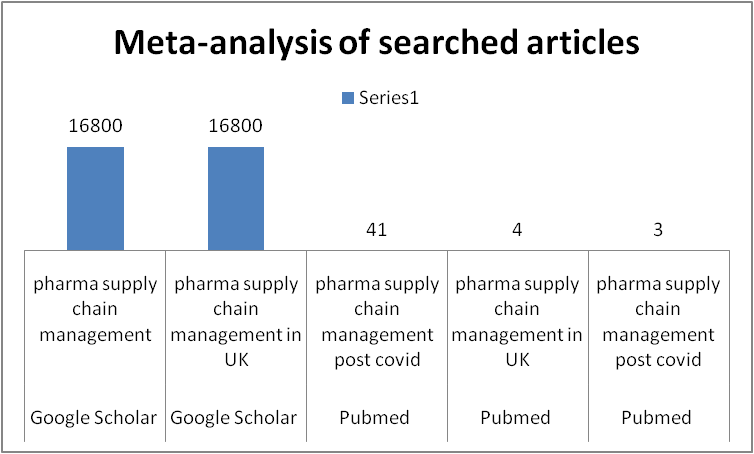
Figure 11: Graph on
Meta-analysis of the searched articles
(Source:
Self-developed)
The
representation of the articles searched in various databases is represented
with the help of a bar graph. From the above graph, it can be stated that the
maximum number of articles are accessed on google scholar when the topic of
management of the pharmaceutical products supply chain is searched for. These
articles are all in English language and published after 2018. However, it is
noticed that only a small number of articles could be accessed by the PubMed
platform on the research topic.
The theories are based on the
management of the supply chain are based on the systems theory and the agency
theory. The agency theory is based on identifying the behavioural
change in the supply chain players. The system theory is based on the fact that
businesses are comprised of multiple components that work harmoniously to
enable the optimum functioning of the larger business body. According to Kostev
and Lauterbach (2020), the state of panic buying of medicines during the time
of pandemic has resulted in significantly shortage levels in the post-covid
time. It is suggested that the lack of correct information and the spreading of
wrong information among the public is the major cause of creating the situation
of panic buying. In the context of the supply chain functioning in the global
pharmaceutical market, this involves the suppliers of the raw materials for
making drugs as well as the sellers of the pharmaceutical products. Also, the
delays in the delivery of medicines initiate the process of raising the cost of
the medicines.
This type of management looks after the life cycle of drugs
sold in the UK market. The GDP of pharmaceutical companies in the UK is
estimated to be approximately 2.5%. During the pandemic era, there was a huge
demand for medicines among people. As opined by Hasan et al.
(2022), supply chain management looked into the3 production in large
quantities. In this way, pharmaceutical companies can meet the rapid needs and
demands of the common people. The technological interventions incorporated in
the pharmaceutical companies helped it earn a maximum profit rate in the UK
market. As a result of the huge demand from the people at the time of the Covid
19 pandemic, the supply chain of medicines at times felt it difficult to meet
the needs of the common people. As stated by Sawyerr (2022), the frequent lockdown in the
regions of the UK led to a massive loss in the pharmaceutical industry. The
supply chain faced a massive challenge while transporting medicines to the
required centre. The factor of medicine shortages is one of the critical
aspects faced in the p[ost
covid era. As referred by Acosta et al.
(2019), the shortage of medicines is based on the differences in the
perspectives between the management of the supply chain and the global market
situation. The situation of medicines going out of stock is based on mainly
four issues that are market situation, managing the supply chain in an
effective manner, the process of manufacturing the medicines and the political
issues prevalent in a country.
The
outputs of the organization in relation to supply chain management are oriented
with agile implementation. As a result of the covid-19 impact on value
reduction and suppliers, complications have arisen (Cuong and Tien, 2022).
Therefore, the critical analysis of the result has demonstrated the new
strategic planning associated with supply chain management in the UK related to
pharmaceutical companies adopting nearshoring processes. According to Golgeci, Yildiz, and Andersson (2020), the coming phases of
post-Covid will require much more resilience and flexibility with digital
interventions.
Robotics and AI specialized
implementation have started to be incorporated within the pharmaceutical
industries (Fonseca and
Azevedo, 2020). In managing the supply chain, two major divisions have
been associated with this field, the planning system and the execution system
of the supply chain. In analyzing the existing evidence from pharmaceutical
industries from the UK has faced supply chain visibility and cold chain
shipping of products. The private and public partnership for supply chain
continuity and development has been approached (Ishida, 2020). The bottlenecks and lack of
readiness in reacting according to an emergency in the supply chain have
impacted over sourcing process.
The multiple souring processes of
eliminating souring issues in a particular organization and regions seem to
evolve with post-Covid SCM continuity development. According to Sudan and Taggar
(2021), the supply chain disruption with Covid development in 2020 and 2021 has
left the pharmaceutical industries to adopt new and sustainable strategies for
SCM's resilience and flexibility enhancement. The diversification approach
implementation in SCM has been promoted. According to Hassan and Abbasi (2021),
the multiple factories, suppliers, and regions of markets are additional key
strategies in modern sourcing and SCM. Fonseca and Azevedo (2020) opined that
the dependency on one single factory or supplier is required to shift to
multi-layer sourcing. Thus, the UK has started to adopt and apply the robotics
in logistics aspect of the organization to eliminate maximum human workmanship
(Ozdemir et al., 2022).
Stock managing and inventory
maintenance are two major approaches to SCM. The health care equipment and
medicines are required to maintain stock for emergency support. Therefore, with
the experiences of covid-19 pandemic impact on inventory and stock management
new approach to intermediate inventory development and stock safety (Singh et al. 2022). The future changes in power dynamics in the supply chain and radical
change in inventory strategy According to Modgil, Singh, and Hannibal (2021), the AI application can
be effective in achieving a balanced demand and application approach for
pharmaceutical companies in the UK. As suggested by Schleper et al. (2021), in shifting from global
to local, Schleper et al. (2021) have used the Grey Decision-making trial and
Evaluations laboratory (Grey-DEMATEL). The depiction has allowed stating the
factors affecting supply chain disruption and has significant shared relations
between them as well.
The
significant challenges that emerged during the covid-19 pandemic spread are uncertainty
in demand, inconsistency in supply, material scarcity, delayed delivery, labour scarcity, contrasting capacity, vehicle
unavailability, and "last-mile delivery" (Xu et al. 2020). In responding to these,
all challenges affecting SCM in the UK are further mitigated with significant
strategic and analytical construction of new approaches. Hence, the existing
studies on the UK business environment have stated that the three major issues
that have been merged with the covid-19 pandemic and will last for a longer
period are inconsistency in the supply chain, material scarcity, and
scarcity of labour (Moretto and Caniato, 2021). However, the financial damage has been
imposed with SCM disruption as well. The mitigation of financial loss has been
asserted with pricing and costing development and the cost leadership
implementation process for MNCs (Schleper et
al., 2021). According to Ishida (2020), two types of strategies can be
imposed to mitigate exciting challenges associated with SCM: long-term and
short-term strategies. Contractual and dedicated labour
force balancing processes are being introduced in Pharmaceutical
sectors associated with SCM actions. (Nandi et
al. 2021). Therefore, extracted information and existing studies evaluation
have asserted the above-mentioned changes; thus, the result collected from
different existing accounts has stated labour
balancing along with the alternative substitution of raw material as a key
mitigation strategy.
Capabilities
of developing supply chain resilience with dynamic approaches of technologic
and planning have demonstrated the leading customer demand and satisfaction
delivery. As stated by Khan, Alroomi, and
Nikolopoulos (2022), the future goal of SCM is going to be underlined with the
social and humanitarian supply chain for a long-term strategic shift. Thus,
this strategy has been contrasted with technological interventions. Therefore, Golgeci, Yildiz and Andersson (2020) opined that resilience
reimbursement and efficiency development could be addressed with a mixed
products optimisation approach. The financial crisis
with SCM performance reduction and complexity development can be mitigated with
reverse capacity investment. The reestablishment of the previously achieved
state of SCM performance and resilience is only achieved with new strategic
management and planning. Hence, the supporting evidence from the result section
has highlighted Tailored Sourcing strategies for pharmaceutical companies from
the UK.
The
overall discussion has a description of the effectiveness of SCM in
Pharmaceutical industries in the UK in the post-Covid-19 phase. The major
outcomes and extraction are linked with existing challenges and future
mitigation. The pre-Covid phases have distinct strategies of SCM, factors are
also different from the present, and post-Covid SCM requires specialised strategies and planning for sustaining SCM. The
suggested business planning strategy for the effective development of SCM is a
critical approach to perform. Analysing the during
covid-19 challenges, the most affecting challenge is suppler issues due to
global boundaries (Forehand, Roman, and Schaefer, 2021). Therefore, local
suppliers are an easy source to contact during crucial times to continue to
stock and deliver materials and products to customers. Thus, the concerning
industry is a very significant sector to be ready to provide products and
services to their customers. However, demand for health care equipment and
medicine is the last high demand during pandemics and post-pandemic.
5.2
Strengths and weaknesses of the study
The presented study with the focus
on the SCM concept, strategies, and outcomes development with effectiveness
evaluation is bounded with significant strengths and weaknesses. Pharmaceutical
industries have experienced major demands and pressure in the UK during the
Covid surge in 2020-2021. This pandemic has been enlisted as one of the
greatest health crises in this nation. The technological interventions and digitalised equipment have failed to promote continuity in
SCM performance (Forehand,
Roman and Schaefer, 2021). The significant crisis of a number of labour, supply of materials, and
delays in delivery significantly occur issues.
. The collaboration is a strength
for future prospects of SCM development. According to Sudan and Taggar (2021),
understanding the Covid impact on SCM has been tested with System and
Networking partnership theory's significant theory. The strength of this study
has been underlined in factors identified in SCM disruptions. The long-term
strategies and short-term strategies have high prospects of providing
significant planning development for industries with SCM (Kim and Zhao, 2021).
Thus, the diversification in the strategic management of the Supply chain with
technology and digitalisation has required training
for employees at an organisation. Therefore, 1% of
employees related to the UK's pharmaceutical industries have been involved with
SCM. The asserted strengths are recounted to be affecting long-term outcomes
and outputs of supply chain continuity.
The pharmaceutical industry's supply chain looks after the
production and distribution of medicines to patients in the UK. This type of
management looks after the life cycle of drugs sold in the UK market. The GDP
of pharmaceutical companies in the UK is estimated to be approximately 2.5%.
During the pandemic era, there was a huge demand for medicines among people. As
opined by Hasan et al. (2022), supply chain
management looked into the3 production in large quantities. In this way,
pharmaceutical companies can meet the rapid needs and demands of the common
people. The technological interventions incorporated in the pharmaceutical
companies helped it earn a maximum profit rate in the UK market. As a result of
the huge demand from the people at the time of the Covid 19 pandemic, the
supply chain of medicines at times felt it difficult to meet the demands of the
common people. AS stated by Sawyerr
(2022), the frequent lockdown in the regions of the UK led to a massive
loss in the pharmaceutical industry. The supply chain faced a massive challenge
while transporting medicines to the required centre.
The frequent purchase of important
medicines led to a shortage of medicines in the market of UK. This affected at
supply chain at large, as it was unable to meet the growing demands of the
people. The absence of workers acts as a major factor that leads to the
inefficiency in the management of the supply champion of medicines in the
market in the UK. The change in the behaviour pattern
of customers as a result of the fear of the covid 19 virus affected the supply
chain of medicines at large.
The
result section has suggested that the effectiveness of SCM has been reduced
with the scarcity of labour and scarcity of raw
material availability. Therefore, the vehicles' unavailability has also been
affected by the delay in delivery. The study has extracted that nearshoring and
suboptimal manufacturing with significant technologic intervention are reliable
approaches to enhance performance with continuity (Khan, Alroomi
and Nikolopoulos, 20222). The systematic review of this research interest area
with SCM in the UK has demonstrated the dynamic functionality of logistics as
well as resilience development SCM. Therefore, the vendors develop with local
and multiple vendors selection for stock safety and inventory intermediation
applications.
This
study has provided implementation of full skilled employees with digital tool
application development and motivating workers for better performance. The
long-term strategies related to this study have been encountered with AI, ML,
and Cloud-based intervention (Hassan and Abbasi, 2021). The end-to-end digital
technologies are helpful in supporting the problem associated with supply chain
continuity. Hence, the handling capabilities required to be exercised with
staff. All contribution of this has been asserted, and the positive impact is
being delivered to UK's pharmaceutical industries.
5.3 Limitations
Despite
all these strengths contributed by this study, there are certain shortcomings
that have been identified. Firstly, this presented study has been focused on
UK's geopolitical environment only. Therefore, the global comparison has been
performed, but the emphasis has been imposed on the core UK's pharmaceutical
industries. The manufacturing, supplying, and outcomes of SCM are being
highlighted in UK's prospects. However, future studies may extend by exposing
others sectors and industries as well. Comparative studies can be much more
effective for creating significant conclusive states about global scenarios
(Cuong and Tien, 2022). The qualitative analysis is also another limitation of
this study. The quantitative research design with analysis may have extracted
significant quantitative data from this present situation (Modgil, Singh and
Hannibal, 2021).
Chapter
6: Conclusion
6.1
Conclusion
It can be concluded that the
coronavirus outbreak has a negative impact on the logistics, manufacturing and
supply chain of pharmaceutical companies in the UK. Supply chain disruption has
created the need to improve resilience in pharmaceutical supply chain
management activities. It has been evaluated that in order to manage the
challenges faced by medical institutions in a pandemic situation, medical
supplies are shared to meet the treatment requirement as well a warehouse
management process has been improvised (Spike et al. 2022). Moreover, it has been estimated that the flow of
medical goods such as vaccines and equipment is disrupted in pandemic
situations that require resilience in the manufacturing and distribution
system. Economic downtown also hinders the manufacturing of medical equipment
and medicines due to changes in trade tax (Belhadi et al., 2021). As stated by Naz et al.
(2021), changing the pharmaceutical business environment forces various
pharmaceutical firms to update their products constantly. The pandemic's
negative consequence is diverse in pharmaceutical company performance.
Therefore, immense changes are required to compensate for the financial loss of
the pharmaceutical company (Saleheen and Habib,
2022). Henceforth, it has been identified that the coronavirus outbreak forces
pharmaceutical companies to adopt various technologies such as artificial
intelligence in the supply chain management process.
6.2
Linking with Objectives
Objective
1: The present supply chain management
shows the use of advanced technology in the supply chain resilience process. As
per the views of Naz et al. (2021), the AI system enables
analytical capabilities by offering algorithmic solutions for improving
pharmaceutical supply chain management processes. Additionally, in the UK,
tracking the supply chain has been easier with the implementation of the AI
system. Network visibility has been improved that reflects the tracking process
and manufacturing details of medicines. The UK pharmaceutical companies that
help in the production of high-quality drug development have adopted good
inventory management practices. Therefore, a systematic review has been able to
provide transparent insight into the current management and technologies used
in a pharmaceutical company in the UK.
Objective
2: The systematic review has been able
to depict the challenges that are faced by current pharmaceutical companies in
the UK, such as supply chain problems, demand-side problems and logistic
problems due to the traditional way of supply chain management and
manufacturing process. As mentioned by Joshi and Sharma (2022), before the pandemic situation,
managers of pharmaceutical companies concentrated on inventory management and
decreased drug manufacturing. After the pandemic situation, managers are
focusing on productivity increase and meeting the demand.
Objective
3: Systematic review has been able to
find the challenges faced by different pharmaceutical companies in the UK. As
stated by Schleper et al. (2021), pressure is created among
managers of pharmaceutical companies in the UK due to uncertainty. Moreover,
the risk management process becomes a challenge for pharmaceutical companies.
Pharmaceutical fraud cases have increased (Ten et al., 2018). Findings also suggest that raw material import also
becomes a challenge for the UK that requires proper policy improvement from a
political point of view. Henceforth, the result of the literature review has
been successfully able to identify the threats in the supply chain management
system.
Objective
4: The findings show the proposed
mitigation process is the utilisation of artificial
intelligence in the supply chain management process. Findings of the systematic
review suggest that sharing resources such as drugs and manufactured equipment
can potentially help in mitigating scarcity. Additionally, the warehouse
management process can potentially facilitate the supply chain management
process. As suggested by Belhadi et al. (2021),
the digitisation process of supply chain management
has increased the efficiency of the pharmaceutical industry. However, it is a
threat to employment.
6.3
Recommendation
●
Implement
AI and automation technologies
Pharmaceutical industries can
implement AI and automation technologies for better SCM performance with
high efficiency (Naz et al., 2021). According to Panwar, Pinkse,
and De Marchi (2022), the Covid-19 pandemic has limited physical contact, and
worker reduction in different industries has been the most effective issue. However,
the UK's technological environment and position are very high, incorporating
any technology in organisational management and
performance development aspects.
●
Incorporated sustainability action in
Supply chain management practice
The
post-Covid phase is a highly proactive phase for moving towards sustainable
development. Thus, the further recommendation for pharmaceutical industries SCM
required sustainability approaches in supply chain management in the UK. As
stated by Ellram et
al. (2022), the post-covid-19 phases required a much more technological and
sustainable approach to reduce sudden risks associated with SCM.
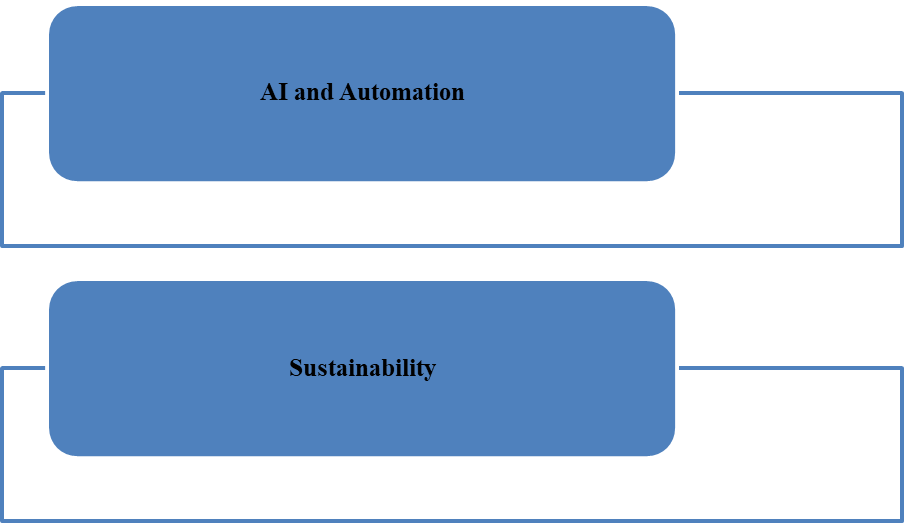
Figure 12:
Recommendations for Post-Covid SCM
6.4Limitations
The study has been limited with
major data limitations. The comparison and descriptive analysis of existing
studies and works seem to be lacking with wider issues. In a systematic review,
the major issue is being recognised with existing
work's time scale and limited information. Thus, the SCM present risk and
future risk are not being addressed with wider issues emerging within
international boundaries. This study has been lacking with data and information
about the present issues in details analysis.
6.5
Future scope
The study is going to allow us to go
beyond the boundaries of single issues in SCM in UK's pharmaceutical industries. The
investigation of post-Covid SCM strategies is viable to structure new
approaches and strategies for industries. Thus, future studies can be conducted
on a comparative account of UK SCM and Global SCM prospects. The changes faced
UK s Pharmaceutical companies due to provide-19 and other pharmaceutical
companies from different countries. Different strategies used by different
countries and their outcomes related to a particular business environment can
be tested. The greater exposure to comparative studies is associated with this
study.
Reference
Journals
Acosta, A., Vanegas, E.P., Rovira, J.,
Godman, B. and Bochenek, T., 2019. Medicine shortages: gaps between countries
and global perspectives. Frontiers in
pharmacology, 10, p.763.
Alam,
S.T., Ahmed, S., Ali, S.M., Sarker, S. and Kabir, G., 2021. Challenges to
COVID-19 vaccine supply chain: Implications for sustainable development goals. International Journal of Production
Economics, 239, p.108193.
Alamoodi, A.H., Zaidan, BB,
Zaidan, A.A., Albahri, O.S., Mohammed, K.I., Malik,
R.Q., Almahdi, E.M., Chyad, M.A., Tareq, Z., Albahri, A.S. and Hameed, H., 2021. Sentiment analysis and
its applications: A systematic review. Expert systems with applications, 167,
p.114155.
Alsuwailem,
A.A., Salem, E., Saudagar, A.K.J., AlTameem, A., AlKhathami, M.,
Khan, M.B. and Hasanat, M.H.A., 2021. Impacts of COVID-19 on the Food Supply
Chain: A Case Study on Saudi Arabia.
Sustainability, 14(1), p.254.
Alzoubi, H., Ahmed, G., Al-Gasaymeh,
A. and Kurdi, B., 2020. Empirical study on sustainable supply chain strategies
and its impact on competitive priorities: The mediating role of supply chain
collaboration. Management Science
Letters, 10(3), pp.703-708.
Bag,
S., Gupta, S., Choi, T.M. and Kumar, A., 2021. Roles of innovation leadership
on using big data analytics to establish resilient healthcare supply chains to
combat the COVID-19 pandemic: a multi-methodological study. IEEE
Transactions on Engineering Management.
Balakrishnan,
A.S. and Ramanathan, U., 2021. The role of digital technologies in supply chain
resilience for emerging markets automotive sector. Supply Chain Management: An International Journal.
Bigdeli, A.Z., Dwivedi,
YK and Raman, R., 2021. How is COVID-19 altering the manufacturing landscape? A
literature review of imminent challenges and management interventions. Annals
of Operations Research, pp.1-33.
Bown, C.P. and Bollyky, T.J., 2022. How
COVID‐19 vaccine supply chains emerged in the midst of a pandemic. The World Economy, 45(2), p.468.
Bradscholars.brad.ac.uk. 2021. Pharmaceutical supply chains and management innovation? Available
at: https://bradscholars.brad.ac.uk/bitstream/handle/10454/18679/papalexi_et_al_2021.pdf?sequence=5&isAllowed=y
Bramer,
W.M., De Jonge, G.B., Rethlefsen, M.L., Mast, F. and Kleijnen, J., 2018. A systematic approach to searching: an
efficient and complete method to develop literature searches. Journal
of the Medical Library Association: JMLA, 106(4), p.531.
Butt, AS, 2021. Supply chains and COVID-19: impacts,
countermeasures and post-COVID-19 era. The
International Journal of Logistics Management.
Chang,
Y., Iakovou, E. and Shi, W., 2020. Blockchain in global supply chains and cross
border trade: a critical synthesis of the state-of-the-art, challenges and
opportunities. International Journal of Production Research, 58(7),
pp.2082-2099.
Ciravegna,
L. and Michailova, S., 2022. Why the world economy
needs, but will not get, more globalisation in the
post-COVID-19 decade. Journal of
International Business Studies, 53(1), pp.172-186.
Clauson,
K.A., Breeden, E.A., Davidson, C. and Mackey, T.K., 2018. Leveraging Blockchain
Technology to Enhance Supply Chain Management in Healthcare::
An exploration of challenges and opportunities in the health supply
chain. Blockchain in healthcare today.
Cole, R., Stevenson, M. and Aitken, J., 2019.
Blockchain technology: implications for operations and supply chain management.
Supply Chain Management: An International
Journal.
Cooper, C., Booth, A., Varley-Campbell,
J., Britten, N. and Garside, R., 2018. Defining the process to literature
searching in systematic reviews: a literature review of guidance and supporting
studies. BMC medical research methodology, 18(1),
pp.1-14.
Craighead, C.W., Ketchen Jr, DJ and Darby, J.L., 2020.
Pandemics and supply chain management research: Toward a theoretical toolbox. Decision Sciences, 51(4), pp.838-866.
Cuong, TH and Tien,
N.H., 2022. Application of ICT in Logistics and Supply Chain in post-Covid-19
economy in Vietnam. International Journal of Multidisciplinary Research and
Growth Evaluation, 3(1), pp.493-451.
Dai,
T. and Tang, C., 2022. Frontiers in Service Science: Integrating ESG Measures
and Supply Chain Management: Research Opportunities in the Postpandemic
Era. Service Science, 14(1), pp.1-12.
Ding,
B., 2018. Pharma Industry 4.0: Literature review and research opportunities in
sustainable pharmaceutical supply chains. Process Safety and
Environmental Protection, 119, pp.115-130.
Donthu, N. and Gustafsson, A., 2020. Effects of COVID-19 on business and
research. Journal of business research,
117, pp.284-289.
Ellram, L., Flynn, B.,
Harland, C., Kov cs, G., Sarkis, J. and Tate, W., 2020. Report of the online
forum action agenda for effective post COVID-19 supply chains. Technical
Report.
Emanuelsson,
E.A.C., Charles, A. and Shivaprasad, P., 2021. A regenerative business model
with flexible, modular and scalable processes in a post-covid era: The case of
the spinning mesh disc reactor (smdr). Sustainability, 13(12), p.6944.
Eriksen, M.B. and
Frandsen, T.F., 2018. The impact of patient, intervention, comparison, outcome
(PICO) as a search strategy tool on literature search quality: a systematic
review. Journal of the Medical Library Association: JMLA, 106(4),
p.420.
Farooq, M.U., Hussain,
A., Masood, T. and Habib, M.S., 2021. Supply chain operations management in
pandemics: a state-of-the-art review. Management & Marketing. Challenges
for the Knowledge Society, 15(s1), pp.424-438
Fonseca, L. and Azevedo,
A.L., 2020. COVID-19: outcomes for global supply chains. Management
& Marketing. Challenges for the Knowledge Society, 15(s1),
pp.424-438.
Forehand, K., Roman, J.
and Schaefer, T., 2021. Supply Chain Efficiency in the Discount Store Industry
Post COVID-19: Applying the Supply Chain Efficiency Ratio. Operations
and Supply Chain Management: An International Journal, 14(4),
pp.423-430.
Freeman, R.E., Dmytriyev,
S.D. and Phillips, R.A., 2021. Stakeholder theory and the resource-based view
of the firm. Journal of Management, 47(7), pp.1757-1770.
Friday, D., Savage, D.A., Melnyk, S.A., Harrison, N.,
Ryan, S. and Wechtler, H., 2021. A collaborative
approach to maintaining optimal inventory and mitigating stockout risks during
a pandemic: capabilities for enabling healthcare supply chain resilience. Journal of Humanitarian Logistics and Supply
Chain Management.
Gereffi, G., 2020. What does the COVID-19 pandemic teach us
about global value chains? The case of medical supplies. Journal of International Business Policy, 3(3), pp.287-301.
Gligor, D., Bozkurt, S., Russo, I. and Omar, A., 2018.
A look into the past and future: theories within supply chain management,
marketing and management. Supply Chain
Management: An International Journal.
Golgeci, I., Yildiz, H.E. and
Andersson, U.R., 2020. The rising tensions between efficiency and resilience in
global value chains in the post-COVID-19 world. Transnational
Corporations Journal, 27(2).
Grames, E.M., Stillman, A.N.,
Tingley, M.W. and Elphick, CS, 2019. An automated approach to identifying
search terms for systematic reviews using keyword co‐occurrence networks.
Methods in Ecology and Evolution, 10(10), pp.1645-1654.
Guha Roy, D., 2022. A comprehensive analysis of
sustainable IoT infrastructure in the post-COVID-19 era. In Intelligent Internet of Things for
Healthcare and Industry (pp. 219-237). Springer, Cham.
Handfield, R.B., Graham, G. and Burns, L., 2020.
Corona virus, tariffs, trade wars and supply chain evolutionary design. International Journal of Operations &
Production Management.
Hassan, N.M. and Abbasi,
M.N., 2021. A review of supply chain integration extents, contingencies and
performance: A post Covid-19 review. Operations Research Perspectives, 8,
p.100183.
Hastig,
G.M. and Sodhi, M.S., 2020. Blockchain for supply chain traceability: Business
requirements and critical success factors. Production and Operations
Management, 29(4), pp.935-954.
Ishida, S., 2020.
Perspectives on supply chain management in a pandemic and the post-COVID-19
era. IEEE Engineering Management Review, 48(3),
pp.146-152.
Johhson, E. and Sylvia, M.L., 2018. Secondary data
collection. Critical Analytics and Data Management for the DNP, p.61.
Joshi, S. and Sharma, M., 2022. Impact of sustainable
supply chain management on performance of SMEs amidst COVID-19 pandemic: an
Indian perspective. International Journal
of Logistics Economics and Globalisation, 9(3), pp.248-276.
Kalaitzi, D., Matopoulos,
A., Fornasiero, R., Sardesai, S., Barros, A.C., Balech, S. and Muerza, V., 2021.
Megatrends and trends shaping supply chain innovation. In Next generation supply chains (pp. 3-34). Springer, Cham.
Kano,
L., Narula, R. and Surdu, I., 2022. Global value chain resilience:
Understanding the impact of managerial governance adaptations. California Management Review, 64(2),
pp.24-45.
Khan, M., Alroomi, A. and Nikolopoulos, K., 2022. Supply Chain
Disruptions and Consumer Behavior Change from COVID-19: Empirical Evidence and
Long-Term Implications for Supermarkets in the UK. Journal of
Humanities, Arts and Social Science, 6(1), pp.28-42.
Kim, K. and Zhao, L.,
2021. Filtering facepiece respirator supply chain management framework in a
disaster such as COVID-19. Societies, 11(4), p.136.
Koenig,
S.G., Bee, C., Borovika, A., Briddell, C., Colberg,
J., Humphrey, G.R., Kopach, M.E., Martinez, I., Nambiar, S., Plummer, S.V. and
Ribe, SD, 2019. A green chemistry continuum for a robust and sustainable active
pharmaceutical ingredient supply chain. ACS Sustainable Chemistry &
Engineering, 7(20), pp.16937-16951.
Kostev, K. and Lauterbach, S., 2020. Panic
buying or good adherence? Increased pharmacy purchases of drugs from
wholesalers in the last week prior to Covid-19 lockdown. Journal of psychiatric research, 130, pp.19-21.
Kumar, A., Luthra, S., Mangla, S.K. and Kazan oğlu, Y., 2020. COVID-19 impact on sustainable
production and operations management. Sustainable
Operations and Computers, 1,
pp.1-7.
Kumar, A., Zavadskas, E.K.,
Mangla, S.K., Agrawal, V., Sharma, K. and Gupta, D., 2019. When risks need
attention: adoption of green supply chain initiatives in the pharmaceutical
industry. International Journal of
Production Research, 57(11),
pp.3554-3576.
Lee, S.M. and Lee, D., 2021. Opportunities and
challenges for contactless healthcare services in the post-COVID-19 era. Technological Forecasting and Social Change,
167, p.120712.
Long,
H.A., French, D.P. and Brooks, J.M., 2020. Optimising the value of the critical
appraisal skills programme (CASP) tool for quality appraisal in qualitative
evidence synthesis. Research Methods in Medicine & Health Sciences, 1(1),
pp.31-42.
Maglietta, G., Diodati,
F., Puntoni, M., Lazzarelli, S., Marcomini,
B., Patrizi, L. and Caminiti, C., 2022. Prognostic factors for post-COVID-19: a
systematic review and meta-analysis. Journal of clinical medicine, 11(6),
p.1541.
Masudin, I. and Safitri, N.T.,
2020. Food cold chain in indonesia during the
Covid-19 pandemic: A current situation and mitigation. Jurnal Rekayasa Sistem
Industri, 9(2), pp.99-106.
Min,
C., Xue, M., Haotian, F., Jialian, L. and Lingli, Z., 2021. An overview of the
characteristics and quality assessment criteria in systematic review of pharmacoeconomics. PloS
one, 16(2), p.e0246080.
Modgil, S., Singh, R.K.
and Hannibal, C., 2021. Artificial intelligence for supply chain resilience:
learning from Covid-19. The International Journal of Logistics
Management.
Moktadir, M.A., Ali, S.M., Mangla, S.K., Sharmy, T.A., Luthra,
S., Mishra, N. and Garza-Reyes, J.A., 2018. Decision modeling
of risks in pharmaceutical supply chains. Industrial
Management & Data Systems.
Moretto, A. and Caniato, F., 2021. Can Supply Chain Finance help mitigate
the financial disruption brought by Covid-19?. Journal
of purchasing and supply management, 27(4), p.100713.
Munn, Z., Peters, M.D., Stern,
C., Tufanaru, C., McArthur, A. and Aromataris, E., 2018. Systematic review or scoping review?
Guidance for authors when choosing between a systematic or scoping review
approach. BMC medical research methodology, 18(1), pp.1-7.
Nandi, S., Sarkis, J., Hervani, A.A. and Helms, M.M., 2021. Redesigning supply
chains using blockchain-enabled circular economy and COVID-19
experiences. Sustainable Production and Consumption, 27,
pp.10-22.
Narula,
S., Kumar, A., Prakash, S., Dwivedy, M., Puppala, H.
and Talwar, V., 2021. Modeling and analysis of challenges for industry 4.0
implementation in medical device industry to post COVID-19 scenario. International Journal of Supply and
Operations Management.
Naz, F., Kumar, A.,
Majumdar, A. and Agrawal, R., 2021. Is artificial intelligence an enabler of
supply chain resiliency post COVID-19? An exploratory state-of-the-art review
for future research. Operations Management Research, pp.1-21.
Ons. 2021. UK trade in goods, year
in review: 2021. Available at: https://www.ons.gov.uk/economy/nationalaccounts/balanceofpayments/articles/uktradeingoodsyearinreview/2021 [Accessed on 01 August 2022]
Ozdemir, D., Sharma, M.,
Dhir, A. and Daim, T., 2022. Supply chain resilience during the COVID-19
pandemic. Technology in Society, 68, p.101847.
Panwar, R., Pinkse, J. and De Marchi, V., 2022. The future of global
supply chains in a post-Covid-19 world. California Management Review, 64(2),
pp.5-23.
Patino,
C.M. and Ferreira, J.C., 2018. Inclusion and exclusion criteria in research
studies: definitions and why they matter. Jornal Brasileiro de Pneumologia, 44, pp.84-84.
Poletti-Hughes, J. and Briano-Turrent,
G.C., 2019. Gender diversity on the board of directors and corporate risk: A
behavioural agency theory perspective. International
Review of Financial Analysis, 62,
pp.80-90.
Putter, J.S., 2021. Immunotherapy for COVID-19: Evolving treatment of
viral infection and associated adverse immunological reactions. Transfusion and Apheresis Science, 60(2),
p.103093.
Rai,
J., Tiwari, M.S. and Gupta, M.K., 2022. Understanding the Benchmarking and Decision Making Approach in Cold Chain Supply Management in
Current Scenario. JOURNAL OF ALGEBRAIC STATISTICS, 13(1),
pp.235-239.
Raj, A., Mukherjee, A.A., de Sousa Jabbour, A.B.L. and Srivastava, S.K.,
2022. Supply chain management during and post-COVID-19 pandemic: Mitigation
strategies and practical lessons learned.
Journal of business research, 142, pp.1125-1139.
Rethlefsen,
M.L., Kirtley, S., Waffenschmidt, S., Ayala, A.P., Moher, D., Page, M.J. and
Koffel, J.B., 2021. PRISMA-S: an extension to the PRISMA statement for
reporting literature searches in systematic reviews. Systematic reviews, 10(1),
pp.1-19.
Rethlefsen, M.L., Kirtley, S.,
Waffenschmidt, S., Ayala, A.P., Moher, D., Page, M.J. and Koffel, J.B., 2021.
PRISMA-S: an extension to the PRISMA statement for reporting literature
searches in systematic reviews. Systematic reviews, 10(1),
pp.1-19.
Rogerson,
M. and Parry, G.C., 2020. Blockchain: case studies in food supply chain
visibility. Supply Chain Management: An International Journal, 25(5),
pp.601-614.
Roscoe, S., Skipworth, H., Aktas,
E. and Habib, F., 2020. Managing supply chain uncertainty arising from
geopolitical disruptions: evidence from the pharmaceutical industry and brexit. International
Journal of Operations & Production Management.
Sabouhi, F., Pishvaee, M.S. and
Jabalameli, M.S., 2018. Resilient supply chain design under operational and
disruption risks considering quantity discount: A case study of pharmaceutical
supply chain. Computers & Industrial
Engineering, 126, pp.657-672.
Sarkis, J., 2020. Supply chain sustainability:
learning from the COVID-19 pandemic. International
Journal of Operations & Production Management.
Sarkis,
M., Bernardi, A., Shah, N. and Papathanasiou, M.M., 2021. Emerging challenges
and opportunities in pharmaceutical manufacturing and distribution. Processes, 9(3),
p.457.
Schleper, M.C., Gold,
S., Trautrims, A. and Baldock,
D., 2021. Pandemic-induced knowledge gaps in operations and supply chain
management: COVID-19 s impacts on retailing. International Journal of
Operations & Production Management, 41(3), pp.193-205.
Schleper, M.C., Gold,
S., Trautrims, A. and Baldock,
D., 2021. Pandemic-induced knowledge gaps in operations and supply chain
management: COVID-19 s impacts on retailing. International Journal of
Operations & Production Management, 41(3), pp.193-205.
Sharma, H.B., Vanapalli, K.R., Cheela, V.S.,
Ranjan, V.P., Jaglan, A.K., Dubey, B., Goel, S. and Bhattacharya, J., 2020.
Challenges, opportunities, and innovations for effective solid waste management
during and post COVID-19 pandemic. Resources, conservation and
recycling, 162, p.105052.
Singh, T., Tripathi, S.,
Dwivedi, A. and Acevedo-Duque, ., 2022. Post-COVID green supply chain
management of used products: a study towards awareness for vaccination. Environmental
Science and Pollution Research, pp.1-15.
Statista.com, 2022. Distribution of global pharmaceutical international logistics in 2013
and 2016.
Available at:
https://www.statista.com/statistics/373046/worldwide-pharmaceutical-logistics-transportation/
[Accessed on 21st May 2022]
Statista.com.
2020. Value of pharmaceutical products
imported into the United Kingdom (UK) from the EU-27 from 2016 to 2020.
Available at: https://www.statista.com/statistics/497337/united-kingdom-uk-import-value-pharmaceutical-products-from-the-european-union/
Sudan, T. and Taggar, R., 2021. Recovering supply chain disruptions in
post-COVID-19 pandemic through transport intelligence and logistics systems:
India's experiences and policy options. Frontiers in Future
Transportation, 2, p.660116.
Tasnim, ZERIN, 2020. Disruption in global Food Supply
Chain (FSCs) due to Covid-19 pandemic and impact of digitalisation through
block chain technology in FSCs management. European
Journal of Business and Management, 12(17),
pp.73-84.
Tawfik,
GM, Dila, K.A.S., Mohamed, M.Y.F., Tam, D.N.H., Kien, N.D., Ahmed, A.M. and
Huy, N.T., 2019. A step by step guide for conducting a
systematic review and meta-analysis with simulation data. Tropical
medicine and health, 47(1), pp.1-9.
Ten Ham, R.M., Hoekman, J., H vels,
A.M., Broekmans, A.W., Leufkens,
H.G. and Klungel, O.H., 2018. Challenges in advanced
therapy medicinal product development: a survey among companies in Europe. Molecular Therapy-Methods & Clinical
Development, 11, pp.121-130.
Ul-Hameed, W., Mohammad, H., Shahar, H., Aljumah, A. and Azizan, S., 2019. The effect of integration
between audit and leadership on supply chain performance: Evidence from UK
based supply chain companies. Uncertain
Supply Chain Management, 7(2),
pp.311-328.
Usuzaki, T., Shimoyama, M.,
Chiba, S., Mori, N. and Mugikura, S., 2020. A Method
Expanding 2 by 2 Contingency Table by Obtaining Tendencies of Boolean
Operators: Boolean Monte Carlo Method. arXiv
preprint arXiv:2002.04721.
Wang, M. and Jie, F., 2020. Managing supply chain
uncertainty and risk in the pharmaceutical industry. Health services management research, 33(3), pp.156-164.
Weforum.org.
2020. The ongoing impact of COVID-19 on global supply chains. Available at:
https://www.weforum.org/agenda/2020/06/ongoing-impact-covid-19-global-supply-chains/
Xu, Z., Elomri, A., Kerbache, L. and El
Omri, A., 2020. Impacts of COVID-19 on global supply chains: Facts and
perspectives. IEEE Engineering Management Review, 48(3),
pp.153-166.
Zhu,
G., Chou, M.C. and Tsai, C.W., 2020. Lessons learned from the COVID-19 pandemic
exposing the shortcomings of current supply chain operations: a long-term
prescriptive offering. Sustainability, 12(14), p.5858.