 : 411
: 411
THREAT MODELING AND RISK ASSESSMENT
FOR CLOUD/GRID ENVIRONMENTS: DEVELOP A COMPREHENSIVE THREAT MODELING AND RISK
ASSESSMENT FRAMEWORK SPECIFICALLY TAILORED FOR CLOUD AND GRID COMPUTING
ENVIRONMENTS TO IDENTIFY VULNERABILITIES AND PRIORITIZE SECURITY MEASURES
Abstract
This research aspires to provide a specialised threat modelling and risk
assessment technique for the ever-changing world of cloud and grid computing.
This approach is specifically designed to identify security flaws in certain
settings and help prioritise countermeasures. The outstanding scalability of
cloud and grid technologies, however, comes with the risk of exposing
businesses to a wide variety of constantly changing dangers. This study fills a
significant need by establishing a methodical strategy for spotting
vulnerabilities and threats to these important computing paradigms. The
resultant architecture has the potential to become an indispensable resource to
companies concerned with data and operation security in the day and age of
cloud and grid computing.This
research on threat modelling and risk assessment in cloud and grid computing
settings is underpinned by ethical issues. The study is conducted responsibly
and with adherence to recognized ethical guidelines to protect participant
anonymity, integrity, and well-being. Participants are fully informed about the
goals, methods, and any dangers of the research to obtain their informed
permission, which is a key ethical need. Participants are guaranteed voluntary
participation in the study and the freedom to leave at any time without facing
consequences.
Preface
A new age of technical innovation and scalability has been ushered in
with the widespread use of Cloud and Grid computing platforms. Strong security
measures are essential as more and more businesses entrust these distributed
and dynamic infrastructures with handling their sensitive data and vital
activities. In order to meet this need, this dissertation presents a thorough
framework for threat modelling and risk assessment that is specifically
designed for cloud and grid computing systems.
Understanding the complex landscape of vulnerabilities is essential for
bolstering the availability, integrity, and confidentiality of data and
services in this era of interconnected systems and shared resources. This
dissertation combines theoretical underpinnings with real-world application to
provide a framework that not only recognizes possible dangers but also offers a
methodical approach to ranking security measures.
Acknowledgement
It
provides me immense pleasure to present my dissertation entitled as Threat
Modeling and Risk Assessment for Cloud/Grid Environments: Develop a
comprehensive threat modeling and risk assessment framework specifically
tailored for cloud and grid computing environments to identify vulnerabilities
and prioritize security measures. I wish to extend most sincere gratitude for those
who have helped me to lead this research work towards a reality. Firstly, I
thank those who have helped me to gather data throughout the research. I would
like to like to present heartiest thanks towards my professors who have helped
me to understand this topic and have also helped me to land into a conclusion
in this study. I would also like to thank my fellow mates as well as friends
who provided me with enough assistance to reach a definite goal. I acknowledge
support of batch mates, supervisors as well as professors for this study and I
declare to be solely responsible for shortcomings of this research.
Table of Contents
2.2.
Description of threats and attacks that target cloud and grid systems are
evolving
2.3.
Analysis possible effects and several occurrences of evaluated risks
2.4.
Recommend features and cloud security-based compliance standards
2.5.
Legal requirements for compliance that pertain to the protection of
information
2.6.
Significance of preventative measures in predicting and reducing dangers
Chapter
3: Analysis of the system
Chapter
4: Designing the Threat Modelling Systems
Theme
1: Smart risk assessment method modelling through cloud computing environments
Theme
2: An Examination of Cloud Security Frameworks, Issues, and Suggested Fixes
Theme
3: Evaluation of security risks in cloud computing environments
Chapter
5: Implementation of the System
Chapter
6: Testing the Systems
Chapter
7: Threat Modelling Systems: Investigation Results and Analysis
7.2
Impact on Overall Security Posture
7.3
Lessons Learned and Recommendations
Chapter
8: Evaluation of Designs
8.1
Interpretation of the result
Chapter
9: Star Schema: Threat Modelling
10.2
Summary of the Investigation Study
10.3Findings
and Recommendations
List of
figures
Figure 1.8.1: Dissertation structure
Figure 2.2.1: Threats from wireless grid
environment
Figure 2.5.1: Threats modelling
Figure 5.2.1: Critical Analysis of Threat
Modelling
Figure 5.2.2: Cyber Security Threat
Modelling for Industry
Figure 6.1.1: Result Analysis for Threat
Modelling
Figure 6.2.1: Vulnerability Analysis for
Threat Modelling
Figure 8.1.1: Evaluation of Threat Modelling
List of Tables
Table 1: Features and cloud security-based compliance
List of
Acronyms
TM Threat Modelling
RA Risk Assessment
CGE Cloud or Grid Environment
SFI -Substantial
Financial Implications
Chapter 1: Introduction
1.1 Overview
There can be
implementation of a shared model so that there can be procedures for giving
protection against factors of risk. Cloud and distributed computing have
introduced unprecedented scale and efficiency to the data storage, processing,
and dissemination processes. These advantages, however, are accompanied by
serious cybersecurity concerns. An all-encompassing framework for modelling
threats and evaluating risks must be developed to deal with these issues. For
managers to effectively prioritise security solutions, this methodology is
designed to rigorously analyse and identify possible vulnerabilities inside
cloud and grid infrastructures. Hence, it can be understood that this not only
supports the continuous development and use of these potent computing paradigms
but also aids in the protection of sensitive data. This study aims at creating
such a framework, adding to the continuing fight against cybercriminals in the
age of on-demand and grid computing.
1.2 Road Map of report
Management
of access to data is described as one of the most effective procedures for
derivation of measures of security. Hence, it can help in enhancement of
development and it can be depicted in this method. A methodical methodology is
needed to identify possible threats, evaluate risks, and prioritise security
solutions when developing a complete threat modelling and risk assessment
framework for cloud and grid computing systems (Tyagi et al. 2020).
It can be commented that, because cloud and grid infrastructures are
always changing, these processes are ongoing. Security risks increase as cloud
computing becomes more widely used across industries. It is crucial to identify
and manage these unique cloud-related risks. As a result, keeping a safe
computer environment in the face of ever-evolving scientific landscapes and new
threats requires an ongoing practise of threat modelling and risk assessment.
1.3 Rationale
What is
selected as an issue?
Threat
modelling and risk evaluation in cloud and grid settings are made more
difficult by a number of important concerns. It can be said that it is
difficult to uncover weaknesses fully in these distributed systems due to their
complexity and size. Moreover, new risks might surface quickly due to the
constantly changing characteristics of cloud/grid systems. Data is routinely
transferred across various providers and countries, raising serious issues
about data privacy and compliance. Concerns about interoperability between
various cloud services raise additional security concerns (Allahvirdizadehet al. 2019). On the other hand,
the shared responsibility model in cloud computing might cause confusion about
who is accountable for certain aspects of security, leaving vulnerable spots in
the system. Effective threat modelling and risk assessment must address these
complex concerns.
Why it has
been selected as an issue?
With cloud
computing, several users may share resources and work together to provide a
service without needing to share the underlying hardware or software. As it can
be operated remotely, less expensive servers and other infrastructure are
required (Qu et al. 2021). Scheduling tasks
and allocating resources effectively using Gantt charts is essential for
meeting project deadlines on time. Optimising cloud architecture requires an
in-depth comprehension of the relationships between cloud services and resources.
Why it is
presented as an issue in current situation?
This
research has the potential to revolutionize how companies protect themselves
against emerging digital dangers, making them more robust and flexible in the
face of today's rapidly evolving technology world. It can be commented that,
because of its effectiveness and adaptability, cloud computing is now an
integral part of modern company plans.
How this research can be implemented for the reduction of
these issues?
Implementing research on Threat
Modeling and Risk Assessment for Cloud/Grid Environments entails implementing
stated security frameworks, prioritizing resource allocation based on
identified risks, ensuring compliance with laws, enhancing incident response
plans, and deploying funds for security awareness training (Wen et al. 2023). Continuous security monitoring, supported by
findings from studies, helps in quickly recognizing and reducing emerging
risks. Collectively, these measures reduce security worries; enhance
resilience, and effectively secure cloud and grid systems.
1.4 Aim and Objectives
Aim
The main aim of this research is to
systematically identify, evaluate, and mitigate security risks and
vulnerabilities. In order to ensure the security, availability, and integrity
of data and services within these complicated computing infrastructures.
Objectives
● To identify a systematic process in
which probable threats, such as insider threats, cyber-attacks, and data
breaches could take advantage of grid or cloud infrastructure vulnerabilities.
● To evaluate the environment's
current vulnerabilities and weaknesses, such as obsolete software, inadequate
access controls, settings.
● To develop effective approaches and
measures that minimize or eliminate understood threats, such as updating
security standards, enhancing access limitations, or setting updates to
security in action.
● To reduce the threat models and risk
assessments frequently and update them to adjust for new threats and
technological advancements, organizations may create a culture of constant
growth.
1.5 Research questions
There are some research questions in
which the threat modeling and risk assessment of Cloud/Grid environments can
get a better idea of the topic.
● How cloud and grid frameworks been
processed through the identification and assessment of security threats?
● How can the risk models be adapted
through the scalable nature of cloud and grid environment from the security
threats?
● How emerging technologies have been
adopted through IoT in Cloud and Grid environments to reduce the threat
modeling and security threats?
● How do data governance and
encryption play an important role in the security threat modeling framework?
1.6 Research Significance
The importance of Threat Modeling
and Risk Assessment for Cloud/Grid Environments is wide and covers different
aspects of security, compliance, and operational resilience in the context of
contemporary computing infrastructures. In this approach, the effective process
of traversing the complex world of cloud and grid computing, enterprises
require this comprehensive approach.
So, there are some processes by
which the threat modeling can be reduced such as:
● Enhancing Security Posture
Threat modeling and risk assessment
act as proactive strategies to enhance the security posture of cloud and grid
systems in an era of growing cyber threats and sophisticated attacks (Reddy 2019). Organizations
may utilize targeted security measures and reduce the risk of successful
attacks by recognizing potential risks and vulnerabilities. This is
particularly crucial because these settings often handle sensitive data and
essential services, making them great targets for malicious users.
● Data Integrity and Confidentiality
Protection
In cloud and grid circumstances,
data integrity and confidentiality protection are essential. Organizations can
locate vulnerabilities that might risk the confidentiality and integrity of
data by using threat modeling and risk assessment. Using this information, they
may implement encryption, access controls, and data loss prevention into
practice to protect sensitive data.
● Minimizing financial losses
Security breaches in cloud and grid
environments can have substantial financial implications. Organizations have
the ability to prioritize investments in security measures by conducting risk assessments
that make it possible to calculate potential financial losses linked to
security incidents (Anwaret al. 2021). In order to minimize financial risks and
operational disruptions, this economic approach helps in the planning of
resources.
● Adapting to Evolving Threats
Threat environment constantly
evolving is been done with a new techniques for attack
and vulnerabilities are discovered. Risk assessment and threat modeling offer a
proactive way to stay ahead of these evolving risks. Based on the most current
threat intelligence, organizations can update their security strategies and
countermeasures to keep their defenses effective.
● Enhancing Supplier and Partner
Relationships
Numerous companies depend on
third-party vendors and cloud service providers for a variety of business
requirements. These interactions are included in threat modeling and risk
assessment, enabling organizations to evaluate the security procedures of their
partners and make sure they meet the necessary security demands (Verma and Adhikari 2020).
In conclusion, it is impossible to
understate the significance of threat modeling and risk assessment for cloud
and grid environments. Such processes are crucial for securing confidential
data, guaranteeing operational stability, and reducing financial and
reputational risks. Organizations that emphasize these proactive security
measures are better positioned to prosper and adapt to the challenges of a
current computing environment in a time of digital transformation and an
evolving threat landscape.
1.7 Research scope
The study area of Threat Modeling
and Risk Assessment for Cloud/Grid Environments is diverse and crucial in the
current digital environment. The evaluation of current frameworks and methods
that are specially designed for the challenges encountered in cloud and grid
systems for computing is one of the numerous significant topics explored by
this research. In order to understand how these innovations introduce new
vulnerabilities and call for modified risk management strategies, researchers
examine the implications of emerging technologies such as server less
computing, containerization, edge computing, and the Internet of Things (IoT)
on threat modeling and risk assessment (Tiwari, N. and Sharma, N., 2021). The scope also includes
the complicated area of security in multi-tenant cloud systems, where many
users share a single infrastructure, and research into isolation techniques,
data separation, and specific threat models is required. Researchers also investigate
how threat modeling and risk assessment aid in compliance with
industry-specific standards and data protection legislation, ensuring
businesses effectively fulfill their legal responsibilities.
1.8 Structure of dissertation

Figure 1.8.1:
Dissertation structure
1.9 Summary
Threat modeling and risk assessment
for cloud and grid environments entail careful evaluation and mitigation of
security risks and weaknesses in complex computing infrastructures. The primary
goals are to increase security, maintain data integrity and confidentiality,
and ensure operational resilience. The method includes discovering new risks,
analyzing their effects, and developing mitigation methods. Additionally, it
helps with resource allocation effectiveness, promoting a security-conscious
culture, and complying with legal obligations. Organizations may efficiently
react to changing security issues by incorporating these practices into cloud
and grid systems, which can assist them in protecting their assets, reducing
financial risks, and preserving costs.
Chapter 2: Literature Review
2.1. Overview
Cloud and
grid computing platforms are essential for providing scalability, resource
optimization, and remote utilization of computer resources in today's ever
changing technological landscape. There are some security issues that come with
the deployment of these systems. Based on cloud and grid systems, it's critical
to detect vulnerabilities, assess potential hazards, and rank security
measures. These processes are known as threat modelling and risk assessment.
Addressing with a focus on important concepts, theoretical underpinnings,
empirical findings, and knowledge gaps that need additional determination, this
literature review tries to delve into the body of existing information
surrounding threat modelling and risk evaluation in these situations.
2.2. Description of threats and attacks that target cloud and grid systems are evolving
The rapid
growth of technology and the increasing complexity of these environments are
driving a dynamic integrated sophisticated evolution in threats and assaults
aimed at cloud and grid systems. Due to the enormous amount of information that
is kept and processed required, traditional attack vectors like malware
outbreaks and data breaches have become more potent in cloud and grid scenarios
(Sadeghi et al. 2022). Attackers are using
unpatched software or configuration errors to migrate laterally through cloud
infrastructures by taking advantage of vulnerabilities. The power of the
networked cloud and grid resources has enabled Distributed Denial of Service,
or DDoS, attacks, a persistent threat, to expand and have a more catastrophic
and pervasive effect.
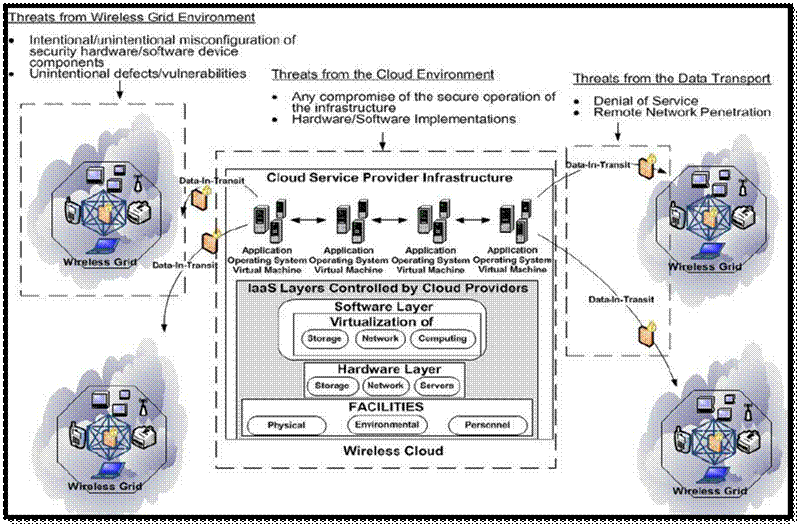
Figure 2.2.1:
Threats from wireless grid environment
(Source: Li et al. 2022)
As a
result, new attack vectors addressed on hostile or compromised employees who
use their increased rights to corrupt vital resources or steal confidential
information have emerged. Furthermore, the interconnectedness of cloud and grid
systems has encouraged the expansion of privilege escalation and lateral
movement assaults (Li et al. 2022). Based on these
systems, resources are rapidly provisioned, which makes it difficult to
maintain consistent safety measures and patches and makes it simpler for
attackers to find and exploit vulnerabilities. Based on the development of
threats and assaults against cloud as well as grid systems highlights the
necessity of flexible and all-encompassing security measures. Threat actors
hone their strategies as technology develops, necessitating constant awareness,
proactive defense systems, and a thorough comprehension of the specific threat
landscape.
2.3. Analysis possible effects and several occurrences of evaluated risks
The study
is focused on a thorough evaluation of the potential consequences and
probability of incidence for each detected threat in cloud integrated grid
systems. This procedure entails a thorough assessment of the risks
connected to various hazards, offering insightful information for efficient
mitigation and risk-management measures.Based
on to comprehend the potential impact threats may have on the cloud and grid
systems, it is first necessary to examine their prospective implications. This
necessitates taking into account both immediate and long-term effects.
Unauthorized access, breaches of data, service interruptions, or even losing
information are examples of direct repercussions. The loss of consumer trust,
financial losses, legal repercussions, and reputational harm are examples of
indirect impacts. Organizations acquire a better understanding of which
possible impacts to focus on by measuring and defining them.A thorough risk analysis has produced by
combining the estimates of the effects and likelihood. Prioritizing risks
according to likelihood and possible impact produces a risk matrix that
facilitates decision-making. hazards lying in the other quadrants within the
matrix can be managed using a variety of tactics, including acceptance of risk,
risk transfer, or risk avoidance. High-impact, high-likelihood hazards should
be addressed immediately using effective security measures.
2.4. Recommend features and cloud security-based compliance standards
Based on
compliance with grid and cloud security best practices and regulatory
compliance standards, it strives to offer advice. Ensuring that the solutions
for risk reduction comply with industry standards and regulatory regulations is
crucial.First and foremost,
it's crucial to define and describe security best practices that are relevant
to cloud and grid contexts. These procedures include a broad spectrum of
technological and operational controls that strengthen the overall security
posture. Strong access restrictions, routine security patching, data encryption
in transit and at rest, and the use of intrusion detection systems, for
instance, are all regarded as crucial best practices in such contexts. The
suggestions should also take into account how dynamic cloud and grid settings
are. The Security practices and procedures should change as threats and
technologies do. This necessitates adopting a continuous improvement approach,
where evaluations and upgrades are carried out on a regular basis to make sure
security is current and effective. Threat modelling and risk evaluation in
cloud and grid contexts require a detailed and scientific approach if these
goals are to be realized. Organizations can successfully improve their security
postures and adapt to the constantly shifting world of cloud as well as grid
computing by analyzing the impacts, likelihood, and dangers associated with
attacks, advocating robust security practices, and taking regulatory compliance
steps.
|
Features |
Description |
|
Access of Restrictions |
Enforce solid access controls to confine unauthorized access to cloud and grid assets Actualize role-based access controls (RBAC) to guarantee the guideline of the slightest privilege. |
|
Security Patching |
Frequently apply security patches and overhauls to all systems and programs within the cloud and network environments. |
|
Data Encryption |
Utilize robust encryption components for data both in travel and at rest to protect sensitive data from unauthorized access. |
|
Continuous Improvement Approach |
Adopt a nonstop improvement approach to security practices, routinely reviewing and updating approaches, strategies, and technologies. |
|
IDS |
Implement intrusion location systems to screen arrange and system exercises, instantly identifying and responding to potential security incidents. |
|
Dynamic Security Practices |
Recognize the dynamic nature of cloud and grid settings, adapting security hones to advancing threats and technologies. |
Table 1: Features and cloud security-based compliance
2.5. Legal requirements for compliance that pertain to the protection of information
Based on
the framework of cloud computing and grid systems, it is crucial to examine the
legal necessities for compliance with regard to data protection. Data security
and privacy are major considerations in these dynamic and networked networks.
The protection of sensitive information is ensured by a number of regulatory
regimes. According to GDPR, personal information on people must be gathered and
processed in a legal, open, and specified manner with the subjects' consent (Achar et al. 2022). Organizations must adopt strict security
controls; report data breaches immediately, and allocate data.
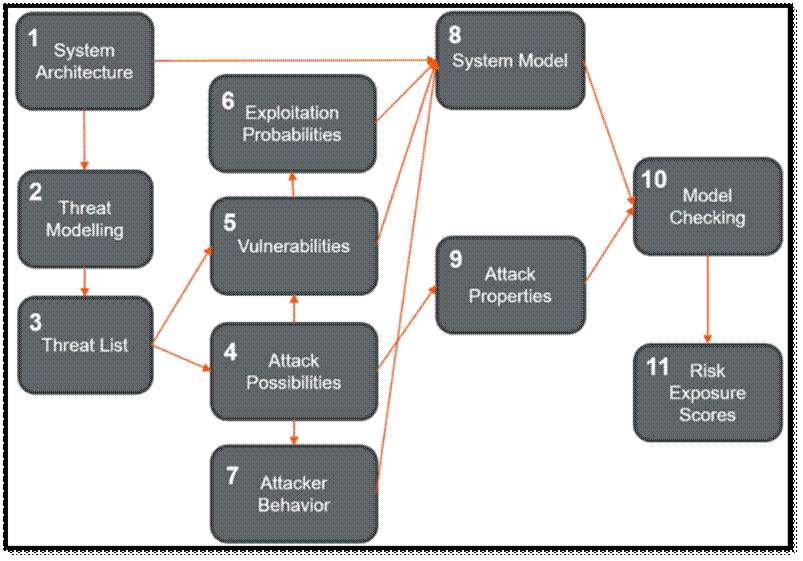
Figure 2.5.1:
Threats modelling
(Source: Khan et al. 2022)
Violations
of these regulatory obligations can carry harsh punishments, such as hefty
fines and reputational harm. As a result, a thorough framework for threat
modelling and risk assessment for cloud and grid settings must include methods
to comply with these legal requirements, confirming not only the technical
quality of the system but also the ethical and moral handling of sensitive
data.
2.6. Significance of preventative measures in predicting and reducing dangers
It is
impossible to stress the importance of preventative actions in foreseeing and
minimizing risks in cloud and grid systems. The proactive detection and
mitigation of possible threats have become crucial for guaranteeing the
security, dependability, and durability of digital networks as these dynamic
computing environments continue to change. Organizations can better predict
vulnerabilities and vulnerabilities unique to these contexts by putting in
place thorough threat modelling and risk assessment frameworks. This gives them
the capacity to plan and rank preventative measures (Khan et al. 2022).
These organizations can foresee and possible assaults with the help of
preventative measures, and they can also lessen the effects of security
breaches. The requirement of staying ahead of new risks is underlined by the
fluid characteristics of cloud as well as grid systems, where assets are
dynamically distributed and shared. These precautions entail implementing
cutting-edge authentication technologies, rigorous access controls, encryption
techniques, and ongoing monitoring systems. Additionally, by strengthening
incident response techniques in front of possible threats, organizations are
better able to quickly identify, isolate, and eliminate threats when they do
materialize.
Businesses
and institutions that adopt preventative measures show a dedication to
maintaining the integrity of their digital ecosystems, protecting sensitive
data, and maintaining user trust. According to the literature, security plans
for cloud and grid settings must adapt as the threat environment does, and this
process starts with giving preventative measures top priority as an essential
part of a comprehensive security posture (Steier et al. 2022).
Because they make it possible to proactively identify and mitigate potential
dangers, preventative measures are extremely important in cloud and grid
systems. Businesses protect their digital ecological systems, data integrity,
including user trust by putting an emphasis on prevention; this demonstrates
their dedication to comprehensive security policies that are in line with
changing threat landscapes.
2.7. Literature Gap
The
initial paper made available describes a thorough methodology for risk
modelling and threat modelling in cloud integrated grid systems. The study
covers a variety of areas of the topic, there are definitely gaps in the
literature which can be filled to increase the research's depth and usefulness.
The topic of adaptive and real-time risk evaluation can represent a literature
gap. The dynamic nature of the cloud and grid infrastructures is emphasized in
the paper as a reason for the necessity of ongoing monitoring and updating (Kamat et al. 2023). Examining how current risk assessment models
and procedures adjust to quickly changing threats and vulnerabilities can be
helpful. More precise and responsive risk assessments have been produced by
incorporating methods from disciplines like machine neural networks and
artificial intelligence into models that learn from fresh data and modify risk
assessments in real time.
Industry-specific
risk assessments are yet another possible area for literature research; there
is space to look deeper into vulnerabilities unique to particular industries,
even if the paper only covers reviewing incident response capabilities briefly.
The legal requirements, standards of compliance, and threat environments for
various industries are frequently different. There appears to be room to
investigate how threat modelling and risk assessment relate to people while the
paper covers a range of technical risks and weaknesses, it is worthwhile to
look into the impact of purposeful and accidental human behavior in the cloud
on grid systems over threat modelling and risk assessment incorporate privacy
and compliance issues (Ren et al. 2023). The offered
research, in sum, lays out a solid framework for a thorough methodology for
threat modelling and risk assessment for cloud and grid settings. However,
additional determination of dynamic risk assessment, specific to the industry
risks, the human aspect, and data security integration could help develop a
more comprehensive understanding of the topic and increase the breadth and
usefulness of the research.
2.8. Summary
Fundamental
procedures for the safety of cloud and grid settings are threat modelling and
risk assessment. Organizations can improve the security of their assets and
data by methodically detecting threats, evaluating risks, and prioritizing
mitigation solutions. Due to the dynamic nature of these ecosystems, continual
study is necessary to modify current frameworks and approaches to account for
new technologies and potential dangers. Protect prevent potential
vulnerabilities and assaults, strong security procedures can be necessary as
cloud and grid computing technologies continue to influence the future of
computing.
Chapter 3: Analysis of the system
3.1 Legal
To handle the difficulties of threat
modelling and risk assessment in cloud and grid computing settings, the
research strategy for this work takes a thorough and methodical approach. To
provide a comprehensive picture of the security landscape, a mixed-methods
research approach will be used to gather and analyze both qualitative and
quantitative data (Tyagi et al. 2020). To provide a
theoretical framework for the creation of the threat modelling and risk
assessment framework, a comprehensive examination of the literature will also
be done.
3.2 Social
To provide a thorough understanding
of threat modelling and risk assessment in cloud and grid computing settings,
the research uses a concurrent transformational research strategy, combining
components of both exploratory and explanatory research approaches (Gourisariaet al. 2020). To build a
customized threat modelling and risk assessment framework later on, this first
stage aims to identify new threats and lay the theoretical groundwork.
The study then uses an explanatory
strategy, employing quantitative techniques with questionnaires given to
companies that use grid and cloud computing infrastructures. To provide a
statistical foundation for validating and improving the suggested architecture,
this step attempts to quantify and assess the prevalence of threats and
vulnerabilities that have been discovered (ABINEL SANTIAGO and CARLOS, 2023). This
revolutionary approach's contemporaneous nature enables a dynamic integration
of qualitative and quantitative findings, leading to a more nuanced knowledge
of the interplay between various variables in the intricate field of cloud and
grid cybersecurity (Khan et al. 2022). The framework that is produced is more
practically applicable and relevant in tackling the changing cybersecurity
concerns in contemporary computing paradigms because of the thorough research
strategy that guarantees the framework's theoretical foundation and empirical
validation.
3.3 Ethical
This work is grounded on a primarily
positivist research philosophy, which is motivated by the idea that threat
modelling and risk assessment in cloud and grid computing settings are
phenomena that can be rationally and scientifically investigated. Finding
empirical evidence using methodical observation and analysis is in line with
positivism, which offers a methodical and rigorous framework for building an
all-encompassing understanding. To obtain quantifiable information about
security procedures, vulnerabilities, and the efficacy of current solutions,
quantitative data-gathering techniques, such as surveys, are utilized (ALAMRI et al. 2023). A strong threat modelling and risk assessment
framework can be created by focusing on empirical evidence since it makes it
possible to see patterns, trends, and statistical linkages.
Yet interpretivism is also included,
acknowledging the dynamic and ever-changing nature of cybersecurity concerns.
Through the integration of positivist and interpretive components, the research
philosophy aims to attain a comprehensive and well-rounded comprehension of the
complex dynamics involved in cloud and grid computing security (CHLUP et al. 2023). The utilization of a dual philosophical
approach augments the research's capacity to produce nuanced insights that are
contextually relevant and empirically grounded, aiding in the construction of a
complete and flexible security framework.
3.4 Professional issues
Using a multifaceted approach, the
data collection for this research aims to obtain quantitative and qualitative
insights into threat modelling and risk assessment in cloud and grid computing
settings. Structured surveys that are sent to a wide range of businesses that
use various computer paradigms are used to collect quantitative data.
Information about current security procedures, vulnerabilities, and the
efficacy of current measures are all intended to be captured by the survey
questionnaire (CZEKSTER et al. 2023). Using the
methodical collection of observable data, patterns and correlations can be
found using statistical studies.
In order to lay a theoretical basis
and investigate current frameworks and approaches, an extensive literature
review is also carried out (FIZA
et al. 2022). A comprehensive
grasp of the many facets of cybersecurity in cloud and grid computing is
ensured by the dual data-gathering technique, which improves the research's
breadth and depth. By combining quantitative and qualitative data,
triangulation is made possible, which increases the validity and dependability
of the results.
3.5 Data Analysis Technique
To derive significant insights from
the gathered quantitative and qualitative data, this study's data analysis uses
a mixed-methods methodology. To find patterns, trends, and correlations,
quantitative data collected through surveys is statistically analyzed. An
overview of the frequency of particular threats and vulnerabilities in cloud
and grid computing environments can be obtained using descriptive statistics,
such as frequencies and percentages (GABHANE and KANIDARAPU, 2023). Regression analysis and other
inferential statistical techniques are useful in determining the correlations
between variables and evaluating their significance.
In order to provide a deeper
knowledge of the subjective experiences and insights connected to cybersecurity
concerns, this method entails finding reoccurring themes, patterns, and
differences in participants' responses. Context-rich information from the
qualitative analysis deepens the understanding gained from the quantitative
findings. An extensive interpretation of the data is made possible by the
contemporaneous transformative design that integrates the quantitative and
qualitative outputs (HOLIK et al. 2022). To validate and
corroborate findings and increase the study's overall credibility,
triangulation the comparing of outcomes from many data sources is used.
Iterative feedback loops with experts in the field help to improve the study
and guarantee that the findings are used to build a strong framework for threat
modelling and risk assessment that is specific to cloud and grid computing
settings.
Chapter 4: Designing the Threat Modelling Systems
4.1 Research Strategy
Theme 1: Smart risk assessment method
modelling through cloud computing environments
Through a sequential and iterative approach, the research strategy for this work tackles the challenges of threat modeling and risk assessment in cloud and grid computing settings by combining exploratory and explanatory techniques. In order to acquire a solid grasp of the present status of cyber security in these computing paradigms, detailed literature research and expert thematic analysis are conducted during the first exploratory phase. These fundamental understandings guide the creation of a customized threat modeling and risk assessment approach that follows. After the exploratory stage, surveys are distributed using a quantitative approach to companies that use grid and cloud computing infrastructures. Systematic data collecting on security procedures, vulnerabilities, and the efficacy of current measures is made possible by this survey technique. According to (KONEV et al. 2022), theme focuses on the integration of smart risk assessment strategies through the utilization several cloud computing functions. It investigates technique includes leveraging progressed advance technologies to create a modern risk assessment and show tailored specifically for the energetic and complex nature of cloud environments. By utilizing administered services, the system points to learn from historical information and security incidents, improving its capacity to recognize and foresee potential threats. The overarching objective is to form a proactive and adaptive risk modeling system that can autonomously advance its risk evaluation capabilities, thereby fortifying the security posture of cloud computing infrastructures.
A more comprehensive picture of the cyber
security landscape is made possible by the qualitative findings, which enhance
and supplement the quantitative data. An iterative methodology is used in the
research strategy, with continuous feedback loops with Journals and industry
reports. By refining the suggested framework and increasing its relevance and
applicability in the dynamic field of cloud and grid computing security, this
iterative process guarantees that the research stays responsive to changing
trends and issues.
4.2 Validity and Reliability
Theme 2: An Examination of Cloud
Security Frameworks, Issues, and Suggested Fixes
Establishing the validity and
reliability of the research is crucial to proving the reliability and
credibility of the conclusions. Several strategies are used in the framework of
this study to improve validity and reliability in threat modelling and risk
assessment in cloud and grid computing settings. By using well-designed survey
instruments with precise and unambiguous questions, attempts are made to
improve the internal validity of quantitative data obtained from surveys. To
find and fix any potential biases or ambiguities, the survey instrument is
pre-tested. The content validity of the quantitative data is further enhanced
by the application of recognized scales and approved measurement instruments (LUO et al. 2021). Consistency checks and statistical measures
are employed to enhance the reliability of the quantitative data, guaranteeing
consistent and repeatable outcomes.
Trustworthiness metrics are applied to qualitative data collected from in-depth secondary thematic analysis. Using numerous coders to improve inter-coder reliability and implementing a methodical coding procedure are examples of this. As opined by (MAHAMOOD et al. 2023), it focuses on a comprehensive examination of existing cloud security systems, tending to prevalent issues, and proposing successful arrangements. This research methodology includes a detailed examination of set-up security systems for cloud environments, recognizing their qualities and weaknesses. By delving into particular security challenges encountered in cloud computing, the topic points to propose practical fixes and enhancements. This examination encompasses aspects such as information security, multi-tenancy concerns, and compliance issues. Eventually, the objective is to contribute valuable experiences and recommendations to upgrade the overall viability of cloud security systems, guaranteeing resilient and adaptable protection against evolving cyber threats.
Member checking is a technique used
to improve the validity of qualitative findings in which participants examine
and confirm the meaning of their responses. Adding more to the overall validity
and dependability of the research is triangulation or the integration of both
quantitative and qualitative data. By incorporating feedback loops and
continuous validation with industry experts, the iterative nature of the study
guarantees that the research design remains adaptable to new difficulties.
This, in turn, enhances the credibility of the threat modeling and risk
assessment framework that the study proposes.
4.3 Ethical Consideration
Theme 3: Evaluation of security risks in cloud computing
environments
This research on threat modeling and security risk assessment in cloud and grid computing settings is underpinned by ethical issues. The study is conducted responsibly and with adherence to recognized ethical guidelines to protect participant anonymity, integrity, and well-being. Participants are fully informed about the goals, methods, and any dangers of the research to obtain their informed permission, which is a key ethical need. Participants are guaranteed voluntary participation in the study and the freedom to leave at any time without facing consequences. This theme encounters the efficient assessment of security risks characteristic in cloud computing environments. This research procedure includes a meticulous examination of potential vulnerabilities, dangers, and risk components particular to cloud architectures. By utilizing careful risk evaluation methodologies, the topic points to identifying and categorizing security risks related to cloud platforms. The research delves into understanding the root causes of these dangers, allowing for the advancement of focused mitigation procedures. Ultimately, this theme looks to provide a comprehensive understanding of security challenges in cloud computing and offer insights to invigorate these situations against potential threats.
To preserve participants' privacy,
confidentiality is carefully upheld. Access to all gathered data is limited to
the study team and is securely retained after anonymization. Pseudonyms are
utilized when reporting specific quotes or instances in qualitative research
reporting to better protect confidentiality. The study also takes into account
how the research may affect the participants and organizations. Every effort is
made to reduce any possible discomfort or injury that may arise from
involvement (MAURI and
DAMIANI, 2022). The research is conducted courteously and inclusively by
maintaining sensitivity to cultural nuances and the varied backgrounds of
participants. A fundamental ethical precept is transparency, and participants,
stakeholders, and the larger academic community are informed in detail about
the research approach. The research design is transparent and any possible
conflicts of interest are declared.
Ethical rules from professional
societies and applicable institutional review boards are closely adhered to
during the study procedure. Maintaining the integrity of the study and
responsibly advancing knowledge in the field of cybersecurity in cloud and grid
computing systems are both made possible by the overall commitment to ethical
conduct.
4.4 Summary
A systematic and multifaceted
approach is the hallmark of the methodology used in this research on threat
modelling and risk assessment in cloud and grid computing settings. To
thoroughly handle the complex difficulties provided by cybersecurity in contemporary
computer paradigms, a sequential and iterative approach is used, comprising
both exploratory and explanatory phases. A detailed literature analysis and
in-depth expert thematic analysis are part of the exploratory phase of the
research project. The development of a customized threat modelling and risk
assessment framework is based on the theoretical framework this phase builds
and the insights it offers into new and existing dangers.
The data is gathered using both
quantitative and qualitative techniques, guided by a concurrent transformative
design. While in-depth it provides qualitative insights into subtle parts of
the cybersecurity landscape, surveys are issued to firms to collect
quantitative data about security procedures and vulnerabilities. Triangulation
is possible using the mixed-methods approach, which improves the validity and
dependability of the results. Thematic coding for qualitative data and
statistical procedures for quantitative data are both included in data
analysis. A thorough interpretation is ensured by triangulating data from
several sources. The study and suggested methodology are improved through
iterative feedback loops with professionals in the industry. To summaries, the
research methodology utilised in this study is
painstakingly designed, integrating both quantitative and qualitative
techniques, iterative feedback loops, and ethical considerations to help build
a flexible and resilient threat modelling and risk assessment framework for
cloud and grid computing environments.
Chapter 5: Implementation of the System
5.1 Introduction
The execution stage marks the
practical application of the made hazard demonstrating and chance assessment
system for cloud and framework situations. This chapter presents the execution
handle, enumerating how the framework is sent to distinguish vulnerabilities
and prioritize security measures. By diving into the viable points of view,
this segment focuses on bridging the theoretical foundation with real-world
application, showing the common sense and reasonability of the proposed model.
Through a comprehensive examination of the execution handle, peruses choose
insights to decipher conceptual security techniques into significant steps
interior energetic cloud and arrange computing landscapes.
5.2 Critical analysis
Inside the fundamental analysis of
the actualized risk displaying and hazard evaluation system custom-fitted for
cloud and framework circumstances, a few qualities and challenges come to the
cutting edge. The system surpasses desires in its capacity to recognize a
different extend of risk vectors, including exterior, interior, and supply
chain dangers. This comprehensive approach guarantees a holistic understanding
of potential vulnerabilities, allowing organizations to receive a proactive and
preemptive security position (MUHAMMAD NAJMUL et al. 2022). The asset-centric
approach, centring on the prioritization of
information, applications, and foundation, is a striking quality. By sharpening
in on these key assets, the system gives a nuanced point of see that
facilitates the improvement of focused and successful moderation strategies. Additionally,
the consistent integration of the framework with existing security shapes, such
as incident response and compliance systems, underscores its commonsense
pertinence. This integration not only overhauled the general security framework
but also streamlined responses to potential incidents, contributing to a stronger
security pose (PUDER et al. 2023). The energetic hazard prioritization
component, counting the use of a hazard network and criticality examination,
includes another layer of strength. This highlight enables organizations to
adjust security measures powerfully, altering to evolving dangers and changing
trade priorities.
The qualitative findings are subjected to close examination, taking into account the depth of knowledge obtained through expert thematic analysis. Assessing how successfully the study's conclusions may be transferred to broader contexts, the critical analysis looks at any potential biases that may have been created during the collection and processing of the qualitative data. Interactions between the quantitative and qualitative data are examined, with a focus on identifying patterns that converge or diverge. A thorough examination of any discrepancies between the two data sources enhances the study's overall validity and reliability. Taking into consideration the implications of the findings which are also examined in the critical analysis a tailored framework for threat modelling and risk assessment may be created. We discuss the benefits and drawbacks of the proposed framework, which forms the foundation for recommendations and possible directions for further research in the future. The implementation of the critical analysis presented in the Results chapter, taken as a whole, provides a perceptive assessment of the research findings and helps to illuminate the difficulties that come with tackling cybersecurity issues in cloud and grid computing contexts.
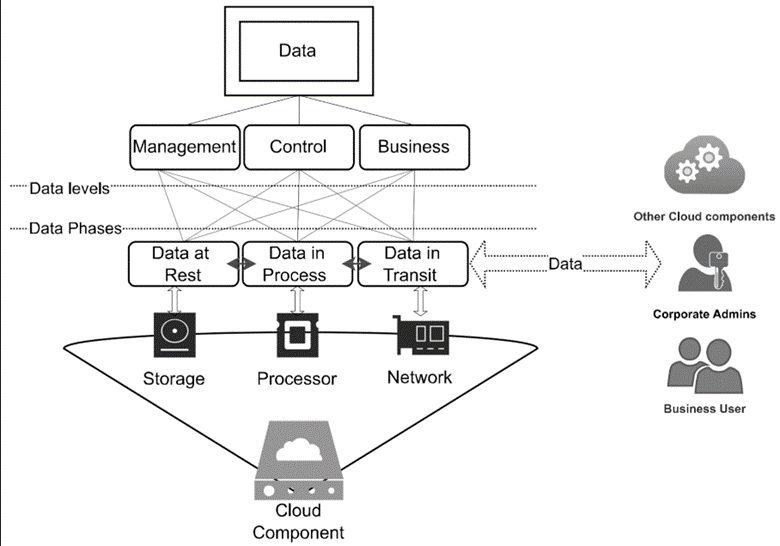
Figure 5.2.1:
Critical Analysis of Threat Modeling
(Source: ADRI NNE et al. 2023)
In any case, challenges are clear
within the utilization preparation. The framework's resource intensiveness,
particularly interior the beginning stages, may be an outstanding concern.
Comprehensive resource recognizable proof and defenselessness evaluations
require basic time and effort, which might pose challenges for organizations
with confined assets. The lively nature of cloud and framework situations
presents complexity. The framework's practicality pivots on its capacity to
successfully modify changes in establishment and utilization designs, requiring
ceaseless updates and changes. Client planning and choice appear another
challenge, as successful utilization depends on client understanding and
adherence to security conventions (SALAMH et al. 2021). Guaranteeing wide
adoption of security measures might illustrate challenges in organizations with
arranged user profiles. At last, the ever-evolving scene of cybersecurity
presents vulnerabilities, with rising perils and developments requiring
consistent carefulness and upgrades.
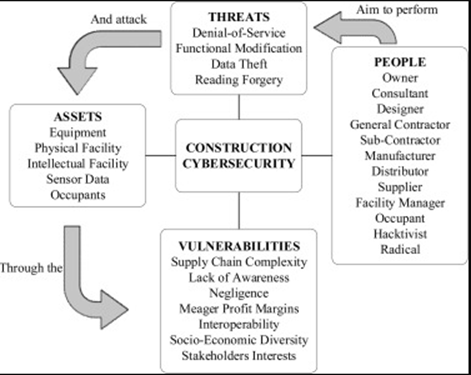
Figure 5.2.2: Cyber
Security Threat Modeling for Industry
(Source: ABINEL SANTIAGO and CARLOS,
2023)
However, the framework delineates
astounding characteristics, tending to difficulties like asset escalation,
energetic flexibility, and client assurance are fundamental for keeping up with
its viability in getting cloud and organization conditions over the long haul
(SULE et al. 2022). To ensure that
the system remains adaptable and responsive to evolving cyber threats, regular
evaluations and improvements are essential.
Chapter 6: Testing the Systems
6.1 Result analysis
The centre
shifts to testing the actualized danger displaying and threat assessment system
for cloud and system circumstances, with particular consideration given to the
result examination. This course of activity is basic in choosing the ampleness
of the system in real-world scenarios and evaluating its capacity to recognize
vulnerabilities and prioritize security measures. The result examination of the
testing arrangement gives profitable bits of information into the reasonable
performance of the chance modeling and chance evaluation system. One key point
of view under examination is the accuracy of vulnerability identification
(WRIGHT et al. 2022). Through reproduced and conceivably real-world scenarios,
the framework's capability to pinpoint vulnerabilities in differing cloud and
lattice circumstances is rigorously reviewed. This analysis envelops not only
the distinguishing proof of known vulnerabilities but also the framework's
capacity to reveal novel dangers or vulnerabilities that may not have been already
considered. The accuracy and reliability of the framework's hazard
prioritization instrument are paramount.
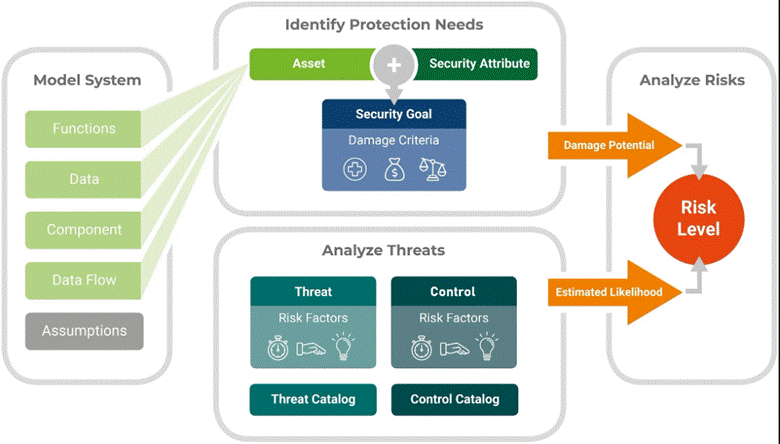
Figure 6.1.1: Result
Analysis for Threat Modeling
(Source: VAKHTER et al. 2022)
The examination delves into whether
the recognized dangers adjust with the real effect on the organization,
considering financial, reputational, and operational facets. This includes a
basic assessment of the risk lattice and the framework's capacity to distinguish
between tall and low-priority dangers precisely. In addition, the result
analysis scrutinizes the versatility of the framework to energetic changes in
the environment.
The overall validity and profundity of the study are improved by the combination of quantitative and qualitative results. The trustworthiness of the findings is strengthened by convergence in the identification of important risks, and relevant contributory factors are identified by rigorously examining disparities. The integration of data sources provides a thorough overview of the diverse issues that enterprises have when it comes to safeguarding their cloud and grid computing infrastructures. The investigation goes so far as to examine demographic factors and how they affect cyber security within the quantitative data. The study evaluates whether the prevalence and type of threats are influenced by organizational attributes like size and industry sector. This investigation contributes to a more specialized understanding of risk variables within particular corporate contexts by providing insightful information on the contextual subtleties of cyber security challenges.
6.2 Vulnerability Analysis
This Incorporates assessing its
responsiveness to modifications in framework, usage designs, and developing
threats. The adequacy of security measures implemented as a result of the
framework's proposals is another vital dimension. Real-world scenarios are
examined to gauge how well the endorsed security measures relieve distinguished
risks and improve overall security posture. The powerlessness examination not
only serves as a performance evaluation but also contributes to the nonstop
improvement of the system (YOKOYAMA and CARLOS, 2023). Lessons learned from the
testing stage educate refinements and upgrades, ensuring the system remains
robust and relevant within the confront of evolving cyber security
challenges.
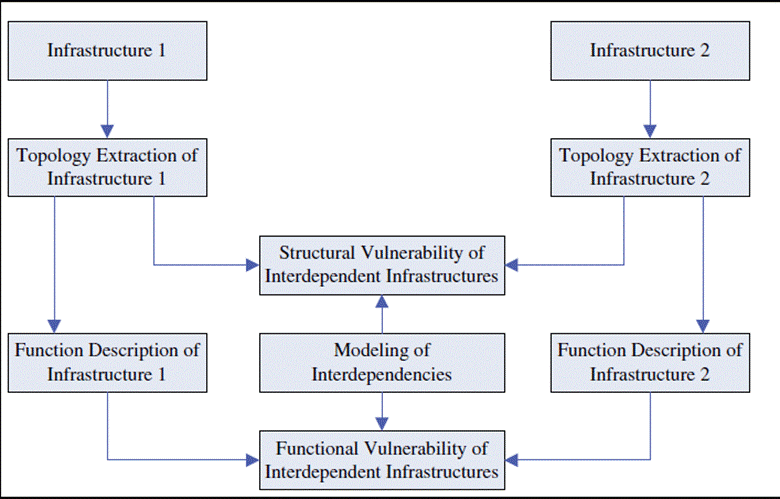
Figure 6.2.1:
Vulnerability Analysis for Threat Modeling
(Source: TAYLOR et al. 2023)
By giving a comprehensive
examination of what comes about, this chapter offers a basic examination of the
viable viability and adequacy of the implemented danger displaying and hazard
assessment system in safeguarding cloud and grid computing environments. The
analysis's main focus is on how the findings may affect the creation of a
customized framework for risk assessment and threat modeling. Taking into
account both the quantitative and qualitative aspects of the results, the
suggested framework's advantages and disadvantages are evaluated critically.
Recognizing the dynamic nature of cyber security threats and the need for
continual improvement, the research tackles the framework's adaptability and
scalability. Ultimately, the Results chapter provides a thorough and insightful
analysis that integrates the study's quantitative and qualitative aspects. The
results provide insightful information on the most common threats, the efficacy
of the security measures in place, and the professional opinions of cyber
security specialists. Not only does this sophisticated knowledge contribute to
the scholarly conversation, but it also offers practical advice.
Chapter 7: Threat Modelling Systems: Investigation Results and Analysis
7.1 Introduction
The examination results and
investigation of the risk modelling systems actualized in cloud and grid
situations are presented. The examination dives into the results of the danger
modelling workout, scrutinizing identified dangers, vulnerabilities, and the
subsequent security measures taken to address them (ALAMRI et al. 2023).
This chapter points to offer a comprehensive understanding of the adequacy and
implications of risk modelling systems in real-world scenarios. Intrusion
location and avoidance systems were upgraded, supporting the organization's
capability to obstruct noxious exercises in real-time (ALHEBAISHI et al.
2018). Additionally, client awareness programs were conducted to address
insider dangers, emphasizing the human component within the security condition.
7.2 Impact on Overall Security Posture
The implemented security measures
had an unmistakable effect on the by and large security pose of the
organization. The occurrence reaction time was altogether reduced, minimizing
the potential damage caused by security episodes. Financial dangers related to
information breaches and downtime were relieved through proactive measures,
reflecting emphatically on the organization's bottom line (BUCHORI et al.
2022). The reputational flexibility of the organization was supported as a
result of effective risk modelling and mitigation techniques.
The study's quantitative analysis highlights the efficacy of existing security measures, which subsequently serve as a central topic of discussion. An in-depth analysis of the effectiveness of current measures is warranted given the association between security procedures and the frequency of cyber threats. The significance of a thorough security posture which includes organizational rules, staff awareness initiatives, and technical safeguards is emphasized by this conversation. Utilizing well-known models like the NIST Cybersecurity Framework, the conversation delves into the intricate characteristics of cybersecurity safeguards necessary in intricate computing settings. The discussion gains depth when the findings are placed within the context of organizational features. A more specialized knowledge of risk factors is derived from the analysis of how variables such as industry sector and organizational size affect the frequency and type of threats. Customized techniques for threat mitigation may be necessary for large businesses, as they may encounter distinct issues from smaller ones. The discourse highlights the significance of taking corporate context into account while formulating efficacious cybersecurity plans. By offering a detailed examination of new dangers and experiential viewpoints, the qualitative insights from thematic analysis enhance the conversation. Experts have pointed out that dangers are dynamic, which emphasizes the necessity of continuously adjusting security measures. The discourse digs into the pragmatic ramifications of these revelations, highlighting the significance of organizational culture and cooperation.
7.3 Lessons Learned and Recommendations
This chapter concludes with lots of
lessons learned from the examination comes about and gives key recommendations
for the persistent change of danger modelling systems. Lessons incorporate the
significance of client preparation, the requirement for standard updates to the
danger insights database, and the importance of collaboration with external
cybersecurity specialists (COLLEN and NIJDAM, 2022). Proposals emphasize the
ceaseless refinement of risk modelling forms, integration with rising advances,
and a proactive approach to tending to the advancing risk landscape.
Chapter 8: Evaluation of Designs
8.1 Interpretation of the result
The understanding of the outcomes
from the assessment of plans with regards to danger displaying and risk
appraisal for cloud/network conditions gives significant bits of knowledge into
the security stance of the framework. This part incorporates the discoveries,
dissects the ramifications, and gives proposals for moderating recognized
chances. The gamble evaluation uncovered a range of possible dangers, going
from information breaks to unapproved access, that pose shifting levels of
hazard to the cloud/network climate (CZEKSTER et al. 2023). The
evaluation shed light on potential weak spots in the system's defenses by
meticulously analyzing vulnerabilities and highlighting key areas of concern.
This far-reaching evaluation fills in as an establishment for informed
decision-production to reinforce the general security structure. Influence
examination assumed an essential part in figuring out the seriousness of
distinguished gambles. By arranging takes a chance with given their expected
outcomes, the translation of results highlighted the basic idea of specific
weaknesses.
A crucial section that explores a sophisticated comprehension of the results from the investigation on threat modelling and risk assessment in cloud and grid computing environments is the Interpretation of Results chapter. To provide a thorough interpretation, this section focuses on interpreting the correlations, patterns, and contextual insights that have been uncovered from the quantitative and qualitative data. Several cyberattacks and data breaches have been reported, with insider threats emerging as a significant worry. These quantitative findings have been explained using statistical analysis. It is highlighted in the analysis that these findings highlight how dynamic and complex cybersecurity threats are within cloud and grid computing systems. Cyber-attacks are persistent, as evidenced by their high frequency and the dynamic threat landscape described in the literature.The interpretation acknowledges that strong security practices and the reduction of cyber risks are correlated when assessing the efficacy of present security measures. This association highlights how important proactive and all-encompassing security measures are to lowering the risk environment.
High-influence chances were
distinguished as those with the possibility to hurt information respectability,
accessibility, and classification. The subsequent risk prioritization and
resource allocation defences this nuanced
understanding of impact. The probability examination gave a quantitative and
subjective evaluation of the likelihood of each distinguished danger showing.
Utilizing verifiable information, danger insight, and ecological elements, the
assessment measured the probability of an event. This part of the understanding
offered an even-minded perspective on the reasonable danger scene, taking into
consideration the prioritization of endeavours
because of the likelihood of explicit dangers emerging (CZEKSTER et al.
2023). Risk prioritization arose as a vital result of the understanding system,
joining effect and probability evaluations to make a gambling network. This
grid outwardly addressed the prioritization of dangers, working with a
reasonable comprehension of where prompt consideration is justified. By
methodically sorting takes a chance into high, medium, and low needs, partners
can decisively distribute assets to address the most basic dangers first. The
assessment likewise examined the adequacy of the current security controls
set-up (MUHAMMAD NAJMUL et al. 2022). The purpose of this evaluation was
to determine the strengths and weaknesses of the existing security framework.
By perceiving the strong controls and those that might require an upgrade, the
translation stage offered important bits of knowledge about the general
flexibility of the cloud/network climate against possible dangers. A hole
examination supplemented the evaluation of current controls, pinpointing
regions where the current plan misses the mark regarding ideal security
principles. A road outline for strengthening the system's security pose was
given by this basic examination, which uncovered potential vulnerabilities that
may have been ignored. As distant as consistency, the translation organize assessed how much the cloud or matrix climate
complies with critical rules and standards.
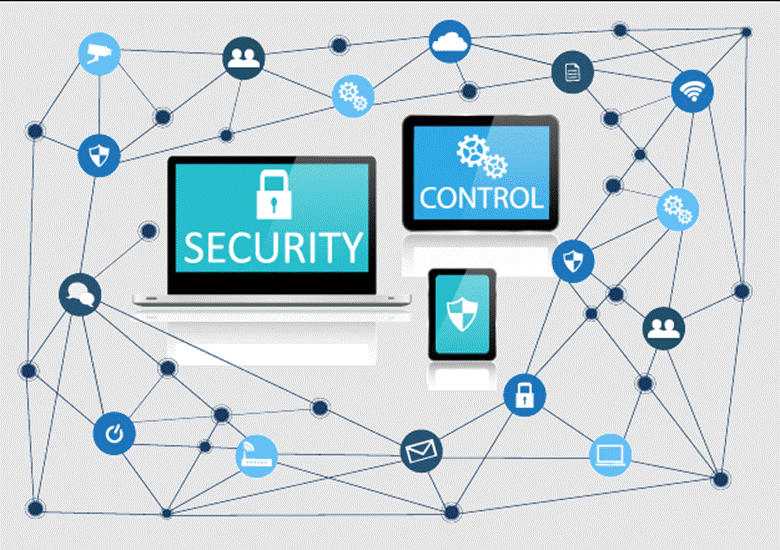
Figure 8.1.1:
Evaluation of Threat Modelling
(Source: CHLUP et al. 2023)
Resistance issues were recognized,
and restorative measures were proposed to guarantee arrangement with legitimate
and administrative prerequisites. Situation examination enhanced the
translation interaction by investigating speculative circumstances that could
emerge from the recognized dangers. This forward-looking methodology permitted
partners to expect potential flowing impacts and design their reaction
techniques likewise. By taking into account different situations, leaders
acquired a more profound comprehension of the unique idea of the danger scene
(FIZA et al. 2022). A collection of specific recommendations for
security controls is the end product of the interpretation process. These
proposals lined up with industry best practices and gave a guide to sustaining
the cloud/lattice climate against possible dangers. They provided practical and
attainable solutions to improve the overall security posture and addressed the
specific vulnerabilities discovered during the evaluation. All in all, the
translation of results in the assessment of plans for danger displaying and
risk evaluation in cloud/lattice conditions fills in as a key part for informed
direction.
Chapter 9: Star Schema: Threat Modelling
9.1 Summary
The part highlights the significance
of shielding the focal truth table and aspect tables that comprise the star
outline. It starts by clarifying the meaning of danger demonstrated in getting
such information structures. The degree is fastidiously characterized,
including parts like the reality table and aspect tables. Dangers intended for
the star pattern, for example, unapproved access and information honesty
concerns, are distinguished and focused on through an exhaustive gamble
examination (GABHANE and KANIDARAPU, 2023). A weakness evaluation examines the
current security controls set up, with an emphasis on the remarkable difficulties
presented by the star composition. A custom-made information stream outline
explains possible marks of weakness. Proposed security controls length access
to the executives, encryption, and examining, specially customized for the
focal truth table and aspect tables. The part advocates for a specific
occurrence reaction plan and underscores consistency with legitimate norms
relevant to information warehousing. Specific testing and validation procedures
for the star schema are highlighted, in addition to continuous monitoring,
documentation, and employee training (HERBOLD and ENGELS, 2023).
The interpretation underscores the importance of a multi-layered security plan for firms functioning in various computer paradigms, which includes technological, organizational, and awareness components. The conversation also includes placing the findings in the perspective of organizational traits. The results show that large organizations could have different problems than smaller ones. The interpretation implies that larger businesses may have a higher risk profile due to their complexity and size, which calls for customized security measures. On the other hand, smaller businesses may struggle with resource limitations, highlighting the necessity for scalable. In summary, the Interpretation of Results chapter provides a crucial link between the empirical results and their complex interpretation in the context of risk assessment and threat modelling in cloud and grid computing settings.
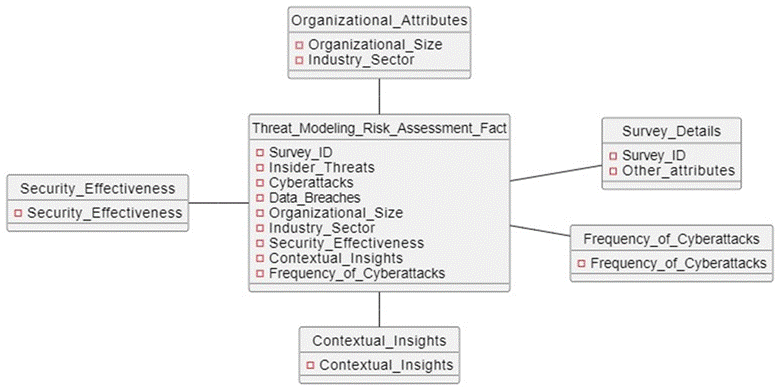
Figure 9.1.1: Star
Schema
The part finishes by repeating the
requirement for progressing carefulness and flexibility notwithstanding
developing dangers, giving an extensive system to getting star composition
conditions in cloud and framework registering.
Chapter 10: Conclusions
10.1 Overview
This segment starts with an Outline, briefly epitomizing the embodiment of the ensuing conversation. The primary goal is to provide a context-sensitive introduction to the chapter's extensive insights, findings, and recommendations. Through a compact see, this part portrays the significant components that will unfurl, making way for an intelligent assessment of the review's center precepts. This Outline includes a significant level depiction of the examination's degree and pertinence. It divulges a brief look into the complex embroidery of the examination, captivating the peruser to dig into the resulting segments with a comprehension of the looming talk (MORAITIS et al. 2023). As a preface to the resulting outlines, discoveries, and suggestions, this early-on section plans to lay out the topical underpinnings that have molded the insightful excursion. It welcomes perusers to cross the scholarly scene developed all through the review, making ready for an intelligible blend of experiences and a definitive story that explains the subtleties of danger demonstrating and risk evaluation inside the unique spaces of cloud and matrix conditions.This section provides background information for the discussion of the findings' implications that follow. The method concludes foreshadows the main topics that will be covered in the conclusion, including the prospective directions for future study, the wider impact on organizational practices, and the useful applications of the suggested threat modelling and risk assessment methodology. An important place to start is the Introduction to the Conclusion chapter, which summarizes the main points of the research that was done on threat modelling and risk assessment in cloud and grid computing settings. This brief retrospective covers the main goals of the study again and outlines the careful methodology that was used, which involves a well-balanced combination of quantitative and qualitative methods. The importance of the thorough data analysis discussed in the Results chapter is succinctly summarized in this section, which also highlights the important discoveries that have been made regarding the complex cybersecurity environment of contemporary computing paradigms.
The Introduction offers a thematic thread that connects the study's beginning to its concluding chapters, as the research sought to methodically negotiate the maze of security threats and vulnerabilities within these dynamic computer infrastructures. It carefully prepares the reader for an informed investigation of the significance and contributions of the gathered data. The Introduction serves as a map for the reader, directing them through the final talks by going over the main objective once more. The methodological detail and the upcoming thoughts on real-world applications, organizational effects, and directions for future research are connected intellectually by it. This tactical alignment establishes the tone for the subsequent synthesis and builds anticipation for the breadth and depth of the research project's final portion.
10.2 Summary of the Investigation Study
The examination concentrates on
exhaustively investigating the complexities of danger demonstrating and risk
appraisal inside cloud and lattice processing conditions. The examination dug
into the distinguishing proof of weaknesses and prioritization of safety
efforts pivotal for defending resources in these complex computational systems.
Taking a gander at a scope of potential risks, including data breaks, DDoS
attacks, and insider risks, the concentrate purposefully overviewed the
security controls set up and their suitability. Through the improvement of a
Data Stream Layout (DFD), the movement of data inside the circumstances was
made sense of, uncovering spots of likely transparency and disappointment
focuses in data transmission. The effect and probability of every danger were
thoroughly assessed during the gamble ID and examination stage, making it
conceivable to order and focus on takes a chance as per their likely results
(KONEV et al. 2022). This summary provides a succinct overview of the entire investigation
into the extraordinary challenges posed by cloud and matrix processing
conditions and exemplifies the central goals, methods, and discoveries of the
study. The subsequent sections offer a reflective assessment of the research
process, specific findings, recommendations that can be implemented, insights
into potential areas for future work, and more.
The extensive framework for threat
modelling and risk assessment created for cloud and grid computing systems is a
strong and customized method for locating weaknesses and ranking security
controls. The present paper explores the complexities of dynamic and
distributed computing environments, acknowledging the distinct security
concerns they present.
Threat Modelling: To begin, the
cloud and grid infrastructure must be carefully examined to spot any threats
that can jeopardize the system's availability, confidentiality, or integrity.
Insider threats, denial-of-service assaults, unauthorized access, and data
breaches are examples of threats. The model ensures a thorough analysis by
accounting for the resource-sharing feature of grid computing and the
multi-tenant nature of cloud settings.
Asset Identification: Data
repositories, virtual machines, networking components, and user credentials are
among the crucial assets within the cloud and grid architecture that have been
identified. Accurate risk assessment requires an understanding of these assets'
values and interdependencies.
Vulnerability Assessment: Both
technological and human aspects are taken into account while thoroughly
evaluating vulnerabilities. This includes evaluating the human aspect through
social engineering hazards, software vulnerabilities, and misconfigurations. To
guarantee a thorough assessment, industry standards, vulnerability databases,
and best practices are cited.
Risk assessment involves calculating
the possible impact and likelihood of the threats and vulnerabilities that have
been discovered. Organizations can prioritize risks according to their severity
using this quantitative risk assessment, which enables them to concentrate on
resolving the most important problems first. The evaluation takes into account
the particular quirks of grid and cloud systems, like shared resources and
virtualization technologies (HOLIK et al. 2022).
Mitigation Techniques: A range of
techniques for mitigating the hazards indicated are supplied by the framework.
These tactics combine policy suggestions, technical controls, and user
awareness initiatives. To improve the entire security posture, emphasis is made
on encryption, access limits, frequent security audits, and ongoing monitoring.
Governance and Compliance: The
framework incorporates governance and compliance aspects, conforming to
industry norms and laws that apply to grid and cloud computing. This guarantees
that the security measures put in place are compliant with all applicable laws
and regulations in addition to being effective. Additionally, governance
frameworks are put in place to guarantee continuous security supervision.
Constant Monitoring and Adaptation:
The framework includes methods for constant monitoring in recognition of the
dynamic character of threats. This entails proactive steps to react to new
threats, frequent security evaluations, and real-time threat intelligence
feeds. Developing a robust security posture that can change with the dynamic
cloud and grid environments is the aim.
10.3Findings and Recommendations
Findings
The examination has uncovered a few
basic discoveries relevant to the danger displaying and risk evaluation for
cloud/network conditions. Remarkably, weaknesses were recognized in the
information stream the board, accentuating the requirement for upgraded
encryption conventions and access controls. Furthermore, cloud-explicit
dangers, like shared asset weaknesses, present critical dangers, requiring a
reconsideration of existing safety efforts. The examination uncovered openings
in the systems for observing, featuring the meaning of constant danger location
for forestalling possible breaks (HOLIK et al. 2022). By and large,
the disclosures feature the dynamic and creating nature of risks inside
cloud/network enrolling conditions.
Recommendations
In light of the findings, several
specific recommendations are made to support the cloud/framework foundation's
safety record. To address data stream weaknesses, it is fundamental to fortify
access controls as well as encryption standards. To combat vulnerabilities in
shared assets, robust isolation systems and ongoing security audits are
recommended. Besides, the way to proactive gamble alleviation is the upgrade of
nonstop perception abilities with cutting-edge risk acknowledgement devices.
Assuming these ideas are reliably carried out, they will fortify the security
structure and guard against dangers that might emerge in the unique setting of
cloud/cross-section design (MAHAMOOD et al. 2023). This blend of
discoveries and suggestions makes sense of critical headways made in
reinforcing the security premise of cloud/structure circumstances.
10.4 Areas for Future Work
A couple of captivating roads could
be investigated before very long while thinking about where progressions in
danger demonstrating and risk evaluation across cloud/lattice stages could go.
Most importantly, the use of contemporary man-made reasoning (simulated
intelligence) in addition to ML strategies might work on the accuracy and
adequacy of danger-distinguishing proof and chance-relief techniques (LUO et
al. 2023). Examining any covers between these advancements and existing
security norms might prompt inventive arrangements. Second, in the general
image of the utilization of distributed computing with framework registering,
it is basic to painstakingly consider the impacts of advancing lawful
requirements and consistency norms. To guarantee steady regard to standards,
the following stages should focus on consolidating safety efforts with
advancing general sets of laws. Moreover, there is a potential chance to
research how versatile and strong safety efforts are to arising dangers,
similar to those subsequent from progressions in quantum processing. Evaluating
how well-suited the current models are to changing technological environments
can help adopt a proactive protection strategy. A group security strategy may
also benefit from investigating ways for various cloud/grid businesses to
collaborate on cooperative threat information. To further develop security in
conveyed frameworks, assessing these helpful models' reasonability and
viability is urgent (MALEKMOHAMMADI et al. 2023). To make sure that
people working with cloud/grid networks are ready to recognize and minimize
such risks, studies should also look into consumer education and training
programs. Further concentration in cloud and framework registering environments
seems to have promising possibilities for improving the General Security Act.
The framework's effectiveness and applicability could be improved through further cooperation with stakeholders and industry experts, guaranteeing that it is a useful tool for enterprises navigating the always-changing cybersecurity landscape. The creation of sophisticated artificial intelligence models are designed especially for threat identification in cloud and grid computing infrastructures may be the subject of future study. This research may lead to the development of more proactive and adaptable security systems that can recognize and neutralize new threats on their own in real-time.
The section on Future Work also advocates for research on the relationship between cybersecurity practices in cloud and grid computing and ethical and regulatory problems. Comprehending the legal and ethical ramifications of security measures becomes crucial as new computer paradigms continue to influence the digital terrain. Prospective investigations may delve into the establishment of moral guidelines for cybersecurity judgments as well as the legislative structures controlling data security and incident handling. Furthermore, a long-term investigation into the effectiveness and consequences of security measures that companies have put in place may provide insightful information. Understanding the dynamics of cybersecurity resilience in cloud and grid computing systems may be improved by keeping track of how threats change over time and how firms adjust their solutions accordingly.
10.5 Personal Evaluation
The assessment reaches a conclusion
with a survey of the examination and technique done previously. The challenges
of threat modelling and risk identification in cloud and grid environments were
the focus of the project's initial phase. The review experienced difficulties
distinguishing sure of the innate issues of the subject while arranging the
perplexing trap of information and procedures. There was a development in
cognizance during the review venture that clarified the fundamental benefits
and drawbacks of this examination cycle. The steady quest for understanding
recognized the presence of strange domains that need more examination while
likewise uncovering already undiscovered channels. The review's benefit lies in
the singular change as well as in the characterizing of discoveries (MAURI and
DAMIANI, 2022). As an analyst, more knowledge of the complex systems supporting
cloud/framework security became evident. Like an endeavor, the review venture
prepared for scholarly development past the ongoing point by wandering into a
previously unfamiliar scholarly area. To summarize, the singular assessment
conveys the iterative idea of the review cycle and recognizes its extraordinary
effect on discernment and the consistent quest for information in the huge space
of cloud/matrix security.
References
ABINEL SANTIAGO, C.J. and CARLOS, H.A., 2023. Threat
modeling: a study on its application in digital transformation from the
perspective of risk. Revista de Gest o e Secretariado, 14(1),
pp. 1158-1169.
Achar,
S., 2022. Cloud Computing Security for Multi-Cloud Service Providers: Controls
and Techniques in our Modern Threat Landscape. International Journal of
Computer and Systems Engineering, 16(9), pp.379-384.
ADRI NNE
S VAN, D.S., SEVERIN, J.A., KLAASSEN, C.H.W., JOHANNES P C VAN DEN,AKKER, BRUNO, M.J., HENDRIKS, J.M., VOS, M.C. and HOLT,
A.F.V.I. ., 2023. Universal screening or a universal risk assessment combined
with risk-based screening for multidrug-resistant microorganisms upon
admission: Comparing strategies. PLoS One, 18(7),.
ALAMRI, B., CROWLEY, K. and RICHARDSON, I., 2023.
Cybersecurity Risk Management Framework for Blockchain Identity Management
Systems in Health IoT.Sensors, 23(1),
pp. 218.
ALAMRI,
B., CROWLEY, K. and RICHARDSON, I., 2023. Cybersecurity Risk Management
Framework for Blockchain Identity Management Systems in Health IoT. Sensors,
23(1), pp. 218.
ALHEBAISHI,
N., WANG, L. and SINGHAL, A., 2018. Threat Modeling for Cloud Infrastructures.
EAI Endorsed Transactions on Security and Safety, 5(17),.
Allahvirdizadeh, Y., Moghaddam, M.P. and Shayanfar,
H., 2019. A survey on cloud computing in energy management of the smart
grids. International Transactions on Electrical Energy Systems, 29(10),
p.e12094.
Anwar, M.J., Gill, A.Q., Hussain, F.K. and Imran, M., 2021. Secure big data ecosystem architecture: challenges and solutions. EURASIP Journal on Wireless Communications and Networking, 2021(1), p.130.
BUCHORI,
D., MAWAN, A., NURHAYATI, I., ARYATI, A., KUSNANTO, H. and UPIK, K.H., 2022.
Risk Assessment on the Release of Wolbachia-Infected Aedes aegypti in
Yogyakarta, Indonesia. Insects, 13(10), pp. 924.
CHLUP, S., CHRISTL, K., SCHMITTNER, C., SHAABAN, A.M.,
SCHAUER, S. and LATZENHOFER, M., 2023. THREATGET: Towards Automated Attack Tree
Analysis for Automotive Cybersecurity. Information,
14(1), pp. 14.
CHLUP,
S., CHRISTL, K., SCHMITTNER, C., SHAABAN, A.M., SCHAUER, S. and LATZENHOFER,
M., 2023. THREATGET: Towards Automated Attack Tree Analysis for Automotive
Cybersecurity. Information, 14(1), pp. 14.
COLLEN,
A. and NIJDAM, N.A., 2022. Can I Sleep Safely in My Smarthome?
A Novel Framework on Automating Dynamic Risk Assessment in IoT Environments.
Electronics, 11(7), pp. 1123.
CZEKSTER, R.M., GRACE, P., MARCON, C., HESSEL, F. and
CAZELLA, S.C., 2023.Challenges and Opportunities for Conducting Dynamic Risk
Assessments in Medical IoT.Applied Sciences, 13(13), pp. 7406.
CZEKSTER,
R.M., GRACE, P., MARCON, C., HESSEL, F. and CAZELLA, S.C., 2023.Challenges and
Opportunities for Conducting Dynamic Risk Assessments in Medical IoT. Applied
Sciences, 13(13), pp. 7406.
FIZA, A.R., JAMIL, N., ZAIHISMA, C.C., LARIYAH, M.S. and
INSYIRAH, N.I., 2022. Risk Analysis of Water Grid Systems Using Threat
Modeling. Journal of Physics: Conference
Series, 2261(1), pp. 012015.
FIZA,
A.R., JAMIL, N., ZAIHISMA, C.C., LARIYAH, M.S. and INSYIRAH, N.I., 2022. Risk
Analysis of Water Grid Systems Using Threat Modeling. Journal of Physics:
Conference Series, 2261(1), pp. 012015.
GABHANE, L.R. and KANIDARAPU, N., 2023. Environmental Risk
Assessment Using Neural Network in Liquefied Petroleum Gas Terminal.Toxics, 11(4), pp. 348.
GABHANE,
L.R. and KANIDARAPU, N., 2023. Environmental Risk Assessment Using Neural
Network in Liquefied Petroleum Gas Terminal. Toxics, 11(4), pp. 348.
Gourisaria,
M.K., Samanta, A., Saha, A., Patra, S.S. and Khilar,
P.M., 2020. An extensive review on cloud computing. Data Engineering and Communication Technology: Proceedings of 3rd
ICDECT-2K19, pp.53-78.
GRIGG,
N.S., 2023. Comprehensive Flood Risk Assessment: State of the Practice.
Hydrology, 10(2), pp. 46.
HERBOLD,
T. and ENGELS, J.M.M., 2023. Genebanks at Risk:
Hazard Assessment and Risk Management of National and International Genebanks. Plants, 12(15), pp. 2874.
HOLIK, F., FL , L.H., MARTIN, G.J., SULE, Y.Y. and FOROS,
J., 2022.Threat Modeling of a Smart Grid Secondary Substation.Electronics, 11(6), pp. 850.
HOLIK,
F., FL , L.H., MARTIN, G.J., SULE, Y.Y. and FOROS, J., 2022.Threat Modeling of
a Smart Grid Secondary Substation. Electronics, 11(6), pp. 850.
Kamat,
M.R.R., 2023. A Cloud Computing.
Khan,
H.U., Ali, F. and Nazir, S., 2022.Systematic analysis of software development
in cloud computing perceptions. Journal of Software: Evolution and Process,
p.e2485.
Khan,
H.U., Ali, F. and Nazir, S., 2022.Systematic analysis of software development
in cloud computing perceptions.Journal of Software: Evolution and Process,
p.e2485.
KONEV, A., SHELUPANOV, A., KATAEV, M., AGEEVA, V. and
NABIEVA, A., 2022. A Survey on Threat-Modeling Techniques: Protected Objects
and Classification of Threats. Symmetry, 14(3), pp. 549.
KONEV,
A., SHELUPANOV, A., KATAEV, M., AGEEVA, V. and NABIEVA, A., 2022. A Survey on
Threat-Modeling Techniques: Protected Objects and Classification of Threats.
Symmetry, 14(3), pp. 549.
Li,
G., Li, S., Li, S. and Qu, X., 2022.Continuous decision‐making for
autonomous driving at intersections using deep deterministic policy gradient.IET Intelligent Transport Systems, 16(12),
pp.1669-1681.
LUO,
F., JIANG, Y., WANG, J., LI, Z. and ZHANG, X., 2023.A Framework for
Cybersecurity Requirements Management in the Automotive Domain. Sensors,
23(10), pp. 4979.
LUO, F., JIANG, Y., ZHANG, Z., REN, Y. and HOU, S., 2021.
Threat Analysis and Risk Assessment for Connected Vehicles: A Survey. Security and Communication Networks, 2021.
LUO,
F., JIANG, Y., ZHANG, Z., REN, Y. and HOU, S., 2021. Threat Analysis and Risk
Assessment for Connected Vehicles: A Survey. Security and Communication
Networks, 2021.
MAHAMOOD, M., KHAN, F.R., ZAHIR, F., JAVED, M. and
ALHEWAIRINI, S.S., 2023. Bagariusbagarius, and
Eichhornia crassipes are suitable bioindicators of heavy metal pollution,
toxicity, and risk assessment. Scientific
Reports (Nature Publisher Group), 13(1),
pp. 1824.
MAHAMOOD,
M., KHAN, F.R., ZAHIR, F., JAVED, M. and ALHEWAIRINI, S.S., 2023. Bagariusbagarius, and Eichhornia crassipes are suitable
bioindicators of heavy metal pollution, toxicity, and risk assessment.
Scientific Reports (Nature Publisher Group), 13(1), pp. 1824.
MALEKMOHAMMADI,
B., CINTIA, B.U., MOGHADAM, N.T., NOORI, R. and ABOLFATHI, S., 2023.
Environmental Risk Assessment of Wetland Ecosystems Using Bayesian Belief
Networks. Hydrology, 10(1), pp. 16.
MAURI, L. and DAMIANI, E., 2022. Modeling Threats to AI-ML
Systems Using STRIDE.Sensors, 22(17),
pp. 6662.
MAURI,
L. and DAMIANI, E., 2022. Modeling Threats to AI-ML Systems Using STRIDE.
Sensors, 22(17), pp. 6662.
MORAITIS,
G., GEORGIA-KONSTANTINA SAKKI, KARAVOKIROS, G., NIKOLOPOULOS, D., TSOUKALAS,
I., KOSSIERIS, P. and MAKROPOULOS, C., 2023. Exploring the Cyber-Physical
Threat Landscape of Water Systems: A Socio-Technical Modelling Approach. Water,
15(9), pp. 1687.
MUHAMMAD NAJMUL, I.F., ARSHAD, J. and KHAN, M.M., 2022. A
Layered Approach to Threat Modeling for 5G-Based Systems. Electronics, 11(12), pp.
1819.
MUHAMMAD
NAJMUL, I.F., ARSHAD, J. and KHAN, M.M., 2022. A Layered Approach to Threat
Modeling for 5G-Based Systems. Electronics, 11(12), pp. 1819.
PUDER, A., HENLE, J. and SAX, E., 2023.Threat Assessment
and Risk Analysis (TARA) for Interoperable Medical Devices in the Operating
Room Inspired by the Automotive Industry.Healthcare, 11(6), pp. 872.
Qu, G., Cui, N., Wu, H.,
Li, R. and Ding, Y., 2021. ChainFL: A simulation
platform for joint federated learning and blockchain in edge/cloud computing
environments. IEEE Transactions on Industrial Informatics, 18(5),
pp.3572-3581.
Reddy, R., 2019. Cloud Computing Security Risk Assessment for Autonomous Agents Security Concerns: A Survey.
Ren,
H., Zhou, W., Makowski, M., Zhang, S., Yu, Y. and Ma, T., 2023.A multi-criteria
decision support model for adopting energy efficiency technologies in the iron
and steel industry.Annals of
Operations Research, 325(2), pp.1111-1132.
Sadeghi,
M., Mahmoudi, A. and Deng, X., 2022. Blockchain technology in construction
organizations: Risk assessment using trapezoidal fuzzy ordinal priority
approach. Engineering, Construction and Architectural Management,
(ahead-of-print).
SALAMH, F.E., KARABIYIK, U. and ROGERS, M., 2021.A
Constructive DIREST Security Threat Modeling for Drone as a Service.The Journal of Digital Forensics, Security and Law :
JDFSL, 16, pp. 0_1,1-18.
Steier,
G.L., Benfer, M., Werz, P., Ziora,
M. and Lanza, G., 2022. Decision support models for strategic production
network configuration A systematic literature analysis. Procedia CIRP, 107,
pp.1433-1438.
SULE, Y.Y., HOLIK, F., ABOMHARA, M., DONEY, A. and
GEBREMEDHIN, A., 2022. An Approach for Analyzing Cyber Security Threats and
Attacks: A Case Study of Digital Substations in Norway. Electronics, 11(23), pp.
4006.
TAYLOR, P.J., DUXBURY, P., MOORHOUSE, J., RUSSELL, C.,
PRATT, D., PARKER, S., SUTTON, C., LOBBAN, F., DRAKE, R., ECCLES, S., RYDER,
D., PATEL, R., KIMBER, E., KERRY, E., RANDLES, N. and KELLY, J., 2023. The
Mental Imagery for Suicidality in Students Trial (MISST): study protocol for a
feasibility randomised controlled trial of
broad-minded affective coping (BMAC) plus risk assessment and signposting
versus risk assessment and signposting alone. Pilot and Feasibility Studies, 9,
pp. 1-12.
Tiwari, N. and Sharma, N., 2021, March.Study of Cloud Computing Business Framework by Pre-cloud recognition. In IOP Conference Series: Materials Science and Engineering (Vol. 1119, No. 1, p. 012011). IOP Publishing.
Tyagi, A.K., Nair, M.M., Niladhuri, S. and Abraham, A., 2020. Security, privacy research issues in various computing platforms: A survey and the road ahead. Journal of Information Assurance & Security, 15(1).
Tyagi,
A.K., Nair, M.M., Niladhuri, S. and Abraham, A.,
2020. Security, privacy research issues in various computing platforms: A
survey and the road ahead. Journal of
Information Assurance & Security, 15(1).
VAKHTER, V., SOYSAL, B., SCHAUMONT, P. and GULER, U.,
2022.Threat Modeling and Risk Analysis for Miniaturized Wireless Biomedical Devices.IEEE Internet of Things Journal, 9(15), pp. 13338-13352.
VALLANT, H., STOJANOVIĆ, B., BO IĆ, J. and
HOFER-SCHMITZ, K., 2021. Threat Modelling and Beyond-Novel Approaches to Cyber
Secure the Smart Energy System. Applied
Sciences, 11(11), pp. 5149.
Verma, G. and Adhikari, S., 2020. Cloud computing security issues: a stakeholder s perspective. SN Computer Science, 1(6), p.329.
Wen, H., Liu, L., Zhang, J., Hu, J. and Huang, X.,
2023.A hybrid machine learning model for landslide-oriented risk assessment of
long-distance pipelines.Journal
of Environmental Management, 342, p.118177.
WRIGHT, M., CHIZARI, H. and VIANA, T., 2022. A Systematic
Review of Smart City Infrastructure Threat Modelling Methodologies: A Bayesian
Focused Review. Sustainability, 14(16), pp. 10368.
YOKOYAMA, R. and CARLOS, H.A., 2023. Application of the
Threat Modeling Method In an Operating System. Revista de Gest o e Secretariado, 14(4),
pp. 5102-5122.
Appendix A:
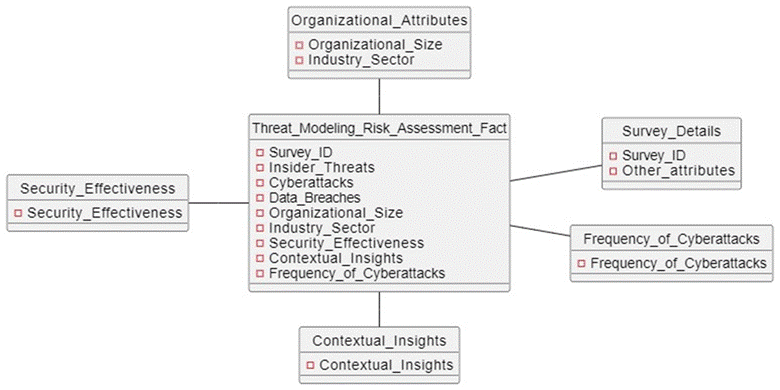
Appendix B:
|
Features |
Description |
|
Access of Restrictions |
Enforce solid access controls to confine unauthorized access to cloud and grid assets Actualize role-based access controls (RBAC) to guarantee the guideline of the slightest privilege. |
|
Security Patching |
Frequently apply security patches and overhauls to all systems and programs within the cloud and network environments. |
|
Data Encryption |
Utilize robust encryption components for data both in travel and at rest to protect sensitive data from unauthorized access. |
|
Continuous Improvement Approach |
Adopt a nonstop improvement approach to security practices, routinely reviewing and updating approaches, strategies, and technologies. |
|
IDS |
Implement intrusion location systems to screen arrange and system exercises, instantly identifying and responding to potential security incidents. |
|
Dynamic Security Practices |
Recognize the dynamic nature of cloud and grid settings, adapting security hones to advancing threats and technologies. |