 : 571
: 571
TO IDENTIFY THE EFFECTS OF GOOD
BUSINESS COMMUNICATION IN BUSINESS DEVELOPMENT AND GROWTH OF THE UK BANKING
SECTOR
This research investigates business communication in the UK banking sector through a case study on Lloyds Banking Group. The introduction outlines the rationale, objectives, research questions, and significance of examining communication practices and links to organizational growth.
The literature review analyses key theories and prior research on business communication, banking challenges, and connections to performance. Gaps in understanding effective communication strategies for UK retail banks are identified. The review positions this study to address limitations and provide new insights.
This chapter outlines the interpretivist, qualitative methodology. A case study strategy will be used to analyse Lloyds Banking Group. Secondary data from academic, industry, and company sources will be thematically analysed to identify communication patterns. Ethics in data handling and reporting will be ensured. The methodology provides a focused means to ethically collect and interpret evidence on communication practices and their impacts within the banking sector context.
Through rigorous thematic analysis of diverse qualitative data sources, this chapter examines Lloyds Banking Group's communication practices, challenges, and performance links. Findings reveal ingrained barriers but also reform efforts to modernize communication strategies for transparency, coordination, and customer-centricity.
This chapter synthesizes key themes and insights on business communication within Lloyds Banking Group. Enduring legacy structures posing challenges are highlighted along with cultural opportunities to embrace participative, customer-focused communication supporting growth, trust, and competitiveness.
In this concluding chapter, theoretical and practical implications are outlined. Recommendations to improve Lloyds Banking Group's communication flows, messaging coherence, crisis preparedness, and channel integration are provided based on the research. Wider recommendations to advance communication excellence across UK banking are also presented.
Table of Contents
1.3 Research Aims and
Objectives
2.2 Role of Communication
in Organizational Growth and Development
2.3 Communication challenges
the UK banking sector facing
2.4 Impact of
Communication on Organizational Growth
4.2.1 Theme 1: Concepts
and Models of Business Communication in Banking
4.2.2 Theme 2: Role of
Communication in Organizational Growth
4.2.3 Theme 3:
Communication Challenges in Banking
4.2.4 Theme 4: Improving
Communication in the Banking Sector
5.2 Discussion of the
qualitative data source
5.2.1 Business
communication in the UK banking sector
5.2.3 Challenges faced by
Lloyds Banking Group
List of Figures
Figure 1.1: Dissertation
Structure
Figure 2.1: Cost of
scandals costs 20 major banks 264bn over five years
Figure 2.2: Key
communication challenges facing the UK banking sector
Figure 2.3: Negative
impacts due to ineffective communication
Figure 2.5: Conceptual
Framework
Figure 3.1: Types of
research philosophy
Figure 5.1: Structure of
the Group
Figure 5.2: Global income
of Lloyds Banking Group from 2010 to 2022
Figure 5.3: Global trading
surplus of the UK Lloyds Banking Group from 2010 to 2019
Chapter 1: Introduction
1.1 Introduction
Communication is vital for sharing important information and enabling growth within any organisation. In the banking sector, effective communication facilitates critical practices like conveying bank policies, interacting with stakeholders, training employees, and attracting customers. However, many UK banks struggle with communication challenges that hinder organisational development in cases unresolved. This research examines business communication and its impact on growth in the UK banking industry through a case study on Lloyds Banking Group. This chapter is going to highlight the background of the Lloyds Banking group along with the technology adaptation of this bank. Furthermore, this chapter will shed light on the rationale and significance of the study.
1.2 Research Background
Effective business communication is essential for organisational success in today's interconnected world (Bovee and Thill, 2018). Communication allows coordination of business activities between employees, departments, and external stakeholders. Clear and open communication promotes organisational alignment around goals, builds trust, and enables quick responses to problems (McCroskey, 2015). Communication also facilitates knowledge sharing, innovation, and adaptation to changing conditions (Gallo, 2022). Within the banking and financial services sector, communication is particularly crucial. Lim et al., (2017) explain banks rely on internal communication to ensure alignment between front-office customer-facing roles and back-office operations. Banks need to communicate complex financial products and services clearly to customers (Du Plessis, 2017). The global nature of banking also requires effective cross-cultural communication skills to serve diverse markets.
Advances in technology have transformed communication channels in banking. According to Coetzee (2018), retail banks now interact with customers predominantly through digital platforms like mobile apps rather than physical branches. However, research indicates face-to-face communication remains valued for resolving issues and building trust (Pea et al., 2012). This omnichannel environment creates new communication challenges for banks. Within the banking industry, technology has enabled new ways to interact with customers and deliver services. Mobile and online banking have become ubiquitous, reducing physical branch traffic (Safeena et al., 2012). However, as Larivi re et al. (2013) discuss, many customers still value human interaction for complex needs like loans and financial planning. Banks must strike a balance between convenience and personal service. Communication technology also facilitates security measures like fraud detection while raising privacy concerns. These developments create new considerations for bank communication strategies. Business communication models and practices are evolving rapidly alongside advances in technology. Organisations like Lloyds Banking Group must adapt their internal and external communication approaches to effectively leverage new capabilities while understanding audience preferences. This backdrop highlights the importance of examining how emerging technologies shape communication dynamics within the modern banking sector.
1.3 Research Aims and Objectives
Research aim:
The aim of this study is To identify the effects of good business communication in business development and growth of the UK banking sector : A study on Lloyds Banking Group
Research objectives:
● To increase basic understanding about the business communication in context with the UK banking sector
● To determine the role of good communication in improving organisational growth and development of Lloyds Banking Group
● To examine the challenges that can face by Lloyds Banking Group in the absence of good business communication
1.4 Research Questions
● What is the concept along with the model of business communication in context with the UK banking sector?
● How does good business communication help Lloyds Banking Group in improving organisational growth and development?
● What are the major challenges that Lloyds Banking Group can face in the absence of good business communication?
1.5 Rationale of the study
This research aims to generate pragmatic recommendations and theoretical contributions through an in-depth investigation of business communication practices and their impact on organisational growth within the UK banking sector. The primary rationale is to provide data-driven insights that Lloyds Banking Group can apply to improve communication excellence across multiple levels, including leadership messaging, employee relations, customer interactions, and public reputation. Enhanced communication capacity is expected to increase Lloyds Banking Group s competitiveness, innovation, customer loyalty, and bottom-line performance (Alzoubi et al. 2022). The research will identify specific communication challenges and solutions to equip Lloyds Banking Group with the knowledge needed to foster an organisational culture and climate optimised for communication. In addition, the learnings from evaluating Lloyds Banking Group can serve as a model for other major banks in the UK seeking to adapt communication strategies to the evolving demands of the digital banking era. As technologies and customer expectations shift, sound communication will be imperative for the entire sector to retain relevance and meet consumer needs (Kandampully et al. 2022). Thus, this research aims to offer a timely analysis of how leading banks like Lloyds Banking Group can leverage communication excellence to enable sustainable success.
Furthermore, the study holds significance for communication and business scholars by contributing empirical insights and an analytical framework to advance academic literature at the intersection of communication, organisational development, corporate culture, and strategic leadership specifically in the banking context. The work can spur additional research to continue expanding cross-disciplinary knowledge in these critical domains. In addition, enhanced organisational communication should translate into positive outcomes for banking customers through improved services, relations, transparency, and overall value. The rationale is therefore multifaceted, generating both practical and theoretical contributions that can benefit key stakeholders in the UK banking ecosystem.
1.6 Problem Statement
Effective communication is vital for the growth and success of any organisation, including banks within the UK banking sector. However, many banks need help in implementing good communication practices, which can negatively impact organisational development. One such bank that could benefit from improving communication is Lloyds Banking Group, one of the leading financial institutions in the UK. Lloyds Banking Group was formed in 2009 and provides banking and financial services to over 30 million customers (Lloydsbankingroup.com, 2023). As a large organisation with more than 65,000 workers, communication within Lloyds Banking Group can be complex and inefficient at times. Problems in communication channels between leadership and staff, unclear messaging, and lack of transparency are some issues that may exist. Poor communication reduces employee satisfaction and retention, reduced productivity, strained customer relationships, and failure to reach organisational goals.
With proper communication, employees may fully understand their duties, leading to mistakes that reduce the quality of service. Customers who do not receive clear information on bank products and policies may withdraw their accounts and bank with competitors instead. Misunderstandings between departments can also cause process delays that impact operations. As a result, Lloyds Banking Group risks poorer financial performance, loss of competitive advantage, and reduced ability to innovate in the digital banking sector. Effective business communication has been shown to mitigate these risks and enable growth by aligning employees to strategic priorities, fostering transparency, and building customer trust (Mart nez-Pel ez et al. 2023). However, concrete solutions to improve communication within Lloyds Banking Group have yet to be established.
Addressing this gap could significantly strengthen Lloyds Banking Group's organisational development and performance in the evolving UK banking industry. Therefore, this research aims to assess the impacts of strong internal and external communication on key areas like employee engagement, customer relations, productivity, and profitability for Lloyds Banking Group. The results will provide data-driven recommendations to enhance communication practices, overcome challenges, and position Lloyds Banking Group for sustainable success through business communication excellence.
1.7 Research Significance
This research holds significance for several stakeholders within the UK banking sector. The findings will provide practical value to Lloyds Banking Group by identifying communication challenges and solutions to enhance organisational growth and development. Improved communication practices can increase Lloyds Banking Group's competitiveness, innovation, customer retention, and bottom line. Thus, this research aims to equip Lloyds Banking Group's leadership with the insights needed to foster a culture of effective communication at multiple organisational levels. In addition, insights from Lloyds Banking Group could be transferred to benefit other major banks in the UK. As the banking industry evolves to meet changing customer expectations and adopt emerging technologies, sound communication will be imperative. This research offers a timely analysis of how leading banks like Lloyds Banking Group can adapt communication strategies and structures for sustainable success. The banking sector may use these findings as a model for assessing and optimising communication capacity.
This research also holds value for communication and business scholars. The study contributes empirical insights and an analytical framework to the literature on business communication, organisational development, corporate culture, and strategic leadership in the banking sector. Academics can build on this work to expand knowledge in these critical domains. Moreover, banking customers stand to gain from improved services, products, and relations with their banks in case communication enhances bank operations and customer orientation (Alam et al. 2021). Thus, this research aims to study communication not only internally but also from an external perspective of how banks interact with and provide value to their customers through strong communication practices. In addition, effective communication should translate to positive outcomes for all key stakeholders affected by the UK banking system. Thus, this timely study on communication fills an important knowledge gap and carries multifaceted significance for Lloyds Banking Group, the UK banking sector, academic scholars, customers, and the financial system. The research outcomes can provide theoretical and actionable contributions to improving business communication and growth.
1.8 Outline of the study

Figure 1.1: Dissertation Structure
(Source: Self-Developed)
The first chapter will introduce the research by presenting the background, problem statement, research questions, objectives, and significance of the study. This section will provide context and rationale for investigating business communication and growth in the UK banking sector. The second chapter will review existing literature relevant to key concepts like communication theories, organisational communication, and challenges in the banking industry. Furthermore, by synthesising previous studies, this chapter will identify gaps in understanding effective business communication practices for banking growth. It will conclude by positioning this research to address limitations and contribute new insights. The third chapter will detail the research methodology by justifying the philosophical approach, research design, data collection methods, and analysis techniques. Factors like the qualitative nature of the study, and case study strategy, will be explained and aligned to the research aims. Ethics, reliability, and limitations of the methods will also be addressed.
The fourth chapter will then present the study's findings and provide an in-depth analysis aligned with the research questions on communication, growth, and banking. In addition, the fifth chapter will summarise the key findings, draw conclusions, acknowledge limitations, and give recommendations. It will synthesise results into practical and theoretical contributions for Lloyds Banking Group, the banking sector, and the business communication field. The dissertation will end by identifying future research avenues and reiterating the value of this study.
1.9 Summary
This introductory chapter established the
background and rationale for researching the role of business communication in
the growth and development of banks within the UK banking sector. Lloyds
Banking Group was presented as a leading British financial institution that
will serve as the case study example to analyse communication practices and
impacts. The problem of communication challenges hindering organisational
performance and progress was discussed, with Lloyds Banking Group identified as
an ideal case for assessing solutions to strengthen communication excellence.
The research aims, questions, and objectives were outlined to examine concepts
of effective communication in banking, understand how communication enables
growth for Lloyds Banking Group, and determine potential communication
challenges. The significance of the study for providing practical and
theoretical contributions was highlighted. This research can generate insights
to improve communication strategies and structures within Lloyds Banking Group
and across the wider UK banking sector. It also advances academic literature at
the intersection of communication, business growth, and banking. An outline of
the dissertation chapters was provided, with details on the literature review,
methodology, findings, and conclusions to be presented in subsequent sections.
In summary, this introduction established the platform to carry out an in-depth
investigation of business communication and its impacts on organisational
development in banking.
Chapter 2: Literature Review
2.1 Introduction
The purpose of this literature review is to critically examine theories, models, and prior studies on business communication, with a focus on the banking sector. The review aims to synthesise key concepts, themes, and findings that highlight the role of communication in organisational growth, effective practices, and common barriers. Gaps in understanding will also be identified regarding communication strategies for banks in this chapter. The chapter first explores the theoretical foundations of business communication, including seminal theories still relevant today. It then discusses the literature on organisational communication models, processes, and dynamics. Challenges specific to communication in the banking industry are also reviewed. Moreover, links between communication and organisational performance are analysed in this chapter. This review provides a conceptual background and identifies limitations, thereby positioning the current study to extend knowledge on how banks can leverage communication excellence to enable growth and success.
2.2 Role of Communication in Organizational Growth and Development
Effective organizational communication is widely recognized as a vital factor impacting performance outcomes in modern enterprises. Communication affects both hard metrics like productivity, sales, innovation, and profitability as well as softer measures like employee satisfaction, engagement, and commitment. Clear and open internal communication ensures proper information flows between leadership, departments, and employees (Yue et al., 2019). This facilitates coordination, problem-solving, and execution of business activities. Strong internal communication also provides direction on organizational goals and strategic priorities. This enables alignment across the enterprise and consistent focus toward shared objectives. Furthermore, effective communication up, down, and across organizational hierarchies fosters a culture of transparency, inclusion, and employee empowerment. This boosts satisfaction, retention, and motivation, enhancing human capital outputs.
Communication excellence with customers, investors, and other stakeholders curates a positive brand image and attracts patronage. Strong external messaging builds awareness, trust, and loyalty among target audiences (AlHamad et al., 2022). Thus, well-designed organizational communication strategies and systems have demonstrated positive correlations with productivity, sales, customer acquisition, talent retention, innovation, and profit growth. Communication is thus a lever leaders can strategically optimize to improve organizational performance across industries, including banking.
Organizational communication has a profound influence on growth drivers including employee engagement, customer satisfaction, innovation, and productivity. Engaged employees who feel connected to organizational goals and values are more motivated, satisfied, and productive (Krizanova et al., 2019). Leadership communication fosters engagement by conveying vision, inspiring action, and making employees feel valued through transparency and inclusion in decisions. In contrast, lack of communication demotivates employees. Customer satisfaction hinges on meeting expectations that are set through marketing communication and maintained through support interactions (Hanelt et al., 2021). Clear communication of product or service capabilities, value, and company brand builds satisfaction. Ongoing communication also resolves issues enhancing satisfaction. It has been identified that unsatisfied customers churn due to a lack of communication.
Innovation results from effective knowledge sharing between departments, leaders, and teams. Collaborative communication environments with openness, trust, and idea flow enable innovation (Cortellazzo et al., 2019). Unclear and siloed communication impedes synergistic knowledge exchange hampering innovation capacity. Productivity improves when employees thoroughly understand roles, objectives, and activities. Workplace communication provides this clarity of direction and coordination. Communication breakdowns result in redundancies, errors, and delays reducing productivity. Therefore, research indicates strategic communication positively influences key organizational growth factors. Leaders need to develop strong internal and external communication systems to enable engaged employees, satisfied customers, rapid innovation, and peak productivity essential for growth.
Strategic communication aligns employees to a shared vision, values, and goals across all levels. This unity of purpose channels activities toward organizational priorities enabling growth and adaptation. Clear communication systems with open information flows facilitate coordination and productivity (Falahat et al., 2020). They enhance the execution of business processes and strategy through responsive leadership and empowered employees. Consistent internal and external communication builds an inclusive, ethical organizational culture. This fosters innovation, responsiveness to market changes, and strong connections with all stakeholders. Effective organizational communication is interactive, allowing bidirectional exchange between leaders and employees (Chanana and Sangeeta, 2021). This democratizes decision-making, gains buy-in, and unlocks intrinsic motivation amplifying growth. Thus, models emphasize that strategic, inclusive, and interactive communication produces alignment, execution excellence, ethical culture, empowerment, and motivation. This optimizes human capital, processes, and stakeholder relations, enabling adaptation, innovation, productivity, and sustainable competitive advantage. For modern enterprises like Lloyds Banking Group, following these models to transform organizational communication is essential for success.
While effective communication enables growth, many studies highlight communication challenges that obstruct organizational performance. These barriers manifest across contexts but commonly impede alignment, productivity, culture, and stakeholder relations, stifling sustainable growth. A predominant organizational communication challenge emphasized in literature is top-down communication bottlenecks, where senior leaders poorly convey the company's strategic vision, priorities and objectives to managers and employees (Davidescu et al., 2020). Unclear messaging from the top-down leads to misalignment between executive goals versus employee activities. Employees operate without a unified sense of purpose and key outcomes expected from leadership. This strategic misalignment undermines organizational focus, productivity, innovation, and adaptation required for growth.
Ambiguous communication from managers fails to provide adequate direction to employees on objectives, roles, and responsibilities. When instructional communication lacks specificity, employees remain confused about day-to-day activities, relationships with other departments and individual performance expectations. This breeds misunderstandings, errors, duplications of effort and overall process inefficiencies that limit productivity and effective execution. Unclear leadership communication therefore disempowers the workforce and restricts organizational growth.
Furthermore, siloed communication between departments and teams creates disconnectedness across organizational boundaries. When information sharing and collaboration are obstructed, knowledge exchange suffers along with synergy, cohesion, and innovation capacity (Servaes, 2022). Hidden insights and potential win-win opportunities reside in siloes rather than being uncovered through open communication flows. This restricts organizational learning, problem solving and development. Moreover, poor communication with customers, investors, media and other stakeholders damages corporate reputation and loyalty. Leaders who fail to communicate with transparency or adequately listen to stakeholders struggle to build trusting relationships and engage these external audiences (Mihalache et al., 2022). Declining patronage and negative sentiment from unengaged partners and customers directly slow growth.
During crises, delayed or dishonest communication erodes public trust and organizational credibility. Hiding bad news and communicating reactively rather than proactively harms an organization for years (Heide et al., 2020). Thus, communication lapses create disconnects, ambiguity, silos, distrust, and misalignment across the organization and externally. This disempowers employees, alienates customers, and cripples competitive advantage stifling sustainable growth. Leaders must therefore strategically foster open, coordinated, proactive and transparent communication to overcome barriers. While communication barriers impede organizations broadly, studies reveal banks face particularly acute challenges. The highly regulated, risk-averse, and complex nature of banking creates a difficult communication context (Ahl et al., 2019). Hierarchical structures in banks coupled with documented risk-control lapses point to significant top-down communication gaps between executive leaders and frontline staff (Fauzi et al., 2020). This strategic misalignment allows unethical practices and misconduct to emerge, carrying huge reputational and financial costs.
Moreover, siloed communication between consumer and investment banking units obstructs information sharing. Banks struggle to clearly communicate complex financial products to retail customers, risking mis-selling scandals and distrust. Declining customer engagement threatens growth. Lloyd's communication after massive IT failures was criticized for lack of transparency and accountability. Thus, communication fragmentation, ambiguity, complexity, and reactivity plague UK banking.
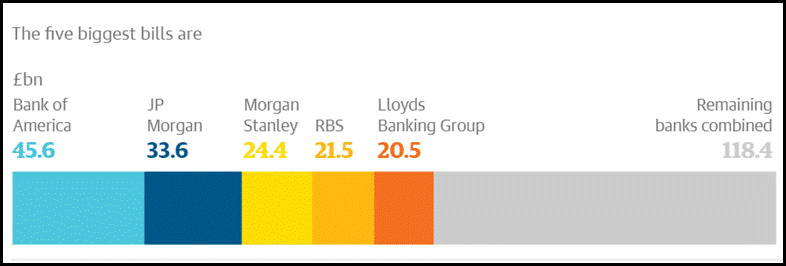
Figure 2.1: Cost of scandals costs 20 major banks 264bn over five years
(Source: Theguardian.com, 2017)
A recent analysis revealed that the total provisions set aside by surveyed banks for misconduct fines and legal charges increased to over 28.6 billion in 2016 (Lloydsbankinggroup.com, 2022). This figure exceeded the prior year's provisions, which had declined from the peak of 63 billion in 2014. The rising trend in provisions indicates UK banks like Lloyds continue to be plagued by substantial penalties related to past unethical practices, highlighting the need for improved conduct and communication. Lloyds exemplifies challenges, suffering reputation damage and 28 billion in misconduct fines since the financial crisis (Bbc.com, 2013). Improving strategic alignment, cross-department collaboration, customer communication and crisis PR could significantly enhance performance. Tackling these barriers presents an opportunity to strengthen organizational development.
2.3 Communication challenges the UK banking sector facing
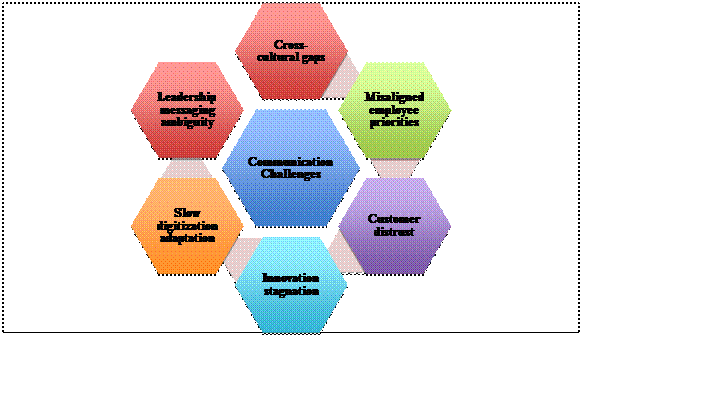
Figure 2.2: Key communication challenges facing the UK banking sector
(Source: Self-Developed)
It has been identified that there are several prevalent communication challenges faced by banks. A major barrier is complexity, banks struggle to clearly communicate intricate financial products and services to customers (Marcu, 2021). The sophisticated nature of banking confuses clients, leading to disengagement, distrust, and mis-selling scandals. It has been observed that banks often over-rely on technical jargon when communicating externally. Financial terminology used in marketing materials and customer interactions reduces comprehension for non-expert audiences (Baicu et al., 2020). This gap in understanding between banks and clients hampers transparency.
Rigid hierarchies and legacy processes in banks inhibit open information flows across siloed departments. Research indicates departmental siloes obstruct collaboration, knowledge sharing, and innovation in banks (Kaur et al., 2021). During crises, banks exhibit legalistic and reactive communication versus transparent engagement. Defensive crisis PR damages trust when integrity and accountability are questioned, like in the 2008 financial crash. Banks struggle to align communication across geographies when expanding globally. Different norms and languages across international branches heighten ambiguity and exclusion in case not addressed properly (Carney, 2019). Therefore, studies reveal banks face communication barriers around complexity, jargon, siloes, crisis PR, and cross-cultural understanding. These issues point to opportunities for banks like Lloyds to enhance organizational communication through simplification, transparency, coordination, and inclusion.
Rapid technological advances are profoundly impacting communication channels, mediums, and strategies within the banking sector (W jcik and Ioannou, 2020). A key transformation is the rise of digital banking through web and mobile platforms, now preferred by most customers for transactions versus physical branches. This enables convenience but risks impersonal and ambiguous communication in case the human or AI balance is poorly managed. Information technology systems facilitate greater information sharing between bank departments. However, achieving true connectivity requires countering the silo mentalities still prevalent in banks.
Technologies like AI chatbots promise more interactive customer service but raise ethical risks around transparency if misapplied (Akpan et al., 2022). Banks wrestle to balance personalization with privacy. While technologies can automate manual processes, over-reliance can undermine human capabilities like emotional intelligence needed in high-touch services. Thus, the literature suggests banks must evolve communication strategies to fully leverage technology innovations while retaining human interaction. Adopting technologies without coordinating channels risks fragmented, impersonal communication. Carefully optimizing omnichannel communication to engage both employees and customers remains crucial for bank relationships and reputation.
Banks face communication challenges both internally between groups like leadership, employees, and departments as well as externally with customers, investors, regulators, and the public. Studies reveal rigid hierarchies coupled with risk-averse cultures in banks inhibit transparent communication from leadership to staff (Abioye et al., 2022). This causes strategic misalignment and unethical behaviours to emerge. Employees perceive opaque leadership communication as purposefully ambiguous.
Between departments, legacy silo structures obstruct information sharing essential for managing risk and coordinating complex bank operations. Relationships suffer from distrust and perceived competition. Banks struggle to make communications accessible despite vastly different client financial literacy. During crises, defensive and legalistic communication damages public trust in banks. Delayed responses and opaque disclosure around issues like liquidity problems or IT failures frustrate external stakeholders seeking transparency. Thus, banks must overcome communication barriers on multiple fronts, fostering participative leadership, collaborative cross-functional teams, customer-centric marketing, and transparent public relations. Improvement requires addressing root cultural and structural issues that allow communication lapses to persist in banking organizations.
Large banking organizations face immense communication challenges due to structural complexity, geographic distribution, product/service breadth, diverse audiences, and stiff regulations. Coordinating consistent messaging across multiple channels to mitigate confusion from organizational siloes and product diversity (Li et al., 2019). Integrated marketing communication aligns outbound communications across all bank divisions. Studies also highlight training programs that aim to simplify complex financial concepts and industry jargon when communicating externally to customers and investors (Niemand et al., 2021).
Digitization provides platforms to centralize information sharing, ensure document accuracy, and connect remote employees. However, research shows technology alone does not remove deeply embedded communication barriers in banks (Contreras et al., 2020). Leadership communication remains vital to reinforce strategic priorities and culture across sprawling organizations. Studies advocate interactive forums, transparency, and leading by example (Streimikiene et al., 2021). Thus, banks combine structural coordination, employee education, technology and engaged leadership communication to manage complexity. Continued efforts to simplify messages, dismantle siloes, and humanize communication are needed to unlock the potential of banking organizations.
Ineffective organizational communication carries substantial consequences for banks in terms of performance and growth. Financial outcomes are directly impacted by poor communication on multiple fronts. A primary impact is strategic misalignment resulting from unclear communication of leadership priorities to employees. Uncoordinated activities undermine efficiency and progress on critical initiatives tied to bank profits and expansion (Fitriasari, 2020). Furthermore, flawed internal communication causes employee disengagement, turnover, and lowered productivity which represent significant human capital costs. Customer-facing staff need proper communication and guidance to perform roles optimally. In addition, opaque or overly complex communications to consumers breed public distrust of banking practices. Resulting in reputation damage and unethical conduct fines incurred by banks create substantial financial burdens. Without effective communication, problems escalate unnoticed until they reach crisis proportions.
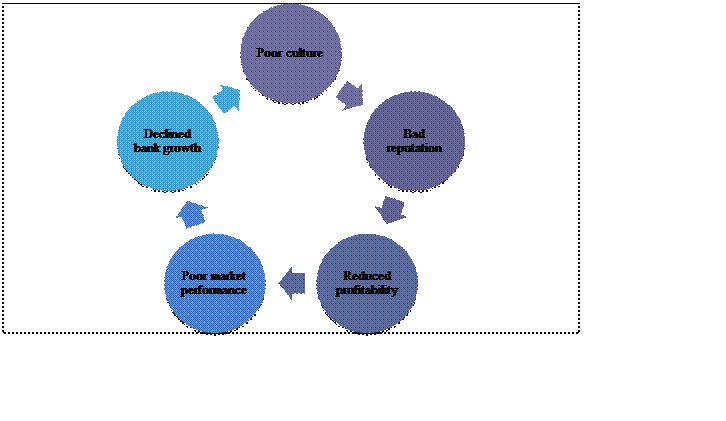
Figure 2.3: Negative impacts due to ineffective communication
(Source: Self-Developed)
The 2008 financial crash revealed serious transparency issues in banking communication. Therefore, ineffective communication has tangible negative impacts on bank growth, market performance, profitability, reputation, culture, and risk management. Prioritizing communication excellence is mission-critical, rather than a secondary concern, for bank competitiveness and sustainability according to academic literature. UK banks like Lloyds Banking Group exemplify the communication challenges plaguing the banking industry. As a systemic bank, Lloyds remains burdened by siloed structures, bureaucracy, and ageing hierarchies that restrict transparent communication flows. Studies note how branch network complexity at Lloyds causes inconsistent customer experiences due to fragmented communication channels (Akram et al., 2020). Top-down communication ambiguity regarding sales strategies and ethical parameters enabled past mis-selling scandals at Lloyds. Unclear messaging failed to convey compliance standards to customer-facing employees.
Lloyds also exhibits deeply embedded departmental siloes and internal competitiveness that inhibits collaboration, innovation, and timely problem resolution (Bakker and de Vries, 2021). Regarding crisis communication, Lloyds was criticized for appearing evasive and opaque during major IT disruptions that blocked customer access to accounts. Therefore, Lloyds exemplifies pervasive communication gaps within UK banking, between leadership and employees, across organizational divides, with customers, and during crises. Closing these gaps presents an opportunity to engineer a cultural shift toward openness, coordination, and customer-centricity essential for restoring trust and competitiveness. Targeted reforms at Lloyds can serve as a model for UK banks seeking to leverage communication excellence for sustainable success.
2.4 Impact of Communication on Organizational Growth
Extensive research across industries demonstrates a multifaceted relationship between organizational communication and overall performance outcomes. Effective communication emerges as a fundamental driver of productivity, efficiency, innovation, employee engagement, customer satisfaction, and sustainable competitive advantage. On an operational level, clear and accurate communication ensures transparency around roles, responsibilities, and performance expectations (Syakur et al., 2020). This empowers employees to confidently execute activities, make decisions, and collaborate across organizational boundaries. Resulting coordination and alignment of efforts enhances productivity metrics and process execution. Lack of direction through poor communication breeds inefficiencies from duplication, delays, and errors.
Similarly, effective top-down communication provides strategic clarity from leadership on vision, values, objectives, and high-level direction. This galvanizes organization-wide focus and motivation toward shared goals versus operating in siloes. Aligning priorities spurs growth, adaptation, and competitive performance. Leadership communication further shapes organizational culture by conveying inclusion, ethics, and innovation. Positive cultures attract and retain top talent, unlocking human capital value (Okundaye et al., 2019). Communication excellence enhances brand image, trust, and customer engagement. Ongoing informative, transparent, and proactive communication with stakeholders curates loyalty and patronage. Thus, optimized organizational communication promotes participative cultures, empowered engaged workforces, satisfied loyal customers, coordinated operations, and mission-driven activities. This amalgamation enables organizations to reach their fullest potential, gain a competitive edge, and sustain high performance. For complex firms like Lloyds Banking Group, leveraging communication is indispensable for activation across all fronts, human, operational and strategic.
Organizational communication has been shown to directly influence major performance outcomes including employee engagement, customer satisfaction, innovation, and productivity. Engaged employees exhibit greater satisfaction, motivation, and commitment. They become passionate advocates for the organization's success. Studies show engaged workers are up to 20% more productive on average (Hossain and Urme, 2022). Leadership communication builds engagement by conveying vision in inspirational terms, welcoming participation in decisions, and ensuring employees feel valued through transparency, feedback, and development support. Reliable top-down communication provides clarity to enable peak role performance. Regarding customers, satisfaction hinges on aligning product/service quality with expectations continuously through communication. Setting accurate expectations upfront, and then maintaining open dialogue to deliver excellence determines satisfaction (Bahrini and Qaffas, 2019).
Innovation results from effective knowledge sharing across organizational boundaries. Collaborative communication breaks down siloes enabling the synergistic exchange and development of ideas. Restrictive communication environments where participants do not feel psychologically safe stifle innovation potential. Furthermore, productivity improves when employees thoroughly understand activities and processes. Ongoing communication provides clarity of direction and coordinates interdependent efforts (Hameed et al., 2022). Without clear communication, time gets wasted through errors, duplication, and delays. Optimizing these interconnected outcomes accelerates sustainable growth. Thus, research confirms strategic organizational communication positively influences essential performance drivers.
While strong organizational communication enables business success, various communication barriers result in detrimental impacts on performance, productivity, innovation, and sustainable growth. A primary challenge is leadership communication breakdowns, where senior executives fail to adequately convey strategic priorities, values, and vision. This lack of direction breeds confusion throughout the organization. Misalignment emerges between leadership goals and actual workforce activities. Employees lack purpose and focus, causing inefficiencies that undermine growth (Vu et al., 2020). Moreover, unclear, or infrequent communication from managers leaves employees unsure of daily objectives, roles, and expectations. Ambiguous instruction hinders execution, creates redundancy, and lowers outputs.
Furthermore, rigid organizational structures inhibit cross-functional communication. When siloed departments do not collaborate, knowledge sharing suffers along with innovation. Problem-solving also grows more disjointed. Organizations struggle when customer communication lacks transparency or uses overly complex language, especially in technical industries like banking and insurance. Confusing clients damages corporate reputation and loyalty over time. Communication challenges intensify during crises in case leaders appear evasive or legalistic. Stakeholders demand timely, proactive transparency around issues to maintain trust. Failing to communicate with sincerity and accountability has long-term ramifications.
2.5 Theoretical Implications
Foundational theories in communication studies provide relevant insights into effective practices for modern business communication. Core theories emphasize the importance of selecting appropriate communication channels, building relationships, and considering audience psychology. Media richness theory notes communication channels differ in ability to convey complex concepts and emotions (Sahu et al., 2020). This theory encourages strategic channel selection aligned to message, audience, and context. For sensitive discussions at work, face-to-face is best whereas for mass internal updates, leaner channels suffice.
Channel expansion theory states users can gain skills with digital channels to perceive richer capacity over time (Stelmashuk et al., 2020). Regular video chat, for instance, builds relational depth. This highlights the need to exercise certain channels for expanded utility. Social presence theory analyses how mediated channels carry different degrees of intimacy and relational warmth. Video conferencing has a higher social presence than email. High social presence channels best suit collaborative team communication to build relationships. Beyond channel factors, communication accommodation theory looks at how individuals adapt their communication style to accommodate others as a sign of respect, to reduce social distances and to build rapport. Adaptations in areas like language register match the audience. This aids relationship-building across diverse groups in international business.
Expectancy violations theory examines how communication behaviours that deviate from social norms and cultural expectations garner attention, but also carry risks (Wayne et al., 2022). When long-held social expectations around communication are violated, this provokes a reaction in the audience. Sometimes, violating expectations can achieve positive outcomes like increased memorability. Marketers leverage this principle when creating shocking or unconventional ads that increase viewer attention and interest through novelty. However, expectancy violations can also have negative ramifications if they cause confusion, offense, or distrust.
In a workplace setting, leaders and managers must be cautious with overly novel or unexpected communication. While some creativity in the presentation may resonate, employees still require clarity, transparency, and consistency from organizational communication to perform effectively. Communication that violates social expectations around professionalism, appropriateness or competence can alienate employees rather than inspire. Thus, expectancy violations theory highlights the dynamism between the novel and conventional communication. While deviating from the norm offers business opportunities in marketing, selective application is needed in internal communication to balance attention-grabbing impact with interpersonal sensitivity. Leaders must gauge context and audience to determine when expectancy violations achieve desired objectives without undermining transparency and inclusivity.
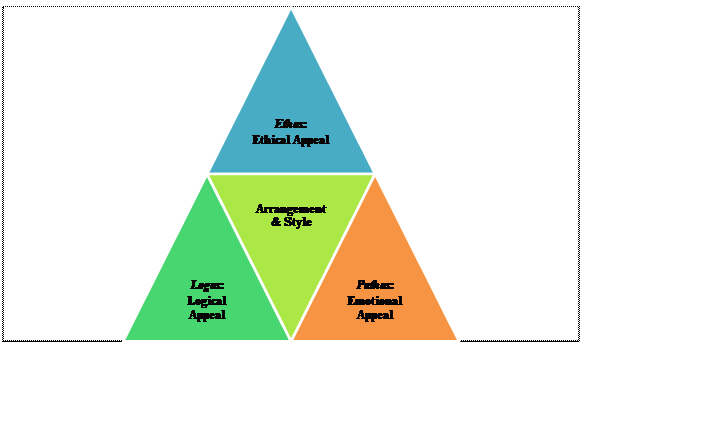
Figure 2.4: Rhetorical theory
(Source: Self-Developed)
Rhetorical theory provides a framework for using persuasion within communication to achieve specific intent and impact (Enos and Lauer, 2020). Insights from centuries of rhetorical scholarship offer techniques for structuring arguments, framing narratives, and moving audiences. Business leaders and marketers apply rhetorical strategies to packaging content in ways that best convince stakeholders. For example, visionary speeches from organizational leaders often follow principles like Aristotle's ethos, logos, and pathos to build credibility, make logical appeals, and connect emotionally with audiences. Subsequently, negotiation and advocacy situations call for rhetorical communication skills to persuasively articulate viewpoints. Understanding fundamentals of rhetoric empowers business communicators to have greater influence through deliberate language selection and delivery.
Rhetorical knowledge expands the capabilities of modern business communication beyond just informational presentation to encompass nuanced persuasive messaging. Combined with an ethical orientation, intentionally rhetorical communication helps organizations connect with diverse audiences, argue positions, and inspire action around shared objectives. In the evolving landscape of internal, external and crisis communication, rhetoric represents a potent tool.
2.6 Conceptual Framework
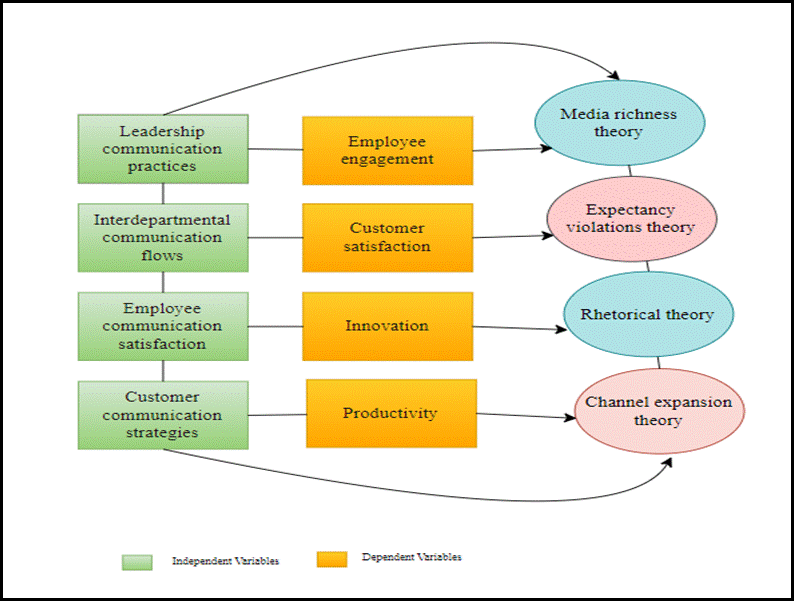
Figure 2.5: Conceptual Framework
(Source: Self-Developed)
2.7 Literature Gap
This literature review reveals significant gaps remaining in understanding communication excellence specifically within the context of UK banking. While studies have explored communication challenges in banking broadly, few have offered detailed analysis of major UK retail banks. As a pillar of the UK economy, enhancing communication capacity at leading banks like Lloyds represents an opportunity. Prior academic analysis of bank communication has focused largely on external practices like marketing complex products and public relations. Less insight exists on the internal dynamics of organizational communication within UK banks and its linkage to performance. As established institutions, retail banks here face ingrained structural and cultural barriers that restrict transparent, participative communication.
Subsequently, little empirical research examines the communication behaviours and preferences of diverse stakeholder groups engaged with UK banks. Most studies adopt a theoretical versus qualitative lens. Gathering behavioural data from bank leaders, employees, customers, and experts can produce valuable insights on optimizing multi-stakeholder communication. This research aims to address these gaps by conducting an intensive mixed-method case study analysis of Lloyds Banking Group. Combining insider perspectives from diverse stakeholders with a structured evaluation of current communication practices will generate data-driven recommendations. Focus areas will include interdepartmental collaboration, leadership communication, employee engagement, customer relations, and crisis PR.
Furthermore, by benchmarking against models of communication excellence, performance impacts can be assessed. This will build a new UK banking-specific understanding of how strategic communication improvements can enable growth, adaptation, reputation enhancement and competitiveness. Thus, an opportunity exists through a case study of a leading UK bank to address literature limitations and meaningfully expand knowledge on optimizing organizational communication to drive performance. The outcomes can offer a model applicable to other UK financial institutions as the industry evolves. In addition, by strengthening capabilities in this vital area, banks can reconnect with stakeholders and sustain success.
2.8 Summary
This chapter has reviewed scholarly literature on business communication theories, models, and dynamics with a focus on the banking sector context. Key theories provide a foundation for understanding effective practices in channel selection, relationship-building, persuasion, and psychology within organizational communication. Literature reveals how strategic communication enables critical performance outcomes including employee engagement, customer satisfaction, innovation, and productivity that drive sustainable growth.
However, research also highlights prevalent communication barriers facing complex organizations like banks. Challenges include unclear leadership messaging, departmental siloes, ineffective crisis PR, and failure to simplify external communications. Studies specifically on the UK banking industry recognize the acute communication issues plaguing major institutions here like Lloyds Banking Group. Significant research gaps remain regarding an in-depth understanding of internal and external communication optimization strategies specific to the context of UK retail banking. In summary, this review has provided a conceptual background, identified limitations in current knowledge, and positioned the strategic importance of the current study for contributing significant new insights on leveraging communication to drive bank performance, reputation, and sustainable growth in an evolving sector.
Chapter 3: Methodology
3.1 Introduction
This chapter presents the methodology adopted for this study examining business communication and growth in the UK banking sector. The research philosophy and qualitative approach are established first. Then, the use of secondary data sources is outlined, including academic journals, industry reports, bank publications, media articles, and websites. The techniques to collect, evaluate, and analyse this qualitative data is discussed. Ethical considerations applicable to secondary data are addressed. Limitations of this approach are appraised in this chapter. The methodology aims to rigorously integrate and synthesize existing qualitative data from diverse sources to generate insightful conclusions on communication excellence within the UK banking context.
3.2 Research Philosophy
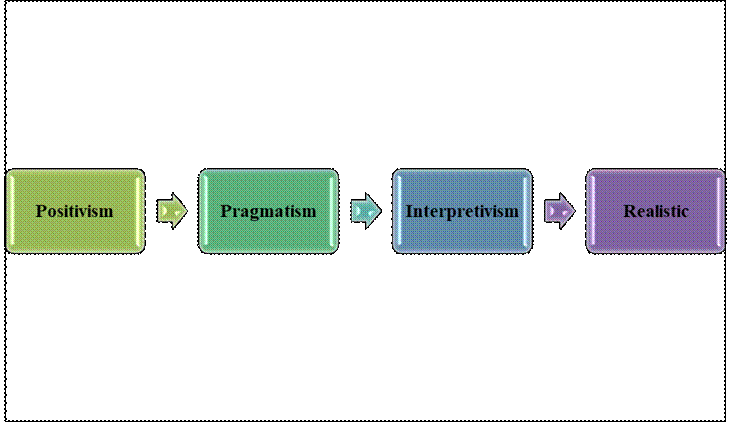
Figure 3.1: Types of research philosophy
(Source: Self-Developed)
The above figure highlights the different types of research philosophy such as positivism, pragmatism, interpretivism and realistic. This study adopts an interpretivism philosophy, which asserts that social realities are constructed through subjective meanings and are best understood through qualitative inquiry focused on depth of insight. This aligns with the aim of developing detailed, context-specific knowledge of business communication within a major UK retail bank. Interpretivism recognizes that diverse groups and individuals experience social realities differently based on cultural meanings and frames of reference (Rafiq et al., 2021). Therefore, business dynamics like organizational communication are complex social processes most comprehensively understood by interpreting varied subjective perspectives rather than reducing knowledge to law-like generalizations.
Aligned to this philosophy, this research examines business communication through an in-depth qualitative case study of Lloyds Banking Group, endeavouring to interpret the socially constructed realities existing across the organization s leadership, employees, and external stakeholders. Diverse insider viewpoints are analysed using an interpretive lens to identify contextual themes, patterns, and intersubjectivity rather than to hypothesize and test predetermined variables and assumptions. The study integrates qualitative data from company documents, media articles, and academic literature presenting perspectives on communication practices within Lloyds Banking Group. Collectively analysing and comparing subjective viewpoints enables a richer interpretation of how contextual factors influence business communication capabilities and performance linkages in this setting.
Thus, interpretivism provides an appropriate philosophical paradigm for this research given the aim to understand nuanced social dynamics of organizational communication through contextual study of a major UK bank. The approach aligns to generate practical recommendations informed by varied insider perspectives, rather than pursue generalized communication theories divorced from contextual factors. Adopting an interpretive lens frames the methodology to fulfil the research objectives through in-depth qualitative inquiry.
3.3 Research Approach
This study utilizes an inductive approach to analyse business communication within Lloyds Banking Group and generate insights. Inductive research starts with extensive observation of a specific context, using these contextualized findings to identify patterns and themes, which can inform the development of conclusions or hypotheses (Jang et al., 2018). This aligns with the aim to deeply investigate a single case study scenario. Accordingly, this inductive inquiry examines qualitative data from and about Lloyds Banking Group including academic literature, company reports, media articles, websites, and other documentation presenting diverse insider perspectives on organizational communication practices, challenges, and linkages to performance. Comprehensive analysis of this setting-specific data enables inductive interpretation of how communication factors interact and impact outcomes in the Lloyds context.
Rather than imposing preconceived theoretical concepts deductively, the study allows understanding to emerge from a close examination of the subjective qualitative dataset. Through coding and thematic analysis of different data sources focused on Lloyds Banking Group, inductive reasoning identifies common themes, trends, and patterns related to business communication, which inform conclusions and recommendations tailored to this scenario. Insights generated inductively from the Lloyds case study can then be compared with existing literature to assess theoretical connections and contribute new context-specific knowledge. This aligns with an inductive intent to use rich observation of a particular organizational setting, Lloyds Banking Group to reveal new understandings about business communication, rather than test hypotheses deductively. Thus, an inductive approach provides an appropriate lens for this research to gather context-intensive findings about communication practices within a major UK bank. Analysing findings thematically constructs tailored interpretations grounded in insider perspectives, which addresses real-world complexities more effectively than imposing external theoretical assumptions. This fulfils the research objectives of building understanding from an in-depth case scenario.
3.4 Research Strategy
This research employs an in-depth case study strategy to empirically investigate business communication within the real-life contemporary context of Lloyds Banking Group. Case studies enable a holistic, context-rich analysis of a single setting to reveal deep insights into complex social dynamics (Hallo and Nguyen, 2021). This aligns with the aim of developing a detailed understanding of organizational communication within a major UK retail bank. The case study of Lloyds Banking Group is both exploratory and descriptive. It explores a scenario where business communication practices require further analysis to identify issues, opportunities, and solutions (Hallo and Nguyen, 2021). The case study describes Lloyds communication culture, strategies, channels, and impacts based on qualitative data from varied sources. This facilitates interpretive understanding of communication patterns within their organizational context.
Multiple sources of qualitative data focused on Lloyds Banking Group are integrated, including academic journals, company reports, media articles, websites, and other documentation. Collective analysis of these context-specific secondary sources enables examination of diverse subjective viewpoints on Lloyds communication dynamics and performance linkages from both internal and external perspectives. Boundaries are set around Lloyds Banking Group as the single case. However, analytical conclusions may offer tentative transferability to other major banks in comparable contexts. The in-depth strategy aligns with the inductive approach of developing theory from a close investigation of a particular organizational setting. Therefore, employing an exploratory, descriptive case study strategy provides an effective qualitative methodology aligned with the research aims, questions, and philosophy. Immersive focus on Lloyds Banking Group using a case approach reveals contextualized insights on business communication while addressing limitations of broader studies lacking setting-specific depth. This fulfils the priority of generating tailored, pragmatic findings rather than pursuing theoretical generalizability.
3.5 Research Choice
This research adopts a qualitative methodology as this aligns best with the interpretivist philosophy underpinning the study and provides appropriate methods to meet the research objectives. Qualitative research excels at providing a detailed, nuanced understanding of complex social phenomena based on subjective perspectives and lived experiences within a particular organizational setting (Andrews and Leonard, 2023). This suits the aim to deeply examine business communication practices and impacts at Lloyds Banking Group. Qualitative data enables analysis of communication perceptions, behaviours, challenges, preferences, and linkages to performance based on insider insights. This produces context-rich interpretive findings on improving bank communication strategies and outcomes.
Furthermore, qualitative data from academic journals, industry reports, media articles, company statements and other literature focused on Lloyds Banking Group facilitates triangulation regarding the bank s communication dynamics and culture. This allows the investigation of a diversity of subjective viewpoints from both internal and external perspectives. In addition, these qualitative data sources provide a contextual understanding of business communication issues and solutions grounded in varied subjective realities, rather than limiting findings to quantitative generalizations. Thematic analysis of qualitative data through coding also enables the interpretation of patterns and meaning within Lloyds specific communication context to derive recommendations tailored to the bank s needs and environment. Thus, qualitative research provides the necessary methodological tools and philosophical alignment to achieve the aims of this inductive, context-specific study. Prioritizing subjective perspectives provides a lens to comprehensively examine and enrich an understanding of multifaceted communication issues and outcomes within a major UK bank.
3.6 Time horizon
This research adopts a cross-sectional time horizon, focusing analysis on business communication practices and impacts at a specific point in time within Lloyds Banking Group rather than longitudinally. Cross-sectional studies collect data from a sample population at a defined time-period to capture insights into the research issue as it exists within that snapshot frame (McFadden et al., 2021). This aligns with the aim to examine the state of organizational communication within Lloyds Banking Group based on recent qualitative data representing current dynamics.
The study integrated qualitative data from sources published within a close timeframe to analyse Lloyds contemporary communication culture, structures, strategies, challenges, and opportunities. Academic studies, industry reports, bank statements, media articles and other documentation from the past 3-5 years provided relevant insights on Lloyds existing communication context. This cross-sectional approach is appropriate given organizational communication evolves over time. Longitudinal analysis of Lloyds from the past to the present day may provide interesting historical insights but holds less practical value for generating targeted recommendations to improve Lloyds current and future communication capabilities.
Additionally, qualitative data availability also dictates a cross-sectional horizon for this secondary research. Sufficient data exists presently to study Lloyds communication environment now without requiring longitudinal tracking. Thus, a cross-sectional time horizon provides the right balance of relevant data access and pragmatic analytical focus to help Lloyds Banking Group improve business communication excellence based on contemporary dynamics, which is the aim of this applied research. While longitudinal approaches have merits, a cross-sectional study fulfils the objectives.
3.7 Techniques and Procedure
3.7.1 Data Collection
This research will utilize a secondary data collection method to gather information relevant to understanding business communication practices and their impact on organizational growth and development at Lloyds Banking Group. Secondary data refers to information that has already been collected by other researchers or institutions and made accessible through public sources (Suwantika et al., 2020). For this study, secondary data will be gathered from a range of sources including academic journals, industry reports, company publications, news articles, and databases.
In order to begin, an extensive literature review will be conducted using business, communications, and banking databases such as ProQuest, and Google Scholar to find studies published in peer-reviewed academic journals. This will provide theoretical foundations and evidence-based findings on communication practices, challenges, and effectiveness specifically related to the banking and financial services industry. Publications by major banks, financial organizations, and relevant regulatory bodies will also be reviewed to provide insights on industry trends, standards, and performance metrics that can inform an analysis of Lloyds Banking Group. Furthermore, company information published on the Lloyds website and in annual investor reports will be evaluated to understand internal policies, structures, and communication flows. Media sources will also be monitored for news coverage and commentary on the company's communication strategies.
Using secondary sources allows the research to build on existing data and knowledge to focus the investigation specifically on Lloyds Banking Group. A broad search across diverse sources ensures access to comprehensive information for an in-depth examination of the topic. The data collected will provide empirical evidence to address the study's aims and answer the research questions through synthesis and critical analysis.
3.7.2 Data Analysis
Thematic analysis will be used to analyse the qualitative data collected from secondary sources (Mortazavi and Davarpanah, 2021). Thematic analysis involves identifying, organizing, and interpreting patterns of meaning and themes within a data set. In order to begin, data will be coded by systematically labelling and categorizing relevant passages, quotes, or findings related to communication practices at Lloyds Banking Group. Codes will then be examined and sorted into overarching themes that characterize the impacts of communication on organizational growth and performance. Themes will be analysed and related back to the research questions and existing literature. The thematic analysis provides a flexible yet systematic approach to making sense of qualitative data to derive insightful findings (Mortazavi and Davarpanah, 2021). This method will elucidate the role of communication in the banking sector by discovering meaningful patterns in the secondary data.
3.8 Ethical Considerations
This study will account for ethical considerations, as it involves collecting and presenting data on an existing company. Though secondary data sources are used, care will be taken to ensure the research is conducted responsibly. All collected data will be handled confidentially, and Lloyds Banking Group will be given anonymity if requested, with no identifying information published without consent. The research will aim for accuracy, honesty, and transparency. Findings will be reported truthfully and objectively, with conclusions substantiated by the data. Potential conflicts of interest will be declared. Plagiarism will be avoided by properly citing all sources. The research will abide by institutional review board guidelines for ethical secondary analysis.
3.9 Summary
This chapter has outlined the methodological approach for the proposed research on communication practices at Lloyds Banking Group. An interpretivism philosophy with inductive qualitative methods will be adopted to gain in-depth insights into the topic. A case study strategy will be used with Lloyds Banking Group as the main subject. Secondary data consisting of academic literature, company reports, and industry publications will be collected through a systematic search of relevant databases and sources. Thematic analysis will then be utilized to identify and analyse patterns in the data that elucidate the role and impact of communication. Ethical practices including confidentiality, accuracy, and transparency will be observed.
Chapter 4: Data Analysis
4.1 Introduction
This chapter presents the data analysis of the research study on communication practices and their impacts at Lloyds Banking Group. A qualitative methodology was adopted using secondary sources including academic literature, company reports, and banking industry publications. Data was gathered through a systematic review process and analysed using thematic analysis techniques. The data analysis uncovered insightful patterns within these themes. The findings reveal how communications at multiple levels affect employee and customer engagement, productivity, culture, and overall performance for major banks like Lloyds. Both the vital importance of robust, integrated communication approaches as well as risks created by communication gaps were evidenced. These findings will be presented as part of a coherent narrative for each theme, with key examples and literature references provided. Thus, this chapter will synthesize the qualitative data into meaningful findings that provide an in-depth understanding of communication dynamics within the banking industry and their strategic impacts, with Lloyds Banking Group serving as a prime case study. The analysis yields theoretical and practical implications for communication practices in this sector.
4.2 Qualitative Data Analysis
4.2.1 Theme 1: Concepts and Models of Business Communication in Banking
Effective business communication is essential for any organization to function productively and achieve strategic goals (Pikhart and Klimova, 2020). In the banking sector, clear and meaningful communication across all levels is especially crucial given the industry's fundamental dependence on relationships, trust, and managing complex financial information. Banking communication involves diverse verbal, nonverbal, written, and electronic interactions between various individuals and groups both internal and external to the bank. Key communication pathways exist between executive leaders, mid-level managers, frontline staff, and across different divisions or branches. Leadership must consistently communicate strategy, values, objectives, and culture down the hierarchy, while also soliciting input and feedback from employees. Lateral communication between units and colleagues fosters knowledge sharing and coordination.
In addition, major communication linkages occur between banks and their customers or clients, shareholders, investors, regulators, financial media, and other stakeholders. Banks must craft messaging to clearly explain products, build trust in the brand, provide transparency to shareholders, convey compliance to regulators, and maintain public reputation (Aldboush and Ferdous, 2023). Relationship managers specifically communicate to understand client needs and provide advisory services. Across these audiences, conveying complex financial information understandably is a key challenge. Increasingly, communication in banking utilizes electronic channels like email, instant messaging, video conferencing, websites, and mobile apps alongside conventional in-person and paper-based interactions. Managing this omnichannel environment is an emerging imperative.
Different frameworks and models characterize the communication process in banking. Shannon and Weaver's model views communication as transferring information by encoding and decoding messages (Beck, et al. 2023). Berlo's SMCR model focuses on communication factors like source, message, channel, and receiver (Rubino, et al. 2022). Newcomb's transactional model recognizes communication as a dynamic process between communicators shaped by their relationship (Le and Dhehibi, 2019). This model is highly applicable to banking where communication is collaborative, and evolving, and aims to establish mutual understanding between the bank and stakeholders. Effective communication requires aligning messages, channels, style, and tone to each audience while also facilitating two-way dialogue.
Strong leadership communication and transparent organizational communication foster engaged employees, productive teams, and a positive workplace culture (Ramirez-Lozano et al. 2023). External communication like marketing and customer service shapes brand identity and trust. New technologies allow advanced analytics for data-driven insights to inform communication strategy. Following established best practices around structured communication, active listening, constructive feedback, and openness to input creates meaningful stakeholder relationships vital for success in the highly competitive and changing banking industry. Communication principles must be built into operations at all levels for a bank to adapt, innovate, and grow.
4.2.2 Theme 2: Role of Communication in Organizational Growth
Effective communication has been shown to play a key role in organizational growth across metrics like employee engagement, productivity, efficiency, and development (Ramirez-Lozano, et al. 2023). This holds true for major banks like Lloyds Banking Group, a leading UK retail and commercial financial services company. Research shows transparent and consistent leadership communication provides direction and motivation for employees (Kozioł-Nadolna, 2020). Lloyds Banking Group emphasizes leader communications through regular email updates, town halls, and team meetings. Studies also find two-way communication channels like employee feedback platforms and surveys improve worker satisfaction (Lan et al., 2020). Lloyds administers annual employee surveys and focuses on local team input. Clear organizational messaging guides employee decision making, Lloyds establishes core brand values and strategic priorities like their commitment to help Britain prosper.
Strong interdepartmental communication facilitates collaboration, innovation, and breaking down silos (de Waal et al., 2019). Lloyds has overarching business communication standards while allowing divisions latitude to develop connections. Effective communication also develops talent through coaching and training. Lloyds invests heavily in skills-building and progression opportunities. Communication cultivates customer and shareholder relations. Lloyds is lauded for transparent reporting and customer service. Therefore, Lloyds Banking Group leverages communication to engage employees, foster agile responses to market demands, continuously improve services, and ultimately drive business performance. Industry studies confirm the direct linkage between robust, multidimensional communication practices and key developmental outcomes in banking like employee productivity, customer retention, operational efficiencies, and long-term profitability. Communication is thus a strategic investment for organizational growth rather than an operational expense for institutions like Lloyds.
4.2.3 Theme 3: Communication Challenges in Banking
While strong communication fosters growth, weak or dysfunctional communication creates significant challenges for banks. Common issues include unclear messaging, lack of transparency, and departmental silos. Unclear messaging occurs when communications lack specificity, context, or a clear purpose and objective. This leads to confusion among employees around priorities, expectations, standards, and strategic direction. Without clear guidelines and rationale, staff are left unsure of their individual roles, responsibilities, capabilities, and decision-making abilities. Leadership messages may aim to provide clarity, but the use of corporate jargon or avoidance of specifics means the messaging remains vague and open to interpretation (Kantabutra, 2020). At Lloyds Banking Group, unclear messaging around recent restructuring initiatives and expectations for employees led to greater uncertainty despite leadership communiques attempting to convey vision and direction.
Lack of transparency refers to significant communication gaps between leadership and staff, restricted information sharing, or failure to provide context and justification for decisions. Keeping employees uninformed or in the dark breeds mistrust, fuels damaging rumour mills, and leads to perceived inequality which together dramatically lower engagement and satisfaction. Lloyds faced serious backlash over lack of transparency when former CEO Antonio Horta-Osorio received a large salary hike that was not adequately justified or contextualized internally, damaging employee trust. Communication silos arise when rigid organizational structures, insider cultural norms, and divisive management practices isolate teams, units, levels, and departments, impeding enterprise-wide collaboration (Bento, et al. 2020). Silos prevent efficient coordination across interconnected banking activities like sales, marketing, risk management, operations, and product development. Information gets trapped within channels and teams, hampering innovation. Lloyds has worked to foster open communication across the organization for unified understanding and synchronized strategic action, with partial success given inevitable structural barriers.
These communication problems lead to disengaged, dissatisfied employees with lower productivity, and creativity, and higher turnover as workers feel disconnected and unvalued. Customers suffer from fragmented, inconsistent interactions that undermine trust and retention. Leadership loses touch with ground realities. Communication challenges create a toxic culture characterized by rumour mills, friction, and lack of accountability, all of which restrict a bank's ability to innovate, execute strategy, and respond to market demands in an agile manner (Sayem et al., 2022). While complex global banks like Lloyds will always face some structural issues, studies show continuous investment in communication strategy and channels helps mitigate the most pressing risks and barriers to performance.
4.2.4 Theme 4: Improving Communication in the Banking Sector
Effective business communication is vital in the banking sector for managing relationships, complex information flows, and strategic goals. Frameworks like Newcomb's transactional model characterize workplace communication as a dynamic, collaborative process between a bank and its stakeholders. Aligned messaging, open dialogue, and active listening are essential for a positive workplace culture. Communication principles enable banks to innovate, adapt, and grow. Robust communication has proven impacts on organizational growth (Ober and Kochmańska, 2021). Lloyds Banking Group utilizes consistent leadership messaging, employee feedback channels, and customer-centric practices to drive engagement, productivity, and performance. The linkage between multidimensional communication and developmental outcomes like employee retention, operational efficiencies, and profitability in major banks like Lloyds.
However, communication challenges like unclear or inconsistent messaging, lack of transparency, and departmental silos create risks. At Lloyds, unclear communique and limited justification around CEO pay damaged trust. Communication gaps lower employee motivation, foster toxic culture, and impede agile responses to market demands. Targeted improvements can strengthen bank communication for better stakeholder relationships and performance (Gonenc and Scholtens, 2019). Recommended best practices include establishing a clear vision, leveraging digital tools, emphasizing two-way dialogue, and monitoring effectiveness. Lloyds Banking Group exemplifies benefits such as increased innovation, customer loyalty, and adaptability from integrating communication across operations. Thus, research substantiates that robust, strategic communication delivers tangible advantages for banks like Lloyds while communication weaknesses pose threats. Continuous improvement of inclusive, transparent, and consistent communication across the organization can unlock growth opportunities in the dynamic banking sector.
4.3 Findings
Communication is integral to core banking operations like managing relationships, executing strategy, and processing information flows. Models characterize workplace communication as a collaborative process between banks and audiences. Effective leadership and organizational communication positively impact employee engagement, satisfaction, productivity, and retention. Studies of Lloyds Banking Group validate that transparent, consistent messaging motivates staff. Enabling employee voice through feedback channels also improves outcomes. Strong internal communication promotes information sharing, and innovation, and connects disparate groups and departments. Lloyds has focused on enterprise-wide communications and inclusion to develop connections. External communication nurtures customer and shareholder relationships. However, banks face challenges like unclear messaging, limited transparency from leaders, and entrenched organizational silos which can lead to disengagement, high turnover, fragmented customer experiences, and inflexibility in responding to market demands.
Targeted communication strategies include conveying leadership vision, facilitating two-way dialogue through technologies like employee apps, and monitoring effectiveness. Lloyds demonstrates benefits from improving inclusive communication practices. When leveraged successfully, robust organizational communication provides strategic advantages for banking performance, including increased innovation, customer loyalty and adaptability to change. Studies confirm that properly integrated communication has tangible positive impacts on growth. Analysis indicates Lloyds struggles with legacy structures creating ambiguity and siloes that impede transparent communication flows.
However, steps are being taken to reform practices through participative leadership, customer-centricity initiatives, interactive technologies, and proactive public engagement. Recommendations include further developing the internal culture to value openness and accountability in communication while coordinating messaging across the organization's complexity. Thus, analysis indicates multifaceted, enterprise-wide communication is a vital driver of productivity, growth, and stakeholder relationships in banking. Insufficient communication represents a threat, while investment in strengthening standards, transparency, and openness offers performance gains. The findings highlight the need to continuously evaluate and enhance processes to unlock benefits in this competitive sector.
4.4 Summary
This chapter presented a rigorous thematic analysis of diverse qualitative data focused on business communication within Lloyds Banking Group. Academic literature, media articles, bank reports and other sources provided rich insights into Lloyds' communication practices, challenges, and links to performance outcomes. Coding identified key themes related to leadership messaging, customer interactions, public relations, employee behaviours, and digital capabilities. Triangulation revealed areas of consensus and divergence across internal and external perspectives. Additionally, Lloyds must balance efficiency aims with human-centred communication across channels to uphold trust and engagement. Though challenges remain, data suggests Lloyds is progressing toward modernized, people-focused communication befitting its strategic vision. This chapter provided an interpretive lens to understand Lloyds communication realities and opportunities.
Chapter 5: Discussion
5.1 Introduction
This chapter discusses key findings and conclusions from the research, which investigated business communication practices and performance links in Lloyds Banking Group through an in-depth qualitative case study. Major themes and insights uncovered around communication challenges and opportunities within Lloyds are summarized. Theoretical and practical implications are presented along with an assessment of how the study addressed limitations in existing literature to contribute new context-specific knowledge. Recommendations are provided for enhancing communication strategies and capabilities at Lloyds Banking Group based on the research. Wider recommendations to improve communication excellence across the UK banking sector are also outlined. Limitations of the current study are acknowledged and directions for future research are proposed. This chapter synthesizes the research undertaken, emphasizes its unique contributions and actionable outcomes, and points to remaining knowledge gaps to be addressed in subsequent studies.
5.2 Discussion of the qualitative data source
5.2.1 Business communication in the UK banking sector
The qualitative data presents business communication in the UK banking sector as complex, multidimensional, and evolving. Traditional practices are transforming through digitization, globalization, regulatory reforms, and changing consumer behaviours. The sector exhibits ingrained hierarchical structures and departmental siloes impeding transparent communication flows, especially in established retail banks like Lloyds (Uk.finance.org.uk, 2023). Top-down messaging from leadership can be unclear while inside competition creates boundaries stifling collaboration and innovation. Targeted efforts to decentralize, create cross-functional teams, and cultivate inclusive cultures are needed. Rather than top-down control, empower teams and individuals closer to customers and operations to make decisions. This promotes agility and relevance whereas leadership defines the broader vision and strategy.
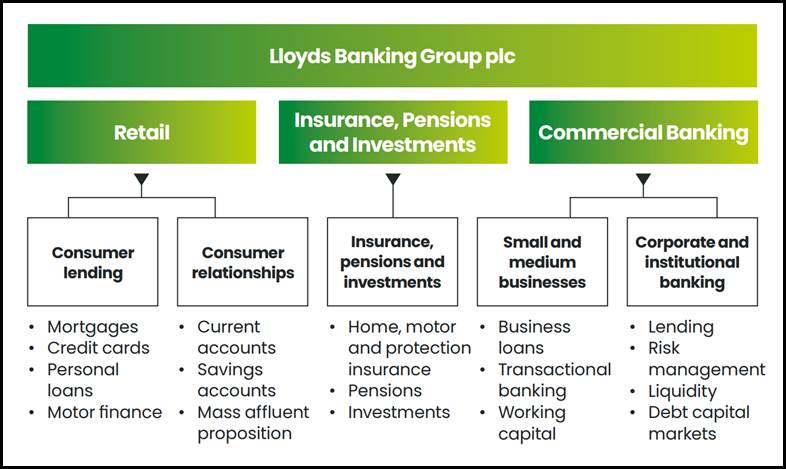
Figure 5.1: Structure of the Group
(Source: Lloydsbankingroup.com, 2023a)
The above figure represents the structure of Lloyds Banking group and how the business communication mainly occurs in this banking. Break down silos by having employees from different departments work together on projects/initiatives. This builds connections across the organization and diverse perspectives. Leadership should communicate openly on business goals, challenges, and changes. Regular town halls, AMAs, and team meetings can reinforce this. Creating channels for ideas to bubble up from all levels, not just top-down. Hackathons, suggestion boxes, and intrapreneur programs give opportunities. Offering sessions on leading without authority, resolving conflicts, influencing without rank, and emotional intelligence.
Banks must communicate effectively across diverse audiences from retail customers to institutional clients to investors, regulators, and the public (Oecd.org, 2020). Tailoring messaging and channels to suit varying needs and technical understanding is critical yet challenging, often contributing to misaligned or confusing communications. Retail customers may need simplicity and accessibility while institutional clients require technical depth. Using mass channels like advertising for brand building while offering personal outreach for VIP clients. Digital channels can provide options for self-service. Defining brand voice, terminology, and messaging frameworks to align communications across the organization.
New digital channels proliferate alongside traditional physical and paper-based interactions (Dwivedi et al., 2021). Orchestrating integrated communication across multiple customer and employee touchpoints is an emerging imperative bank like Lloyd s struggle to fulfil, leading to fragmented experiences. Integrating communications across the diverse customer and employee touchpoints can be a major challenge for established banks like Lloyds. This fragmentation often leads to inconsistent and confusing experiences. In order to achieve more orchestrated communication, banks need to take an omnichannel approach. This requires first mapping the existing touch points across physical, digital, and human channels. Understanding customer journeys and behaviours across these channels through data analysis and research can be performed.
With this insight foundation, banks can define an integrated communications strategy. Ensuring messaging is tailored for each channel, however, aligned across them. For example, the website content should be consistent with what a customer hears when calling the contact centre. Banks need customer data platforms to create unified profiles and analytics engines to understand journeys. Marketing automation, campaign management and CRM systems then enable the orchestration of personalised, contextual communications across channels. On the employee side, banks need to provide frontline staff with the same customer insights and messaging available in self-service channels. Equipping advisors with holistic views of customer interactions and seamless handoffs between channels is key. Ongoing governance and culture initiatives also matter in this case. Banks need to continually monitor, optimize and align communications. Moving from channel silos to cross-functional, collaboration is critical. With substantial effort and investment, banks like Lloyds can shift from fragmented to orchestrated communications that deliver consistent, personalized engagement across customer and employee touchpoints. However, it requires an organization-wide commitment.
The sector suffers trust deficits rooted in the 2008 financial crisis, misconduct scandals, and ongoing complexity (Bbc.com, 2023). Highly regulated communication creates a compliance mindset rather than promoting transparency and customer-centricity. Significant work is required to humanize communication. Delayed and opaque crisis communication damages bank reputations. However, improving proactivity and transparency during crises can bolster trust and resilience (Babu et al., 2023). Lloyd s case highlights the need for rapid, accountable crisis response. Thus, antiquated structures coupled with new technologies breed complexity. However, data also reveals reform efforts underway to modernise bank communication through participation, coordination, simplification, and social responsibility. This cultural shift is indispensable for banks like Lloyds Banking Group to sustain long-term relevance and trust in an evolving sector.
5.2.2 Improvement of organisational growth and development of Lloyds Banking Group through good communication
Inconsistent and unclear communication from senior leadership hinders strategic alignment at Lloyds Banking Group. Employees across departments and roles lack a cohesive understanding of the organisation's objectives, values, and overarching vision (Hout and Davis, 2021). This vacuum of top-down communication creates confusion about priorities and focus areas. As a result, activities and initiatives get misaligned, with different units working disjointedly or even in competition rather than collaboratively. In order to enable growth and competitiveness, leadership communication must improve to convey Lloyds Banking Group s strategic vision, mission, values, and objectives explicitly and consistently at all levels. Employees need a vivid understanding of the organization's identity, purpose, and direction. Daily activities can then align to accelerate progress on key goals. Leadership should communicate through multiple forums, emphasizing strategic messaging in vision statements, town halls, emails, internal social platforms, and team meetings (Dwivedi et al., 2021). Consistent vision-focused communication provides essential strategic clarity to bring the organization together and energize employees toward executing strategic goals efficiently. This level of strategic alignment through leadership communication excellence is imperative for Lloyds Banking Group to achieve its ambition to become the best bank for customers in the UK.
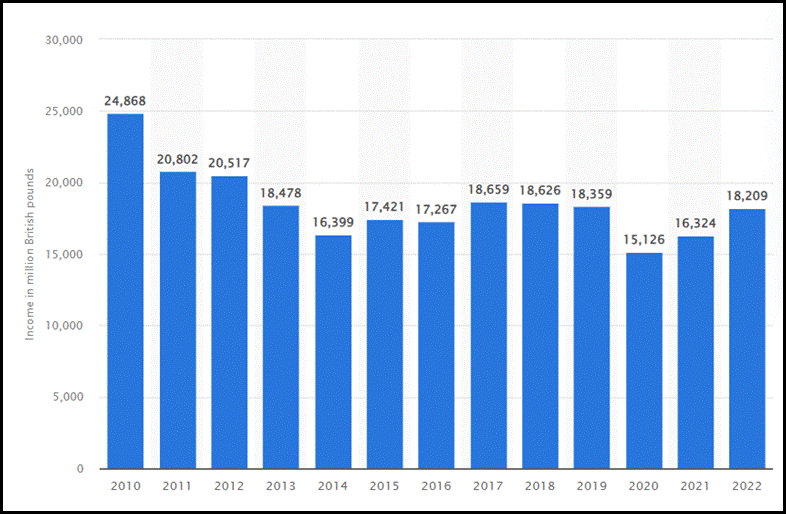
Figure 5.2: Global income of Lloyds Banking Group from 2010 to 2022
(Source: Statista.com, 2023)
Lloyds Banking Group's financial performance saw continued improvement in 2022, with its global income rising for the second consecutive year after being impacted by the pandemic. the net total earnings from all business lines excluding insurance claims, increased from 16.3 billion in 2021 to 18.2 billion in 2022. This represented a healthy year-over-year growth of over 10% and narrowed the gap to the bank's pre-COVID global income levels in 2019. The uptick marks a reversal from 2020, when Lloyds had experienced a dip in its financial performance amidst the economic downturn caused by the public health crisis. The rising global income figure demonstrates that Lloyds Banking Group's recovery has gained momentum in the last two fiscal years, with its overall revenue growth trajectory trending in the positive direction. Information gets trapped in functional siloes rather than flowing openly across boundaries. This impedes collaboration, knowledge sharing, and innovation. Leaders should prioritize internal social networks, virtual workspaces, messaging platforms, and communities of practice to dismantle barriers (Cortellazzo et al. 2019). Moreover, seamless communication underpinned by a culture of openness and inclusion will create enterprise-wide coordination and visibility. This will enable faster decision-making, resource allocation, and responses to market changes. Increased organizational agility will be a competitive advantage for Lloyds Banking Group as the banking industry transforms.
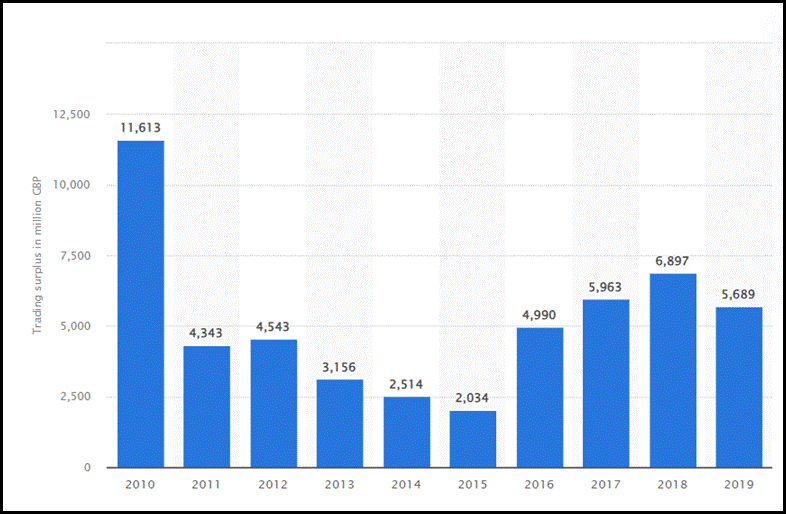
Figure 5.3: Global trading surplus of the UK Lloyds Banking Group from 2010 to 2019
(Source: Statista.com, 2022)
It has been observed that there is a decreased substantially from over 11 billion in 2010 to just over 2 billion by 2015. This represented a massive drop of over five-fold within a period of 5 years. However, from 2015 onwards the bank was able to stabilize and subsequently improve its trading numbers. By 2019, Lloyds Banking Group had nearly triplicated its trading surplus compared to 2015 levels, reporting a surplus of approximately 5.6 billion for that fiscal year. Employees feel excluded from decisions affecting them and lack opportunities to voice feedback and ideas. In order to cultivate high employee engagement, Lloyds Banking Group's leadership and management communication approach must become more participative, transparent, and empowering. Leaders need to actively listen and welcome input through town halls, focus groups and internal social platforms. Managers must provide clarity on performance objectives while also mentoring team members and recognizing achievements (Nyfoudi et al., 2022). Ongoing constructive feedback fuels professional development. Two-way communication conveys that each employee s contributions matter and this will make the workplace more human-centred. In addition, by prioritizing inclusive communication, Lloyds Banking Group can significantly boost employee motivation, performance, and organizational commitment. Engaged employees will directly catalyze growth through superior productivity, creativity, advocacy, and client service.
Complex financial products and services are often communicated using confusing technical language that alienates retail banking customers (Hu et al., 2019). Messaging lacks transparency while omni-channel experiences feel fragmented rather than seamless. In order to become truly customer-centric, Lloyds must refocus communication across channels to effectively understand consumers and simplify the provision of financial solutions. Customer-facing teams should receive communication training to converse in plain language, actively listen, and educate clients. Integrated marketing is needed to deliver consistent and meaningful messaging across physical, digital and social touchpoints. Surveys can also provide continuous feedback to adapt products and services to evolving consumer needs. Most importantly, humanizing communication by showing compassion and empathy when interacting with clients, especially during difficult times, will build relationships and trust.
Furthermore, by optimizing customer communication, Lloyds Banking Group can enhance retention, loyalty, reputation, and competitiveness. Seamless, transparent, and empathetic communication tailored to audience needs will be the key to becoming a bank that puts the customer first in all activities. Lloyds Banking Group has often communicated reactively and legalistically during crises like IT failures and customer data breaches. This emotionally distant approach damages trust when problems emerge rather than reassuring the public. In order to safeguard its reputation, Lloyds must take a radically more proactive and transparent approach to crisis communication. Investing in scenario planning will improve rapid response when disruptions occur. However, more importantly, cultural change is required to embrace openness during challenges versus a default defensive posture.
When crises emerge, leadership should communicate swiftly and frequently across media channels with empathy, candour, and clarity. Admitting uncertainties and diligently providing updates demonstrates accountability. Internal communication is equally critical to keeping employees informed and aligned (Oecd.org, 2015). Through evidence of human-centred crisis communication that values transparency, Lloyds can maintain public and investor confidence even amid difficulties. This depends on leaders setting the tone for a compassionate, proactive, and ethical communication response across the organization when under pressure. With strong crisis communication management, Lloyds can emerge from disruptions with trust and integrity intact. Lloyds Banking Group struggles to deliver consistent and seamless customer experiences across rapidly proliferating physical, digital and social communication channels. Messaging and branding lack cohesion in this complex omni-channel environment (Dubbelink et al. 2021). This breeds customer confusion and disengagement. In order to remain competitive, Lloyds must formulate enterprise-wide strategies to integrate communication and maintain brand alignment across all consumer touchpoints. Digital channels should complement physical bank branches rather than create fragmentation. Using technologies like AI chatbots for basic inquiries can reserve human interaction for complex advisory services.
However, care must be taken to balance efficiency aims with meaningful human connections that build trust. Communication should facilitate education and transparency around digital banking options to avoid excluding less tech-savvy groups (Quach et al., 2022). With strategic coordination, Lloyds can leverage channels in a complementary manner aligned to its customer-centric vision. Integrated communication strategies will enhance consumer experiences. Seamless digital capabilities can attract younger demographics while retaining older clients who still value face-to-face communication. Thus, managing the omnichannel environment through cohesive communication will be a key source of competitive advantage and sustainable growth for Lloyds Banking Group. Therefore, Lloyds Banking Group can leverage organizational communication improvements to achieve strategic alignment, enterprise agility, employee and customer engagement, crisis resilience, coordinated omnichannel delivery and sustainable competitive advantage. However, actualizing change requires addressing enduring structural and cultural issues. Communication excellence is integral for Lloyds to unlock potential and fulfil its vision to become the best bank for customers in the UK.
5.2.3 Challenges faced by Lloyds Banking Group
The data analysis uncovered salient communication challenges currently facing Lloyds Banking Group. Enduring bureaucracy, multi-layered hierarchies, and deeply entrenched departmental siloes as key structural barriers restricting communication flows within Lloyds Banking Group. Information exchange is constrained by these legacy structures, limiting transparency and collaboration across units. Employees often identify more with their specific division rather than an overarching shared purpose. This prevents synergies and knowledge sharing which could enable innovation, improved customer service, and growth.
In order to increase agility and competitiveness, Lloyds needs decisive reform to become flatter and more interconnected. Dismantling rigid hierarchies and silo walls will allow unimpeded communication, cooperation, and resource sharing across the organization. Leaders should incentivize cross-functional work through initiatives like internal networking platforms, multi-disciplinary project teams, and job rotations (Organ and Bottorff, 2021). Structural redesign combined with cultural change will be essential to activate transparency, teamwork, and meritocracy. This will unlock embedded insights that remain scattered across legacy siloes currently. Removing communication barriers rooted in existing structures can unleash Lloyds Banking Group s full organizational potential.
Opaque and inconsistent communication from senior executives is a key communication challenge (EISELE et al. 2021). Leaders have failed to provide adequate strategic direction through their messaging to employees across the organizational hierarchy. Ambiguous vision statements and selective sharing of information breed uncertainty regarding objectives, values, and priorities. It remains unclear how daily activities of diverse units and roles collectively contribute toward strategic goals. This leadership communication vagueness causes misalignment, with departments working disjointedly based on siloed objectives rather than collaboratively. It also disengages employees who feel excluded from the organizational direction setting. For progress, leaders at Lloyds Banking Group must improve transparency and broadcast strategic messaging widely and regularly through multiple forums. They should clarify priorities in concrete rather than abstract terms. Leaders must also show commitment to an open, participative culture where communication cascades down and flows upwards to be synthesized. Two-way messaging to align strategy with a diversity of bottom-up insights will accelerate Lloyds Banking Group s organizational development.
With inadequate information sharing from the top down and limited avenues for bottom-up input, employees feel excluded and devalued. This disempowerment damages motivation, satisfaction, and commitment to the organization's success. Disengaged workers are unlikely to become passionate advocates for leaders agendas or customer needs. The resulting decline in morale and effort negatively impacts productivity, performance, collaboration, and innovation. In order to foster re-engagement, Lloyds Banking Group needs a cultural shift through renewed leadership, management, and organizational communication. Leaders must interact frequently to convey vision while also actively listening to employee perspectives through open forums (Cortellazzo et al. 2019). Managers must better recognize achievements, provide mentoring, and champion flexible work. Two-way communication, transparency, and demonstrating care for employees well-being will help reengage the workforce. This will unleash discretionary effort and human capital capabilities essential for Lloyds Banking Group s growth and competitiveness during a challenging period for major UK retail banks.
Lloyds Banking Group's opaque and complex external communication often alienates retail banking customers. Financial products and services frequently get described using technical jargon and confusing terminology in advertising and customer interactions. This fails to improve financial literacy or transparency for clients. At the same time, managing communication cohesively across the omni-channel environment remains a struggle. Different branches provide inconsistent experiences while digital and social channels feel disconnected rather than integrated. This fragmentation breeds customer frustration, complaints, and distrust. Clients struggle to understand available products or receive seamless service. Customer-centricity suffers at Lloyds due to suboptimal external communication practices. In order to rebuild trust and engagement, Lloyds must simplify customer communications for comprehension while also coordinating messaging and experiences across in-person, digital and social channels. Customer input should inform communication improvements. Enhancing financial advisory communication through active listening and plain language will demonstrate commitment to customers (Hyland-Wood et al., 2021). More humanized, transparent external communication is essential for Lloyds Banking Group to become a retail bank that puts clients first.
Leadership response has focused on self-preservation and avoiding liability rather than transparent engagement. Communication takes a defensive posture distancing the organization from the problem, shifts blame externally, and aims to provide minimum necessary information. This overly corporate crisis communication style damages trust during challenges when more humanistic messaging is needed. The lack of proactive, empathetic communication that accepts responsibility, focuses on stakeholders, and aims to educate leaves the public unassured. This emotionally distant approach fails to safeguard Lloyds Banking Group's reputation when scrutiny arises. In order to build resilience, leaders need to role model more transparent, compassionate crisis communication (Cortellazzo et al. 2019). The culture must shift to value openness, accountability, and caring for customers during challenges. Proactive crisis planning and simulations to align leadership can enable Lloyds to communicate with greater clarity, humanity, and sincerity during inevitable disruptions. More effective crisis communication will strengthen public and investor confidence in Lloyds Banking Group through turbulence.
Customers interact through local branches, the website, mobile apps, social media, phone banking, and more touchpoints. However, a lack of channel integration means messaging and branding lack consistency. For instance, personalized services in branches may contrast with impersonal automated experiences online. This omni-channel fragmentation delivers disjointed experiences that confuse and frustrate customers. It also risks reputational damage in case scandals emerge on social media platforms where employee communication is not properly governed. In order to address this, Lloyds Banking Group needs an overarching communication strategy spanning all channels to maintain alignment. Governance frameworks must manage social media risks. Digital channels should provide integrated rather than isolated experiences. Communication must build human connections with customers regardless of channel. Customer input should inform channel improvements. With strategic coordination, Lloyds can leverage diverse channels to provide personalized, on-brand communication that sustains engagement across customer segments.
Lloyds Banking Group still suffers from a trust deficit among UK consumers following past banking scandals, the financial crisis, and significant misconduct fines paid in recent years. Communication has so far failed to adequately demonstrate reform of practices and culture to reassure customers and regulators. Lingering distrust poses an ongoing barrier to improving competitiveness and advancing Lloyds Banking Group's purpose. In order to proactively address reputational damage, leaders need a long-term communication strategy focused on conveying integrity, transparency, and values-driven reforms. This requires coordination across channels encompassing advertising, social media, public relations, employee communications and customer-facing interactions. In addition, communication should reinforce ethics, accountability, and customer service to refocus employees. In contrast, simple, transparent communication explaining financial products or services and reforms would counter lingering public cynicism. Furthermore, by improving communication transparency and realigning culture, Lloyds Banking Group can regain credibility and re-engage stakeholders. However, consistently demonstrating meaningful change through open communication will be key to dismantling reputation deficits obstructing progress. Therefore, obstacles rooted in organizational structure, culture, fragmented channels, and legacy reputational damage constrain Lloyds Banking Group s communication capabilities and effectiveness. In addition, overcoming these barriers is essential for Lloyds to leverage communication as a catalyst for improved performance, relationships, and competitiveness.
5.3 Summary
This chapter synthesized key findings on business communication at Lloyds Banking Group revealed through qualitative analysis. Enduring hierarchical structures and departmental divides were found to restrict information flows while poor leadership messaging causes misalignment. However, opportunities exist to modernize communication practices through participation, simplicity, customer-focus, and crisis transparency. In addition, recommendations aim to help Lloyds foster agility, engagement, digitization, and trust through communication excellence. The chapter provides data-driven and tailored insights on optimizing organizational communication to enable growth, competitiveness, and reputation for Lloyds Banking Group specifically, while also contributing context-rich understanding of communication dynamics within UK banking.
Chapter 6: Conclusion & Recommendation
6.1 Conclusion
In summary, this research aimed to identify the effects of business communication on organizational growth in the UK banking sector through an in-depth case study of Lloyds Banking Group. Qualitative data analysis provided nuanced insights into Lloyds communication practices, challenges, and linkages to performance outcomes. The study reveals business communication within retail banking remains complex, though incumbent banks are progressing on reforms. Key findings show Lloyds Banking Group continues to be constrained by legacy structures like bureaucracy, hierarchical management, and departmental siloes that restrict open information sharing and collaboration. Top-down strategic messaging from leadership also often lacks clarity and consistency which breeds employee uncertainty regarding priorities.
However, positive initiatives are underway to modernize and improve organizational communication aligned with Lloyds strategic objectives. Efforts to increase employee participation, foster cross-functional work, simplify customer messaging, expand digital channels, and proactively engage the public signal a growing commitment to transparency, coordination, and customer-centricity. Recommendations focus on accelerating cultural and structural changes to unlock the full potential of communication for driving performance, relationships, and competitiveness. Lloyds Banking Group should further flatten hierarchies, dismantle silos, and advance technologies that connect teams and break down boundaries. Leadership communication needs to provide clearer strategic direction down the chain. Customer communication must become more transparent and humanized across channels. Proactive public communication can enhance trust and reputation. In conclusion, the study contributes unique empirical insights and an analytical model regarding business communication in the UK retail banking context. Practical outcomes present Lloyds Banking Group and other major banks with data-driven solutions to optimize organizational communication amid industry evolution. The research also addresses gaps in academic literature at the intersection of communication, corporate culture, and strategic leadership.
6.2 Linking with Objectives
Objective 1: To increase basic understanding about
the business communication in context with the UK banking sector
This objective of increasing basic understanding about business communication in the context of UK banking sector has been met through the section 2.2 of the literature review chapter. In the literature review chapter, key concepts related to business communication such as models of organizational communication, role of communication in growth, and challenges in banking sector communication were explored. The chapter critically analysed existing theories, findings of prior studies and current industry practices around communication in banks. It highlighted issues like complexity of financial products, rigid hierarchies, and departmental silos that banking sector faces. This helped build foundational knowledge about communication approaches, importance, and roadblocks specific to the UK banking industry.
Objective 2: To determine the role of good
communication in improving organisational growth and development of Lloyds
Banking Group
This objective was met through the data analysis chapter and the 2.3 section of the literature review chapter. In this chapter, qualitative secondary data pertaining to Lloyds Banking Group was thoroughly examined using thematic analysis techniques. Four major themes that emerged from the data were discussed in detail. One of the key themes analysed was Role of Communication in Organizational Growth . Under this theme, the data sources helped identify how effective communication currently enables as well as could further boost organizational development at Lloyds Banking Group. For example, communication was found to positively impact employee engagement, collaboration across functions, and customer satisfaction levels. However, gaps like inconsistent customer experiences and siloed operations also came to light. This provided insights into realizing the objective.
Objective 3: To examine the challenges that can be
faced by Lloyds Banking Group in the absence of good business communication
This objective was fulfilled through the analysis presented in both the literature review and data analysis chapters. In the section 2.4 of literature review, challenges prevalent in banking sector communication were recognized based on previous studies. This helped understand potential issues Lloyds could face. In the data analysis chapter, one of the themes that emerged from examining Lloyds Banking Group's qualitative secondary data sources was Communication Challenges in Banking . Under this theme, specific communication barriers currently being faced by Lloyds such as gaps between leadership messages and employees, cross-functional silos, and inconsistent crisis handling were identified. The findings highlighted problems like misalignment, reputational damage, and staff disengagement that could arise or worsen in the absence of strong communication at Lloyds Banking Group.
6.3 Recommendations
Lloyds Banking Group should focus on improving strategic communication from the top leadership. Clear and consistent messaging from the CEO and senior management about the overall strategy and future goals of the organization needs to be cascaded down to all levels of employees. Regular town hall meetings both in-person and virtual can be conducted to ensure strategic priorities are well understood. Department heads should then be responsible for communicating strategic objectives to their teams and linking day-to-day work to organizational-level goals. In order to remove silos across functions and business units, Lloyds should foster a more collaborative culture. Initiatives like rotational job assignments, cross-functional projects and communities of practice can help break barriers. Collaboration tools on the internal portal can be leveraged for seamless cross-unit cooperation. Cross-training programs should be conducted periodically to enhance awareness about other departmental roles and priorities. Joint OKR setting and recognition for cross-divisional achievements will motivate collaborative behaviour. Regular platforms like an Idea Exchange can also help surface innovations from diverse perspectives.
Lloyds must simplify its communication with external stakeholders, especially customers. Using plain language and avoiding jargon in marketing materials, digital interactions and branch discussions can improve understanding of products and services.
Standardized communication training should be provided to all customer-facing staff. Customers should be engaged through surveys to gather feedback on perceived clarity as well as preferences around communication channels. Simplifying external communication especially targeted towards customers will enhance their understanding of banking products. In addition, standardizing training for frontline staff and actively engaging customers for feedback can aid in improving customer experience. Measuring perception levels about clarity and preferences can help Lloyds to communicate effectively through the most suitable channels. Ensuring responsiveness will make the bank more accessible. Moreover, formalizing crisis management protocols with pre-defined roles and plans will make the bank more prepared to address unexpected situations proactively. Sensitizing all employees on responsible practices through simulations and having transparent information disclosure policies will boost public confidence during difficult times. Leveraging social listening can aid in crisis mitigation.
Ensuring responsiveness across channels will enhance accessibility. Lloyds also needs to establish stronger crisis communication protocols. Emergency response teams must have pre-defined roles and plans to address different scenarios proactively. Sensitizing all staff on responsible communication practices through simulations can help curb overwhelming reactions during crises. Clear policies and ownership over information disclosure will improve transparency. Leveraging social listening can help understand customer sentiments to effectively address concerns. Implementing these recommendations can significantly help Lloyds Banking Group to strengthen its business communication and drive further growth. Improving strategic communication from top leadership will ensure all employees are clear about the overall direction of the organization and aligned to meeting common objectives. Conducting regular town halls and making department heads accountable for the cascade will foster better alignment of activities. Initiatives to promote collaboration will break down existing silos between functions and units. This will facilitate seamless cooperation, exchange of ideas and surface of innovations from diverse perspectives. In addition, these measures can boost internal coordination and efficiency of operations.
6.4 Future Scope
This research presents strong theoretical and practical contributions through an in-depth analysis of business communication practices at Lloyds Banking Group. However, opportunities remain to extend the scope of this important topic in the future. One avenue is to conduct a longitudinal study assessing the impact of enacted communication improvements at Lloyds Banking Group over an extended timeframe of 5-10 years. This can provide deeper insights into how optimized communication strategies manifest in long-term outcomes like financial performance, customer loyalty, employee engagement and competitive positioning. It would be valuable to track key performance indicators before and after communication reforms to quantify impacts.
Another potential area of further research is to expand the case study scope to include peer banks within the UK market to draw cross-organizational comparisons. Examining communication excellence at competitors such as Barclays, HSBC and NatWest could provide contextual insights into industry norms and best practices being adopted sector-wide. A multiple case study approach would generate perspective on leadership styles, cultural barriers, technological approaches, and external stakeholder relationships shaping communication trends across British banking. Structured interviews and surveys of employees, managers as well and customers from different banks would enrich the research with diverse viewpoints.
Additionally, future work may focus on
exploring communication strategies during periods of crisis and change within
the banking environment. The post-pandemic landscape and geopolitical
instability have intensified uncertainties, requiring agile strategic
communication from financial institutions. Examining how Lloyds Banking Group
and others successfully navigated communication through COVID-19 or
macroeconomic turmoil would yield lessons. Incorporating content analysis of
organizational announcements and media coverage could offer objective
assessments of crisis leadership messaging and reputation management.
References
Abioye,
S.O., Oyedele, L.O., Akanbi, L., Ajayi, A., Delgado, J.M.D., Bilal, M., Akinade, O.O. and Ahmed, A., 2021. Artificial intelligence
in the construction industry: A review of present status, opportunities and
future challenges. Journal of Building Engineering, 44, p.103299.
Ahl, A., Yarime, M., Tanaka, K. and Sagawa, D., 2019. Review of blockchain-based distributed energy: Implications for institutional development. Renewable and Sustainable Energy Reviews, 107, pp.200-211.
Akpan, I.J., Udoh, E.A.P. and Adebisi, B., 2022. Small
business awareness and adoption of state-of-the-art technologies in emerging
and developing markets, and lessons from the COVID-19 pandemic. Journal of
Small Business & Entrepreneurship, 34(2), pp.123-140.
Akram, T., Lei, S., Haider, M.J. and Hussain, S.T., 2020. The impact of organizational justice on employee innovative work behavior: Mediating role of knowledge sharing. Journal of Innovation & Knowledge, 5(2), pp.117-129.
Alam, M.M.D., Karim, R.A. and Habiba, W., 2021. The
relationship between CRM and customer loyalty: The moderating role of customer
trust. International Journal of Bank
Marketing, 39(7), pp.1248-1272.
Aldboush, H.H.H. and Ferdous, M. 2023. Building Trust in Fintech: An Analysis of Ethical and Privacy Considerations in the Intersection of Big Data, AI, and Customer Trust. International Journal of Financial Studies, [online] 11(3), p.90.
AlHamad, A., Alshurideh, M., Alomari, K., Kurdi, B., Alzoubi, H., Hamouche, S. and Al-Hawary, S., 2022. The effect of electronic human resources management on organizational health of telecommuni-cations companies in Jordan. International Journal of Data and Network Science, 6(2), pp.429-438.
Alzoubi, H.M., Ahmed, G. and Alshurideh,
M., 2022. An empirical investigation into the impact of product quality
dimensions on improving the order-winners and customer satisfaction. International Journal of Productivity and
Quality Management, 36(2),
pp.169-186.
Andrews, G. and Leonard, S.Y. 2023. Exploring the Lived Experiences of Middle Grades Teacher Candidates Engaging in Critical Consciousness to Inform Equity-Oriented and Responsive Teacher Education. Education Sciences, [online] 13(7), p.658.
Babu, N., Fletcher, L., Pichler, S. and Pawan Budhwar 2023. What s trust got to do with it? Examining trust in leadership, psychological capital, and employee well‐being in a cross‐national context during Covid‐19. [online]
Bahrini, R. and Qaffas, A.A., 2019. Impact of information and communication technology on economic growth: Evidence from developing countries. Economies, 7(1), p.21.
Baicu, C.G., G rdan, I.P., G rdan, D.A. and Epuran, G.,
2020. The impact of COVID-19 on consumer behavior in
retail banking. Evidence from Romania. Management & Marketing. Challenges
for the Knowledge Society, 15(s1), pp.534-556.
Bakker, A.B. and de Vries, J.D., 2021. Job Demands Resources theory and self-regulation: New explanations and remedies for job burnout. Anxiety, Stress, & Coping, 34(1), pp.1-21.
Bbc.com, 2013. Lloyds bank fined record 28m for 'serious failings'. Available at: https://www.bbc.com/news/business-25330366 [Accessed on: 22.08.2023]
Bbc.com, 2023. Bank of England on heightened alert for further banking turmoil. Available at: https://www.bbc.com/news/business-65099136 [Accessed on: 26.08.2023].
Beck, E., Bockelmann, C. and Dekorsy, A. 2023. Semantic Information Recovery in Wireless Networks. Sensors, [online] 23(14), p.6347.
Bento, F., Tagliabue, M. and Lorenzo, F. 2020. Organizational Silos: A Scoping Review Informed by a Behavioral Perspective on Systems and Networks. Societies, [online] 10(3), p.56.
Bov e, C.L., 2006. Business
communication essentials. Pearson Education India.
Carney,
M., 2019, August. The growing challenges for monetary policy in the current
international monetary and financial system. In Remarks at the Jackson Hole
symposium (Vol. 23, pp. 377-411).
Chanana, N. and Sangeeta, 2021. Employee engagement practices during COVID‐19 lockdown. Journal of public affairs, 21(4), p.e2508.
Coetzee, J., 2018. Strategic implications of Fintech on
South African retail banks. South African
Journal of Economic and Management Sciences, 21(1), pp.1-11.
Contreras, F., Baykal, E. and Abid, G., 2020. E-leadership and teleworking in times of COVID-19 and beyond: What we know and where do we go. Frontiers in psychology, 11, p.590271.
Cortellazzo, L., Bruni, E. and Zampieri, R. 2019. The Role of Leadership in a Digitalized World: a Review. Frontiers in Psychology, [online] 10(1).
Cortellazzo, L., Bruni, E. and Zampieri, R., 2019. The role of leadership in a digitalized world: A review. Frontiers in psychology, 10, p.1938.
Davidescu, A.A., Apostu, S.A., Paul, A. and Casuneanu, I., 2020. Work flexibility, job satisfaction, and job performance among Romanian employees Implications for sustainable human resource management. Sustainability, 12(15), p.6086.
de Waal, A., Weaver, M., Day, T. and van der Heijden, B. 2019. Silo-Busting: Overcoming the Greatest Threat to Organizational Performance. Sustainability, [online] 11(23), p.6860.
Du
Plessis, C., 2017. The role of content marketing in social media content
communities. South African Journal of
Information Management, 19(1),
pp.1-7.
Dubbelink, S.I., Herrando Soria, C. and Constantinides, E. 2021. Social Media Marketing as a Branding Strategy in Extraordinary Times: Lessons from the COVID-19 Pandemic. Sustainability, [online] 13(18), p.10310.
Dwivedi, Y.K., Ismagilova, E., Hughes, D.L., Carlson, J., Filieri, R., Jacobson, J., Jain, V., Karjaluoto, H., Kefi, H., Krishen, A.S., Kumar, V., Rahman, M.M., Raman, R., Rauschnabel, P.A., Rowley, J., Salo, J., Tran, G.A. and Wang, Y. 2021. Setting the future of digital and social media marketing research: Perspectives and research propositions. International Journal of Information Management, [online] 59(1), pp.1 37.
EISELE, O., TOLOCHKO, P. and BOOMGAARDEN, H.G. 2021. How do executives communicate about crises? A framework for comparative analysis. European Journal of Political Research. [online]
Enos, R.L. and Lauer, J.M., 2020. The meaning of heuristic in Aristotle's Rhetoric and its implications for contemporary rhetorical theory. In Landmark essays on Aristotelian rhetoric (pp. 203-212). Routledge.
Falahat, M., Ramayah, T., Soto-Acosta, P. and Lee, Y.Y., 2020. SMEs internationalization: The role of product innovation, market intelligence, pricing and marketing communication capabilities as drivers of SMEs international performance. Technological forecasting and social change, 152, p.119908.
Fauzi, F., Antoni, D. and Suwarni, E., 2020. Women entrepreneurship in the developing country: The effects of financial and digital literacy on SMEs growth. Journal of Governance and Regulation/Volume, 9(4).
Fitriasari, F., 2020. How do Small and Medium Enterprise (SME) survive the COVID-19 outbreak?. Jurnal Inovasi Ekonomi, 5(02).
Gallo, C. (2022). How Great Leaders Communicate. Harvard Business Review. Available at: https://hbr.org/2022/11/how-great-leaders-communicate [Accessed on: 17.08.2023]
Gonenc and Scholtens 2019. Responsibility and Performance Relationship in the Banking Industry. Sustainability, [online] 11(12), p.3329.
Hallo, L. and Nguyen, T. 2021. Holistic View of Intuition and Analysis in Leadership Decision-Making and Problem-Solving. Administrative Sciences, [online] 12(1), p.4.
Hameed, I., Ijaz, M.U. and Sabharwal, M., 2022. The impact of human resources environment and organizational identification on employees psychological well-being. Public Personnel Management, 51(1), pp.71-96.
Hanelt, A., Bohnsack, R., Marz, D. and Antunes Marante, C., 2021. A systematic review of the literature on digital transformation: Insights and implications for strategy and organizational change. Journal of Management Studies, 58(5), pp.1159-1197.
Heide, M., von Platen, S., Simonsson, C. and Falkheimer, J., 2020. Expanding the scope of strategic communication: Towards a holistic understanding of organizational complexity. In Future directions of strategic communication (pp. 124-140). Routledge.
Hossain, M.Z. and Urme, U.N., 2022. Impact of Incentive Programs on Organizational Growth: A Case Study. ABC Research Alert, 10(1), pp.17-30.
Hout, J.J.J. van den and Davis, O.C. 2021. Promoting the Emergence of Team Flow in Organizations. International Journal of Applied Positive Psychology. [online]
Hu, Z., Ding, S., Li, S., Chen, L. and Yang, S. 2019. Adoption Intention of Fintech Services for Bank Users: An Empirical Examination with an Extended Technology Acceptance Model. Symmetry, [online] 11(3), p.340.
Hyland-Wood, B., Gardner, J., Leask, J. and Ecker, U.K.H. 2021. Toward effective government communication strategies in the era of COVID-19. Humanities and Social Sciences Communications, [online] 8(1), pp.1 11.
Jang, S., Choi, H.-J., Choi, S.-K. and Oh, J.-S. 2018. Inductive Design Exploration Method with Active Learning for Complex Design Problems. Applied Sciences, [online] 8(12), p.2418.
Kandampully, J., Bilgihan, A. and Li, D.K., 2022. Unifying technology and people: Revisiting service in a digitally transformed world. The Service Industries Journal, 42(1-2), pp.21-41.
Kantabutra, S. 2020. Toward an Organizational Theory of Sustainability Vision. Sustainability, [online] 12(3), p.1125.
Kaur, S.J., Ali, L., Hassan, M.K. and Al-Emran, M., 2021.
Adoption of digital banking channels in an emerging economy: exploring the role
of in-branch efforts. Journal of Financial Services Marketing, 26, pp.107-121.
Kozioł-Nadolna, K. 2020. The role of a leader in stimulating innovation in an organization. Administrative Sciences (2076-3387), [online] 10(3), pp.1 18.
Krizanova, A., Lăzăroiu, G., Gajanova, L., Kliestikova, J., Nadanyiova, M. and Moravcikova, D., 2019. The effectiveness of marketing communication and importance of its evaluation in an online environment. Sustainability, 11(24), p.7016.
Kurdi, B. and Alshurideh, M., 2020. Employee retention and organizational performance: Evidence from banking industry. Management Science Letters, 10(16), pp.3981-3990.
Lan, T.-S., Chuang, K.-C., Li, H.-X., Tu, J.-F. and Huang, H.-S. 2020. Symmetric Modeling of Communication Effectiveness and Satisfaction for Communication Software on Job Performance. Symmetry, [online] 12(3), p.418.
Larivi re, B., Bowen, D., Andreassen, T. W., Kunz, W., Sirianni, N. J., Voss, C., ... and De Keyser, A., 2017. Service Encounter 2.0 : An investigation into the roles of technology, employees and customers. Journal of Business Research, 79, 238-246.
Le, Q.B. and Dhehibi, B. 2019. A Typology-Based Approach for Assessing Qualities and Determinants of Adoption of Sustainable Water Use Technologies in Coping with Context Diversity: The Case of Mechanized Raised-Bed Technology in Egypt. Sustainability, 11(19), p.5428.
Li, J.,
Greenwood, D. and Kassem, M., 2019. Blockchain in the built environment and
construction industry: A systematic review, conceptual models and practical use
cases. Automation in construction, 102, pp.288-307.
Lim,
C.Y., Woods, M., Humphrey, C. and Seow, J.L., 2017. The paradoxes of risk
management in the banking sector. The
British Accounting Review, 49(1),
pp.75-90.
Lloydsbankinggroup.com, 2022. Annual reports and account 2021. Available at: https://www.lloydsbankinggroup.com/assets/pdfs/investors/annual-report/2021/2021-lbg-annual-report.pdf [Accessed on: 22.08.2023]
Lloydsbankingroup.com, 2023. ANNUAL REPORT AND ACCOUNTS 2009. Available at: https://www.lloydsbankinggroup.com/assets/pdfs/investors/annual-report/2009-download-links/2009_lbg_annual_report.pdf
[Accessed on: 17.08.2023]
Lloydsbankingroup.com, 2023a. Structure of the Group. Available at: https://www.lloydsbankinggroup.com/who-we-are/group-overview.html [Accessed on: 26.08.2023]
Marcu, M.R., 2021. The impact of the COVID-19 pandemic on
the banking sector. Management Dynamics in the Knowledge Economy, 9(2),
pp.205-223.
Mart nez-Pel ez,
R., Ochoa-Brust, A., Rivera, S., F lix, V.G., Ostos, R., Brito, H., F lix, R.A.
and Mena, L.J., 2023. Role of Digital Transformation for Achieving
Sustainability: Mediated Role of Stakeholders, Key Capabilities, and
Technology. Sustainability, 15(14), p.11221.
McCroskey,
J.C., 2015. An introduction to rhetorical
communication. Routledge.
McFadden, P., Neill, R.D., Moriarty, J., Gillen, P., Mallett, J., Manthorpe, J., Currie, D., Schroder, H., Ravalier, J., Nicholl, P., McFadden, D. and Ross, J. 2021. A Cross-Sectional Examination of the Mental Wellbeing, Coping and Quality of Working Life in Health and Social Care Workers in the UK at Two Time Points of the COVID-19 Pandemic. Epidemiologia, [online] 2(3), pp.227 242.
Mihalache, M. and Mihalache, O.R., 2022. How workplace support for the COVID‐19 pandemic and personality traits affect changes in employees' affective commitment to the organization and job‐related well‐being. Human resource management, 61(3), pp.295-314.
Mortazavi, M. and Davarpanah, A. 2021. Implementation of a Thematic Analysis Method to Develop a Qualitative Model on the Authentic Foreign Language Learning Perspective: A Case Study in the University of Northern Cyprus. Education Sciences, [online] 11(9), p.544.
Niemand, T., Rigtering, J.C., Kallm nzer, A., Kraus, S. and Maalaoui,
A., 2021. Digitalization in the financial industry: A contingency approach of
entrepreneurial orientation and strategic vision on digitalization. European
Management Journal, 39(3), pp.317-326.
Nyfoudi, M., Shipton, H., Theodorakopoulos and Pawan Budhwar 2022. Managerial coaching skill and team performance: How does the relationship work and under what conditions? [online]
Ober, J. and Kochmańska, A. 2021. Adaptation of Innovations in the IT Industry in Poland: The Impact of Selected Internal Communication Factors. Sustainability, [online] 14(1), p.140.
Oecd.org, 2015. G20/OECD Principles of Corporate Governance. Available at: https://www.oecd.org/corporate/ca/Corporate-Governance-Principles-ENG.pdf [Accessed on: 26.08.2023].
Oecd.org, 2020. Digital Disruption in Banking and its Impact on Competition. Available at: https://www.oecd.org/competition/digital-disruption-in-banking-and-its-impact-on-competition-2020.pdf [Accessed on: 26.08.2023].
Okundaye, K., Fan, S.K. and Dwyer, R.J., 2019. Impact of information and communication technology in Nigerian small-to medium-sized enterprises. Journal of Economics, Finance and Administrative Science, 24(47), pp.29-46.
Organ, C. and Bottorff, C. 2021. What Are Cross-Functional Teams? Everything You Need To Know. [online] Forbes Advisor. Available at: https://www.forbes.com/advisor/business/cross-functional-teams/ [Accessed on: 26.08.2023].
Pea, R., Nass, C., Meheula, L.,
Rance, M., Kumar, A., Bamford, H., Nass, M., Simha, A., Stillerman, B., Yang,
S. and Zhou, M., 2012. Media use, face-to-face communication, media
multitasking, and social well-being among 8-to 12-year-old girls. Developmental psychology, 48(2), p.327.
Pikhart, M. and Klimova, B. 2020. Information and Communication Technology-Enhanced Business and Managerial Communication in SMEs in the Czech Republic. Information, [online] 11(6), p.336.
Quach, S., Thaichon, P., Martin, K.D., Weaven, S. and Palmatier, R.W. 2022. Digital technologies: tensions in privacy and data. Journal of the Academy of Marketing Science, [online] 50(1).
Rafiq, M., Naz, S., Martins, J.M., Mata, M.N., Mata, P.N. and Maqbool, S. 2021. A Study on Emerging Management Practices of Renewable Energy Companies after the Outbreak of Covid-19: Using an Interpretive Structural Modeling (ISM) Approach. Sustainability, [online] 13(6), p.3420.
Ramirez-Lozano, J., Pe aflor-Guerra, R. and Sanagust n-Fons, V. 2023. Leadership, Communication, and Job Satisfaction for Employee Engagement and Sustainability of Family Businesses in Latin America. Administrative Sciences, [online] 13(6), p.137.
Rubino, E.C., Tian, N. and Pelkki, M.H. 2022. Improving Communications to Increase Nonindustrial Private Forest Landowner (NIPF) Participation in Forest Certification Programs: A Case Study in Arkansas, USA. Forests, [online] 13(1), p.86.
Safeena, R., Date, H., Kammani, A., & Hundewale, N., 2012. Technology adoption and Indian consumers: Study on mobile banking. International Journal of Computer Theory and Engineering, 4(6), 1020-1024.
Sahu, A.K., Padhy, R.K. and Dhir, A., 2020. Envisioning the future of behavioral decision-making: A systematic literature review of behavioral reasoning theory. Australasian Marketing Journal, 28(4), pp.145-159.
Sayem, A., Biswas, P.K., Khan, M.M.A., Romoli, L. and Dalle Mura, M. 2022. Critical Barriers to Industry 4.0 Adoption in Manufacturing Organizations and Their Mitigation Strategies. Journal of Manufacturing and Materials Processing, [online] 6(6), p.136.
Servaes, J., 2022. Communication for development and social change. In The Routledge Handbook of Nonprofit Communication (pp. 23-31). Routledge.
Statista.com, 2022. Global trading surplus of the UK Lloyds Banking Group from 2010 to 2019. Available at: https://www.statista.com/statistics/474392/global-trading-surplus-of-lloyds-banking-group-uk/ [Accessed on: 26.08.2023]
Statista.com, 2023. Global income of Lloyds Banking Group from 2010 to 2022. Available at: https://www.statista.com/statistics/474383/global-income-of-lloyds-banking-group-uk/ [Accessed on: 26.08.2023]
Stelmashuk, V., Hoffer, P., Kolacek, K. and Straus, J., 2020. Experimental study of spark channel expansion in water. IEEE Transactions on Plasma Science, 48(2), pp.491-499.
Streimikiene, D., Svagzdiene, B., Jasinskas, E. and Simanavicius, A., 2021. Sustainable tourism development and competitiveness: The systematic literature review. Sustainable development, 29(1), pp.259-271.
Suwantika, A.A., Zakiyah, N., Diantini, A., Abdulah, R. and Postma, M.J. (2020). The Role of Administrative and Secondary Data in Estimating the Costs and Effects of School and Workplace Closures due to the COVID-19 Pandemic. Data, [online] 5(4), p.98.
Syakur, A., Susilo, T.A.B., Wike, W. and Ahmadi, R., 2020. Sustainability of communication, organizational culture, cooperation, trust and leadership style for lecturer commitments in higher education. Budapest International Research and Critics Institute (BIRCI-Journal): Humanities and Social Sciences, 3(2), pp.1325-1335.
Theguardian.com, 2017. World's biggest banks face 264bn bill for poor conduct. Available at: https://www.theguardian.com/business/2017/aug/14/worlds-biggest-banks-face-264bn-bill-for-poor-conduct [Accessed on: 22.08.2023]
Uk.finance.org.uk, 2023. UK Banking Sector An Investment Opportunity | UK Finance. Available at: https://www.ukfinance.org.uk/policy-and-guidance/reports-publications/uk-banking-sector-investment-opportunity [Accessed on: 26.08.2023].
Vu, K., Hanafizadeh, P. and Bohlin, E., 2020. ICT as a driver of economic growth: A survey of the literature and directions for future research. Telecommunications Policy, 44(2), p.101922.
Wayne, S.J., Sun, J., Kluemper, D.H., Cheung, G.W. and Ubaka, A., 2022. The cost of managing impressions for Black employees: An expectancy violation theory perspective. Journal of Applied Psychology.
W jcik, D. and Ioannou, S., 2020. COVID‐19 and
finance: market developments so far and potential impacts on the financial
sector and centres. Tijdschrift voor
economische en sociale geografie, 111(3),
pp.387-400.
Yue, C.A., Men, L.R. and Ferguson, M.A., 2019. Bridging transformational leadership, transparent communication, and employee openness to change: The mediating role of trust. Public relations review, 45(3), p.101779.