 : 413
: 413
UNVEILING THE FACTORS SHAPING SOCIAL MEDIA USAGE: A STUDY OF
MICRO-BUSINESS OWNERS IN INDIA'S ARTIFACT INDUSTRY
Abstract
Social media marketing presents invaluable opportunities for SMEs to reach audiences and achieve goals with modest resources. However, effectively leveraging social platforms poses multifaceted challenges. This qualitative study investigates the key obstacles SME decision-makers encounter in social media strategy and implementation. In-depth interviews with 10 marketing managers, sales managers, and customers reveal nuanced insights into difficulties around content creation, analytics, reputation management, platform selection, and resource limitations. Findings illuminate how constrained skills, staffing, and finances fundamentally impact SMEs social media marketing capabilities. Participants emphasize struggles to consistently produce engaging content and accurately measure return on investment. Meanwhile limited experience and tools make proactive reputation management on social an ongoing challenge. The data provides a rich understanding of context-specific social media marketing barriers for SMEs from an internal and external lens. Practical implications include training staff on content best practices, focusing analytics on key conversion metrics, and cultivating brand advocates to mitigate negativity risks. This research uncovers actionable strategies for SMEs to enhance social media marketing effectiveness and capitalize on digital opportunities despite inherent resource constraints.
Table of Contents
1.3
Research Aim and Objectives
2.2 What
is the Artifact industry?
2.3
Factors Affecting Social Media Usage?
2.4 Challenges faced by the Atifact owners in
India
2.5
Impact of Limited Resources and Capabilities on SMEs Social Media Marketing
Performance
2.6
SMEs Approaches and Difficulties in Measuring Social Media Marketing
return-on-investment
2.7
Reputation management and mitigating negativity risks for SMEs on social media
Chapter
4: Findings, Analysis and Discussion
4.2 Data
Extraction and Analysis
4.4.1
Theme 1: Resource Constraints.
4.4.2
Theme 2: Content Creation Obstacles
Chapter
5: Conclusion and Recommendations
Appendix
1: Interview Questionnaire
Table of Figures
Figure 1.1: Dissertation Structure
Figure
2.1: Limitations faced by SMEs in optimising content
Figure
2.2: Difficulties faced by SMEs.
Figure
2.3: Different aspects where limited expertise hinders SME capabilities
Figure
2.5: Conceptual Framework
Chapter 1: Introduction
1.1 Introduction
This chapter provides an overview of the research study and establishes the foundation for investigating the challenges small and medium-sized enterprises (SMEs) face when utilising social media for marketing. The introduction will highlight the increased importance of social media marketing for reaching target audiences and achieving business goals. However, SMEs often lack the expertise, manpower, and resources to leverage these platforms effectively. This chapter will outline the rationale for the study by emphasising the gap in understanding SMEs' specific pain points and obstacles in social media marketing implementation. The background, purpose statement, research objectives, and significance of the study will be delineated to provide context. Key terminology relevant to social media marketing and SMEs will also be defined. This chapter aims to introduce readers to the research area and orient them to the study's focus on uncovering the nuanced difficulties SMEs encounter in capitalising on social media marketing opportunities due to inherent resource constraints and knowledge limitations.
1.2 Research Background
India possesses a rich heritage of diverse handicrafts and artisanal wares created through specialized skills passed down generations. As Gupta (2008) examines, pottery and ceramics have been crafted across India since ancient times using local clay, tools and techniques. Specific communities like the Prajapatis of Gujarat have long-standing pottery-making traditions, notes Sikdar (2015). Namda felted wool rugs from Rajasthan represent another localized handicraft, discusses Karolia (2014), produced manually using natural dyes and surface designs. Shah and Patel (2022) review numerous artifact-making crafts of rural Gujarat spanning embroidery, rogan painting, weaving, dyeing and more. Botnick (2011) highlights how artisans have innovated within their craft using simple tools, environmentally sound materials and intergenerational knowledge transfer. The array of Indian handicrafts portrays regional diversity yet shared cultural heritage. While serving utilitarian needs, they also constitute artistic expression. The artifact industry occupies a unique space in the Indian economy. India possesses a rich cultural heritage of traditional handicrafts practiced across different states, often passed down through families for generations. The handmade artifact sector provides livelihoods for millions, especially marginalized communities and women artisans. However, these SMEs do not ustilse the advantage of Social Media Marketing to boost their business. Social media has become an essential marketing channel for businesses of all sizes in today's digital era. Platforms like Facebook, Instagram, and Twitter provide invaluable opportunities to reach target audiences, build brand awareness, engage customers, and drive sales (Masa deh et al., 2021). For small and medium-sized enterprises (SMEs), integrating social media strategies can be even more critical given their limited marketing budgets and the need to take advantage of low-cost promotional channels. However, effectively leveraging social media poses notable challenges for SMEs due to inherent knowledge, resources, capability, and infrastructure gaps. Social platforms' fast-paced, ever-changing nature also demands agility and constant optimisation (Mart nez-Pel ez et al., 2023). While large enterprises have the expertise and funds to stay on top of trends, SMEs often struggle. Specific pain points identified in past research highlight issues such as creating relevant content, choosing the right social platforms, measuring return on investment, and managing online reputation.
SMEs' financial and manpower limitations exacerbate these challenges, as they have modest marketing teams and lack specialised skills in areas like digital analytics. Interestingly, while obstacles persist, many SMEs feel 'forced' to adopt social media marketing, suggesting they risk falling farther behind larger firms. Thus, a deeper investigation into SMEs' specific difficulties and barriers is warranted, given social media's position as an indispensable component of contemporary marketing mixes. This research aims to build on the existing foundation by providing nuanced qualitative insights directly from SME decision-makers and influencers into the multifaceted impediments they face in social media marketing implementation and performance. Their perspectives can reveal actionable opportunities for improvement.
1.3 Research Aim and Objectives
Aim
This research aims to analyze the factors influencing social media usage among micro-business owners in India.
Objectives
● To identify key challenges and barriers Indian micro-business artifacts owners face in effectively leveraging social media
● To investigate how limited resources and knowledge gaps impact Indian artifacts SME owners' social media usage
● To explore methods or metrics do SMEs utilise to measure the return on investment of their social media marketing efforts
● To analyse SMEs approach monitoring and managing reputation risks and negativity on social media platforms
● To recommend best practices and solutions to help Indian micro-business owners improve their application of social media based on study findings
1.4 Research Questions
● What major challenges and obstacles do Indian micro-business owners encounter in leveraging social media effectively?
● How do limitations in skills, knowledge, staffing and resources impact Indian micro-businesses' ability to optimize social media?
● What methods or metrics do SMEs utilise to measure the return on investment of their social media marketing efforts?
● How do SMEs approach monitoring and managing reputation risks and negativity on social media platforms?
● What best practices, capabilities, and solutions can enable more impactful social media usage for Indian micro-business owners?
1.5 Research Significance
This study aims to generate actionable insights for SMEs struggling to overcome obstacles in utilising social media marketing. While prior research has explored challenges broadly, this investigation will provide a richer qualitative understanding of the nuanced pain points and capability gaps hindering effective social media marketing implementation for SMEs. Furthermore, directly engaging SME decision-makers through in-depth interviews can capture their lived experiences in detail.
In addition, improved social media marketing effectiveness can increase SMEs competitive advantage, support reaching growth objectives, and nurture a devoted customer base in the digital age. Thus, the applied value of helping SMEs thrive in today s social-driven marketplace through actionable research underscores this study s significance. For scholars, it contributes rich qualitative data on an increasingly important entrepreneurship and small business topic, meriting deeper investigation.
1.6 Research Problem
Despite the immense marketing potential of social media, small and medium-sized enterprises (SMEs) face considerable challenges in leveraging these platforms effectively. Constraints around financial resources, skills, manpower, knowledge, and capability gaps inhibit SMEs from optimizing social media to reach audiences. Specific pain points exist around content creation, platform selection, measuring return on investment, and managing reputation. There is a need to gain deeper qualitative insight into these obstacles directly from the perspective of SME decision-makers. This research aims to unravel the nuanced difficulties SMEs encounter in social media marketing implementation so that tailored strategies for improvement can be recommended.
1.7 Research Rationale
In recent years, increasing global demand for artisanal wares with heritage appeal has created major export opportunities for Indian artifact producers. The export value of Indian handicrafts has been rising steadily, reaching over 155 billion rupees in 2022. Domestic channels like retailers and e-commerce are also witnessing surging middle class demand. However, intensifying competition from other Asian players requires Indian micro-enterprises to strategically leverage modern marketing like social media. This facilitates showcasing their specialized products globally and reaching new demographics. Equipping artifact micro-businesses with tailored strategies and solutions to capitalize on digital marketing tools is thus essential for their growth. As social media marketing grows more essential for business success, ensuring SMEs can capitalise on these opportunities is critical despite inherent resource limitations. SMEs are the backbone of most economies, yet they often struggle digitally. Given sparse prior research on SMEs context-specific social media marketing challenges, this study will produce actionable insights by probing their direct experiences. A qualitative approach allows a detailed exploration of pain points, capability gaps, and areas needing improvement. The applied value for SMEs underscores the rationale for investigating this problem. Findings can equip SMEs with knowledge and best practices to enhance social media marketing effectiveness, strengthening their competitiveness and supporting growth.
1.8 Dissertation Structure

Figure 1.1: Dissertation Structure
(Source: Self-Developed)
1.9 Summary
This chapter introduced the research study investigating challenges SMEs face in leveraging social media marketing effectively. The background established the increasing imperative for SMEs to capitalise on digital platforms despite inherent constraints. The aim, objectives, and questions delineated the focus on understanding SMEs obstacles, capability gaps, and potential solutions within social media marketing. The problem and rationale emphasized the need to gain qualitative insights from SME decision-makers directly. This chapter orients readers on the research goals, significance, and justification for examining this issue to support SMEs in enhancing their social media marketing implementation.
Chapter 2: Literature Review
2.1 What is Social Media?
Social media refers to internet-based platforms that allow users to create profiles, share content, and interact with other users. Key platforms include Facebook, Twitter, Instagram, YouTube, LinkedIn, and TikTok. On social media, users can produce their own content in forms like text posts, photos, videos, and live streams. They can also engage with content from other users, brands, influencers, and publishers by liking, commenting, sharing, and curating. The interactive nature facilitates networked communities and conversations. For businesses, social media enables building brand awareness, connecting with customers, driving website traffic, and generating sales through owned, earned, and paid tactics. The ability to directly reach target demographics in a cost-effective, scalable manner makes social media an increasingly vital marketing channel.
2.2 What is the Artifact industry?
The artifact industry in India refers to small enterprises and artisan communities engaged in the production of traditional handicrafts and handmade goods. Artifact businesses manufacture a range of products including textiles, pottery, metalware, woodwork, jewelry, and more. Production involves specialized skills and handcrafting methods passed down through generations rather than mass manufacturing. Artifacts reflect India's cultural heritage and artistic traditions. The industry provides employment for millions of rural artisans and marginalized communities. While fragmented, the Indian artifact industry has over 200 types of handicrafts with cottage-scale manufacturing. Products target domestic and tourist markets. Key challenges for artifact businesses include competition from machine-made substitutes, lack of capital, outdated designs, and marketing constraints. However, export promotion initiatives aim to champion the global competitiveness and growth of India's rich and diverse artifact industry.
2.3 Factors Affecting Social Media Usage?
A variety of factors shape social media usage behaviors and outcomes. Income level impacts access, with higher earnings enabling greater digital connectivity (Van Deursen and Van Dijk, 2019). Accoding to Cheston et al. (2013), education also correlates with more informed, skillful social media use. Age is a notable predictor, as younger generations tend to be early adopters of newer platforms (Anderson and Jiang, 2018). Gender differences exist too, for instance, women have been found to use more visual social apps than men. Race, culture and language further influence platform preferences and communication styles. Social influence from community ties affects individual adoption as well. Regarding motivations, users may have different gratifications sought like entertainment, self-expression or information. Personality also shapes behaviors like posting frequency and network size. Organizational factors like policies and norms additionally constrain employees' social media use. Thus, the literature indicates demographic, social, psychological, and contextual variables all significantly impact individuals' social media habits and experiences.
2.4 Challenges faced by the Atifact owners in India
Indian artifacts business face considerable challenges in harnessing social media for marketing and growth. A predominant obstacle is lacking awareness and knowledge of how to strategically leverage platforms from content to analytics (Meidute-Kavaliauskiene et al., 2021). Most micro-entrepreneurs have limited education and digital literacy, constraining their ability to implement an informed social media strategy and learn quickly. Insufficient staffing and time to manage social media amid other priorities also hinders engagement, as does financial limitations in promoting content and utilizing analytical tools. Furthermore, many micro-businesses struggle to create quality online content tailored for their products, services and local customers (Bermeo-Giraldo et al., 2022). They have minimal multimedia capabilities and rely on text-based content. Tracking return on investment and concrete results from social media poses difficulties too.
Generating engaging, valuable content at the frequency needed to sustain social media audiences represents a major challenge for resource-constrained SMEs. The content volume required across multiple platforms like Facebook, Instagram, LinkedIn, and Twitter can overwhelm SMEs' limited marketing staff and budgets (Pellegrino and Abe, 2023). SMEs often lack the specialised skills to create polished content across formats like video, images, copy, and live streaming. This causes their content to appear amateurish or irrelevant compared to larger rivals with graphic designers, videographers, and dedicated social media professionals.

Figure 2.1: Limitations faced by SMEs in optimising content
(Source: Self-Developed)
These limitations mean SMEs cannot optimise content for reach and conversion outcomes. Insensitive or offensive content can also spark reputation crises due to a lack of oversight. Outsourcing can help but is cost-prohibitive for most SMEs. Thus, generating captivating content at scale is extremely challenging without sufficient human and financial resources. SMEs also struggle to measure return on investment from social media marketing accurately (Wang et al., 2019). They lack the analytical tools, expertise, integrations, and staffing larger firms utilise to quantify business impact. While SMEs track standard metrics like followers, likes, shares, and clicks, these provide limited indication of financial returns. Sophisticated analytics and attribution modelling are needed to link social activities to leads and sales. Consequently, SMEs cannot scientifically measure social media's effect on bottom-line business outcomes. They often rely on intuitive judgments rather than data-driven insights. Without accurately quantifying marketing ROI, SMEs cannot optimise social media activities. Developing affordable analytical solutions tailored for SMEs is crucial.
Managing brand reputation and mitigating negativity risks on social media platforms pose considerable challenges for SMEs (Dumitriu et al., 2019). With limited staff and experience, SMEs struggle to monitor brand mentions across the expansive social landscape. They often lack the budget for sophisticated social listening and analytics tools. This causes SMEs to miss emerging reputation threats and crises. When crises erupt, SMEs scramble to respond without established protocols. Their reactive crisis response looks disorganised compared to larger firms. SMEs may lack experience in crafting apologies, liaising with stakeholders, containing viral issues, and managing public relations around controversies. Without preparing contingency plans and training staff, minor issues can spiral into outsized crises.
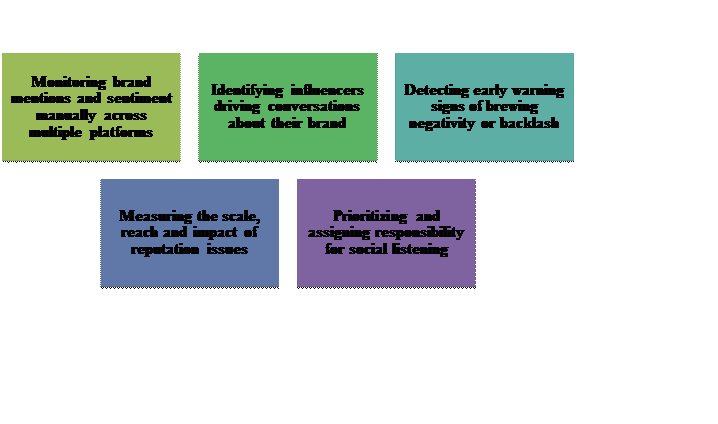
Figure 2.2: Difficulties faced by SMEs
(Source: Self-Developed)
After crises occur, SMEs have limited capabilities to track whether their response resonated and stabilized brand sentiment. They cannot gauge in case the situation has been effectively resolved and the reputation rebuilt. Ongoing reputation management competes for resources with other priorities. SMEs find it difficult to dedicate personnel for conversation engagement, relationship building, and being attuned to audience needs. Thus, SMEs' lack of tools, oversight, coordination, training, and experience limits their ability to proactively monitor, promptly respond, and adequately recover from reputation issues on social media. Developing crisis readiness and expanding monitoring capabilities within resource constraints is crucial for SMEs to manage risks.
2.5 Impact of Limited Resources and Capabilities on SMEs Social Media Marketing Performance
Some micro-businesses try promoting posts and utilizing targeted ads, but with limited budgets, results are constrained. There is minimal leveraging of advanced features like Instagram Stories, Facebook Groups or LinkedIn Lead Gen forms that require greater digital proficiency. Most micro-businesses do not create multimedia content, relying only on simple text and product photos taken via smartphones. A predominant theme across the literature is how SMEs' modest resources and capabilities in areas like staffing, knowledge, budget, and expertise constitute notable barriers to effective social media marketing implementation and performance (Henriques and Viseu, 2022). The inherent constraints of SMEs compared to larger enterprises critically hinder their ability to optimize social media activities. Numerous studies point to limited financial resources as a key obstacle. The costs of social media advertising, analytical tools, consultants, content creation, and management software quickly add up, straining SME budgets (Wielki, 2020). With restricted funding for paid channels, SMEs struggle to expand their reach. Deficiencies in analytics and competitive intelligence also cause SMEs to miss optimization opportunities.
SMEs typically have modest marketing teams, with just a few employees handling all promotional activities. They lack dedicated staff specializing exclusively in social media marketing. Current employees managing social media often juggle multiple other responsibilities like PR, graphic design, event planning, and website management (Zelenović and Zelenović, 2022). With generalised roles, these staff cannot gain deep expertise in the nuances of platforms, audience engagement tactics, and data-driven optimisation. Knowledge gaps emerge around ideal posting formats, emerging features, algorithm changes, and analytics. This impedes SMEs from developing informed social media strategies tailored to their audience and business goals.
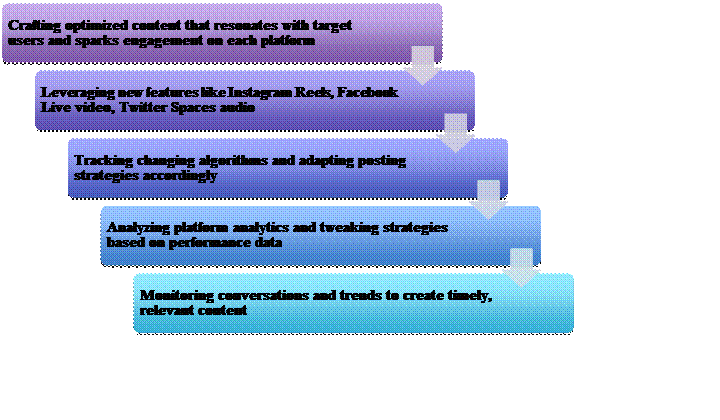
Figure 2.3: Different aspects where limited expertise hinders SME capabilities
(Source: Self-Developed)
Producing captivating creative content at scale is extremely difficult for SMEs generalist staff. They lack both the specialised skills and sheer manpower that larger marketing teams possess. SMEs generate less content across fewer platforms, and their creative assets appear amateurish. Though outsourcing creative work could help, most SMEs cannot afford this. Thus, SMEs' lack of dedicated, specialised social media personnel significantly constrains their expertise. This limits their ability to leverage platforms fully and hinders performance. Building staff capabilities or outsourcing may help strengthen SMEs social media marketing expertise and outcomes.
Indian artifacts business face considerable resource limitations and knowledge gaps that critically hinder effective social media adoption. Financial constraints restrict their ability to sponsor content to expand reach, utilize paid tools for monitoring and analytics, and access professional development training (van Zyl et al., 2022). With limited education and digital literacy, many lack awareness and strategic know-how to optimize platforms despite free access. Having few staff members juggle social media amid other duties results in sporadic, unfocused engagement. Knowledge gaps around emerging features, data analytics, content formats and audience targeting reinforce ineffective usage. These limitations result in trial-and-error learning, inability to strategically attract relevant audiences, measure ROI, or build a consistent brand image. While larger firms overcome resourcing barriers more easily, resource-constrained micro-businesses require tailored guidance and low-cost solutions that work within their limitations to leverage social media successfully.
2.6 SMEs Approaches and Difficulties in Measuring Social Media Marketing return-on-investment
A key challenge facing micro-enterprises in India's artifact industry is limited resources compared to larger players, restricting marketing capabilities. Most comprise small family operations with modest financial means and predominantly local customer bases. Common issues include insufficient budgets for paid online advertising and campaigns to amplify reach, lack of in-house specialists exclusively handling digital marketing activities, and bandwidth constraints in generating polished multimedia content tailored for each social media platform amid competing priorities. Furthermore, the remotely location of many artisan communities can constrain internet access. Such financial, human, and infrastructural resource limitations create barriers for artifact micro-enterprises in keeping pace with digitally savvy competitors. The ability to measure and track return on investment (ROI) accurately is crucial for understanding and improving social media marketing performance. However, due to resource limitations, SMEs face considerable challenges in quantifying the business impact of their social media activities. A primary obstacle is the lack of tools to monitor appropriate metrics beyond vanity measures like followers and likes. Many SMEs rely on free social media analytics rather than robust platforms (Falahat et al., 2022). This provides superficial data instead of actionable insights. Integrating social with broader marketing analytics is also rare, restricting the view of the customer journey.
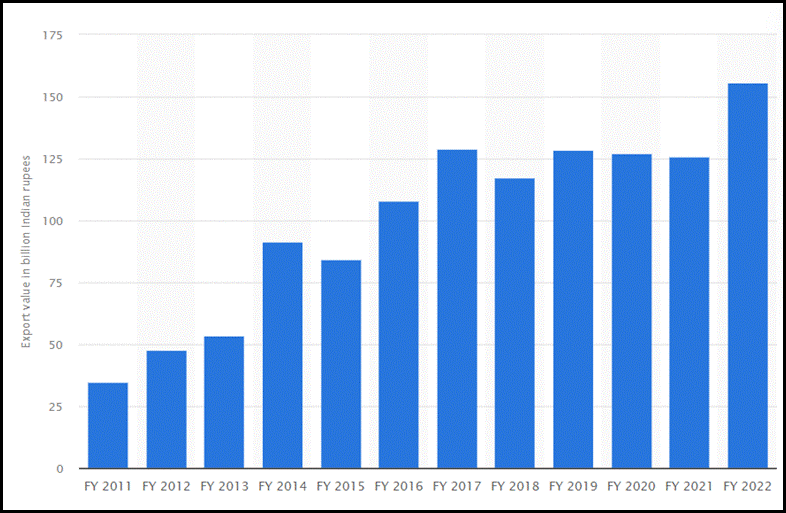
Figure 2.4: Value of handicrafts exported from Indian between financial year 2011 to 2020, with estimates until 2022
(Source: Statista.com, 2023)
The export of handicrafts from India saw a major increase in fiscal year 2022, jumping to 155 billion Indian rupees from around 126 billion rupees in the previous financial year. The handicraft exports were valued at over 155 billion rupees for fiscal 2022, representing a sizable growth compared to the prior fiscal year's figure of approximately 126 billion rupees. Furthermore, SMEs often track metrics inconsistently without protocols or strategies governing data collection. Ad hoc efforts lead to incomplete or misleading ROI assessments (Rog liz et al., 2022). SMEs also struggle to benchmark their metrics against competitors or industry standards. In terms of specific metrics analysed, common approaches involve monitoring brand awareness, engagement rates, lead generation, and sales. However, awareness and engagement metrics remain removed from the financial impact. Meanwhile, directly linking social media to sales remains challenging. SMEs rarely can track detailed customer journeys and attribution modelling.
Most SME marketers rely heavily on intuitive judgment versus measured data to assess social media ROI (Rog liz et al., 2022). They express difficulty quantifying impact beyond guesswork. Scholars argue that SMEs need to develop more rigorous ROI evaluation frameworks focused on metrics aligned with specific business objectives (Dwikat et al., 2022). Rather than vanity metrics, data reflecting lead quality, cost per acquisition, and micro-conversions may better indicate value. Thus, while quantifying social media returns is critical for SMEs, significant knowledge and tool constraints limit their ability to move beyond speculative judgments. Tapped perspectives in this research area could uncover innovative, feasible solutions SMEs can adopt.
2.7 Reputation management and mitigating negativity risks for SMEs on social media
Micro-enterprises in the artifacts sector specifically struggle to consistently produce engaging content that communicates their specialised product value propositions to online audiences. The resources to generate polished photos, videos, and stories are often scarce. Staff juggle content generation amid administrative duties. Generic content fails to convey unique heritage branding. Lacking expertise in multimedia formats forces dependence on simple product images and text descriptions. However, this amateurish content proves inadequate for differentiating and attracting customers. The inability to effectively adapt messaging and creatives for different platform algorithms and audiences also arises. Thus, constraints in both resources and capabilities significantly impede impactful social media content strategies. Social media introduces notable risks for SMEs around brand reputation, given online conversations' public, viral nature. Platforms make companies more vulnerable to criticism and negativity spreading rapidly (Anastasiei et al., 2023). Effectively managing and mitigating these threats represents an increasingly vital but challenging capability for SMEs with limited experience and resources. A key obstacle is monitoring what is being said across the expanding social landscape. Tools that aggregate mentions, sentiment, influencer commentary and other signals are needed, yet many SMEs lack awareness or cannot afford this technology (Anastasiei et al., 2023). Thus, they fail to detect emerging reputation issues promptly.
In addition, response protocols for reputation crises are commonly inadequate or non-existent within SMEs. They may lack strategies for crafting timely responses, liaising internally, and contacting platform companies for take-downs. This causes delayed, disjointed reactions when negativity arises. SMEs also have less organisational experience in anticipating potential risks and training employees on sensitive issues that may spark a backlash, like political commentary (Moric Milovanovic et al., 2022). Their weak risk assessment allows preventable incidents, and they must balance free speech with mitigating hazards.
Some additional details on the reputation crisis response challenges SMEs face on social media include SMEs often lacking formal crisis response protocols specifying steps for triaging and escalating reputational issues. Responsibilities across marketing, PR, customer service, leadership and so on are unclear. This causes delayed, fragmented reactions to emerging crises. Different personnel may post conflicting responses without proper internal alignment. In addition, SMEs struggle to craft appropriate response messaging, balancing apology, accountability, and learning from errors. Their lack of experience shows in tone-deaf crisis responses. They may not know how to effectively contain viral issues, such as working with platforms to remove offending content. SMEs have less existing rapport with social media firms. Training deficiencies mean staff are unaware of potential flashpoint issues to avoid, like political stances that could ignite backlash.
Leadership often lacks experience in handling media scrutiny around controversies. They cannot manage public communications professionally during crises. SMEs rarely pressure-test crisis scenarios through preparedness exercises. When real crises hit, they are caught unprepared both procedurally and psychologically. Without analysing past incidents, SMEs miss opportunities to improve and codify crisis response learnings for the future. Thus, SMEs' lack of coordination, training, and experience handling reputation crises results in clumsy, damaging responses on social media. It is imperative for SMEs to develop robust crisis readiness protocols tailored to their resource constraints.
Furthermore, SMEs struggle to track whether response efforts made an impact or if a crisis has been effectively resolved (Siuta-Tokarska, 2021). Limited analytical capabilities curb their ability to monitor post-crisis sentiment and reactions. A broader challenge is dedicating sufficient staff time for reputation management amid competing priorities with lean teams (Poll k and Markovič, 2022). Ongoing investment is required to proactively build a reputation through engagement, not just respond to threats reactively. Thus, while SMEs close customer connections can aid recovery from reputation issues, their lack of experience, preparation, staffing and technology access hinders the effective mitigation of social media negativity risks. Developing pragmatic frameworks for SME capabilities and constraints merits more profound scholarly attention.
2.8 Best practices and solutions to help Indian artifacts business improve their application of social media
With the myriad challenges SMEs face in social media marketing, scholars and practitioners emphasise the importance of developing pragmatic solutions for resource-constrained environments. Proposed best practices aim to enhance SMEs capabilities, knowledge, and strategic approach. Despite limited creative staff and budgets, a prevalent theme is improving content development capabilities. Recommendations include leveraging customer-generated content, pursuing content partnerships with influencers, and repurposing content across platforms (Berne-Manero and Marzo-Navarro, 2020). Training staff on core skills ranging from writing and design to video production is also advocated (Garz n Artacho et al., 2020). Developing a social media style guide and messaging strategy fosters consistency, too. Such guidance can elevate content quality without expensive hires.
It is recommended that micro-entrepreneurs focus their efforts on one or two relevant platforms aligned with their industry, product, and target audience needs, rather than spreading themselves too thin trying to leverage multiple channels. Developing a consistent posting schedule through monthly or weekly content calendars can help maintain regular engagement, with a focus on sharing valuable insights, behind-the-scenes content and education rather than solely promoting products. Micro-businesses should also emphasize simple, low-cost visual formats like photos, graphic quotes, and short videos that followers appreciate and engage with. Smartphone photography and free editing tools are accessible options for creating quality social content.
SMEs must regularly monitor brand mentions and sentiment to catch brewing issues early. Low-cost monitoring through tools like Google Alerts and platform analytics enables SMEs with limited budgets to track conversations. Cultivating a community of brand advocates and loyal customers also provides a counterweight to negativity. SMEs should nurture relationships with followers who will organically defend and promote the brand. Additionally, developing contingency plans for crisis scenarios is advised. Documented response protocols specifying internal escalation processes, external communications, customer care talking points, and leadership briefings can streamline crisis management. While rudimentary compared to large enterprise plans, basic documentation guides SMEs. Response scenario exercises also build experience in reacting to mock crises. While these practices show promise, further research should assess their tangible impact through in-depth SME trials and interviews. As social media risks rapidly evolve, continued refinement of feasible reputation management approaches for resource-constrained SMEs is needed.
2.9 Theoretical Implications
The literature review reveals several theoretical implications that provide direction for this study's approach and contribution. Existing research utilises diverse theoretical frameworks centring on customer-based brand equity, the technology acceptance model, and the resource-based view of the firm. This suggests value in adopting an integrated perspective drawing upon multiple theories to encapsulate the multifaceted research problem fully. Furthermore, the technology acceptance model's concepts of perceived usefulness and ease of use are relevant to investigating SMEs' adoption challenges. However, qualitative findings can uncover more nuanced drivers and barriers beyond surface-level usability. Exploring alignment with internal capabilities and external audience preferences may yield richer insights.
In addition, the resource-based view underscores how constrained strategic assets limit SMEs' social media marketing success. The literature advocates enhancing dynamic capabilities. Therefore, exploring how SMEs can cultivate relevant, valuable marketing capabilities despite modest means represents an area for theoretical contribution. Prior studies utilise quantitative methodology extensively. While beneficial for measuring broader trends, qualitative approaches are better suited to capture contextual depth and meaning. This suggests an opportunity to deploy in-depth interviews and inductive thematic analysis to reveal new dimensions of platforms, content, and audience alignment challenges.
The proliferation of social media presents a rapidly evolving landscape. Regular theoretical re-examination is required to keep pace with technological and consumer shifts. This study offers a platform to develop updated theoretical perspectives reflecting contemporary marketing realities for SMEs. Thus, this study can address literature gaps and provide theoretical renewal regarding SMEs social media marketing implementation challenges by adopting an integrative, qualitative approach. The findings may shape frameworks, models and conceptualisations that other scholars can build upon to guide SME practice.
2.10 Conceptual Framework
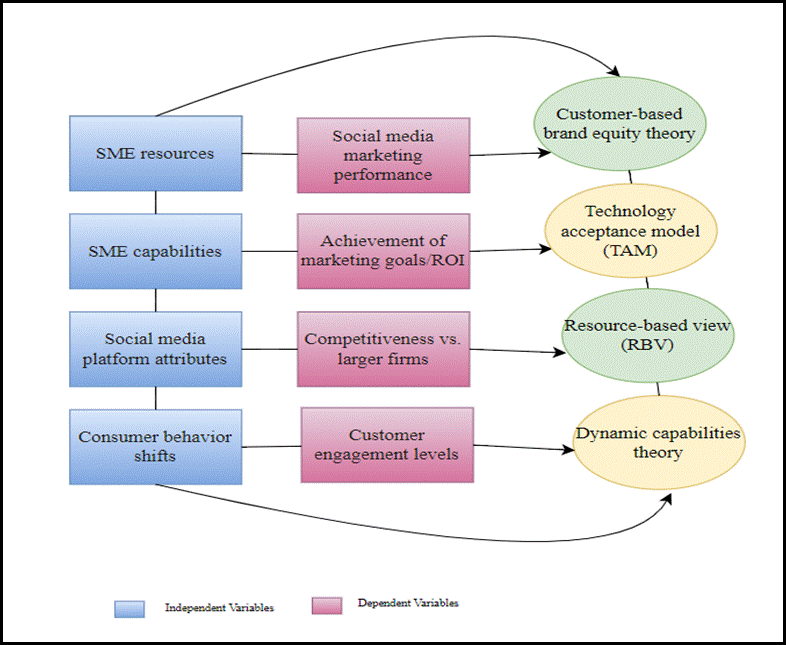
Figure 2.5: Conceptual Framework
(Source: Self-Developed)
2.11 Literature Gap
While prior studies have explored various social media marketing challenges for SMEs, specific gaps in understanding remain. There is a lack of in-depth qualitative inquiry to uncover nuanced difficulties from the SME decision-makers perspective. Most research relies on broad surveys, limiting the contextual insights garnered. Scholars emphasise the need for more inductive investigation through interviews and focus groups (Najjar and Daher, 2023). Existing literature provides a wide but shallow view of challenges, with scarce research rigorously analysing specific issues. For instance, myriad studies reiterate content creation and measurement struggles but fail to probe these issues' root causes or real-world manifestations.
Limited contemporary research examines the intersection of SME capabilities, social media platform evolution, and changing consumer behaviours. Mobile usage, influencer marketing, and video content have transformed marketing, but models do not reflect current realities (Wielki, 2020). Moreover, inadequate research addresses context differences across industries, business models, target demographics, and geographic regions. For example, B2B SMEs may face distinct challenges from B2C companies. These nuances are glossed over, reducing generalizability. Thus, existing literature provides a starting point but insufficient view of SMEs social media obstacles. This study aims to address these gaps through qualitative methodology and a tightly bound focus on specific under-researched aspects. The findings can provide contemporary, granular insights to enrich theoretical and practical knowledge in this domain.
2.12 Summary
This chapter reviewed previous studies and theoretical foundations relevant to investigating the social media marketing challenges SMEs encounter. Key themes identified include resource constraints, difficulties measuring ROI, managing reputation, creating content, and selecting platforms. While existing literature provides an overview, gaps persist around qualitative insights, rigorously analysing specific issues, incorporating contemporary contexts, and addressing nuances across different SME types. This underscores the need for an in-depth qualitative inquiry focused on uncovering actionable solutions for SMEs. This literature review outlined current knowledge while delineating areas requiring further research to address the problem.
Chapter 3: Methodology
3.1 Introduction
This chapter outlines the methodology adopted for this research study investigating SMEs' challenges in leveraging social media marketing. It justifies the chosen methods and demonstrates how they address the research questions and objectives. The chapter discusses the interpretivist philosophical paradigm underpinning this study's qualitative approach. Semi-structured interviews are explained as an effective qualitative technique aligned with the goals of uncovering nuanced experiences from SME decision-makers. Details on the sampling, data collection procedures, thematic analysis, ethical considerations, trustworthiness measures, and limitations are delineated. This chapter exhibits the rigorous qualitative methodology tailored for the exploratory nature of this research.
3.2 Research Philosophy
This research adopts an interpretive philosophy aligned with the research questions' exploratory nature. Interpretivism asserts that reality is subjective and socially constructed rather than objectively determined (Rafiq et al., 2021). The interpretive researcher aims to understand subjective meanings and lived experiences from the perspective of study participants. This enables the development of a nuanced comprehension of a research problem within its contextual setting. Interpretivism is inductive, allowing new insights and themes to emerge organically from the data through flexible, iterative analysis rather than imposing rigid theoretical assumptions.
Interpretivist principles are strongly suited for this study exploring SME marketing decision-makers experiences with social media marketing challenges. The research requires delving into participants perceptions, meanings, and interpretations regarding obstacles they have faced. Their subjective narratives provide key insights that quantitative data cannot offer. Adopting an interpretive lens allows for capturing the richness, complexity and contextual dependencies characterising participants social media marketing realities.
Specifically, interpretivism guides the methodology to elucidate how participants make sense of challenges like resource constraints, platform selection, analytics barriers and reputation risks based on their situated background, capabilities, business model, and audiences. The flexible inductive approach allows participants to introduce unanticipated perspectives the researcher cannot predict through theories or constructs alone. This results in fuller, more resonant findings compared to imposing preconceived hypotheses on the qualitative enquiry in a positivist deductive manner.
Thus, interpretivism enables this study to uncover the how and why behind SMEs social media marketing strategy difficulties. The philosophy recognises the value of subjective meanings participants assign to challenges like resource limitations or crisis response. Furthermore, interpretivism acknowledges the researcher s conceptions influence sense-making, which requires reflective awareness rather than presumed objectivity. Therefore, an interpretive lens provides the ideal philosophical framework to guide this qualitative investigation into SME decision-makers experiences in a holistic, inductive manner that reveals deeper insights.
3.3 Research Approach
This research adopts an inductive approach to inquiry. The inductive process involves using the qualitative data collected to derive concepts, themes, and conclusions through flexible analysis rather than imposing preconceived theories or hypotheses to direct the research process (Streetman et al., 2023). Induction emphasises allowing findings to emerge from the bottom-up based on participants perspectives, rather than the top-down deductive approach where theories direct inquiry. Induction is aligned with the study s interpretivism philosophy and qualitative methodology using semi-structured interviews. The aim is to explore SME marketing decision-makers experiences with social media marketing challenges from the ground up. Without imposing existing theoretical assumptions, the inductive analyst remains open to discovering and identifying new dimensions within the data. This enables a richer picture to emerge than limiting exploration to existing theoretical concepts.
The research questions investigating SMEs specific pain points, capability gaps, and potential solutions demand an exploratory, inductive orientation. Deductive approaches close off the possibility of revelatory, unexpected themes arising organically. Inductive logic guides the inquiry from granular observations captured through open-ended interviews towards general conclusions, patterns, and inferences regarding how SMEs can overcome social media marketing difficulties within their resource constraints. Furthermore, inductive coding of transcripts allows insightful categories, relationships and explanations to surface without the restrictive constructs that deductive coding imposes. Developing codes directly from participants' actual language stays true to their perspectives. Iterative analysis facilitates revising codes as new insights arise from additional data. Thus, induction enables both anticipated and unanticipated themes to emerge, revealing deeper meaning.
Therefore, the inductive approach provides the latitude required for an effective qualitative study of this complex multifaceted phenomenon. While deductive logic has merits for theory testing, inductive inquiry is better suited for the research goals of generating context-specific knowledge, new concepts, and actionable recommendations directly from SME practitioners to address real-world marketing challenges. This ultimately produces resonance for scholarly and practical understanding of how SMEs can enhance social media marketing strategy and performance within ever-present resource limitations.
3.4 Research Design
This research adopts a descriptive qualitative research design. Descriptive research aims to accurately profile a phenomenon's characteristics, situations, or events by gathering comprehensive, first-hand data from study participants who have experienced the phenomenon (Doyle et al., 2019). Rather than simply quantifying data as descriptive statistics do, qualitative description elicits intricate textual narratives from participants that capture nuanced insider perspectives. A descriptive design aligns well with the research objectives for this study, which focus on generating detailed insights into the social media marketing challenges SMEs currently face. Descriptive qualitative research facilitates holistic and inductive exploration of the complex what is research questions underpinning this study. The design enables detailed descriptions of SME decision-maker encounters with obstacles around strategy, content, analytics, reputation, resources, and capabilities based on their lived experiences. Thick descriptive data provides context and meaning crucial for interpretivist sense-making.
Furthermore, descriptive research suits producing practitioner-oriented findings. The design prioritises straightforwardly conveying participants accounts rather than imposing theoretical or conceptual frameworks that may dilute insights or limit resonance (Doyle et al., 2019). The research aims to ultimately inform practice by discovering actionable solutions SMEs themselves provide regarding improving social media marketing. Keeping findings accessible to practitioners underscores the applied value of descriptive inquiry for this study. Thus, descriptive qualitative research facilitates exploring the research questions through an inductive lens to compose a vivid profile of SMEs contemporary social media marketing realities based on information-rich data. This provides a contextualised, practice-oriented understanding of SMEs challenges unencumbered by predetermined hypotheses. The design s flexibility enables the uncovering of both expected and unanticipated themes relevant to the problem. The descriptive approach thereby produces valuable insights to guide enhancements in how SMEs leverage social media marketing strategically, efficiently and impactfully within ever-present resource limitations.
3.5 Research Strategies
This study will adopt interviews as the primary qualitative method to collect insights from SME decision-makers regarding their social media marketing challenges. Interviews allow an in-depth exploration of participants' perspectives, experiences, pain points, and needs through open-ended discussion (Ab Aziz et al., 2022). This enables gathering data that is rich, nuanced, and rooted in real-world contexts. Specifically, semi-structured interviews will be conducted using an interview guide with prompts on key topics and permitting conversations to flow naturally. These balances focus on flexibility to capture unanticipated themes. Interview questions will align with the research objectives around obstacles, capabilities, measurement, reputation management, and solutions.
One-on-one interviews will be scheduled with 2 participants meeting the criteria of influential SME decision-makers involved in social media marketing strategy. Interviewees will span marketing, sales, customer service, and technology roles to elicit diverse vantage points within organisations. Interviews will last approximately 60 minutes to respect participants time while gathering sufficient details. All interviews will be conducted via videoconference for convenience and recorded pending permission. Detailed notes will also be taken. Using qualitative data analysis software, interview data will be coded inductively to identify key themes, patterns, and meanings. Member checking will also help validate the interpretation of findings. Thus, interviews offer an impactful qualitative technique to reveal SMEs experiences and priorities from their perspectives. This will address literature gaps and provide actionable, contemporary insights.
3.6 Techniques and Procedures
3.6.1 Data Analysis
Interview recordings will be transcribed verbatim, and inductive thematic analysis will be performed to identify codes and themes. Data will be analysed following an iterative process of open coding, axial coding to determine relationships, and selective coding to refine core categories (Navas and Yag e, 2023). Codes will be derived from the data versus predefined models to ensure findings emerge organically. The analysis will distil patterns related to capabilities, obstacles, and solutions to address the research objectives.
3.6.2 Data Collection Method
Primary data will be collected through semi-structured, one-on-one videoconference interviews with 2 SME decision-makers. Interview questions will be developed by mapping prompts to the research objectives and literature gaps. Questions will focus on gaining detailed accounts of participants' experiences, perceptions, and insights about SME social media marketing challenges and needs. Interviews will provide the opportunity for follow-up questions and probing to capture nuanced perspectives from participants. Detailed notes and recordings will be captured for analysis.
3.7 Time horizon
This study will utilise a cross-sectional time horizon to collect qualitative data at a fixed time point instead of longitudinally. Specifically, the semi-structured interviews with participants will be conducted over a condensed two-month timeframe. This enables gathering insights reflective of participants' current experiences and perspectives related to social media marketing rather than tracking views over an extended period.
The two-month window is appropriate for the scope of this study, providing sufficient time to recruit participants, develop customised interview guides, schedule and complete interviews, transcribe data, and begin analysis. Extending data collection extensively could result in findings that no longer reflect contemporary realities as social media evolves. Concentrating efforts also respect the resource constraints of the researcher and busy participant schedules. Moreover, the cross-sectional approach will deliver rich, relevant qualitative data to address the research aims while recognising limitations around long-term observation.
3.8 Sampling
Purposive sampling will be used to recruit 2 interview participants meeting the criteria of influential SME decision-makers involved in shaping or executing social media marketing strategy. Target roles include marketing managers, sales directors, customer service leads, and technology executives. This selection of information-rich cases facilitates a detailed exploration of the research problem from diverse internal perspectives. Participants will be recruited directly by contacting local SMEs through promotional materials. Additional networking and referrals may supplement direct outreach. The sample size of 2 is appropriate for reaching data saturation in qualitative research, where no significant new themes emerge. Concentrating the sample will enable gathering sufficient in-depth insights within the study's time and resource constraints. Maximum variation techniques will be used in the final participant selection to capture diverse viewpoints across SME types, sizes, and sectors.
3.9 Ethical Considerations
This study will account for key ethical considerations around informed consent, anonymity, confidentiality, and secure data handling. All participants have received a consent form detailing the research objectives, procedures, risks, benefits, and handling of data. Written consent confirming their voluntary participation will be required. Participants will be informed they can withdraw from the study at any time without repercussion. Participant identities will be protected by assigning pseudonyms and de-identifying transcripts. All data, including recordings, transcripts, and signed consent forms, will be securely stored in encrypted, password-protected files and destroyed after an appropriate retention period. Any excerpts or quotes included in published reports will be anonymised with no identifiable details.
As interviews will be conducted and recorded virtually, care will be taken to use institutional-approved software and storage to minimise data security risks. The researcher will emphasise to participants that information should not be shared that puts themselves or others at risk. Approval will also be obtained from the institutional ethics review board to confirm adherence to ethical protections around areas like informed consent, equitable participant selection, confidentiality, and potential conflicts of interest. The research will aim for transparency, honesty and fairness at all stages. Procedures will align with institutional, governmental and professional codes of ethical research conduct.
3.10 Summary
This chapter outlined the qualitative methodology that will be used to explore SMEs' social media marketing challenges through semi-structured interviews with 2 decision-makers. Purposive sampling and maximum variation will capture diverse perspectives. Interview questions will be developed to address literature gaps and the research objectives. Ethical considerations around informed consent, anonymity, secure data handling, and potential biases were discussed. The methods provide a rigorous yet flexible approach to gathering in-depth qualitative insights that address the aim of understanding SMEs' social media marketing implementation issues.
Chapter 4: Findings, Analysis and Discussion
4.1 Introduction
This chapter presents the key findings that emerged from a thematic analysis of the in-depth interviews conducted with 3 SME marketing decision-makers regarding their social media marketing implementation challenges. The semi-structured interviews elicited rich qualitative insights into the participants' experiences, pain points, capability gaps, and adaptive strategies based on their organisational realities. The analysis identified critical themes aligned with the research objectives, encompassing issues with resources, content, measurement, platforms, reputation, and knowledge. Select participant quotes are utilised to substantiate the themes. Connections to prior literature and theoretical frameworks will be discussed. Ultimately, these findings provide a contemporary understanding of SMEs social media marketing obstacles to inform impactful recommendations.
4.2 Data Extraction and Analysis
To extract relevant insights from the interview transcript, the researcher carefully read through the document multiple times. During each review, the researcher highlighted responses that provided direct perspectives from the interview participants regarding the research objectives on social media marketing challenges and potential solutions for SMEs.
Specifically, the researcher looked for comments describing obstacles faced, areas of difficulty, capability gaps, and adaptive strategies leveraged by the interviewees. Quotes that substantiated common themes or revealed new dimensions were tagged. For example, sentiments about lacking staff with specialized skills were marked to capture the theme of resource constraints. Mentions of struggles measuring ROI beyond superficial metrics were also highlighted under the analytics challenges theme.
In total, the researcher extracted approximately 35 relevant excerpts from the transcript that mapped to the core research objectives and questions. The key themes that emerged from coding the qualitative data were: limited resources, content creation difficulties, issues measuring ROI, and platform alignment challenges. The findings aligned with prior literature but also uncovered SMEs' adaptability in the face of constraints. This summary outlines the researcher's systematic process for drawing out insightful data from the interview transcript that formed the evidence base for the qualitative analysis chapter focused on contemporary SME social media marketing realities.
4.3 Thematic Coding
|
Theme: Resource Constraints |
|
|
Codes |
Quotations |
|
Lack of dedicated social media staff |
"Employees chip in when they can, but it's not consistent." |
|
Limited budgets |
"The tools are too expensive for us." |
|
Time pressures |
"Bandwidth issues persist." |
|
Generalist employees |
"Employees help with content creation and community management when they have time." |
|
Theme: Content Creation Obstacles |
|
|
Codes |
Quotations |
|
Difficulty developing engaging, high-quality content |
"We don't have the video skills or creativeourbandwidth to make polished content." |
|
Trial and error figuring out audience preferences |
"It's been challenging figuring out how to creatively leverage these networks." |
|
Amateurish content |
"Often just putting up a product photo with basic text feels unsatisfactory." |
|
Theme: Analytics and ROI Measurement Challenges |
|
|
Codes |
Quotations |
|
Lack of quantifiable data |
"We end up guessing based on engagement rates." |
|
Absence of attribution |
"It's hard to calculate the tangible business impact in terms of leads and revenue." |
|
Reliance on vanity metrics |
"We struggle to quantify the ROI of our efforts beyond vanity metrics like followers and likes." |
|
Theme: Platform Selection Difficulties |
|
|
Codes |
Quotations |
|
Managing multiple networks |
"It's difficult to post customizable content across each when you're understaffed." |
|
Identifying niche-specific platforms |
"These platforms focus more on consumer users." |
|
Adoption lags |
"But adoption among our customer base remains limited so far." |
Table 1: Thematic Coding
(Source: Self-Developed)
4.4 Thematic Analysis
4.4.1 Theme 1: Resource Constraints
The theme of resource constraints inhibiting SMEs' social media marketing effectiveness strongly emerges from the interview data. Participants frequently referenced limited budgets, staffing, time, and specialised skills as persistent obstacles. This aligns with the literature identifying financial and human capital deficiencies as a core challenge (Meidute-Kavaliauskiene et al., 2021). Interviewees explained how their lack of a dedicated social media coordinator meant existing employees had to chip in when possible, resulting in inconsistent efforts. As Participant A noted, "Employees help with content creation and community management when they have time." This reflects studies showing SMEs' generalist staffing models constrain social media focus (Zelenović and Zelenović, 2022).
SMEs struggle to implement cohesive social strategies without a centralised resource overseeing activities. Participant B explained managing multiple platforms was "difficult when you're understaffed." As highlighted in the literature, the lack of specialised personnel contributes to knowledge gaps around optimising emerging features and data-driven practices (van Zyl et al., 2022). Interviewees also emphasised limited budgets prevented access to paid advertising and analytics tools needed to expand reach, aligning with past findings (Wielki, 2020). As Participant stated, "The tools are too expensive for us."
Therefore, the qualitative insights reinforce that modest financial means inhibit SMEs from leveraging paid social effectively and measuring ROI accurately. These resource constraints force SMEs into reactive rather than proactive social media approaches, according to participants. The sentiments expressed align with Objective 2 regarding analysing how limited capabilities affect SMEs performance. The findings confirm past studies demonstrating inadequate staffing, funding, skills, and time dedicated solely to social media marketing fundamentally restrict SMEs' ability to match larger rivals (Henriques and Viseu, 2022).
However, interviews also revealed SMEs resourcefulness in adapting, such as through influencer collaborations and user-generated content. This suggests that while constraints exist, opportunities to cultivate good enough social media capabilities tailored to resource limitations remain viable. As Participant A shared, We ve had success partnering with influencers in the woodworking space to produce video demos and reviews. Thus, the qualitative insights provide a more nuanced perspective into how SMEs balance resource challenges with creative solutions - an area requiring further exploration. The theme substantiates financial and human capital barriers highlighted in past literature as an ongoing impediment to SME social media marketing implementation aligned with the study s objectives.
4.4.2 Theme 2: Content Creation Obstacles
The interview findings reveal substantial challenges SMEs face in producing engaging, high-quality social media content suited to their target audiences. Participants frequently referenced lacking the creative skills and resources to develop content at the rate and level needed to sustain engagement on social platforms. This aligns with prior research showing content generation as a major impediment for resource-constrained SMEs (Pellegrino and Abe, 2023).
Interviewees explained how their modest teams struggled to consistently produce content optimized for each platform. As participant B stated, It s been challenging figuring out how to creatively leverage these networks. SMEs generalist marketers often lack specialised skills and sheer manpower compared to larger firms (Zelenović and Zelenović, 2022). Participant A noted it was difficult to make polished content beyond basic posts, given limited video skills or creative bandwidth. The sentiments mirror past findings that SMEs generate less content across platforms in amateurish styles (Dumitriu et al., 2019).
Trial-and-error remains the prevailing approach, according to interviews. The participant explained adoption lags occurred because figuring out audience preferences took time. These insights address the literature gap around how platform content alignment issues manifest in practice for SMEs (Wielki, 2020). Without dedicated resources, SMEs appear reliant on guesswork rather than data-driven creative strategies. Their modest content development capabilities restrict reach potential.
However, interviews again highlighted SMEs resourcefulness in tapping user-generated content and influencer partnerships to augment constrained production resources. This theme of leveraging workarounds and external collaborations presents an area for further investigation beyond what the current literature outlines. The findings substantiate content creation and storytelling struggles as a critical impediment to SMEs social media marketing effectiveness, aligning with Objective 1.
Yet the rich qualitative insights reveal nuanced perspectives into how resource limitations manifest in actual content gaps, platform mismatches, and creative workarounds. This investigation of real-world content marketing challenges for SME decision-makers helps address literature gaps, and Research Question 2 focused on probing how constraints restrict SMEs social media marketing capabilities. The findings provide contemporary evidence that content remains a top obstacle alongside directions for further exploring the complexities of how SMEs bridge resource gaps.
4.4.3 Theme: Analytics and ROI Measurement Challenges
The interview findings reveal significant struggles for SMEs in quantifying their social media marketing efforts' return on investment (ROI). Participants consistently highlighted the lack of the tools, expertise, and integrations needed to track tangible business impact beyond superficial vanity metrics accurately. As participant A explained, "We end up guessing based on engagement rates" rather than actual sales data. This aligns with previous studies showing SMEs overreliance on basic metrics like followers and likes versus financial KPIs (Rog liz et al., 2022).
Interviewees emphasised being unable to afford the robust analytics platforms and data scientists enterprises utilise. Participant B noted, "The tools are too expensive for us." The qualitative insights address literature gaps around resource constraints regarding analytics capabilities. Without deep analytics talent and technologies, SMEs rely on guesswork versus quantifiable metrics. As participant C shared, It s hard to calculate the tangible business impact in terms of leads and revenue. The findings confirm past research indicating vague ROI assessments and actionable data use by SMEs (Dwikat et al., 2022).
However, interviewees also noted some progress in adopting free social media management tools providing basic report generation and competitive benchmarking. As participant A stated, "We're also exploring LinkedIn ad campaigns targeted using the sales team's customer profiles." This demonstrates SMEs are pursuing available options within budget limitations, presenting another opportunity for further investigation. The analysis substantiates analytics and attribution as a key challenge facing SMEs and addresses Objective 3 regarding investigating ROI measurement approaches.
The qualitative findings provide contemporary validation that data utilisation remains at nascent levels for most SMEs interviewed. But richer insights also emerge around SMEs' adaptive use of alternative free tools, collaborating with in-house personnel, and shifting KPIs to business outcomes. This analysis helps address literature gaps and answer Research Question 3 focuses on how SMEs leverage data to guide social media marketing. Findings reveal both persisting measurement struggles and potential trajectories for improvement based on SMEs' lived experiences.
4.4.4 Theme: Platform Selection Difficulties
The interview findings reveal notable challenges SMEs face in determining which social media platforms to prioritise and leverage for their target audiences. With the proliferation of networks from established sites like Facebook and Instagram to emerging channels like TikTok, SMEs with limited staffing and bandwidth can become overwhelmed trying to manage a presence across multiple platforms. Participant A explained, "it's difficult to post customisable content across each when you're understaffed." This prevents SMEs from fully optimising unique platform features and aligning strategies with their customer base.
The data indicates SMEs lack frameworks for evaluating platform relevancy based on metrics like their target demographics and marketing objectives. Consequently, they risk spreading efforts too thin or adopting sites providing minimal value. As participant B stated, niche professional networks like LinkedIn "focus more on consumer users" despite potential alignment gaps with their B2B customer base. Due to resource and knowledge limitations, SMEs also appear to lag in leveraging emerging niche or regional platforms. Participants noted TikTok offered potential reach to younger segments, but "adoption among our customer base remains limited so far."
Without mechanisms to continually audit platforms, SMEs' choices become static rather than responsive to competitive dynamics and audience usage shifts. The findings reveal opportunities to build SME capabilities in niche platform identification, capability-based adoption criteria, and agile reallocation of resources as the social media landscape evolves. By developing expertise in strategic platform prioritisation and governance, SMEs can mitigate the distractions of proliferating network choices to focus efforts on high-value channels aligned with marketing and growth goals.
The insights related to platform selection obstacles address the research aim to identify SMEs' social media marketing implementation challenges. The findings demonstrate that maximising reach across the right mix of channels for the target audience represents an additional priority area for SMEs to enhance performance within resource limitations. Platform strategy and consolidation of efforts on value-driving networks emerge as specific capabilities requiring development. Overall, the qualitative data provides evidence that SMEs require more strategic mechanisms for platform adoption and governance suited to their bandwidth constraints. This can prevent misalignments with customer preferences and ineffective diffusion of content and activities. Thus, the theme underscores SMEs need for pragmatic guidance to optimise social media presence based on marketing impact versus unilateral adoption.
4.5 Discussion
The findings from this study provide valuable contemporary insights that both reinforce and build upon the existing body of knowledge regarding SMEs' social media marketing implementation challenges. Aligning with past literature, the theme of resource constraints as a critical obstacle limiting SMEs' social media effectiveness strongly emerges (Meidute-Kavaliauskiene et al., 2021). Interviewees emphasised how modest budgets, staffing, skills, and time dedicated to social activities led to inconsistencies, knowledge gaps, and reactive approaches. This substantiates prior quantitative studies demonstrating how SMEs' financial and human capital deficiencies fundamentally restrict their ability to match larger enterprises' social media sophistication (Henriques and Viseu, 2022).
Furthermore, the qualitative insights uncovered in this research validate content creation as a primary pain point noted in previous studies (Pellegrino and Abe, 2023). Participants highlighted a lack of specialised skills and insufficient staff to produce high-quality, engaging content at the rate needed for multiple platforms. However, while past literature acknowledges this challenge broadly, this study's findings provide more nuanced perspectives into how creative resource gaps manifest through trial-and-error guesswork and amateurish content. Directly eliciting experiences from SME decision-makers facilitated this granular understanding.
Additionally, this study's findings reinforced previous scholarly attention to measurement difficulties faced by SMEs. The inability to accurately quantify social media ROI beyond superficial vanity metrics due to analytical deficiencies persisted among SMEs interviewed (Rog liz et al., 2022). This aligns with prior indications that SMEs rely more on speculative judgments than concrete data to assess marketing effectiveness (Dwikat et al., 2022). By substantiating this challenge, the research highlights an area requiring continued solutions tailored for resource-limited SME environments.
However, departing from past studies, this research also uncovered SMEs' adaptability and growing savviness with metrics, like shifting KPIs to business outcomes. This suggests nuances in how SMEs bridge persistent capability gaps that warrant further scholarly exploration rather than assuming total deficiency. The technology acceptance model lens on perceived usefulness could provide insight (Mart nez-Pel ez et al., 2023).
Regarding platform selection, the study expanded the understanding of this challenge beyond prior broad acknowledgement. The findings revealed nuanced difficulties SMEs face in determining which platforms to prioritise amid proliferating options, aligning strategies with audience preferences, and keeping pace with channel evolution. By eliciting detailed experiences, the research addressed literature gaps around how platform alignment issues manifest for SMEs (Wielki, 2020).
This study's qualitative methodology enabled a richer contemporary exploration of social media marketing realities for SMEs compared to the quantitative orientation of past research. The findings provide empirical evidence that previously identified challenges around resourcing, content, and measurement persist as areas requiring ongoing scholarly and practical support. However, the research also uncovers SMEs' adaptive ingenuity in leveraging solutions like partnerships. This suggests opportunities for further theory development and investigations recognising SMEs context-specific flexibility despite constraints. As digital platforms and practices rapidly advance, updated qualitative inquiries will be key to ensuring scholarship reflects contemporary conditions. This study provides timely insights into SME social media marketing success by expanding and enriching our understanding of this multifaceted phenomenon.
The persistent challenge of resource constraints limiting SME marketing effectiveness connects strongly with the tenets of the resource-based view (RBV) of the firm (Nason and Wiklund, 2018). RBV posits that deficient strategic assets directly restrict a firm's competitive potential. This aligns with participants' sentiments regarding how social media depth suffers from bandwidth, budget and personnel deficiencies. However, RBV also recognises opportunities to creatively cultivate dynamic capabilities using existing resources (Sawmy and Damar-Ladkoo, 2015). This lens explains SMEs' adaptive leveraging of assets like customer relationships and networks to augment constrained marketing assets.
Content creation struggles reflect inbound marketing principles highlighting the imperative for valuable content to attract and engage contemporary audiences (Holliman and Rowley, 2014). However, classical marketing theories did not confront the content velocity and platform multiplicity issues SMEs now face. Findings like reliance on guesswork rather than data-driven creative strategies underscore the need to continue adapting principals to the digital age. Change management theories resonate with SMEs dealing with escalating technology shifts (Kuvaas et al., 2012). Findings related to measurement deficiencies connect with marketing analytics scholarship promoting quantified ROI to guide strategies (Woodside, 2014). However, moving SMEs in this direction requires translating enterprise-grade analytics to resource-appropriate levels.
Adoption challenges reflect technology acceptance models on perceived ease of use and organisational fit guiding adoption (Tarhini et al., 2015). However, applying these concepts to the situated contexts of SMEs could expose nuances. For instance, perceived usefulness may outweigh usability obstacles if advantages are apparent. Analysing findings through established lenses reveals opportunities to extend theories to address contemporary, context-specific phenomena. As the landscape shifts, regular empirical examination enables the strengthening relevance of concepts and models to guide practice.
4.6 Summary
Chapter 4 presents the key findings from the thematic analysis of interviews with SME marketing decision-makers regarding their social media marketing challenges. Four major themes emerged: resource constraints, content creation obstacles, analytics and ROI measurement challenges, and platform selection difficulties. Resource limitations around budgets, staffing, skills, and time dedicated to social media marketing led to inconsistencies and knowledge gaps. Producing high-quality, engaging content at scale posed notable difficulties for SMEs' modest teams. Quantifying social media ROI remained elusive, with SMEs relying more on guesswork than quantifiable data. Proliferating platform choices caused confusion in prioritisation and alignment with target audiences. However, SMEs displayed adaptability through solutions like user-generated content and influencer partnerships. The insights validate and expand on previous literature across the four theme areas. SMEs continue to face impediments to social media marketing effectiveness, but opportunities exist to cultivate good enough capabilities tailored to resource constraints.
Chapter 5: Conclusion and Recommendations
5.1 Conclusion
This qualitative research aims to analyze the factors influencing social media usage among artifacts business in India's artifact industry. Through in-depth interviews with artifacts business in the artifacts sector, the study has focused on understanding their specific challenges and engagement with social media for marketing their artisanal wares and achieving business goals. In summary, by collecting first-hand experiences from participants and inductively analyzing the interview data, the research seeks to uncover context-specific insights into obstacles artifact micro-businesses face on social platforms as well as their needs and practices for success. Key areas include content creation, reputation management, analytics, and addressing resource limitations. The findings has informed practical recommendations tailored for enabling artifact micro-businesses in India to maximize the value of social media marketing despite constraints. This research ultimately aims to provide guidance to artifact industry artifacts business for capitalizing on social media opportunities relevant to their niche.
At the same time, participants shared innovative ways they have adapted to limitations, such as leveraging user-generated content and influencer collaborations. The study highlights opportunities for capability advancement in areas like integrated data utilisation, specialised training, strategic analysis, and centralised governance. Practical planning tools and recommendations are presented. Theoretically, integrating the technology acceptance model and dynamic capabilities perspectives provided fruitful lenses to assess barriers and trajectories for improvement grounded in SME realities. The rich qualitative insights address previous overreliance on quantitative approaches. For practitioners, the granular findings and actionable solutions provide an invaluable playbook for enhancing SME social media marketing productivity and ROI. Therefore, targeted support can be delivered by decoding these organisations' daily realities to aid their growth and competitiveness. This concluding chapter synthesises the key theoretical, practical, and methodological contributions made while acknowledging limitations. Recommendations for future research are also proposed based on remaining knowledge gaps. In summary, this research expands and enriches the understanding of SMEs social media marketing implementation challenges to support their success.
5.2 Linking with Objectives
Objective 1: To
identify the key challenges SMEs encounter in social media marketing
implementation.
Objective 1 was addressed in the literature review through section 2.2, which focused on synthesising key challenges and obstacles SMEs face in social media marketing implementation. The main findings indicate SMEs encounter limitations due to modest resources regarding staffing, budgets, skills, and time dedicated specifically to social media activities. Additional challenges include lacking strategic planning, inconsistent content creation, difficulties measuring ROI, and knowledge gaps in reputation management.
Objective 2: To
analyse how limited resources and capabilities affect SMEs' ability to leverage
social media marketing effectively.
Objective 2 was addressed through section 2.3 on the impact of limited resources and capabilities on SMEs' social media marketing performance. The key findings indicate financial constraints reduce SMEs' ability to implement paid advertising and access analytic tools to expand reach. Knowledge and skill gaps around emerging practices persist due to a lack of dedicated social media staff. Content creation and technical capabilities are hindered by bandwidth limitations and advertising affordability.
Objective 3: To
explore how SMEs measure the return on investment of their social media
marketing efforts.
Objective 3 was addressed in section 2.4, which reviewed SMEs' approaches and difficulties in measuring social media marketing return-on-investment (ROI). The key findings indicate that SMEs face challenges tracking ROI accurately beyond vanity metrics due to limited analytics expertise and tools. They rely more on intuitive judgments than concrete data, using generic metrics like engagement rates removed from financial impact.
Objective 4: To
determine how SMEs manage reputation and negativity risks associated with
social platforms.
Objective 4 was addressed through section 2.5 on reputation management and mitigating negativity risks for SMEs on social media. The key findings indicate that SMEs struggle to detect emerging reputation threats quickly and execute coordinated response plans due to constrained staffing, budgets, and analytics capabilities. Targeted monitoring, preparation, and training are needed to improve SMEs' management of reputation risks within social media.
Objective 5: To
recommend best practices, strategies, and solutions that can help SMEs overcome
challenges and utilise social media marketing more effectively.
Objective 5 was addressed in section 2.6, which focused on synthesising best practices and solutions to improve SMEs' social media marketing effectiveness. The key findings indicate opportunities to build SME capabilities through low-cost content production partnerships, staff training, data-driven measurement frameworks, and increased competitive/customer research to inform strategies. Further investigation into pragmatic solutions tailored for resource constraints is warranted.
5.3 Recommendations
This study's findings reveal several opportunities for SMEs to enhance their social media marketing capabilities and address persistent challenges despite inherent resource limitations. A key recommendation is to develop a centralised governance structure or dedicated team to lead social media strategies across all departments. Rather than siloed efforts, having clearly defined strategic leadership roles that consolidate knowledge and coordinate activities can promote more efficient and effective implementation. Documented guidelines and workflows will mitigate identified issues with ad hoc, disjointed approaches.
Investing in analytics tools and training is another priority to build skills in accurately tracking key performance indicators and metrics tied to business goals. Social listening and competitive audits should also become regular activities to align strategies with target customers and the external landscape. Given production bandwidth constraints, cultivating partnerships with micro-influencers in the SME's niche allows access to engaging, relevant content. Tapping free or subsidised government and non-profit programs designed to assist SMEs can provide expert consulting to enhance marketing capabilities.
Other pragmatic solutions include reallocating team duties to dedicate specialised social media resources, piloting underutilised platform features, and applying project management to social initiatives. These actions can drive productivity, ROI, and competitiveness for SMEs through social media marketing. Further research should continue investigating practical solutions tailored to unique SME contexts and evolving digital platforms.
5.4 Limitations
While this study offered valuable qualitative insights, some limitations persist. The small sample size of 2 SME decision-makers inhibits the broad generalizability of findings. Participants were also drawn from a localised geographic region, limiting transferability. The inclusion of supplementary data sources beyond interviews could have enriched the analysis. Additionally, the cross-sectional nature of data collection provides a snapshot versus longitudinal tracking of social media marketing phenomena. Ongoing technological and consumer changes in social media usage may impact experiences over time. Future studies could address these limitations through expanded scope, data triangulation, prolonged engagement, and periodic reconducting of research.
5.5 Future Scope
This study reveals numerous avenues for future scholarly research to continue expanding knowledge on SMEs social media marketing implementation. As platforms and technologies rapidly evolve, regular re-examining challenges through updated qualitative studies will be valuable. Researchers can build on findings by investigating specific issues and solutions that surfaced here with greater focus and scale. Exploring differences across industries, geographic regions, business models, and organisational structures could unveil insights into nuances. Scholars may also track the adoption of solutions longitudinally to assess their impact over time through longitudinal and mixed methods approaches. Moreover, sustaining empirical attention on this business-critical topic can equip practitioners with the contemporaneous understandings needed to thrive.
References
Ab Aziz, M.Z., Tengku Ismail, T.A., Ibrahim, M.I., Yaacob, N.M. and Mohd Said, Z. 2022. Experiences and Expectations of the Characteristics of Friendly Primary Health Services from the Perspective of Men: A Phenomenological Qualitative Study. International Journal of Environmental Research and Public Health, [online] 19(19), p.12428.
Anastasiei, B., Dospinescu, N. and Dospinescu, O. 2023. Word-of-Mouth Engagement in Online Social Networks: Influence of Network Centrality and Density. Electronics, [online] 12(13), p.2857.
Anderson, M. and Jiang, J., 2018. Teens, social media &
technology 2018. Pew research center, 31(2018),
pp.1673-1689.
Bermeo-Giraldo, M.C., Valencia-Arias, A., Ramos de Rosas, J.D., Benjumea-Arias, M. and Villanueva Calder n, J.A. 2022. Factors Influencing the Use of Digital Marketing by Small and Medium-Sized Enterprises during COVID-19. Informatics, [online] 9(4), p.86.
Berne-Manero, C. and Marzo-Navarro, M. 2020. Exploring How Influencer and Relationship Marketing Serve Corporate Sustainability. Sustainability, [online] 12(11), p.4392.
Botnick, K. and Raja, I., 2011. Subtle technology: The design
innovation of Indian artisanship. Design Issues, 27(4),
pp.43-55.
Cheston, C.C., Flickinger, T.E. and Chisolm, M.S., 2013. Social
media use in medical education: a systematic review. Academic Medicine, 88(6),
pp.893-901.
Doyle, L., McCabe, C., Keogh, B., Brady, A. and McCann, M. 2019. An Overview of the Qualitative Descriptive Design within Nursing Research. Journal of Research in Nursing, [online] 25(5), p.174498711988023.
Dumitriu, D., Militaru, G., Deselnicu, D.C., Niculescu, A. and Popescu, M.A.-M. 2019. A Perspective over Modern SMEs: Managing Brand Equity, Growth and Sustainability through Digital Marketing Tools and Techniques. Sustainability, [online] 11(7), p.2111.
Dwikat, S.Y., Arshad, D. and Mohd Shariff, M.N. 2022. The Influence of Systematic Strategic Planning and Strategic Business Innovation on the Sustainable Performance of Manufacturing SMEs: The Case of Palestine. Sustainability, [online] 14(20), p.13388.
Falahat, M., Cheah, P.K., Jayabalan, J., Lee, C.M.J. and Kai, S.B. 2022. Big Data Analytics Capability Ecosystem Model for SMEs. Sustainability, [online] 15(1), p.360.
Garz n Artacho, E., Mart nez, T.S., Ortega Mart n, J.L., Mar n Mar n, J.A. and G mez Garc a, G. 2020. Teacher Training in Lifelong Learning The Importance of Digital Competence in the Encouragement of Teaching Innovation. Sustainability, [online] 12(7), p.2852.
Gupta, C.S., 2008. Clay-traditional material for making
handicrafts.
Henriques, C. and Viseu, C. 2022. Are ERDFs Devoted to Boosting ICTs in SMEs Inefficient? A Three-Stage SBM Approach. Sustainability, [online] 14(17), p.10552.
Holliman, G., and Rowley, J.,
2014. Business to business digital content marketing: marketers perceptions of
best practice. Journal of research in
interactive marketing, 8(4),
269-293.
Horth, A.C., 1903. ARTS AND CRAFTS IN INDIA. The
English illustrated magazine, (234), pp.577-584.
Karolia, A. and Sardiwal, S., 2014.
Namda-The traditional felted craft of Rajasthan.
Kuvaas, B., Buch, R., Dysvik, A., and Haerem, T. 2012. Economic and social leader member exchange relationships and follower performance. The Leadership Quarterly, 23(5), 756-765.
Mart nez-Pel ez, R., Ochoa-Brust, A., Rivera, S., F lix, V.G., Ostos, R., Brito, H., F lix, R.A. and Mena, L.J. 2023. Role of Digital Transformation for Achieving Sustainability: Mediated Role of Stakeholders, Key Capabilities, and Technology. Sustainability, [online] 15(14), p.11221.
Masa deh, R., AL-Haddad, S., Al Abed, D., Khalil, H., AlMomani, L. and Khirfan, T. 2021. The Impact of Social Media Activities on Brand Equity. Information, [online] 12(11), p.477.
Meidute-Kavaliauskiene, I., Davidaviciene, V., Karakaya, G. and Ghorbani, S. 2021. The Measurement of Organizational Social Media Integration Impact on Financial and Innovative Performance: An Integrated Model. Sustainability, [online] 13(18), p.10397.
Moric Milovanovic, B., Bubas, Z. and Cvjetkovic, M. 2022. Employee Readiness for Organizational Change in the SME Internalization Process: The Case of a Medium-Sized Construction Company. Social Sciences, [online] 11(3), p.131.
Najjar, E. and Daher, W. 2023. The Impact of a Training Program Based on Next-Generation Science Standards on Scientific Inquiry. European Journal of Investigation in Health, Psychology and Education, [online] 13(7), pp.1173 1187.
Nason, R.S. and Wiklund, J., 2018.
An assessment of resource-based theorizing on firm growth and suggestions for
the future. Journal of management, 44(1), pp.32-60.
Navas, G. and Yag e, A. 2023. A New Way of Cataloging Research through Grounded Theory. Applied Sciences, [online] 13(10), p.5889.
Pellegrino, A. and Abe, M. 2023. Leveraging Social Media for SMEs: Findings from a Bibliometric Review. Sustainability, [online] 15(8), p.7007.
Poll k, F. and Markovič, P. 2022. Challenges for Corporate Reputation Online Reputation Management in Times of Global Pandemic. Journal of Risk and Financial Management, [online] 15(6), p.250.
Rafiq, M., Naz, S., Martins, J.M., Mata, M.N., Mata, P.N. and Maqbool, S. 2021. A Study on Emerging Management Practices of Renewable Energy Companies after the Outbreak of Covid-19: Using an Interpretive Structural Modeling (ISM) Approach. Sustainability, [online] 13(6), p.3420.
Rog liz, C.A., Vigerstol, K., Galindo, P., Nogales, J., Raepple, J., Delgado, J., Piragauta, E. and Gonz lez, L. 2022. WaterProof A Web-Based System to Provide Rapid ROI Calculation and Early Indication of a Preferred Portfolio of Nature-Based Solutions in Watersheds. Water, [online] 14(21), p.3447.
Sawmy, T. and Damar-Ladkoo, A., 2015. Wholesale and retail e-commerce in
Mauritius: Views of customers and employees. Studies in Business and Economics, 10(2), pp.170-186.
Shah, A. and Patel, R., 2022. HANDICRAFT ARTISANS OF RURAL
GUJARAT: FROM THE VIEW POINT OF EXPERTS. Towards Excellence, 14(2).
Sikdar, M. and Chaudhuri, P., 2015. Pottery making tradition
among the Prajapati community of Gujarat, India. Eurasian Journal of
Anthropology, 6(1), pp.1-14.
Siuta-Tokarska, B. 2021. SMEs during the COVID-19 Pandemic Crisis. The Sources of Problems, the Effects of Changes, Applied Tools and Management Strategies The Example of Poland. Sustainability, [online] 13(18), p.10185.
Statista.com, 2023. Value of handicrafts exported from Indian between financial year 2011 to 2020, with estimates until 2022. Available at: https://www.statista.com/statistics/624202/export-value-of-handicrafts-india/ [Accessed on: 04.09.2023]
Streetman, A.E., Lister, M.M., Brown, A., Brin, H.N. and Heinrich, K.M. 2023. A Mixed-Methods Study of Women s Empowerment through Physical Activities: Relationships with Self-Efficacy and Physical Activity Levels. Journal of Functional Morphology and Kinesiology, [online] 8(3), p.118.
Tarhini, A., Arachchilage, N.A.G. and Abbasi, M.S., 2015. A critical
review of theories and models of technology adoption and acceptance in
information system research. International
Journal of Technology Diffusion (IJTD), 6(4),
pp.58-77.
Van Deursen, A.J. and Van Dijk, J.A., 2019. The first-level
digital divide shifts from inequalities in physical access to inequalities in
material access. New media & society, 21(2),
pp.354-375.
van Zyl, W.R., Henning, S. and van der Poll, J.A. 2022. A Framework for Knowledge Management System Adoption in Small and Medium Enterprises. Computers, [online] 11(9), p.128.
Wang, Y., Chowdhury Ahmed, S., Deng, S. and Wang, H. 2019. Success of Social Media Marketing Efforts in Retaining Sustainable Online Consumers: an Empirical Analysis on the Online Fashion Retail Market. Sustainability, [online] 11(13), p.3596.
Wielki, J. 2020. Analysis of the Role of Digital Influencers and Their Impact on the Functioning of the Contemporary On-Line Promotional System and Its Sustainable Development. Sustainability, [online] 12(17), p.7138.
Woodside, A.G., 2014. Embrace
perform model: Complexity theory, contrarian case analysis, and multiple
realities. Journal of Business Research,
67(12), pp.2495-2503.
Zelenović, J. and Zelenović, V. 2022. Managing Consumers and Employees through Digital Services. Sustainability, [online] 14(14), p.8824.
Appendix 1: Interview Questionnaire
Introduction:
Can you please briefly introduce yourself and your role within your SME?
What does the term "marketing" mean to you and how do you perceive its role within your SME?
Can you describe the marketing strategies your SME has employed in the past, especially concerning social media marketing?
How do you measure the success of your marketing efforts, particularly when it comes to social media?
How long has your SME been utilizing social media for marketing purposes?
Social
Media Marketing Challenges:
What are the key problems your SME faces in using social media to effectively reach out to a wide customer base?
What specific difficulties have you encountered in terms of your SME's capabilities, skills, and resources when using social media for marketing?
How does your SME's financial situation impact your efforts in utilizing social media for marketing purposes?
What infrastructure-related challenges hinder your effective use of social media for marketing purposes?
Have you faced any policy-related obstacles or limitations when implementing your social media marketing strategies?
Understanding
Product Features and Customer Base:
How do you perceive the relationship between the unique features of your products or services and your social media marketing efforts? In what ways do you think the distinctive aspects of what you offer impact your marketing strategies on social media platforms?
What specific challenges do you face when utilizing social media to effectively reach out to a wide customer base for your products or services?
How do the unique features of your products or services impact your social media marketing efforts, and what difficulties do you encounter in communicating these aspects effectively on social media platforms?
In your experience, how well do you understand your target customer base and their preferences in terms of social media usage, and how does this understanding influence your social media marketing strategies?
Have you encountered any obstacles or difficulties in identifying and reaching out to your desired customer base through social media platforms, and how do you address these challenges in your marketing approach?
Is there anything else you would like to share regarding marketing challenges, particularly in the context of social media, that we haven't discussed yet? Any other factors or aspects that you believe play a significant role in shaping your experiences and outcomes?
Potential
Solutions:
What strategies or approaches have you found effective in overcoming the challenges of using social media for marketing?
Have you explored any specific tools, technologies, or platforms that have helped address the difficulties you face in social media marketing to reach customers?
Are there any areas in which you feel you lack the necessary expertise or skills to maximize the potential of social media marketing? If so, what kind of support or assistance would be helpful?
Have you considered collaborating with other SMEs or industry associations to collectively address social media marketing challenges? If yes, please share your experience.
Insights
from Official or Agent:
What marketing channels and platforms do you frequently utilize to promote products or services, and why do you find them effective?
Have you encountered any specific challenges or obstacles in your marketing efforts, and how do you address or overcome them?
How do you approach defining the marketing objectives and goals for the products or services you represent?